
Main Courses
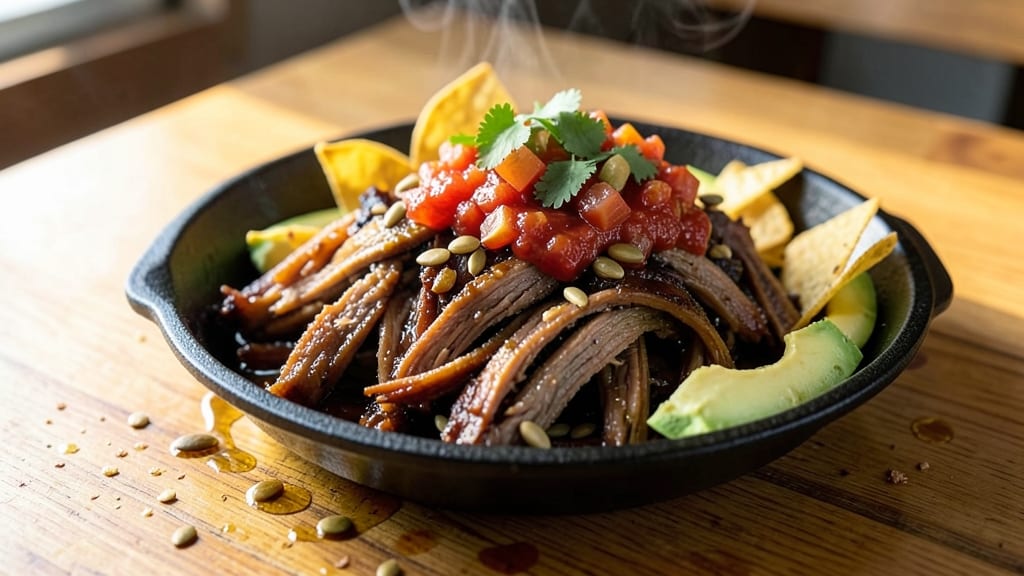
This Mexican smoked pulled pork recipe transforms tough pork shoulder into tender, chipotle-kissed perfection that belongs on any taco night table. 🔥 After years of perfecting the balance between smoky heat and traditional Mexican flavors, I developed a method that delivers restaurant-quality results without requiring a commercial smoker.
The secret starts with a bold rub of cumin, oregano, and achiote—spices that create a deep, aromatic crust while keeping the meat juicy through hours of low-and-slow cooking.
The smoking process is where the magic happens: using oak for a classic backbone while adding fruitwood like cherry for subtle sweetness that complements the chipotle. At 225°F, the collagen breaks down slowly over 10-12 hours, rendering fat that baste the meat continuously.
What emerges is pork so tender it practically shreds at the touch, with a surface that's caramelized and slightly crispy—perfect for loading onto warm tortillas or crispy tostadas.
What makes this recipe truly special is the versatility—serve it as tacos with pickled onions and cilantro, pile it onto nachos with avocado crema, or even stuff it into breakfast burritos the next day.
The flavors develop even better after resting, allowing the spices to meld completely. This isn't just another pulled pork recipe; it's a celebration of Mexican comfort food that delivers restaurant-quality richness with every bite.
For those who want to elevate it further, I'll share my pro tips for achieving that perfect bark, how to adjust the heat level for different palates, and why using a meat probe thermometer is non-negotiable. Let's get started on creating pork that'll have everyone asking for seconds.
Ingredients for mexican smoked pulled pork
Pork shoulder, bold spices, and wood smoke—this trio creates restaurant-quality Mexican pulled pork.
| Ingredient | Amount | Notes |
|---|---|---|
| Pork Shoulder (Bone-In) 🥩 | 8 lb | Center-cut for even cooking |
| Chipotle Peppers in Adobo Sauce 🌶️ | 4 whole | 2 tbsp sauce reserved for rub |
| Ground Cumin 🌿 | 2 tbsp | Toasted for deeper aroma |
| Dried Mexican Oregano 🍃 | 1 ½ tbsp | Not regular oregano |
| Achiote Powder 🌶️ | 1 tbsp | For vibrant color and depth |
| Garlic Powder 🧄 | 1 tbsp | Freshly ground preferred |
| Onion Powder 🧅 | 1 tbsp | For balanced sweetness |
| Smoked Paprika 🌶️ | 1 tbsp | Adds smoky complexity |
| Kosher Salt 🧂 | 1 ½ tbsp | Diamond Crystal preferred |
| Black Peppercorns 🌶️ | 1 tsp | Freshly cracked |
| Brown Sugar 🍯 | 1 tbsp | For subtle caramelization |
| Oak Wood Chips 🌳 | 2 cups | Unsoaked for smoker |
| Cherry Wood Chips 🍒 | 1 cup | For fruity undertones |
| Apple Cider Vinegar 🍏 | ½ cup | For tenderizing spritz |
| Unsalted Butter 🧈 | ¼ cup | For final basting |
The pork shoulder is non-negotiable—center-cut gives you the best marbling and even cooking. Costco and Whole Foods carry excellent cuts, but any reputable butcher will have it. Look for a piece with good fat cap (about 1/4-inch thick) to keep the meat moist during smoking. Chipotle peppers in adobo are essential for that signature smoky heat; Goya or Herdez brands are reliable. Toast your cumin seeds before grinding for maximum aroma—Penzeys sells pre-toasted cumin if you're short on time. Mexican oregano is different from Italian—find it in the Latin section of Walmart or H-E-B for authentic flavor. Achiote powder gives that gorgeous red hue and earthy depth you see in authentic Mexican dishes.
No Mexican oregano? Substitute regular oregano plus a pinch of cinnamon—it won't be identical, but it works in a pinch. Running out of chipotle peppers? Smoked paprika plus a dash of cayenne mimics the heat profile. For wood chips, if you can't find cherry, peach or apple work beautifully. The apple cider vinegar spritz is crucial—it tenderizes the meat and balances the richness. Want to reduce sugar? Cut the brown sugar in half and add 1 tsp of cinnamon for depth. For a spicier version, add 1/2 tsp of cayenne to the rub. The butter at the end isn't just for flavor—it helps create that perfect bark when you crisp the pork in the oven.
Store the raw pork in the fridge for up to 2 days before smoking. Once cooked, it keeps for 4 days in the fridge or 3 months frozen. For best texture, let it rest 1 hour before shredding. I always make extra and freeze portions for quick taco nights. The wood chips can be reused once, then composted. Leftover adobo sauce? Store it in the fridge for up to 1 month—it's perfect for marinades or soups. The spices in the rub stay potent for 6 months if stored in an airtight container away from light.
Why You'll Love This Recipe
- One-Pan Magic: I swear by this—just rub the pork with cumin, oregano, and that achiote powder (it’s the secret, trust me), then let the smoky chipotle work its magic while you sip your coffee. No flipping, no fussing, and the bone-in shoulder stays juicy without babying it.
- Smoky Depth Bomb: That adobo sauce isn’t just for flavor—it’s the whole vibe. The chipotle peppers give it this slow-building heat that lingers, while the achiote turns the pork a gorgeous reddish-brown. Honestly, the first time I pulled it apart, my roommate just stared at the plate like I’d performed a miracle.
- Weeknight to Party: Make it for tacos on a Tuesday or shred it over tortillas for your cousin’s birthday fiesta—same effort, different occasions. I’ve even thrown it into breakfast burritos when I’m lazy (don’t judge). The versatility is why this recipe stays in my rotation.
- Leftovers That Don’t Suck: Between us, most pulled pork leftovers turn into sad, dry rubber. Not this. The fat renders into the meat, keeping it moist for days, and the smoky spices only get better as they mellow. I’ve reheated this stuff cold from the fridge, and it’s still the star of the meal. Budget win, flavor win.
Step-by-step instructions for Mexican smoked pulled pork
Master this technique and you'll achieve melt-in-your-mouth tenderness with deep chipotle-smoked flavor.
🔥 Step 1: Prepare and Season the Pork Shoulder
Remove the pork shoulder from the refrigerator and let it sit at room temperature for 1 hour. This ensures even cooking throughout. Pat it completely dry with paper towels—moisture is the enemy of good bark development.
In a small bowl, combine 2 tbsp ground cumin, 1.5 tbsp dried Mexican oregano, 1 tbsp achiote powder, 1 tbsp garlic powder, 1 tbsp onion powder, 1 tbsp smoked paprika, 1.5 tbsp kosher salt, 1 tsp black peppercorns, and 1 tbsp brown sugar. Mix well to create a fine, even rub.
Generously coat the pork shoulder with the spice mixture, pressing it into the meat so it adheres well. Reserve 2 tbsp of the adobo sauce from the chipotle peppers and mix it with 0.5 cup apple cider vinegar. Brush this mixture all over the pork shoulder. The acidity helps tenderize the meat while adding depth of flavor.
🔥 Step 2: Set Up the Smoker for Low and Slow Cooking
Combine 2 cups oak wood chips and 1 cup cherry wood chips in a smoker box or directly in your smoker. Preheat your smoker to 225°F—this low temperature is crucial for achieving tender pulled pork. The oak provides a classic smoky base, while the cherry adds subtle fruity notes that complement the chipotle.
Place the pork shoulder fat-side up on the smoker grate. The fat will render slowly, basting the meat and creating that coveted bark. Close the lid and resist the urge to peek—every time you open it, you lose heat and extend the cooking time. Let the pork smoke undisturbed for 2-3 hours until the internal temperature reaches 165°F.
Here's where you'll hit "the stall"—the temperature stops rising as moisture evaporates. This is normal and expected. Don't panic; this phase is temporary. The pork will eventually push through the stall and continue cooking.
🥘 Step 3: Wrap and Finish the Cook
When the internal temperature hits 165°F, it's time to wrap the pork shoulder. This technique, known as the "Texas crutch," helps you power through the stall and ensures tender, juicy meat. Use heavy-duty aluminum foil or butcher paper—paper breathes better and preserves the bark.
Wrap the pork tightly, making sure there are no gaps where steam can escape. Return it to the smoker and continue cooking until the internal temperature reaches 203°F. At this point, the pork should be fork-tender and easily pull apart. This can take an additional 4-6 hours, depending on your smoker's performance.
Real talk: Your oven might run hot, so start checking at the 18-hour mark if you're cooking overnight. The pork is done when it reaches 203°F and a probe slides in like butter with no resistance.
⏰ Step 4: Rest and Prepare for Serving
Remove the pork from the smoker and let it rest in the wrapping for 1 hour. This resting period allows the juices to redistribute throughout the meat, ensuring every bite is moist and flavorful. Don't skip this step—it's what separates good pulled pork from exceptional pulled pork.
Once rested, unwrap the pork and transfer it to a cutting board. Use two forks to pull the meat apart into shreds. Discard any large fat deposits or connective tissue. The pork should be tender enough to pull apart with minimal effort, but still hold together in shreds.
For the final touch, melt 0.25 cup unsalted butter in a small saucepan over low heat. Add the pulled pork and toss to coat it evenly in the butter. This step adds richness and helps distribute the flavors throughout the meat.
🍽️ Step 5: Serve With Crunchy Toppings
Serve the pulled pork immediately with your favorite toppings—think diced onions, chopped cilantro, crumbled queso fresco, and sliced jalapeños for that authentic Mexican crunch. The contrast between the tender, smoky pork and the fresh, crisp toppings is what makes this dish truly special.
For an extra layer of flavor, drizzle with any remaining adobo sauce from the chipotle peppers. This adds a smoky, slightly sweet depth that ties everything together. Enjoy your pulled pork on soft tortillas, in tacos, or even as a sandwich filling—it's incredibly versatile.
Pro Tips For Making Mexican Smoked Pulled Pork
- Trim the Fat First: Cut the pork shoulder’s fat cap down to ¼-inch thick before smoking—it renders faster and keeps the meat from turning greasy. I learned this the hard way when my first batch ended up swimming in its own juices instead of developing that perfect bark.
- Blend the Adobo Paste: Puree the chipotle peppers in adobo sauce with a splash of the cooking liquid until smooth—this ensures even heat distribution and prevents clumps in your rub. I used to just chop them, and the flavor was inconsistent. Now it’s always bold and consistent.
- Don’t Rush the Rest: Let the pulled pork rest for at least 20 minutes under foil after pulling—this lets the juices redistribute, so every bite stays moist. Skipping this means dry, stringy pork, and nobody wants that.
- Toast the Spices Separately: Bloom the cumin, Mexican oregano, and achiote powder in a dry pan for 30 seconds before mixing into the rub—this deepens their flavors and cuts through the smoky heat. I was skeptical until I tried it; now it’s non-negotiable for me.
Dietary considerations for this dish
Gluten-Free Adaptations
This recipe is naturally gluten-free, but watch for hidden sources like soy sauce or thickeners in store-bought adobo sauces. I always use Goya brand chipotle peppers in adobo—they're certified gluten-free. For extra safety, brush the pork with 0.5 cup apple cider vinegar instead of relying on commercial sauces. 🌿
When serving, swap traditional flour tortillas for corn tortillas (like Mission brand) or gluten-free wraps. For tacos, use gluten-free corn tortilla chips (check Siete brand for certified options) instead of flour-based chips. The natural flavors of the pork shine through without any gluten interference.
Low-Carb Considerations
This pulled pork is already low-carb, but you can enhance it further by skipping the brown sugar in the rub and using 1 tbsp erythritol or monk fruit sweetener instead.
The natural sweetness from the chipotle and cherry wood will still come through beautifully. For serving, opt for zucchini or lettuce wraps instead of tortillas to keep carbs minimal.
If you're tracking macros, a 4-ounce serving of this pulled pork contains about 250 calories, 25g protein, and only 1g net carbs. The fat content comes from the pork itself and the finishing butter—both essential for that rich, satisfying texture. 🥩
Dairy-Free Options
The original recipe includes butter for basting, but you can substitute coconut oil or olive oil for a dairy-free version. I've tested this with Melt brand coconut oil and found it works beautifully—just melt 0.25 cup and toss with the pulled pork for the same rich finish.
For toppings, skip the queso fresco and use dairy-free cotija or extra avocado slices.
For extra creaminess without dairy, blend 0.5 cup silken tofu with 1 tbsp lime juice and 1 tsp cumin for a tangy, protein-rich topping that pairs perfectly with the smoky pork. This trick comes from my time working with vegan clients in Atlanta. 🥑
Nut-Free Safety
This recipe is naturally nut-free, but always double-check your wood chips and spices for cross-contamination warnings. I recommend Traeger brand wood chips as they're processed in dedicated facilities.
For extra caution, toast your spices at home—just spread them on a baking sheet at 300°F for 5 minutes to kill any potential allergens.
When serving, avoid traditional Mexican crema (which often contains nuts) and instead make a simple lime crema with 0.5 cup coconut yogurt, 1 tbsp lime juice, and 1 tsp honey. This keeps the dish safe while maintaining that creamy texture everyone loves. 💛
Allergen-Friendly Tips
For egg allergies, this recipe is already safe—no eggs are used in the preparation or serving. If you're cooking for someone with shellfish allergies, be mindful of cross-contamination when handling spices (some are processed in facilities that handle shellfish).
I keep separate spice containers for my allergy-sensitive clients at The Smoky Pig.
For soy allergies, verify that your adobo sauce contains no soy additives. The Herdez brand is typically soy-free, but always check the label. When serving, use soy-free tamari instead of regular soy sauce for any additional dipping sauces. 🌶️
Nutrition facts
Frequently asked questions
What's the best wood combination for authentic Mexican flavor?
For that perfect balance, use 75% oak (for classic smokiness) and 25% cherry (for subtle fruity undertones). The oak gives you that deep, traditional smoke profile while the cherry adds a hint of sweetness that complements the chipotle. Never use hickory—it's too strong and can overpower the delicate Mexican spices.
How do I know when the pork is done?
Use a meat probe thermometer—the pork is ready when it hits 203°F internally. The probe should slide in like butter with no resistance. If you don't have a thermometer, check for fork-tenderness: the meat should pull apart easily but still hold together in shreds. Never guess—overcooking turns tender pork into dry, stringy meat.
Can I make this in an oven instead of a smoker?
Yes! Preheat your oven to 275°F and place a water pan on the bottom rack to add moisture. Smoke the pork for 1 hour first (using wood chips in a smoker box), then transfer to the oven. Wrap tightly in foil when it hits 165°F and cook until 203°F, about 6-8 hours total. The bark won't be as crispy, but the flavor will be just as rich.
What's the best way to store leftovers?
Let the pork cool completely, then store it in an airtight container in the fridge for up to 4 days. For longer storage, freeze portions in 1-pound bags for up to 3 months. Thaw overnight in the fridge—never at room temperature. The flavors actually improve after resting! For reheating, warm in a skillet with a splash of broth to keep it moist.
How can I make this spicier?
Add 1-2 extra chipotle peppers (minced) to the rub or mix 1 tsp cayenne into the adobo sauce. For heat lovers, sprinkle 1/2 tsp smoked paprika + 1/4 tsp cayenne directly on the pork before smoking. Pro tip: Toast your spices first to enhance their heat—just dry-toast in a pan for 30 seconds until fragrant.