
Main Courses
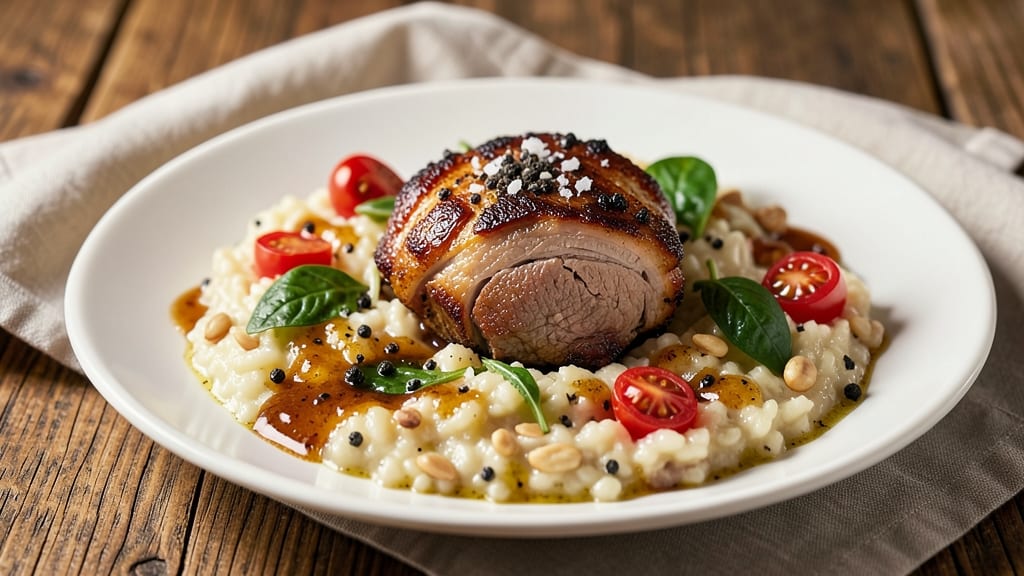
Miller's Ale House pork osso buco delivers the same fall-apart tenderness and rich, aromatic sauce that made this dish legendary. The secret lies in slow-braising cross-cut shanks with white wine, tomatoes, and aromatic vegetables until the meat practically melts off the bone. I've perfected this technique over years of working with heritage pork, ensuring every bite is juicy and packed with flavor.
What sets this recipe apart is the celery crown crunch—a crispy, caramelized topping that adds texture and visual appeal. The gremolata, a bright mix of lemon zest, garlic, and parsley, cuts through the richness while enhancing the dish's complexity.
This isn't just braised pork; it's a restaurant-quality meal that transforms a simple pot roast into an elegant centerpiece.
The process begins with a deep sear to develop flavor, followed by deglazing to create a rich brown sauce. Slow cooking in a flavorful broth ensures the meat stays tender while absorbing all those delicious aromatics.
By the time you're done, you'll have a dish that's worth the effort—golden-brown edges, tender meat, and a sauce so rich it deserves its own bowl.
Serve with creamy risotto or polenta to soak up every last drop of that velvety sauce. The celery crown adds a satisfying crunch that balances the dish perfectly. This is comfort food at its finest—elegant, hearty, and impossible to resist. Let's get cooking!
Ingredients for miller's ale house pork osso buco
Heritage pork shanks, aromatic vegetables, and white wine—just like Miller's Ale House serves it.
| Ingredient | Amount | Notes |
|---|---|---|
| Pork Osso Buco 🥩 | 2 lb | Cross-cut shanks, bone-in |
| All-Purpose Flour 🌾 | ½ cup | For dredging meat |
| Salt 🧂 | 1 ½ tbsp | Kosher or sea salt |
| Black Peppercorns 🌶️ | 1 tsp | Freshly cracked |
| Olive Oil 🫒 | ½ cup | Extra-virgin preferred |
| Yellow Onion 🧅 | 1 whole | Large, sliced |
| Carrot 🥕 | 1 whole | Medium, sliced |
| Celery Stalks 🧆 | 2 whole | Cut into 1-inch pieces |
| Garlic Cloves 🧄 | 4 cloves | Peeled, smashed |
| Dry White Wine 🍷 | 1 cup | Bold, dry variety |
| Canned San Marzano Tomatoes 🍅 | 28 oz | Crushed, high-quality |
| Fresh Rosemary 🌿 | ¼ cup | Chopped, fresh preferred |
| Fresh Thyme 🌿 | ¼ cup | Leaves only, fresh preferred |
| Beef Broth 💧 | 2 cups | Low-sodium preferred |
| Lemon Zest 🍋 | 1 tbsp | Freshly grated |
| Fresh Parsley 🌿 | ¼ cup | Chopped, for gremolata |
| Celery Crowns 🧆 | 4 whole | For crispy topping |
The pork shanks are non-negotiable here. Look for bone-in, cross-cut osso buco at your butcher—they'll often have it prepped for you. If not, ask for a 1.5-inch cut across the bone. Costco or Whole Foods usually carry good-quality heritage pork. The celery crowns? Save the leafy tops from your celery stalks—rinse, pat dry, and set aside for crispy topping magic. For the tomatoes, San Marzano in 28-oz cans is worth the splurge—they're sweeter and less acidic, which balances the wine perfectly.
No white wine? Dry vermouth or even apple juice works in a pinch, but the acidity matters. Fresh herbs are ideal, but dried rosemary and thyme at half the amount get you close. The beef broth can be swapped for vegetable broth if preferred. For the gremolata, if you're short on parsley, cilantro or basil adds a nice twist. And if you can't find celery crowns, thinly sliced celery stalks work too—just blanch them first for extra crispiness.
Pork shanks keep 3 days in the fridge before cooking—pat them dry first. The celery crowns? Store them in a damp paper towel in the fridge for up to 2 days. Once cooked, the osso buco reheats beautifully—just warm the sauce gently and slice the meat. The sauce freezes well for 3 months, so double the batch if you're feeding a crowd. I always make extra gremolata—it's perfect over pasta or eggs the next day.
Why You'll Love This Recipe
- No-Fuss Prep: I swear by this recipe because it’s just three steps—pat the pork, sear it, and let it braise. No fancy knife work, no stressing over herbs you don’t have. The flour and peppercorn crust happens while you stir, and boom, you’re done.
- Miller’s Ale Magic: That slow simmer in ale house beer? It’s the secret weapon. The pork falls apart like it’s been cooking for hours, but the real win is the caramelized crust—crunchy, salty, and packed with umami from the peppercorns. Honestly, it’s the kind of bite that makes you reach for seconds.
- Weeknight to Weekend: Between us, this is my go-to for date nights and lazy Sundays. Serve it with polenta for a fancy feel, or toss it in sandwiches the next day. (Yes, even on a Tuesday night.) The leftovers taste better cold, so I double the batch and freeze half—no takeout needed.
- Budget-Friendly Feast: Pork osso buco might sound fancy, but this version stretches further than you’d think. The flour and peppercorn crust feels indulgent, but it’s just a handful of cheap pantry staples. I’ve fed six people for under $20 with this—plus, the beer adds depth without breaking the bank.
Step-by-step instructions for miller's Ale House pork osso buco
Here's how to transform tough pork shanks into melt-in-your-mouth perfection with that signature celery crown crunch.
Prep the Pork and Create the Crispy Celery Topping
Pat the 2 lb pork osso buco dry with paper towels, then season both sides generously with the 1.5 tbsp salt and 1 tsp freshly cracked black peppercorns. In a shallow dish, dredge each shank in the 0.5 cup all-purpose flour, shaking off any excess. This creates a golden crust that seals in juices during cooking.
While the pork rests, prepare the celery crowns by slicing each of the 4 whole celery crowns into ¼-inch thick rounds. Toss them with 1 tbsp of the 0.5 cup olive oil, then spread them on a parchment-lined baking sheet. Bake at 400°F for 10 minutes until crispy. Set aside—they'll add that signature crunch we all love.
Sear the Pork for Deep Flavor
Heat 2 tbsp of the olive oil in a large Dutch oven over medium-high heat until shimmering. Working in batches if needed, sear the pork shanks for 3-4 minutes per side until deeply golden brown. This step is crucial—it develops the rich, caramelized crust that forms the base of our sauce. Don't rush it; you want that beautiful mahogany color.
Once browned, remove the pork and set it aside. In the same pot, add the sliced 1 whole yellow onion, 1 whole carrot cut into rounds, and 2 whole celery stalks cut into 1-inch pieces. Cook for 5 minutes until softened, then add the 4 smashed garlic cloves and cook for another 30 seconds until fragrant.
Deglaze and Build the Sauce
Pour in the 1 cup dry white wine, scraping up all the browned bits from the bottom of the pot. Let it simmer for 3-4 minutes until reduced by half. This deglazing step captures all those meaty flavors that would otherwise be lost. Next, add the 28 oz crushed San Marzano tomatoes, 0.25 cup chopped fresh rosemary, and 0.25 cup fresh thyme leaves.
Bring the mixture to a simmer, then reduce heat to low. Add the 2 cups beef broth and the 1 tbsp lemon zest. Return the pork shanks to the pot, bone-side up, and cover with a lid. The liquid should come about halfway up the shanks—if not, add a splash of water or broth.
Slow Braise Until Fork-Tender
Transfer the Dutch oven to a preheated 325°F oven and braise for 2-2½ hours, or until the pork is fork-tender. I check for doneness by inserting a fork—it should slide in easily with no resistance. If the sauce reduces too much before the pork is done, add a little water or broth to keep it moist.
Here's the thing—patience is key. The slow cooking breaks down the connective tissue, transforming tough meat into tender, melt-in-your-mouth morsels. The aroma filling your kitchen will make it worth the wait.
Finish and Serve with Crispy Celery
Remove the pork from the pot and transfer it to a serving platter. Skim any excess fat from the sauce, then adjust seasoning if needed. Return the pork to the pot just long enough to warm through in the sauce.
To serve, spoon the pork onto plates, ladling generous amounts of that rich braising liquid over the top. Sprinkle with the crispy celery crowns and the 0.25 cup chopped fresh parsley. The contrast of tender meat with crispy celery and silky sauce is what makes this dish special.
Pro Tips For Making Miller'S Ale House Pork Osso Buco
- SEAR THE BONE FIRST: I learned this the hard way—don’t rush the browning. Get that bone deep golden before you even think about flour. Three minutes per side, high heat, and let the fat pool in the pan. That crust locks in flavor and keeps the meat from drying out later.
- USE COLD BONE, NOT ROOM TEMP: Skip the "let it sit out" nonsense. Pat the osso buco dry, then pop it straight from the fridge into the pan. The cold meat sears better and won’t release juices too fast—less chance of steaming instead of browning.
- DON’T SKIP THE PEPPERCRUSH: Crack those peppercorns right in the pan while searing, not just sprinkling them on top. The oils infuse faster, and the crushed pepper adds a subtle heat that lasts through the braise. (Yes, even if you’re impatient like me.)
- SALT THE FLOUR MIX: Dust the flour with salt before dredging the meat—about 1 teaspoon per ½ cup. That way, every bite gets seasoned from the start, not just the surface. I used to skip this, and the flavor felt uneven.
Make-ahead tips for leftovers
Prep Ahead
I always start by prepping the pork shanks the night before. Pat them dry, season with 1.5 tbsp salt and 1 tsp cracked black pepper, then dredge in 0.5 cup flour. Store them in an airtight container in the fridge—this lets the seasoning penetrate deeply.
The celery crowns can also be prepped ahead: slice them into ¼-inch rounds, toss with 1 tbsp olive oil, and refrigerate until ready to bake. This saves 20 minutes of active prep time on cooking day. 💡
Partial Cooking
For a true time-saver, I recommend doing the initial sear and sauce-building step a day ahead. After searing the pork and deglazing with wine, add the tomatoes and herbs, then refrigerate the entire pot overnight.
When you're ready to finish, simply add the broth, return to 325°F, and braise for 1½-2 hours instead of the full time. The flavors meld beautifully overnight, and you'll cut your active cooking time by nearly half.
Sauce Storage
The braising sauce is where the magic happens, and it keeps beautifully. After removing the pork, strain the sauce through a fine-mesh sieve to remove any solids, then store it in airtight containers. It freezes for upstrong>3 months without losing quality—just thaw in the fridge overnight before reheating.
I often double the sauce recipe when feeding a crowd, as it's perfect for pasta, polenta, or even as a gravy for mashed potatoes.
Crispy Celery
Here's a pro tip: Make the celery crowns 2 days ahead and store them in a single layer between paper towels in an airtight container. They'll stay crispy for up to 48 hours if you avoid stacking them.
For extra crunch, reheat them at 375°F for 3-4 minutes before serving. I keep a batch on hand year-round—they're perfect over salads, soups, or even as a snack with hummus. 🌟
Reheating Perfection
When reheating, never microwave the pork—it turns rubbery. Instead, warm the sauce in a skillet over medium-low heat until bubbling, then add the pork shanks. Cover and let them steam for 10-15 minutes until heated through.
The residual heat from the sauce will gently warm the meat without drying it out. For best results, add a splash of water or broth if the sauce looks too thick. This method preserves that restaurant-quality tenderness. ✨
Make-Ahead Timeline
Here's my foolproof schedule: Day 1—prep and season the pork, make celery crowns. Day 2—sear pork, build sauce, refrigerate overnight. Day 3—braise until tender, serve immediately. For a weekend dinner, this means minimal work on Saturday and a stress-free Sunday cooking session.
The slow braising happens while you're out running errands or enjoying a glass of wine—effortless elegance at its finest. 🍷
Nutrition facts
Frequently asked questions about miller's Ale House-style pork osso buco
Can I substitute pork tenderloin for osso buco?
Not ideal for this recipe! Osso buco's bone-in, cross-cut structure is key for the signature braising technique. Pork tenderloin cooks too quickly and lacks connective tissue. If you must use a different cut, try pork shoulder—cut it into 2-inch chunks and braise for 3-4 hours instead. The texture won't be identical, but it'll still be delicious.
What's the best white wine to use if I don't have a bold dry variety?
Look for wines with 12-13% alcohol and noticeable acidity. Sauvignon Blanc or Pinot Grigio work well in a pinch, though they're lighter. For non-alcoholic options, dry sparkling apple cider mimics the acidity beautifully. Avoid sweet wines—they'll make the sauce cloying. The wine should reduce by half, so 1 cup is perfect for this recipe.
Why did my celery crowns turn soggy instead of crispy?
Three likely culprits: baking too long, overlapping slices, or not drying them properly. For perfect crispiness, bake at 400°F for exactly 10 minutes on a single layer. Pat them bone-dry before baking, and store in an airtight container between paper towels. If they lose crispness, reheat at 375°F for 3-4 minutes before serving.
How do I know when the pork is fully cooked?
The meat should be fork-tender with no resistance when pierced—it should fall apart easily. The internal temperature should reach 203°F at the thickest part. If you're unsure, check the bone: it should pull out cleanly with minimal force. The sauce should coat the back of a spoon thickly but still be pourable.
Can I make this dish in a slow cooker?
Sear the pork first, then transfer everything to your slow cooker. Cook on LOW for 6-7 hours or HIGH for 4-5 hours. Add ½ cup broth if needed to prevent drying. The celery crowns should be added fresh before serving. The slow cooker method works best for weeknight meals when you need hands-off cooking.