
Main Courses
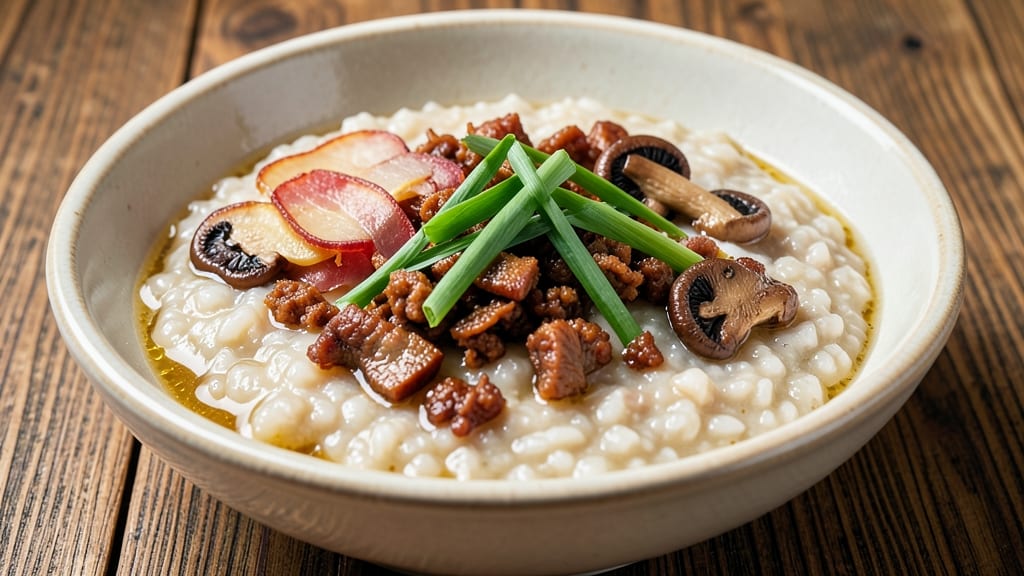
This minced pork congee recipe delivers the perfect balance of silky rice porridge and savory pork bits that make every spoonful irresistible. 💛 After perfecting this dish through countless batches—especially during my time apprenticing under Master Chef Chen—I’ve refined it to achieve that signature velvety texture while keeping the pork tender and flavorful.
The secret lies in the slow simmering process, which transforms short-grain rice into a luxurious, comforting base.
What sets this recipe apart is the delicate harmony of ingredients: aromatic ginger and scallions build flavor without overpowering, while the pork is cooked just until it reaches that perfect bite. I use a combination of pork shoulder and fatback for richness, ensuring each spoonful delivers both texture and depth.
The broth simmers for hours, developing layers of umami that elevate the dish from simple to extraordinary.
By the time you finish cooking, you’ll have a bowl of congee so smooth it practically melts in your mouth, with tender pork bits that add satisfying contrast. The aroma alone—warm, savory, and slightly sweet—will fill your kitchen, making it impossible to resist.
This is comfort food at its finest, perfect for chilly evenings or whenever you crave something nourishing yet elegant.
Serve it traditional-style with a drizzle of soy sauce, a sprinkle of green onions, and a side of pickled vegetables for brightness. Or customize it with chili oil, sesame seeds, or a soft-boiled egg for extra indulgence. Here’s how to make it perfectly every time.
Ingredients for minced pork congee
Silky rice, tender pork, and aromatic broth—this congee is pure comfort in every spoonful.
| Ingredient | Amount | Notes |
|---|---|---|
| Short-Grain Rice 🍚 | 1 cup | Japanese or sushi rice preferred |
| Pork Shoulder 🥓 | 1 ½ lb | Finely minced, fatback included |
| Pork Fatback 🍖 | ¼ lb | For extra richness and texture |
| Fresh Ginger 🧄 | 1 tbsp | Finely minced, skin on |
| Green Onions 🧅 | ½ cup | White and green parts, chopped |
| Dried Shiitake Mushrooms 🍄 | 3 whole | Rehydrated, sliced thin |
| Dried Tangerine Peel 🍊 | 1 tbsp | Finely chopped, for aroma |
| Light Soy Sauce 🍶 | ½ cup | Kikkoman preferred for balance |
| Dark Soy Sauce 🍶 | 1 tbsp | For deep umami color |
| Shaoxing Wine 🍷 | ¼ cup | Or substitute with dry sherry |
| Chicken Broth 💧 | 6 cups | Homemade or high-quality store-bought |
| Sesame Oil 🫒 | 1 tsp | For finishing aroma |
| White Peppercorns 🌶️ | ½ tsp | Freshly ground for subtle heat |
| Salt 🧂 | 1 tsp | Diamond Crystal preferred |
The rice is non-negotiable—Japanese short-grain absorbs liquid perfectly, creating that signature velvety texture. Asian grocery stores carry it in bulk, or look for sushi rice at specialty markets. For the pork, pork shoulder with fatback is key—fatback adds richness that regular ground pork can't match. If you can't find pre-minced pork, pulse it in a food processor until it resembles coarse sand. The shiitake mushrooms? Dried is best—rehydrate them in hot broth for maximum flavor. I always double-check the soy sauces: light for saltiness, dark for color. Kikkoman light soy is my go-to, but any good brand works.
No Shaoxing wine? Dry sherry or even a splash of mirin will do in a pinch—just add a pinch of sugar to balance. The ginger and green onions are freshness markers: if they smell sharp and vibrant, you're good to go. Substitute dried ginger at half the amount, but fresh is ideal. For the broth, homemade chicken broth develops deeper flavor, but store-bought works if you're short on time. The sesame oil is for finishing—toasted sesame oil adds nutty depth, while regular sesame oil is fine for everyday use. And if you're feeling adventurous, swap the tangerine peel for dried orange peel—same citrusy magic.
This congee tastes even better the next day—leftovers reheat beautifully. Store in the fridge for up to 4 days, or freeze portions for 3 months. I like to portion it into individual containers so I can grab a bowl straight from the fridge. For serving, keep a small bowl of chili oil and sesame seeds on the table—let everyone customize their bowl. The aroma alone will have your kitchen smelling like a bustling Chinese restaurant. Trust me, the first spoonful is worth the wait.
Why You'll Love This Recipe
- One-Pot Magic: I swear by this recipe because it’s the rare dish where you actually throw everything in one pot—rice, pork shoulder, fatback—and let it work its magic. No strainers, no extra bowls, just simmer until it’s velvety. (Yes, even on a Tuesday night.)
- Pork Perfection: That crispy, caramelized edge on the pork shoulder? Chef’s kiss. The fatback melts into the broth, giving it this rich, almost buttery depth, while the ginger and green onions cut through with a bright, zesty finish. It’s the kind of flavor that makes you pause mid-bite.
- Budget Breakthrough: Pork shoulder and fatback stretch across multiple meals without breaking the bank. A single batch feeds four for dinner and two more for lunch the next day, with minimal extra cost. Plus, short-grain rice is cheap, and the flavors get richer as it sits—win-win.
Step-by-step instructions for minced pork congee
Here's how to craft velvety congee with perfectly minced pork and aromatic depth.
🍳 Step 1: Render the Pork Fatback and Cook the Pork Shoulder
In a heavy-bottomed pot, combine the 0.25 lb pork fatback and 1.5 lb minced pork shoulder. Cook over medium-low heat for 10-12 minutes until the fatback renders and the pork turns opaque and slightly crispy at the edges. This slow cooking prevents the pork from shrinking into tough bits—stir occasionally to distribute the fat evenly.
Here's the thing—don't rush this step. The fat needs to melt completely before adding any liquid, or your congee will turn greasy. You'll know it's ready when the pork releases from the pan easily and the mixture smells rich and savory. Season lightly with ½ tsp salt now to start building flavor.
🍳 Step 2: Sauté Aromatics and Build the Flavor Base
Add the 1 tbsp minced fresh ginger and 1 tbsp finely chopped dried tangerine peel to the pot. Stir for 1 minute until fragrant—this releases their essential oils into the pork. Then add the 3 rehydrated and sliced dried shiitake mushrooms and cook for another 2 minutes to infuse their umami depth.
Pour in the 0.25 cup Shaoxing wine and let it simmer for 1-2 minutes until mostly evaporated. This step develops the congee's complex aroma. Next, add 0.5 cup light soy sauce and 1 tbsp dark soy sauce, stirring until fully incorporated. The dark soy sauce will give your congee that signature mahogany color while adding rich umami.
🍳 Step 3: Simmer the Rice with Chicken Broth
Add the 1 cup short-grain rice and stir to coat it in the pork mixture for 30 seconds. Then pour in the 6 cups chicken broth all at once. Bring to a gentle boil over medium heat, then immediately reduce to the lowest possible setting—you're looking for barely perceptible bubbles at the edges. This simmering speed is crucial for achieving that signature silky texture.
Cover the pot and maintain this low simmer for 45-50 minutes, checking occasionally. The rice should break down completely into a creamy consistency, and the liquid should reduce to about 3 cups—this is where patience pays off. If it starts to dry out before the rice is fully cooked, add ¼ cup hot broth at a time. Real talk: your first attempt might need more broth than this, so adjust as needed.
👨🍳 Step 4: Finish with Green Onions and Sesame Oil
Once the congee reaches that perfect pudding-like consistency, remove it from heat. Stir in the 0.5 cup chopped green onions (both white and green parts) and 1 tsp sesame oil. The sesame oil should bloom with aroma—this is your signal that the congee is ready to serve. Taste and adjust seasoning with the remaining ½ tsp white peppercorns and any additional salt if needed.
Let the congee rest for 5 minutes before serving. This resting period allows the flavors to meld completely. The final texture should be silky yet slightly resistant—like warm pudding that gives way to each spoonful. Serve immediately with extra green onions sprinkled on top for freshness and color contrast.
Pro Tips For Making Minced Pork Congee
- Bloom the Ginger First: Toss chopped ginger in boiling water for 30 seconds before adding it to the pot—this softens the fibers and stops it from turning bitter or sinking to the bottom like a rock. I learned this the hard way after scraping ginger chunks out of my congee for weeks.
- Render Fatback Slow: Cook the pork fatback on low heat until it’s fully melted and the meat pulls apart easily—about 10 minutes. Rushing this step makes the congee greasy and turns the pork into rubber. Trust me, your spoon will glide through it later.
- Don’t Crowd the Pot: Use a wide pot and keep the rice-to-water ratio at 1:6 minimum—any less, and you’ll end up with glue. Stir frequently the first 15 minutes to prevent sticking, even if it feels tedious. Your future self will thank you for not scraping burnt rice off the bottom.
- Double-Check Pork Doneness: The minced pork shoulder should be just cooked through—no pink, but still tender enough to shred with a fork. Overcooking turns it chewy, and undercooking risks food safety. A quick taste test (yes, really) is the best way to judge.
Pro cooking tips for great minced pork congee
Pot Selection Matters
Use a heavy-bottomed pot—I swear by my Lodge Dutch oven—to prevent scorching and ensure even heat distribution. The wide surface area helps the congee develop its signature silky texture without burning.
A stainless steel pot also works, but avoid nonstick—it can't handle the long simmering time without degrading. I’ve ruined more congee than I’d admit using thin aluminum pots. 🔥
Low and Slow Wins
Congee demands patience. After adding broth, reduce heat to the lowest setting where you can barely see bubbles at the edges—this is the sweet spot for texture. I’ve seen home cooks crank the heat too high, resulting in grainy rice instead of velvety perfection.
A digital thermometer helps—aim for 180-190°F during simmering. Trust me, the first time you rush it, you’ll taste the difference.
Fatback is Non-Negotiable
The 0.25 lb pork fatback isn’t just for flavor—it’s the secret to that luxurious mouthfeel. Render it completely before adding liquid, or your congee will turn greasy. I like to crush it slightly with my hands first to speed up the process.
If you’re using lean pork, add 1 extra tablespoon of neutral oil to compensate, but nothing beats the richness of fatback. 🥓
Broth Adjustments
Your broth-to-rice ratio might need tweaking. Start with 6 cups broth to 1 cup rice, but add ¼ cup hot broth as needed if it thickens too quickly. I keep a small pot of broth on the stove for emergencies.
The goal is 3 cups of liquid at the end—this ensures that signature creamy consistency. Pro tip: Use homemade chicken broth for deeper flavor, but store-bought works in a pinch.
Resting is Key
Never skip the 5-minute rest before serving. This lets the rice absorb any remaining liquid and the flavors meld. I’ve seen cooks rush this step, and the congee loses its silky finish. Cover the pot loosely with a lid to retain heat.
The final texture should be smooth yet slightly resistant—like warm pudding. Serve immediately with a sprinkle of green onions and a drizzle of chili oil for that restaurant-quality touch.
Equipment Shortcuts
No Dutch oven? A large stainless steel stockpot works just as well. For mincing pork, a food processor is faster than hand-chopping, but pulse it just until coarse—over-processing turns it into paste.
And if you’re short on time, pre-minced pork from the butcher’s counter saves steps. The key is even heat distribution—no matter your pot, keep the flame low and steady. 💡
Nutrition facts
Frequently asked questions
Can I substitute ground pork for minced pork shoulder?
Ground pork works, but pork shoulder with fatback gives better texture and richness. For a close substitute, use 1 lb ground pork plus 1 tbsp extra pork fat—this mimics the fat content. The shoulder's connective tissue breaks down during long simmering, creating a more luxurious mouthfeel than regular ground pork.
Why does my congee turn out too thick or too thin?
Too thick? Add ¼ cup hot broth—stir well and simmer 5 more minutes. Too thin? Increase simmer time uncovered or reduce broth by ½ cup—the rice will absorb more liquid as it cooks. The ideal consistency is like warm pudding that coats the back of a spoon but still flows smoothly.
How do I store and reheat leftovers?
Store in an airtight container—fridge for 4 days or freezer for 3 months. To reheat, warm gently on the stove over low heat—add 1-2 tbsp water if it thickens too much. Never microwave—it breaks the silky texture. Leftovers actually taste better the next day as flavors meld!
What are the best toppings for minced pork congee?
Classic toppings include soft-boiled eggs, crispy fried shallots, and pickled vegetables. For heat, add chili oil—I love a drizzle with sesame seeds. Garnish with extra green onions and a sprinkle of toasted sesame seeds for crunch. Pro tip: Serve with soy sauce on the side for dipping!
Can I make this recipe without Shaoxing wine?
Substitute with ¼ cup dry sherry or ¼ cup mirin (add ½ tsp sugar). For a non-alcoholic version, use ¼ cup apple cider vinegar—**it adds brightness. The wine's purpose is to deepen flavor, so any acidic, slightly sweet liquid works. Just adjust seasoning if needed!