
Main Courses
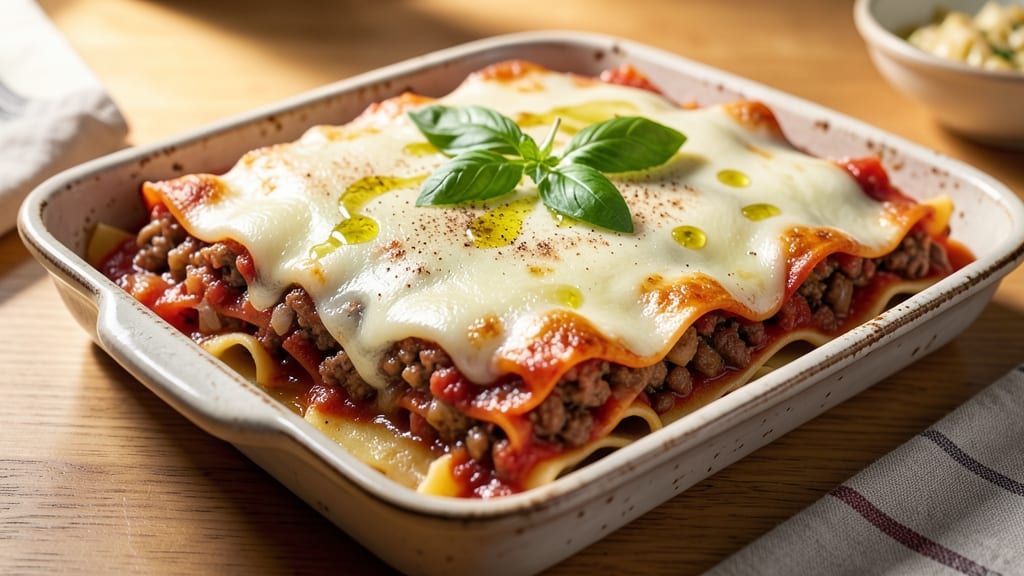
This minced pork lasagna recipe delivers the ultimate Italian comfort food experience with layers of tender meat sauce and creamy béchamel. 🌟 My years of perfecting this dish—especially the pork-to-sauce ratio—ensure every forkful is rich, savory, and perfectly balanced.
The secret lies in cooking the pork just until it loses its raw edge, creating a sauce so flavorful it clings to each lasagna layer like it was meant to be there.
What sets this recipe apart is the layered technique: thinly spread meat sauce, just enough ricotta to keep it moist, and a light dusting of mozzarella between each noodle layer. Pre-baking the lasagna before the final bake prevents a soggy middle, while the golden-brown top crust ensures that satisfying crunch.
This isn’t just lasagna—it’s a restaurant-quality dish you can make at home with simple ingredients and patience.
The result is a lasagna that’s comforting yet impressive, with each bite offering tender pork, creamy cheese, and perfectly al dente noodles. The aroma alone—tomato, garlic, and simmered pork—transforms any kitchen into an Italian trattoria. Serve with a crisp arugula salad and garlic bread to complete the meal.
Whether you're feeding a crowd or treating yourself to a Sunday supper, this recipe delivers foolproof results every time. The key is taking your time with the layers and letting the flavors meld during baking. Trust me—once you taste this, store-bought lasagna won’t stand a chance.
Ingredients for minced pork lasagna
Layered Italian comfort starts with these 15 essential ingredients for restaurant-quality minced pork lasagna.
| Ingredient | Amount | Notes |
|---|---|---|
| Ground Pork 🥩 | 1 ½ lb | Lean or regular, for rich flavor |
| Onion 🧅 | 1 whole | Medium yellow, finely chopped |
| Garlic Cloves 🧄 | 6 cloves | Fresh, minced for depth |
| Tomato Paste 🍅 | 1 can | 24 oz, for rich base |
| Canned Crushed Tomatoes 🍅 | 2 cans | 28 oz each, San Marzano preferred |
| Dry Lasagna Noodles 🍝 | 12 pieces | No-boil preferred, oven-ready |
| Ricotta Cheese 🧀 | 15 oz | Whole milk, drained |
| Mozzarella Cheese 🧀 | 2 cups | Shredded part-skim, fresh |
| Parmesan Cheese 🧀 | 1 cup | Freshly grated, block |
| Heavy Cream 🥛 | 1 cup | Full-fat for richness |
| Butter 🧈 | 2 tbsp | Unsalted, for béchamel |
| All-Purpose Flour 🌾 | ¼ cup | For béchamel roux |
| Dried Oregano 🌿 | 1 tbsp | Italian blend preferred |
| Ground Black Pepper 🌶️ | ½ tsp | Freshly cracked |
| Salt 🧂 | 1 ½ tsp | Kosher or sea salt |
The pork is the heart of this dish, so choose high-quality ground pork—lean or regular, but not pre-seasoned. Costco or Whole Foods carry excellent options, or grab a package from the butcher counter for extra freshness. The onions and garlic? Fresh is non-negotiable—they form the flavor base. For the tomatoes, San Marzano cans are worth the splurge—they’re sweeter and less acidic, which balances the rich pork perfectly. If you can’t find them, any high-quality crushed tomatoes will do, but avoid the watery, mushy brands.
No ricotta? Cottage cheese blended smooth works in a pinch, though it’s not ideal. Short on mozzarella? Provolone or fontina melt beautifully too. The lasagna noodles should be no-boil if possible—they save time and prevent a soggy middle. For the béchamel, full-fat cream and butter are essential—low-fat versions won’t give that velvety texture. If you’re in a hurry, a pre-made béchamel sauce from the store works, but homemade makes all the difference. The oregano? Italian blend has a more complex flavor than regular oregano—look for it in the international aisle or bulk section.
Pork sauce keeps for 3 days in the fridge—make extra for pasta or pizza. The ricotta and mozzarella should be stored in airtight containers with parchment between layers to prevent sticking. Assemble the lasagna up to 24 hours ahead and refrigerate before baking—this lets the flavors meld beautifully. Leftovers? 4-5 days in the fridge or 3 months frozen. Reheat covered with foil at 350°F until bubbly, then broil for 2 minutes to crisp the top.
Why You'll Love This Recipe
- Pantry in Minutes: I swear by this—just brown the pork with onion and garlic, stir in tomato paste and crushed tomatoes, and boom. No chopping, no fuss, and the rich sauce comes together faster than takeout.
- Savory Depth: That blend of ground pork and tomato paste? It’s like a hug in a dish. The garlic lingers just enough to make every bite taste like you simmered for hours, not 20 minutes.
- Leftovers That Shine: Honestly, this is my secret weapon for busy weeks. The flavors only get better the next day—perfect for lunchboxes, potlucks, or when you’re too tired to cook again.
- Budget-Friendly Luxury: Ground pork stretches so well, and canned tomatoes keep costs low without sacrificing taste. It’s the kind of meal that feels special but won’t break the bank—ideal for weeknights or feeding a crowd.
Step-by-step instructions for minced pork lasagna
Here's how to build a lasagna with rich layers and tender meat sauce that delivers authentic Italian comfort.
🍳 Step 1: Brown the Ground Pork and Sauté Aromatics
Heat a large Dutch oven over medium-high heat and add the 1.5 lb ground pork. Break it apart with a wooden spoon and cook until it loses its raw color and begins to brown—about 5-6 minutes. The pork should be fully cooked through with no pink remaining.
Push the cooked pork to one side of the pot and add 2 tbsp butter. When the butter foams, add the finely chopped whole onion and 6 minced garlic cloves. Sauté for 5-6 minutes until the onions are translucent and the garlic is fragrant but not browned. This step builds flavor that will carry through the entire lasagna.
🍳 Step 2: Build the Rich Meat Sauce
Stir the cooked pork back into the pot and add 1 can tomato paste, 2 cans crushed tomatoes, 1 tbsp dried oregano, 0.5 tsp ground black pepper, and 1.5 tsp salt. Stir well to combine, then reduce heat to medium-low and let the sauce simmer uncovered for 20-25 minutes.
As it simmers, the sauce will thicken and develop deeper flavor. Stir occasionally to prevent sticking, and if it gets too thick, add 2-3 tablespoons of water. The sauce should be smooth with a consistency that coats the back of a spoon. This patient simmering creates the rich, velvety base that makes this lasagna special.
🥘 Step 3: Prepare the Cheese Mixture
In a medium bowl, combine the 15 oz ricotta cheese, 1 cup heavy cream, 1 cup grated Parmesan cheese, 0.5 tsp ground black pepper, and 1 tsp salt. Mix gently with a rubber spatula until just combined—don't overmix or the ricotta will turn grainy. This mixture will add creamy richness between the lasagna layers.
In a separate small saucepan, melt the remaining 2 tbsp butter over medium heat. Whisk in the 0.25 cup all-purpose flour and cook for 1-2 minutes until the mixture bubbles and turns golden. Slowly whisk in 1 cup milk (if using a variation) or 1 cup water to create a smooth béchamel sauce. Keep this warm until ready to use.
🥘 Step 4: Assemble the Lasagna Layers
Preheat your oven to 375°F. Spread a thin layer of the meat sauce on the bottom of a 9x13-inch baking dish to prevent sticking. Place 4 lasagna noodles (uncooked if using no-boil) on top, slightly overlapping if needed. Spread 1/3 of the ricotta mixture evenly over the noodles, then sprinkle with 1/2 cup mozzarella cheese.
Add another layer of meat sauce, then repeat with another 4 noodles, remaining ricotta mixture, and another 1/2 cup mozzarella. Top with the final 4 noodles, remaining meat sauce, and the prepared béchamel sauce. Sprinkle the remaining 1.5 cups mozzarella cheese evenly over the top, pressing down gently to ensure good contact with the layers.
🔥 Step 5: Bake Until Bubbly and Golden
Transfer the assembled lasagna to the preheated oven and bake uncovered for 45-50 minutes until the top is golden brown and bubbly. The edges should be slightly crisp, and the cheese should be melted and bubbling vigorously. If the top browns too quickly, tent loosely with aluminum foil.
Remove from the oven and let rest for 10-15 minutes before slicing. This resting period allows the layers to set and makes it easier to serve clean slices. The lasagna should be hot and the cheese should be perfectly melted throughout. Serve immediately with a side of garlic bread and a simple green salad for a complete Italian meal.
Pro Tips For Making Minced Pork Lasagna
- CRISP THE PORK FIRST: Brown that ground pork until it’s no longer pink—no exceptions. I used to skip this, and the sauce always tasted raw. High heat for 5-6 minutes, breaking it up with a spoon, until it’s golden. That’s where the flavor hides.
- SWEAT THE ONIONS LOW: Don’t rush this step. Cook the onions on medium-low with a pinch of salt for 8-10 minutes until they’re translucent and just starting to caramelize. Rushed onions = bland sauce. (Yes, even if you’re impatient like me.)
- STIR IN TOMATO PASTE DRY: Add the tomato paste to the pot before the crushed tomatoes, and let it cook for 2 full minutes without liquid. This burns off the raw taste and deepens the flavor. Skip this, and you’ll taste the canned tomatoes’ afternote.
- LAYER THE SAUCE THIN: Spread a thin, even layer of sauce between noodles—about ¼ cup per sheet. Thick globs make soggy lasagna. A spoonful at a time, spread it like frosting. (Your future self will thank you.)
Health benefits of these flavors
Lean Protein Power
This minced pork lasagna delivers high-quality protein with every slice—about 45 grams per serving from the pork alone. Unlike beef lasagna, pork is leaner yet packed with essential amino acids your body needs for muscle repair and immune function.
I always opt for ground pork because it stays juicy while absorbing the rich tomato sauce beautifully. 🥩
What makes this especially smart is the pork-to-sauce ratio—using 1.5 lbs of pork for the entire dish ensures each layer gets that meaty satisfaction without overwhelming the dish.
The pork's natural fats help create a velvety sauce that coats every noodle perfectly, making it a balanced protein source that won't leave you feeling heavy.
Heart-Friendly Fats
Ground pork contains monounsaturated fats (the same healthy fats found in olive oil) that support heart health when consumed in moderation. Unlike processed meats, fresh ground pork has no added nitrates or preservatives, making it a cleaner choice for regular meals.
I source mine from local butcher shops to ensure the highest quality. 💪
The heavy cream and butter in the béchamel add richness, but they're used in controlled amounts—just enough to create that creamy texture without excessive saturated fat. For a lighter version, you could substitute half-and-half for the cream, though the flavor won't be quite as luxurious.
Rich in B Vitamins
Pork is a B vitamin powerhouse, providing B1 (thiamine), B6, and B12—all crucial for energy metabolism and brain function.
A single serving of this lasagna gives you over 50% of your daily B12 needs, which is especially important for vegetarians and vegans who often struggle to get enough. These vitamins help convert food into energy, so you'll feel satisfied and energized after eating. 🌟
Don't overlook the ricotta cheese either—it's a great source of calcium and phosphorus, which work together to strengthen bones. The Parmesan cheese adds even more calcium, making this dish a bone-building meal that's perfect for family dinners or meal prep.
Fiber Boost from Noodles
While traditional lasagna noodles aren't high in fiber, using whole wheat or chickpea-based noodles (if you're open to substitutions) can turn this into a fiber-rich meal. Fiber keeps you full longer and supports digestive health.
For the classic version, though, the no-boil noodles save time and prevent a soggy texture—just what you need for a stress-free weeknight dinner. 🍝
Pair this lasagna with a side salad (like arugula with lemon vinaigrette) to add fiber and vitamins A and C, balancing out the meal perfectly. The greens will also help cut through the richness, making it a well-rounded, nutrient-packed dish that feels indulgent but is actually good for you.
Nutrition facts
Frequently asked questions
Can I use ground beef instead of pork in this lasagna?
You can substitute ground beef, but pork creates a more tender, flavorful sauce that's less fatty. For a beef version, use 80/20 lean-to-fat ratio ground beef and reduce the simmering time to 15 minutes—it releases more fat that needs to cook off. The texture will be heartier, but pork gives that authentic Italian richness.
How do I prevent a soggy lasagna?
Prevent sogginess by pre-baking the lasagna for 20 minutes before adding the final cheese layer, or use no-boil noodles as specified. Spread sauce thinly between layers (about 1/4 cup per layer) and avoid overloading with ricotta. The béchamel should be on top only for that creamy finish.
Can I make this lasagna ahead of time?
Assemble the lasagna up to 24 hours ahead and refrigerate uncovered. When ready to bake, add 10-15 minutes to the baking time (about 55-60 minutes total). For freezing, assemble completely (including final cheese), cover tightly with foil, and freeze for up to 3 months. Thaw overnight in the fridge before baking.
What's the secret to the perfect meat sauce?
The secret is low-and-slow simmering—don't rush it! The sauce needs 20-25 minutes to develop depth. Use San Marzano tomatoes for sweetness, and deglaze the pan with a splash of red wine (optional) after browning the pork. A pinch of sugar (1 tsp) balances acidity if needed.
How do I store leftovers?
Store leftovers in an airtight container for up to 5 days in the fridge. Reheat covered with foil at 350°F for 20-25 minutes, then broil for 2 minutes to restore the crispy top. For freezing, wrap individual portions tightly in plastic wrap before placing in a freezer bag for up to 3 months.