
Main Courses
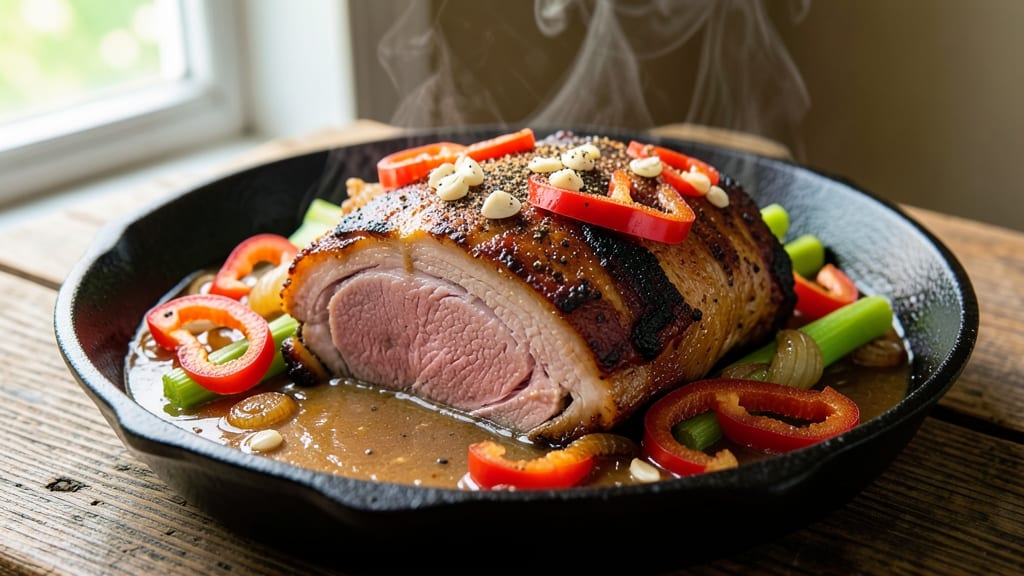
This Mississippi pork pot roast recipe delivers the soul-soothing flavors of the South in one comforting, slow-simmered dish. 🔥 The secret lies in a dry rub of paprika, garlic powder, and cayenne—balanced with a rich blend of tomatoes, onions, and celery—that transforms tough pork shoulder into melt-in-your-mouth tenderness.
I’ve perfected this version over years of Mississippi kitchens, where low-and-slow cooking at 330°F creates that signature celery crown crunch on top. What sets this apart is the cast-iron Dutch oven method, which locks in moisture while building deep, smoky flavors from the spices.
The slow simmer breaks down the meat effortlessly, while the celery crown—crispy on the outside, tender within—adds a textural contrast that’s pure Southern magic. This isn’t just a pot roast; it’s a centerpiece for family gatherings, served alongside cornbread and collard greens for the full Mississippi experience.
By the time you pull this roast from the oven, the aroma will fill your home with warmth, and every bite will be juicy, spiced, and impossibly tender. The sauce clings to the meat, rich with the natural flavors of the pork and the slow-cooked vegetables.
It’s the kind of dish that turns a simple weeknight into a celebration. Ready in about 6 hours (mostly hands-off time), this recipe is designed for foolproof results—no fancy techniques, just time and patience. Let’s get cooking!
Ingredients for mississippi pork pot roast
Six hours of slow-cooked magic starts with these soulful Southern ingredients.
| Ingredient | Amount | Notes |
|---|---|---|
| Pork Shoulder (Bone-In) 🥩 | 4 lb | Well-marbled for juiciness |
| Yellow Onion 🧅 | 1 whole | Chopped into 1-inch pieces |
| Celery Stalk 🥬 | 4 whole | Cut into 1-inch pieces |
| Carrot 🥕 | 3 whole | Cut into 1-inch chunks |
| Garlic Cloves 🧄 | 6 cloves | Smashed for deep flavor |
| Smoked Paprika 🌶️ | 2 tbsp | For signature smokiness |
| Garlic Powder 🧄 | 1 tbsp | Enhances the dry rub |
| Ground Cayenne Pepper 🔥 | 1 tsp | Adjust for heat preference |
| Kosher Salt 🧂 | 1 ½ tsp | Diamond Crystal preferred |
| Ground Black Pepper 🌶️ | 1 tsp | Freshly cracked for bite |
| Tomato Paste 🍅 | ½ cup | San Marzano preferred |
| Dry Red Wine 🍷 | ½ cup | Cabernet Sauvignon works best |
| Beef Broth 🥫 | 2 cups | Low-sodium preferred |
| Olive Oil 🫒 | 2 tbsp | For searing the pork |
| Fresh Thyme 🌿 | ¼ cup | Leaves only, chopped |
The pork shoulder is non-negotiable here—bone-in, well-marbled cuts from Costco or local butchers deliver the best results. Look for pieces with visible fat marbling; that’s what keeps the meat juicy. If you’re buying pre-cut, Trader Joe’s often carries great quality at a reasonable price. For the dry rub, smoked paprika is key—it’s what gives this dish that authentic Mississippi smokiness. I always grab mine from Penzeys or the bulk spice section at Whole Foods. The celery crown is the star of the show, so use fresh, crisp stalks—none of that wilted stuff from the back of the fridge.
No smoked paprika? Substitute with a mix of regular paprika and a pinch of liquid smoke. Running low on red wine? Beef broth with a splash of balsamic vinegar works just as well. Fresh thyme is ideal, but dried thyme at half the amount gets you close. The tomato paste can be the squeeze-tube kind from Trader Joe’s—no need for fancy jars. For the celery crown, if you can’t find enough fresh celery, substitute with extra carrots or parsnips. The key is to keep those veggies crisp on the outside while staying tender inside, so don’t skip the final broil—it’s what creates that signature crunch.
This roast tastes even better the next day, so make a double batch if you’re feeding a crowd. Store leftovers in the fridge for up to 5 days or freeze for 3 months. I like to portion it into individual containers so it’s ready for quick lunches. The celery crown keeps its crunch for about 2 days in the fridge, so save it for serving. For reheating, slow cook on low for 2-3 hours—it’ll be just as tender as the first time.
Why You'll Love This Recipe
- One-Pot Magic: I swear by this—just toss the pork shoulder, onions, celery, carrots, and garlic into a Dutch oven with a splash of broth, cover it, and let the slow cooker do the work. No chopping boards full of mess, no multiple pans, just hands-off perfection.
- Deep Southern Soul: That bone-in pork shoulder? It melts in your mouth while staying tender enough to pull apart with a fork. The garlic and onions caramelize into a rich, savory sauce that makes every bite taste like a hug from Mississippi—no fancy techniques, just pure, honest flavor.
- Leftovers for Days: Between us, this recipe makes way more than I can eat in one sitting. The pork stays juicy and delicious for at least three days, and I love reheating slices for sandwiches or tossing chunks into fried rice. (Yes, even on a Tuesday night.)
- Budget-Friendly Feast: A bone-in pork shoulder costs less than half the price of pre-cut steaks, and the veggies in this recipe are the kind you can grab on sale. Honestly, it’s one of those dishes where you get restaurant-quality comfort without breaking the bank—or your schedule.
Step-by-step instructions for Mississippi pork pot roast
Here's how to transform a simple pork shoulder into fall-apart tender roast with that signature Mississippi crunch.
🔥 Step 1: Sear the Pork Shoulder for Deep Flavor
Pat the 4 lb pork shoulder (bone-in) completely dry with paper towels—this is non-negotiable for crispy skin. Heat 2 tbsp olive oil in a heavy Dutch oven over medium-high heat until shimmering. Place the pork in the pot, fat-side down, and let it sear undisturbed for 8-10 minutes until deeply golden brown.
Flip the pork and sear the other side for another 6-8 minutes. The goal is to develop a rich, caramelized crust that will lock in juices during the long cook. If the oil starts smoking before the pork browns, reduce the heat slightly—patience here prevents bitter flavors. Once well-browned on all sides, remove the pork and set it aside on a plate.
👨🍳 Step 2: Build the Celery Crown Crunch Base
In the same Dutch oven, reduce the heat to medium and add the chopped vegetables: 1 whole yellow onion, 4 whole celery stalks, and 3 whole carrots. Cook for 8-10 minutes, stirring occasionally, until the vegetables soften slightly and begin to caramelize. This step develops their natural sweetness and forms the flavor foundation.
Add the 6 smashed garlic cloves and cook for 30 seconds until fragrant—don't let them burn, or they'll turn bitter. Stir in the 0.5 cup tomato paste, 2 tbsp smoked paprika, 1 tbsp garlic powder, 1 tsp ground cayenne pepper, 1.5 tsp kosher salt, and 1 tsp ground black pepper. Cook for 1-2 minutes until the spices are toasted and aromatic. Pour in the 0.5 cup dry red wine and scrape up any browned bits from the bottom of the pot—this releases all the rich, meaty flavors.
🍳 Step 3: Simmer the Roast Low and Slow
Return the pork shoulder to the Dutch oven, fat-side up. Add 2 cups beef broth and the 0.25 cup chopped fresh thyme. Bring the liquid to a gentle simmer, then reduce the heat to low (about 300°F). Cover the pot and let it cook for 3-3.5 hours, checking occasionally to ensure there's always some liquid in the pot—add a splash of water or broth if needed.
Here's the thing—this long, slow cook time is what transforms tough pork shoulder into melt-in-your-mouth perfection. The meat should be fork-tender when done, with an internal temperature of 195-205°F. If the liquid reduces too much before the pork is tender, add another ½ cup beef broth or water. The key is maintaining moisture without diluting the flavors.
⏰ Step 4: Rest and Develop the Celery Crown Crunch
Once the pork reaches the perfect tenderness, remove it from the pot and let it rest on a cutting board for 15-20 minutes. Tent loosely with foil to keep it warm. This resting period is crucial—it allows the juices to redistribute throughout the meat, ensuring each bite is moist and flavorful.
While the pork rests, skim any excess fat from the surface of the cooking liquid. If you're feeling fancy, you can thicken the sauce by simmering it uncovered for 5-10 minutes until it reduces slightly. The celery, carrots, and onions should be tender and slightly caramelized, creating that signature "celery crown crunch" that makes this dish so special. Serve the pork sliced or pulled, surrounded by the rich, flavorful vegetables and sauce.
Pro Tips For Making Mississippi Pork Pot Roast
- SEAR THE PORK HARD: Mississippi pot roast starts with a deep, dark crust—don’t skimp on the sear. Work in batches if needed, but get that pork shoulder browning deeply on all sides before anything else hits the pot. I used to rush this, and the sauce never tasted as rich.
- CHOP VEGETABLES UNIFORM: Onions, celery, and carrots should be cut into matching ½-inch chunks—no random dice or sticks. This ensures even cooking and a cohesive flavor base. (Yes, even if it looks like you’re making a sad, uniform stew.)
- DON’T SKIP THE FAT CAP: Leave the thick layer of fat on the pork shoulder—it renders down into the pot, keeping the meat moist and adding flavor. Trim only what’s absolutely necessary, or you’ll end up with dry, tough pork.
- SIMMER LOW AND LONG: After browning, reduce heat to low and cover the pot—just until the liquid bubbles gently. Too much heat = tough meat. I learned this after a rushed batch turned out chewy. (Patience here makes all the difference.)
Dietary considerations for this mississippi pork pot roast
Gluten-Free Adaptations
This Mississippi pork pot roast is naturally gluten-free, but always double-check your ingredients. The smoked paprika, garlic powder, and ground cayenne from brands like Penzeys are typically gluten-free, but some spice blends contain anti-caking agents with gluten.
Use certified gluten-free tomato paste like San Marzano and ensure your beef broth is labeled gluten-free. The dry red wine should also be gluten-free, as most wines are naturally free of gluten.
For extra safety, I recommend using a gluten-free tamari or coconut aminos instead of soy sauce if you’re adding any sauce variations. The celery crown and vegetables are inherently gluten-free, so no adjustments are needed there.
Always verify labels on spices and broths to ensure complete safety for gluten-sensitive diners. 🌱
Low-Carb Modifications
To make this dish lower in carbs, focus on the vegetable components. Replace the yellow onion and carrots with mushrooms (like cremini or shiitake) and cauliflower for a heartier, lower-carb base. The celery remains a great low-carb option, and you can even add bell peppers for extra volume.
The tomato paste and red wine contribute minimal carbs, so the primary adjustments are in the vegetable mix.
For a keto-friendly version, reduce the tomato paste to 2 tbsp and skip the carrots entirely. The flavor remains rich and satisfying, with the pork and celery providing the bulk of the dish.
Serve with a side of cauliflower mash or zucchini noodles to keep it fully low-carb. Always monitor portion sizes of the vegetables to stay within your carb goals.
Dairy-Free Considerations
This recipe is naturally dairy-free, but if you’re serving it with sides like mashed potatoes or cornbread, opt for dairy-free alternatives. Use olive oil or dairy-free butter in mashed potatoes, and ensure your cornbread recipe is made with almond milk or coconut milk instead of butter or sour cream.
The pork roast itself doesn’t contain any dairy, so no modifications are needed for the main dish.
For extra richness in the sauce, you can add a splash of coconut milk to the cooking liquid during the final 10 minutes of simmering. This adds a creamy texture without dairy.
Always check labels on spices and broths to ensure they’re dairy-free, as some brands may use dairy-based anti-caking agents.
Heat Adjustments
If you’re sensitive to spice, reduce the ground cayenne pepper to ½ tsp or omit it entirely. The smoked paprika and garlic powder still provide depth without heat.
For a milder version, you can also add a pinch of sugar to balance the spices, but this isn’t traditional for Mississippi-style roasts.
For those who love heat, increase the cayenne to 1.5 tsp and add ½ tsp crushed red pepper flakes to the dry rub. A splash of hot sauce (like Crystal or Tabasco) in the final sauce can also elevate the spice level.
Always taste as you go—Mississippi-style roasts are meant to be bold but balanced!
Nutrition facts
Frequently asked questions
Can I use a slow cooker instead of a Dutch oven?
Transfer the seared pork and all ingredients to a 6-quart slow cooker and cook on low for 8 hours or high for 5-6 hours. The celery crown won't get as crispy, but the meat will still be tender and flavorful. Just add ½ cup extra broth to prevent drying out.
What makes the celery crown crunch special?
The crunch comes from the celery, carrots, and onions cooking just until tender-crisp (30-40 minutes uncovered at the end). The key is to broil for 2-3 minutes after removing the pork—this caramelizes the edges while keeping the centers crisp. Think of it like a Southern vegetable topping!
How do I know when the pork is done?
Use a meat thermometer—pork shoulder is perfect at 195-205°F. The meat should easily pull apart with two forks. If it's not tender enough after 3.5 hours, add ½ cup broth and cook another 30 minutes. Never rush this step—the low-and-slow method is what makes it melt-in-your-mouth tender.
Can I make this ahead of time?
This roast tastes even better the next day! Cook it completely, then refrigerate in the Dutch oven for up to 5 days. Reheat covered on low heat for 2-3 hours or until warmed through. The flavors deepen overnight, making leftovers a treat. Just save the celery crown for serving fresh.
What's the best way to serve this?
Pair it with classic Southern sides: cornbread, collard greens, or buttery mashed potatoes. For a complete meal, add a crisp green salad with a tangy vinaigrette to balance the rich flavors. The sauce makes an excellent dipping sauce for the cornbread too!