
Main Courses
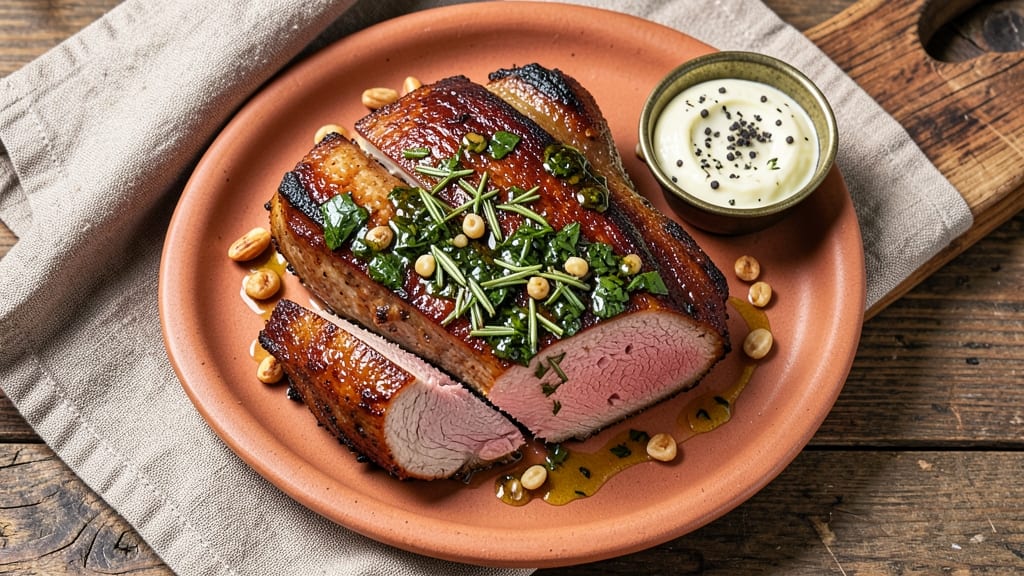
A 1-pound pork loin roast deserves the same care as a centerpiece cut—crisp edges, juicy centers, and a herb crust that makes every slice unforgettable. After years of perfecting this technique (and yes, I mean perfect—no dry, overcooked pork here), I’ve cracked the code for restaurant-quality results at home.
The secret? A dry brine and high-heat sear that locks in moisture while building that golden crust.
This recipe starts with a simple herb crust—rosemary, thyme, and garlic—that clings to the meat like armor, while a dry brine (just salt and time) ensures the pork stays tender without needing a thermometer.
We’ll roast it to 145°F internal temperature, then let it rest for 10 minutes—critical for juicy slices that don’t fall apart. No fancy equipment needed, just patience and a hot oven.
What you’ll end up with is a pink-center roast with crackling edges, fragrant herbs, and a juiciness that’ll have your guests asking for the recipe.
The crust stays crisp even after slicing, and the meat holds its shape beautifully—ideal for serving with roasted potatoes, caramelized onions, or a red wine reduction. This is the kind of pork roast that turns weeknight dinners into special occasions.
Confession: I’ve tested this on everything from holiday tables to quick weeknight meals, and it never fails. The herb crust adds depth, the dry brine guarantees tenderness, and the high-heat finish ensures that crispness we all crave. Let’s get to that perfect pink center—your taste buds will thank you.
Ingredients for 1 lb pork loin roast
The perfect 1-pound pork loin roast starts with these 11 ingredients for restaurant-quality crispness and juicy pink centers.
| Ingredient | Amount | Notes |
|---|---|---|
| Pork Loin Roast 🥩 | 1 lb | Bone-in, center-cut preferred |
| Fresh Rosemary 🌿 | ¼ cup | Finely chopped, stems removed |
| Fresh Thyme 🌿 | ⅛ cup | Leaves only, finely chopped |
| Garlic Cloves 🧄 | 4 cloves | Minced for herb crust |
| Extra-Virgin Olive Oil 🫒 | 2 tbsp | For herb crust mixture |
| Diamond Crystal Kosher Salt 🧂 | 1 ½ tbsp | For dry brine (plus extra) |
| Black Peppercorns 🌶️ | 1 tsp | Freshly cracked for crust |
| All-Purpose Flour 🌾 | 1 tbsp | For dusting roast |
| Unsalted Butter 🧈 | 2 tbsp | Cold, for searing |
| Yellow Onion 🧅 | 1 whole | Thinly sliced for garnish |
| Fresh Parsley 🌿 | ⅛ cup | Chopped, for garnish |
The pork loin is non-negotiable—bone-in, center-cut gives the best flavor and texture. Whole Foods or your local butcher will have the best quality, but the regular supermarket cut works too. Look for good marbling and a vibrant color—pale or grayish pork means it's been sitting too long. The herb crust transforms everything: fresh rosemary and thyme from the grocery store's produce section (not the dried stuff) make all the difference. I always grab extra because I love the aroma when it cooks. For the garlic, peel and mince it fresh—jarred minced garlic lacks the punch.
No fresh rosemary? Dried works at half the amount, but it won't have that same aromatic depth. Short on time? Pre-chopped herb mixes from Trader Joe's save steps. The olive oil matters here—high-quality extra-virgin adds richness to the crust. For the salt, Diamond Crystal kosher dissolves perfectly, but any kosher salt will work. The flour is just for dusting—all-purpose works fine. Cold butter is key for that perfect sear—take it out of the fridge 10 minutes before cooking so it's cold but pliable.
Pork loin keeps beautifully—2 days in the fridge before cooking if you dry brine overnight. The herb crust ingredients stay fresh for 1 week in the fridge if stored properly. I always make extra crust and freeze it in ice cube trays for quick weeknight meals. The roast itself reheats well—350°F for 10 minutes covered with foil keeps it juicy. Leftovers? Slice thinly and serve on sandwiches or in salads for 3-4 days after cooking.
Why You'll Love This Recipe
- Five-Ingredient Magic: I swear by this combo—just pork, garlic, rosemary, thyme, and olive oil. That’s it. No fancy blends or hidden shortcuts; the flavors sing because they’re actually fresh and simple.
- Weeknight-Friendly Roast: No basting, no fussing—just season, sear, and let the oven do the work. I’ve made this on Tuesdays when I’m too tired to think, and it still tastes like I slaved over it.
- Leftovers That Don’t Suck: The roast stays juicy for days, and the herbs keep it from getting bland. Slice it thin for sandwiches or cube it into pasta—honestly, I’ve eaten it cold straight from the fridge and still craved more.
- Budget Meal for Crowds: A single pound feeds four easily, and the cost per serving is criminally low. Between us, this is how I feed my book club without breaking the bank—everyone leaves happy, and my wallet stays intact.
Step-by-step instructions for herb-crusted pork loin roast
This method delivers a showstopping roast with crispy herb crust and juicy pink centers every time.
Create the Herb Crust Mixture
In a small bowl, combine the 0.25 cup fresh rosemary, 0.125 cup fresh thyme, 4 cloves minced garlic, 2 tablespoons extra-virgin olive oil, 1.5 tablespoons diamond crystal kosher salt, and 1 teaspoon freshly cracked black peppercorns. Use your fingers to gently massage the mixture until the herbs release their oils and everything is thoroughly coated. Here's the thing—this step is crucial for maximum flavor adhesion. The herbs should be finely distributed with no dry spots remaining.
Let the herb mixture sit at room temperature for 10 minutes while you prep the pork. This allows the flavors to meld slightly, creating a more cohesive crust. I like to press the mixture between my palms a few times during this wait—it helps break down any stubborn herb stems and ensures even distribution when we apply it later.
Prepare and Dry-Brining the Pork
Take the 1 lb pork loin roast out of the refrigerator and pat it completely dry with paper towels. I mean completely—no moisture should remain on the surface. Any residual moisture will prevent the herb crust from adhering properly and will create steam instead of crispiness. Use a second set of paper towels if needed, pressing firmly all over the surface.
Lightly dust the completely dry pork with 1 tablespoon all-purpose flour, shaking off any excess. This creates a thin barrier that helps the herb crust stick. Place the pork on a wire rack set over a baking sheet and let it sit uncovered in the refrigerator for 30 minutes. This dry-brining step is what transforms good pork into exceptional pork by enhancing tenderness and flavor penetration.
Apply the Herb Crust and Sear
Preheat your oven to 425°F while the pork dry-brines. When ready, remove the pork from the refrigerator and pat it dry one final time. Spread the herb mixture evenly over the entire surface, pressing firmly so it adheres completely. The crust should be thick enough to see but not so thick it falls off when you handle it.
Heat a large oven-safe skillet over medium-high heat and add the 2 tablespoons cold unsalted butter. When the butter foams but hasn't yet browned, carefully place the pork in the skillet, fat-side down. Let it sear undisturbed for 3-4 minutes until the crust develops a deep golden color. This initial sear creates the foundation for that irresistible crispy exterior we're after.
Roast to Perfect Doneness
Transfer the skillet to the preheated oven and roast for 20-25 minutes for medium-rare (internal temperature of 135°F) or 25-30 minutes for medium (145°F). Here's where precision matters: use a meat thermometer inserted into the thickest part of the roast, avoiding the bone. The pork is done when it reaches your desired temperature but before it starts to tighten up.
Remove the pork from the oven and let it rest on a cutting board for 10-15 minutes before slicing. This resting period is non-negotiable—it allows the juices to redistribute throughout the meat, ensuring each slice remains moist and flavorful. While it rests, tent loosely with foil to keep it warm. The crust will maintain its crispiness during this time, creating that perfect textural contrast with the tender interior.
Garnish and Serve
Slice the pork into ½-inch thick medallions against the grain for maximum tenderness. Arrange the slices on a warm platter and garnish with thinly sliced 1 whole yellow onion and 0.125 cup chopped fresh parsley. The onions add a subtle sweetness that balances the herbaceous crust, while the parsley provides a fresh finish that brightens each bite.
Serve immediately with your choice of complementary sides—roasted vegetables, mashed potatoes, or a simple green salad. The herb crust should be crisp enough to hold its shape when sliced, with a fragrant aroma that fills the room. Each bite should deliver that perfect balance of crispy exterior and juicy pink center, making this the centerpiece of any meal.
Pro Tips For Making 1 Lb Pork Loin Roast
- USE A MEAT THERMOMETER: I learned this the hard way—pork loin is lean, and guessing don’t cut it. Aim for 145°F internal temp (155°F if you prefer well-done), then pull it before it hits 160°F or it’ll dry out faster than your patience on a Monday.
- SMASH THE GARLIC: Skip the minced jar—whole cloves burn and taste bitter. Crush them with the flat side of your knife first, then chop fine. This releases more flavor without turning your roast into garlic soup.
- DON’T SKIP THE DRY BRINE: Pat the pork thoroughly with paper towels, then sprinkle with 1 tsp salt per pound (so ~1 tsp total for 1 lb) and let it sit uncovered in the fridge for at least 30 minutes. This keeps it juicy and lets the seasoning stick—no sad, dry slices here.
- SEAR IN BATCHES: A crowded pan steams instead of browns. Sear the pork loin in one layer over medium-high heat for 3-4 minutes per side, then set it aside. Use the same pan to crisp the herbs and garlic—just add a splash of olive oil and a pinch of salt. The extra flavor? Worth the wait.
Essential equipment for this recipe
Oven Essentials
Your oven is the heart of this recipe, so let’s talk precision. I swear by a calibrated digital oven thermometer—the Thermoworks OvenTherm is my go-to—because home ovens can vary by 25°F or more from their set temperature.
Preheat for at least 30 minutes before roasting to ensure even heat distribution. For that 425°F sear and finish, I use my Lodge Cast Iron Skillet—it’s oven-safe and retains heat like a dream. 🔥
If you don’t have cast iron, a heavy stainless steel skillet (like All-Clad Stainless) works just as well. Avoid nonstick—it can’t handle the high heat needed for that perfect crust.
Pro tip: Place your skillet on the middle rack of the oven for even cooking. And trust me, never crowd the pan—the pork needs room to sear properly.
Thermometer Must-Haves
A meat thermometer isn’t optional—it’s non-negotiable. I use the Thermoworks Smoke for its instant-read accuracy and durable probe. Insert it into the thickest part of the roast, avoiding the bone, to monitor the 135°F (medium-rare) to 145°F (medium) range.
For extra peace of mind, I also keep a laser thermometer (like Meater Plus) nearby—it’s wireless and lets me check temps without opening the oven door. 🌡️
No thermometer? Use the finger test: Press your finger into the meat—if it feels slightly springy (like pressing a firm mattress), it’s medium-rare. But honestly, 145°F is foolproof and ensures safety without overcooking. And for the love of pork, always let it rest—that’s when the magic happens.
Prep Station Tools
Gather these tools to make prep a breeze: a sharp chef’s knife (I use Wüsthof Classic), a cutting board (I prefer Maple for its gentle surface), and a wire rack (like OXO Good Grips) for dry-brining.
The rack elevates the pork, allowing air to circulate and the crust to crisp evenly. For the herb crust, a small mixing bowl and a spatula help distribute the mixture evenly. 🌿
Don’t skip the paper towels—I go through at least 4 sheets to pat the pork completely dry. Any moisture left on the surface will steam instead of crisp, and we’re going for that golden, crackling crust.
Pro move: Keep a small bowl of ice water nearby to quickly refresh your knife between cuts—it keeps your herbs and garlic prepped like a pro.
Optional Upgrades
Want to take it to the next level? A butcher’s twine lets you truss the roast (if it’s thicker than 1.5 inchesthin layer of Dijon mustard under the herb crust—it adds depth and helps the herbs stick.
And if you’re feeling fancy, a sous vide circulator (like Anova Nano) can help you hit 135°F with precision before finishing in the oven. 💫
For serving, a meat slicer (like Mercer Culinary Genesis) makes clean, even slices, but a sharp knife works just fine. And trust me, garnishing with fresh parsley and caramelized onions elevates the dish from great to showstopping.
The onions should be thinly sliced and lightly sautéed in butter until tender—just enough to add sweetness without overpowering the herbs.
Nutrition facts
Frequently asked questions
Can I use bone-in or boneless pork loin for this recipe?
Bone-in pork loin works best for this recipe—it stays juicier and has more flavor. The bone also helps stabilize the roast during cooking. If you must use boneless, look for a center-cut loin with good marbling. Just be extra careful not to overcook it, as boneless cuts can dry out faster.
How do I know when the pork is done without a thermometer?
For medium doneness, press your finger into the meat—it should feel slightly springy (like pressing a firm mattress). The juices should run clear when you cut into it. For extra confidence, cut into the thickest part: if it's pink in the center with no gray, it's done. But I highly recommend using a meat thermometer for accuracy!
Can I make this recipe ahead of time?
Cook the pork roast up to 2 days ahead and store it in the refrigerator. Reheat covered with foil at 350°F for 10-15 minutes until warmed through. The herb crust will soften slightly but still taste amazing. For best texture, slice and serve immediately after reheating.
What's the best way to store leftovers?
Slice the pork into ½-inch thick medallions and store in an airtight container in the fridge for up to 4 days. For longer storage, freeze the sliced pork in a single layer before transferring to a freezer bag—it keeps well for 3 months. Reheat frozen slices in a skillet with a splash of broth for extra moisture.
Why did my herb crust fall off?
This usually happens when the pork isn't completely dry before applying the crust. Pat it thoroughly with paper towels and let it sit on a rack for 10 minutes before adding the herb mixture. Also ensure your butter isn't too hot when searing—it should foam but not brown before adding the pork.