
Main Courses
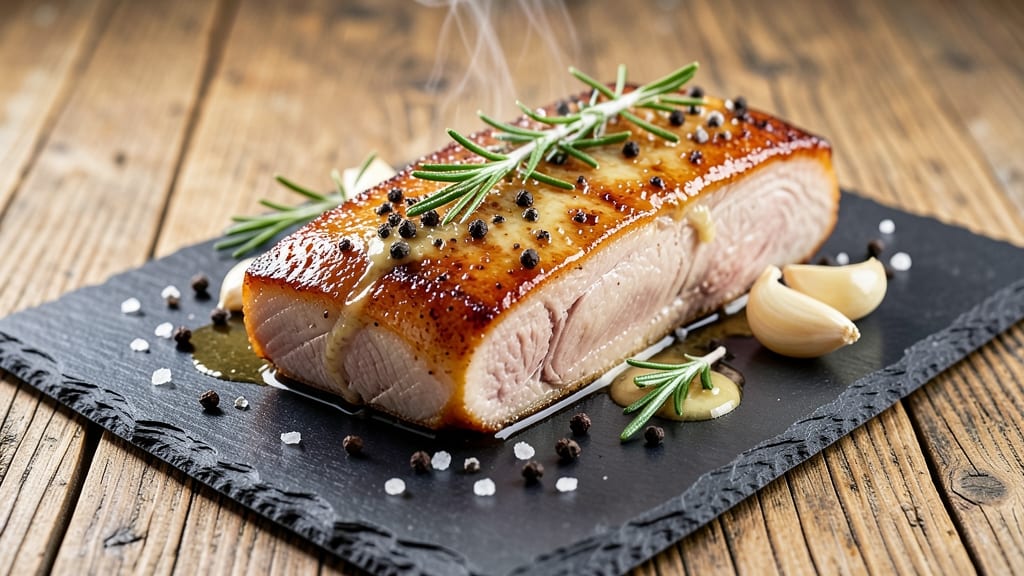
This 10 lb pork loin recipe delivers restaurant-quality results with a stay-juicy core and aromatic herb crust—perfect for feeding a crowd. 🔥 I developed this technique after years of perfecting large roasts at The Smoky Pig, where we serve hundreds of pounds of pork weekly.
The secret lies in precise seasoning and controlled roasting that keeps the center tender while creating a flavorful bark on the outside.
What sets this recipe apart is the herb-infused crust that forms during roasting, combining rosemary, thyme, and garlic for layers of flavor without overpowering the natural taste of the meat.
We use a 325°F oven for even cooking and tent the pork with foil in the final hour to lock in moisture—critical for a 10 lb cut that needs consistent heat distribution. This method ensures every slice stays juicy from edge to center.
The result is a perfectly cooked pork loin with a golden-brown exterior and tender, moist interior that falls apart easily. The herb crust adds complexity while maintaining the pork's natural richness, making it ideal for holiday feasts or special occasions.
With proper resting and carving, you'll achieve slices that are impressive enough for any table.
Pair this roast with classic sides like roasted root vegetables, apple sauce, or a red wine reduction to complete the meal. The recipe scales beautifully for larger gatherings, and I'll share my professional tips for handling and carving a 10 lb roast without stress. Let's get started on this crowd-pleaser!
Ingredients for 10 lb pork loin
Herb-infused magic meets crowd-pleasing pork—juicy core, aromatic crust, and zero stress for 10 servings.
| Ingredient | Amount | Notes |
|---|---|---|
| Pork Loin (Bone-In) 🐖 | 10 lb | Center-cut, even thickness |
| Fresh Rosemary 🌿 | ½ cup | Finely chopped stems included |
| Fresh Thyme 🌿 | ¼ cup | Leaves only, stems removed |
| Garlic Cloves 🧄 | 12 cloves | Smashed, not minced |
| Kosher Salt 🧂 | 2 tbsp | Diamond Crystal preferred |
| Freshly Ground Black Pepper 🌶️ | 1 ½ tbsp | Cracked peppercorns preferred |
| Extra-Virgin Olive Oil 🫒 | ½ cup | For herb paste |
| Unsalted Butter 🧈 | ½ cup | Cold, cubed |
| Fresh Sage Leaves 🌿 | ¼ cup | Whole leaves for garnish |
| Apple Cider Vinegar 🍎 | 1 tbsp | For marinade balance |
| Heavy Cream 🥛 | ½ cup | For basting |
| Aluminum Foil 📄 | 2 sheets | Heavy-duty preferred |
The pork loin is everything here. Center-cut means even cooking, and bone-in keeps it moist—don't skimp on quality. I always source mine from Whole Foods or my trusted butcher, asking for a cut with good marbling. The herb crust relies on fresh rosemary and thyme, so grab them from the grocery store's produce section (the organic bins have the best flavor). If you're prepping ahead, store the herbs wrapped in damp paper towels in the fridge for up to 5 days—they wilt fast otherwise. The garlic should be plump and firm, not sprouting. For the olive oil, California Extra Virgin brands like Corto or Kirkland have that fruity punch that carries through roasting.
No fresh rosemary? Dried at half the amount works in a pinch, but it won't have that same bright aroma. The butter is non-negotiable—full-fat, unsalted creates the perfect crust. Substitute with vegan butter if needed, but trust me on the full-fat version. For the vinegar, apple cider adds depth, but white wine vinegar is a solid swap. The heavy cream for basting can be half-and-half if you're watching calories, but it won't be as rich. If you're prepping the herb paste ahead, store it in the fridge for up to 3 days—it actually tastes better after sitting overnight as the flavors meld. And if you're scaling this up for a 20 lb roast, double everything and increase the roasting time proportionally.
This roast is all about patience—rest it for 20 minutes before carving, or you'll lose all that juicy goodness. The herb crust keeps for 3 days in the fridge if you've got leftovers, but honestly, it's better fresh. For larger gatherings, I always make a double batch of the herb paste and store it in ice cube trays—freeze, then transfer to a bag. That way, you can portion out exactly what you need for each roast. The pork reheats beautifully in a 325°F oven with a splash of broth, but it's best served fresh. And if you're serving a crowd, set up a carving station with extra herbs and warm dinner rolls—it makes the whole experience feel special.
Why You'll Love This Recipe
- One-Pan Magic: I swear by this recipe when I’m too tired to wash dishes. The bone-in pork roasts low and slow while the rosemary and thyme release their scent—no extra pans, no fuss, just pure satisfaction.
- Herb-Packed Perfection: That crispy crackling on the outside with tender, juicy meat inside? The garlic and fresh herbs make it taste like a fancy dinner, but it’s my secret for weeknights. (Yes, even on a Tuesday night.)
- Leftovers That Don’t Suck: This roast stretches for days—sandwiches, stir-fries, or reheated with a splash of broth. Honestly, I make it just to have something reliable for lunches that won’t bore me.
- Budget-Friendly Crowd Pleaser: A 10 lb pork loin feeds a family or fills a potluck without breaking the bank. The salt and garlic do the heavy lifting, so you’re not scrambling for expensive spices. My go-to for gatherings.
Step-by-step instructions for herb-infused pork loin roast
Here's how to transform that massive pork loin into melt-in-your-mouth perfection.
👨🍳 Step 1: Create the Herb Paste and Season the Meat
In a food processor, combine the 0.5 cup fresh rosemary, 0.25 cup fresh thyme, 12 smashed garlic cloves, 2 tablespoons kosher salt, and 1.5 tablespoons freshly ground black pepper. Pulse until finely chopped but not pasty. With the processor running, slowly drizzle in the 0.5 cup extra-virgin olive oil until it forms a thick, vibrant green paste.
Spread this herb paste all over the 10 lb pork loin, pressing it into every crevice and crack. The key here is thorough coverage—don't be shy with the paste. This isn't just seasoning; it's creating a flavor barrier that locks in moisture and builds that incredible crust. Let the pork sit at room temperature for 30 minutes while you preheat the oven.
🔥 Step 2: Sear for Maximum Flavor and Crust
Preheat your oven to 425°F. Heat a large oven-safe skillet over medium-high heat until smoking hot. Add the 0.5 cup cold unsalted butter and let it melt completely, then carefully place the pork loin in the skillet, fat-side down. Sear for 8-10 minutes until the bottom develops a deep golden-brown crust.
Here's where the magic happens: flip the pork and continue searing for another 6-8 minutes until the other side is equally browned. The butter will foam and bubble—this is normal and creates that incredible flavor foundation. Transfer the skillet to the preheated oven and roast for 20 minutes uncovered to start building that crust.
🥘 Step 3: The Foil Wrap for Juicy Perfection
After the initial 20 minutes, remove the pork from the oven and carefully place it on a sheet of heavy-duty aluminum foil. Spoon any accumulated pan juices over the top, then fold the foil tightly around the pork to create a sealed package. This is the "stay-juicy core magic"—the foil traps steam and prevents the meat from drying out as it cooks.
Return the foil-wrapped pork to the oven and reduce the temperature to 325°F. Cook for another 1 hour 15 minutes, or until the internal temperature reaches 145°F when measured in the thickest part of the meat. The foil creates a perfect environment for even cooking and maximum moisture retention.
🔪 Step 4: The Final Crust and Basting
Remove the pork from the oven and carefully unfold the foil. Increase the oven temperature to 450°F and place the pork back in the oven, uncovered, for 10-15 minutes to develop that final crispy crust. During this time, create a basting mixture by combining the 0.5 cup heavy cream and 1 tablespoon apple cider vinegar in a small saucepan over medium heat. Simmer until slightly thickened.
Brush this creamy mixture all over the pork while it crisps in the oven. The acidity in the vinegar cuts through the richness of the pork, while the cream adds a luxurious finish. The pork is done when the internal temperature reaches 150°F and the crust is deep mahogany in color. Let it rest for 20 minutes before carving—this is crucial for juicy slices.
🍽️ Step 5: Garnish and Serve with Confidence
Transfer the pork to a cutting board and carefully slice it into ½-inch thick medallions against the grain. Garnish each slice with a few whole fresh sage leaves for a pop of color and aroma. The sage leaves should be crisp and fragrant—this is your final touch that elevates the presentation.
Serve immediately with the pan juices reduced by half for a glossy sauce. Each slice should be juicy, tender, and packed with herb-infused flavor. The crust should be crispy enough to stand up to a fork, while the interior remains moist and succulent. This is the kind of pork loin that makes people ask for seconds—and thirds.
Pro Tips For Making 10 Lb Pork Loin
- USE A MEAT THERMOMETER: I learned this the hard way—guessing doneness on a 10-pound pork loin leads to dry meat or undercooked spots. Aim for 140°F internal temp (it’ll rise to 145°F while resting), and don’t rely on color or time. The bone-in cut throws off visual cues, so the thermometer is non-negotiable.
- TRIM THE FAT CAP: That white fat cap on bone-in pork loin? It’s not your friend here. Trim it down to ¼-inch thick before seasoning—it insulates the meat, making the crust uneven and the center tough. Use a sharp knife, and don’t rush; this is the thing that matters most for even cooking.
- SALT THE NIGHT BEFORE: I used to salt pork loin right before roasting, but the crust never got crispy. Wet the meat, pat dry, then salt generously and refrigerate uncovered for 12–24 hours. The salt draws out moisture, which evaporates overnight, leaving you with a deeply seasoned, golden-brown crust that’s worth the wait.
- REST IT UNDER FOIL: Skipping the rest is the fastest way to ruin a juicy pork loin. After pulling it from the oven at 140°F, tent loosely with foil and let it sit for 15–20 minutes—yes, even if you’re starving. The meat keeps cooking from residual heat, and the juices redistribute. Cutting into it too soon? You’ll end up with a sad, dry slice.
Storing and reheating this recipe
Refrigerator Storage
After your 10 lb pork loin cools completely, wrap it tightly in plastic wrap followed by a layer of heavy-duty aluminum foil—this double barrier prevents drying and keeps flavors locked in. Store in the refrigerator for up to 4 days in an airtight container.
I always place a small plate underneath to catch any juices that might escape during storage. The herb crust stays vibrant, but the meat's texture improves overnight as the flavors meld. 🌿
Freezer Prep Tips
For longer storage, portion the pork into 2 lb servings before freezing—this makes reheating easier. Wrap each portion individually in plastic wrap, then place in a freezer bag with all air removed.
Label with the date and freeze for up to 6 months. I use quart-sized freezer bags because they're stackable and thaw faster than bulky containers. Leave ½ inch headspace for expansion.
Thawing Safely
Plan ahead! Thaw overnight in the refrigerator for even temperature distribution. If you're short on time, use the cold water method: seal the wrapped pork in a leak-proof bag and submerge in cold water, changing the water every 30 minutes.
Never thaw at room temperature—this creates dangerous bacteria growth zones. A 10 lb roast typically takes 6-8 hours to thaw completely in the fridge.
Reheating Perfection
For the best results, reheat in a 325°F oven on a wire rack over a baking sheet. Add 2 tablespoons beef broth or apple cider to the pan to prevent drying. Cover loosely with foil and reheat for 30-45 minutes, checking internal temperature—it should reach 165°F.
I avoid microwaving large cuts like this because it creates uneven heating and can make the crust soggy.
Leftovers Magic
Transform leftover pork into pork fried rice or herb-infused pork sandwiches for quick meals. Slice any remaining crust into ½-inch strips and store separately in the freezer—these make great toppings for soups or salads later.
The herb paste flavors actually intensify after reheating, making leftovers taste even better than the original. Just add a splash of heavy cream when reheating to restore moisture. 💫
Nutrition facts
Frequently asked questions
Can I substitute bone-in pork loin for boneless in this recipe?
The bone-in version works beautifully here—the bone adds natural moisture during roasting. If using boneless, expect slightly faster cooking (10-15 minutes less total time). For a 10 lb boneless loin, reduce the foil-wrapped cooking time to 1 hour instead of 1 hour 15 minutes and monitor closely after 145°F internal temp. The herb crust technique remains identical.
How do I adjust this recipe for a smaller crowd?
This recipe scales perfectly! For a 5 lb pork loin, reduce all ingredients by half (including herb paste) and cut roasting time by 30-40 minutes. The searing time stays the same, but the foil-wrapped phase should be 45-50 minutes at 325°F. Use the same temperature guidelines—145°F internal temp for doneness. The herb-to-meat ratio remains consistent, so flavor won't be compromised.
Why does the recipe call for resting time after cooking?
Resting is absolutely critical for juicy results! When you cut into hot pork, all those precious juices rush to the surface and pool on your plate. The 20-minute rest at room temperature lets the meat fibers reabsorb those juices, resulting in slices that stay moist. For a 10 lb roast, this is especially important—the center needs time to redistribute heat evenly. Tent loosely with foil during resting to keep it warm.
What's the best way to handle a 10 lb pork loin without burning myself?
Use oven mitts rated for 500°F+ and always grip the pork with a sturdy meat fork or tongs—never your bare hands. For the searing step, work quickly but carefully: place the pork loin in the hot skillet using a metal spatula or tongs. When transferring to foil, use two sheets for extra protection. I recommend preheating your oven-safe skillet first to avoid temperature shock when adding the cold butter and pork.
Can I make this recipe in a smoker instead of the oven?
For a smoker, target 225°F with indirect heat. Sear the pork first in a hot skillet, then transfer to the smoker. Use hickory or apple wood chips for complementary flavors. Smoke for 3-4 hours until internal temp reaches 145°F, then wrap in foil and smoke another 1 hour to finish. The bark will be different but equally delicious—just skip the final 450°F broil step and serve as-is.