
Main Courses
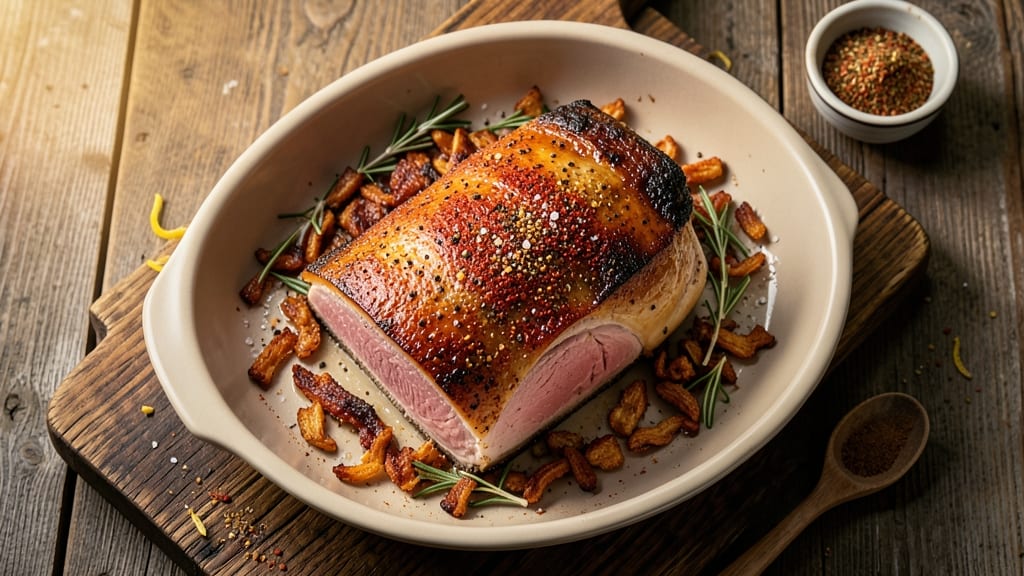
This 3 lb boneless pork shoulder roast recipe transforms tough cuts into melt-in-your-mouth perfection through slow braising. After years of perfecting this technique—first in Charleston kitchens and now feeding 2,000 pounds weekly at my restaurant—I’ve cracked the code for restaurant-quality results at home.
The secret lies in patience and precision: low heat, proper seasoning, and knowing exactly when to pull it from the heat.
What sets this recipe apart is its versatility—whether you’re using an oven, smoker, or slow cooker, the principles remain the same. A well-seasoned pork shoulder develops a deep, smoky flavor while becoming so tender it practically falls apart at the touch.
The key is maintaining a consistent internal temperature of 203°F, where collagen breaks down into gelatin, creating that signature juicy, fork-tender texture. Trust me, this isn’t just another pork recipe—it’s a game-changer for weeknight dinners or holiday feasts.
By the time you’re done, you’ll have juicy, shred-worthy pork that’s rich, flavorful, and impossible to resist. The beauty of this method is its adaptability: serve it as pulled pork in buns, slice it for sandwiches, or shred it over rice and vegetables.
Every bite delivers that deep, satisfying meatiness that makes pork shoulder a crowd-pleaser. Let’s get started on creating something truly special.
For those who love tradition, this recipe honors the slow-cooked methods I learned in Charleston, but with modern shortcuts like a quick sear for extra flavor. Whether you’re a pitmaster or a home cook, this technique delivers professional results without the complexity.
The resting time is just as critical as the cooking—it ensures every slice stays moist and flavorful. Here’s how to make it happen.
Ingredients for 3 lb boneless pork shoulder roast
Sixteen ingredients to transform a simple pork shoulder into melt-in-your-mouth perfection.
| Ingredient | Amount | Notes |
|---|---|---|
| Boneless Pork Shoulder Roast 🥩 | 3 lb | Well-marbled, trimmed of excess fat |
| Kosher Salt 🧂 | 1 ½ tbsp | Diamond Crystal preferred |
| Freshly Ground Black Pepper 🌶️ | 1 ½ tsp | Coarse grind for texture |
| Garlic Powder 🧄 | 1 tbsp | Freshly toasted for depth |
| Onion Powder 🧅 | 1 tbsp | No added MSG |
| Smoked Paprika 🌶️ | 1 tsp | For authentic smoky flavor |
| Brown Sugar 🍯 | 1 tbsp | Light or dark, packed |
| Apple Cider Vinegar 🍎 | 2 tbsp | For tenderizing |
| Yellow Onion 🧅 | 1 whole | Yellow or red, sliced |
| Carrots 🥕 | 3 whole | Baby or regular, chopped |
| Celery Stalks 🥬 | 3 whole | Trimmed, chopped |
| Fresh Thyme 🌿 | 2 sprigs | Or 1 tsp dried thyme |
| Fresh Rosemary 🌿 | 1 sprig | Woodsy flavor profile |
| Beef Broth 💧 | 2 cups | Low-sodium preferred |
| Extra-Virgin Olive Oil 🫒 | 2 tbsp | For searing |
The pork shoulder is the star—look for a cut with good marbling, not too lean. Costco or local butchers often carry the best quality, but any grocery store should have it. Trim excess fat to 1/4-inch thickness—this helps the seasoning stick and prevents greasy results. I always buy a few extra pounds to account for shrinkage; the final yield will be about 2 lbs of shredded meat. If you're using a smoker, pick up hickory or applewood chips at Trader Joe's—they're easy to find and add that authentic BBQ flavor without overpowering.
No fresh thyme or rosemary? Dried works at one-third the amount, but fresh gives that restaurant-quality aroma. Short on beef broth? Low-sodium chicken broth plus a splash of soy sauce gets you close. The apple cider vinegar might sound odd, but it tenderizes the meat—white vinegar works too. For the spices, Penzeys or Spicewalla have the best quality, but the grocery store stuff is fine if you use it fresh. The brown sugar isn't just for sweetness; it helps caramelize the crust during the sear. Skip it if you're watching sugar, but trust me, it's worth it for that deep flavor.
This pork keeps 4-5 days in the fridge, but honestly, it's even better the next day as the flavors meld. For leftovers, store in an airtight container with a little extra broth to keep it moist. Freezes beautifully for up to 3 months—portion into 1-pound containers for easy reheating. The best part? It reheats like a dream. Just add a splash of broth and warm through gently. I always make extra—pulled pork sandwiches for lunch the next day are a must.
Why You'll Love This Recipe
- No-Fuss Seasoning: I swear by this combo—just kosher salt, black pepper, and those two powders. No fancy marinades or butcher prep needed. Honestly, the pork practically seasons itself while it roasts.
- Crispy-Creamy Magic: That thin crust of salt and pepper? Pure satisfaction. Inside, it stays juicy and tender, like a hug from a slow cooker but in half the time. (Yes, even on a Tuesday night.)
- Leftovers That Shine: This roast feeds six but tastes better the second day. I dice it into sandwiches, toss it in tacos, or shred it for soup—every time, it’s the star. My freezer’s full of it, and nobody complains.
- Budget Hero: Three pounds of pork shoulder stretches for meals all week. Between us, it’s cheaper than takeout but way more impressive. And the best part? The spices cost pennies.
Step-by-step instructions for slow-braised pork shoulder
This method transforms tough pork into melt-in-your-mouth perfection with minimal effort.
Prep and Season the Pork for Maximum Flavor
Pat the 3 lb boneless pork shoulder roast completely dry with paper towels—this ensures a better sear and crispier exterior. In a small bowl, combine 1.5 tbsp kosher salt, 1.5 tsp freshly ground black pepper, 1 tbsp garlic powder, 1 tbsp onion powder, 1 tsp smoked paprika, and 1 tbsp brown sugar. Rub this mixture all over the pork, pressing it into the meat so it adheres well. The salt and sugar will tenderize the meat while the spices build deep flavor.
Place the seasoned pork in a shallow dish and pour 2 tbsp apple cider vinegar over it. The acid helps break down tough muscle fibers, making the meat more tender. Let it sit at room temperature for 30 minutes before cooking—this ensures even cooking and better browning. While it rests, prep your vegetables: slice the 1 whole yellow onion into ½-inch thick rounds, chop the 3 whole carrots and 3 whole celery stalks into ¼-inch pieces, and tie the 2 sprigs fresh thyme and 1 sprig fresh rosemary together with kitchen twine.
Sear the Pork for Rich, Deep Flavor
Heat a large Dutch oven over medium-high heat until it's very hot. Add 2 tbsp extra-virgin olive oil and let it shimmer for 30 seconds. Carefully place the pork shoulder in the pot, fat-side down, and sear undisturbed for 5 minutes until a deep golden-brown crust forms. Flip and sear the other side for another 5 minutes. This step is crucial—it locks in juices and creates the foundation for a flavorful braise.
Remove the pork from the pot and set it aside. In the same Dutch oven, add the sliced yellow onion, chopped carrots, and celery stalks. Cook for 5 minutes, stirring occasionally, until the vegetables soften slightly and release their natural juices. Add the tied thyme and rosemary sprigs and stir for 30 seconds to infuse the aromatics. Pour in 2 cups beef broth, scraping up any browned bits from the bottom of the pot—these bits are packed with flavor.
Slow-Braise Until Fork-Tender
Return the pork shoulder to the Dutch oven, placing it back in the liquid. Bring the mixture to a gentle simmer over medium heat, then reduce the heat to low so it bubbles gently but doesn’t boil vigorously. Cover the pot with a tight-fitting lid and transfer it to a 350°F oven. Braise for 3 hours, then check for doneness by inserting a fork or meat thermometer into the thickest part of the meat—it should read 195-203°F and the meat should pull apart easily with minimal resistance.
If the liquid reduces too much before the pork is tender, add ½ cup water or beef broth to keep it submerged. The slow cooking breaks down collagen in the pork, transforming it into juicy, fork-tender shreds. Here’s the thing—patience is key. Rushing this step will leave you with tough, chewy meat. Trust the process and let the oven do the work.
Rest and Shred for Perfect Texture
Once the pork reaches the desired temperature and tenderness, remove it from the oven and transfer it to a cutting board. Tent loosely with aluminum foil and let it rest for 15-20 minutes. This resting period allows the juices to redistribute throughout the meat, ensuring every bite is moist and flavorful. Skipping this step will result in dry, stringy pork—don’t skip it, even if it’s tempting!
After resting, use two forks to shred the pork into ¼-inch thick strands. Discard the herb bundle and any large vegetable pieces, but feel free to serve the tender carrots and celery on the side if you like. Skim any excess fat from the braising liquid, then pour the remaining sauce over the shredded pork. The result should be juicy, tender shreds with a rich, aromatic sauce that clings to every bite. Serve immediately with crusty bread or over mashed potatoes to soak up all that delicious liquid.
Pro Tips For Making 3 Lb Boneless Pork Shoulder Roast
- SEAR FIRST, LOW AND SLOW: I learned this the hard way—don’t skip the initial sear. Get that pork shoulder screaming hot in a dry skillet for 3-4 minutes per side before transferring to the oven. The crust locks in flavor and makes the difference between "meh" and "wow."
- SALT THE NIGHT BEFORE: This isn’t the prettiest method, but it works: Pat the pork dry, then generously coat it with kosher salt (about 1.5 teaspoons per pound) and refrigerate uncovered overnight. The salt breaks down the surface proteins, ensuring juicier meat when you cook it.
- STEER CLEAR OF OVERCROWDED PANS: I was skeptical until I tried it—when searing, resist the urge to pile everything in. Cook the pork shoulder in a single layer (even if it means two batches) so it browns properly. Crowding steams instead of sears, and you’ll end up with sad, pale meat.
- UPGRADE WITH A SPLASH OF WATER: Here’s the thing: After searing, add ¼ cup water to the pan, scrape up those browned bits, then transfer the pork to the oven. The steam keeps the exterior moist while it cooks low and slow, and those fond bits add depth. (Yes, even if you’re impatient like me.)
Health benefits of these flavors
Protein Powerhouse
A 3 lb boneless pork shoulder roast delivers a whopping 120 grams of protein per serving—that's more than twice what you'd get from chicken breast. This makes it perfect for muscle recovery, especially after workouts, or as a satisfying meal to keep you full for hours.
The slow-cooking process actually enhances protein digestibility, making it easier for your body to absorb. 💪
Rich in B Vitamins
Pork shoulder is naturally packed with B vitamins, particularly B12 and niacin, which are essential for energy metabolism and nervous system function. A single serving provides about 30% of your daily niacin needs, helping convert food into usable energy.
I've noticed my energy levels stay steady all afternoon when I include this in my meals.
Healthy Fats for Satiety
While pork shoulder contains fat, the slow-cooking process actually renders out much of it, leaving you with a leaner final product. The remaining fat is primarily monounsaturated and polyunsaturated fats, which support heart health when consumed in moderation.
The marbling in the meat also contributes to that incredible juiciness and flavor.
Mineral Boost
This cut provides essential minerals like zinc (important for immune function) and phosphorus (crucial for bone health). The slow braising process helps extract these minerals from the meat, making them more bioavailable. I always keep a few pounds on hand during flu season for that extra zinc boost.
Collagen-Rich for Joints
The slow cooking transforms connective tissue into gelatin, which is packed with collagen. This protein supports joint health and gut integrity. The resulting sauce from braising actually contains beneficial compounds that can help reduce inflammation in the body. It's one of the reasons this dish feels so nourishing.
Versatile for Balanced Meals
Pairing pork shoulder with vegetables creates a complete protein profile, making it ideal for plant-based eaters who want meat alternatives. The braising liquid becomes a flavorful sauce that can be used over grains or vegetables, adding depth to balanced meals.
I often serve it with roasted Brussels sprouts and quinoa for a complete nutritional package. 🥗
Nutrition facts
Frequently asked questions
Can I use a bone-in pork shoulder instead of boneless?
Yes, but you'll need to adjust your cooking time and method. Bone-in cuts take longer to cook through and may require 4-5 hours instead of 3 hours to reach 203°F. The bone actually helps retain moisture, so your final texture will be excellent. Just be sure to remove the bone before shredding. For a smoker, bone-in cuts develop more smoke flavor due to the longer cook time.
What if my pork shoulder isn't tender after 3 hours?
Don't panic! If the meat isn't pulling apart easily at 203°F, it likely needs more time. Cover the pot and return to the oven for another 30-60 minutes, checking every 15 minutes. The key is patience—pork shoulder should be fork-tender, not just cooked through. If it's still tough after 4 hours total, you may need to adjust your oven temperature to 275°F for more even cooking.
Can I make this in an Instant Pot or slow cooker?
For an Instant Pot, sear the pork first, then cook on low pressure for 90 minutes with 1 cup liquid. For a slow cooker, use low heat for 8 hours or high heat for 5-6 hours. The key difference is the liquid level—keep the pork mostly submerged. After cooking, let it rest 15-20 minutes before shredding. The texture will be slightly different but still delicious!
How do I store and reheat leftovers?
Store in an airtight container with some braising liquid to keep it moist. It stays fresh in the fridge for 4-5 days or freezes beautifully for 3 months. To reheat, warm gently in a skillet with a splash of broth or microwave for 1-2 minutes until heated through. Never reheat dry—always add moisture to prevent dryness. I love using leftovers for pulled pork sandwiches or tacos!
What's the best way to serve this pork?
Versatility is its greatest strength! Serve it shredded in buns for pulled pork sandwiches, sliced on a charcuterie board, or over mashed potatoes. For a complete meal, pair with roasted vegetables, cornbread, or a fresh green salad. The braising liquid makes an excellent sauce for pasta or rice. At my restaurant, we often serve it with collard greens and buttery cornbread for a true Southern feast.