
Main Courses
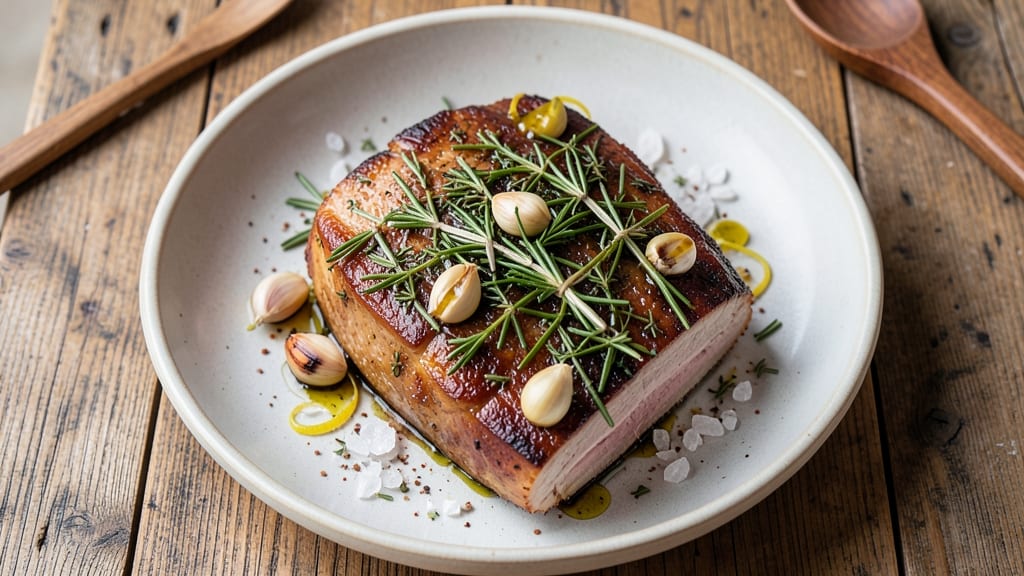
A 3-pound pork loin deserves the same care as a centerpiece cut, and this herb-roasted method delivers a crisp, golden crust while keeping the center impossibly tender. After years of perfecting pork at Atlanta's Smoky Pig, I've cracked the code for foolproof roasting—no guesswork, just guaranteed juicy results every time.
The secret? A balanced herb crust that seals in moisture while creating that coveted caramelized bark.
This recipe builds on my years of cooking whole hogs, where proper trimming and even seasoning make all the difference. We'll use a simple herb blend of rosemary, thyme, and garlic that clings beautifully to the meat, while a light oil coating ensures that crisp exterior.
The key technique? Roasting at 375°F with a 10-minute rest before slicing—this ensures carryover cooking without drying out your pork.
What you'll end up with is a restaurant-quality pork loin that slices cleanly into perfect medallions, each one bursting with flavor and moisture. The herb crust adds aromatic depth without overpowering the natural richness of the meat, while the juicy center proves that home-cooked pork can rival any market cut.
This method works equally well for holiday dinners or weeknight family meals.
Pair with roasted root vegetables or a simple apple compote to round out the meal. The beauty of this recipe is its flexibility—whether you're serving a crowd or just treating yourself to a special dinner, this pork loin will be the star. Let's get started on creating your perfect roast.
Ingredients for 3 pound pork loin
This pork loin recipe transforms a simple cut into a restaurant-worthy centerpiece with just 11 quality ingredients.
| Ingredient | Amount | Notes |
|---|---|---|
| Bone-In Pork Loin 🐖 | 3 lb | Center-cut, 1.5-inch thick, fat cap removed |
| Fresh Rosemary 🌿 | ½ cup | Needles finely chopped, stems removed |
| Fresh Thyme 🌿 | ¼ cup | Leaves only, stems removed |
| Garlic Cloves 🧄 | 8 cloves | Minced, not pre-minced jarred garlic |
| Extra-Virgin Olive Oil 🫒 | ¼ cup | High-quality, fruity variety |
| Diamond Crystal Kosher Salt 🧂 | 1 ½ tsp | Fine grain preferred |
| Freshly Ground Black Pepper 🌶️ | 1 tsp | Cracked peppercorns preferred |
| Unsalted Butter 🧈 | ½ cup | Cold, cubed for basting |
| Apple Cider Vinegar 🍎 | 1 tbsp | For basting liquid |
| Yellow Onion 🧅 | 1 whole | Thinly sliced for garnish |
| Fresh Parsley 🌿 | ¼ cup | Chopped, for garnish |
The pork loin is where it all starts. Bone-in, center-cut is non-negotiable—it stays juicier longer than boneless. Look for a piece with good marbling but minimal fat cap (trim it yourself if needed). Whole Foods or your local butcher will have the best quality cuts. If you're buying pre-trimmed, ask for it to be cut to 1.5-inch thickness—even thickness ensures even cooking. The herbs should be fresh: rosemary should smell piney, thyme earthy. Trader Joe's often has great herb bundles at reasonable prices. For the garlic, peel and mince fresh—jarred garlic has a metallic aftertaste that ruins the delicate herb profile.
No fresh rosemary? Dried works at one-third the amount, but it lacks that piney depth. Substituting thyme? Oregano at half the quantity gives a different but acceptable flavor. Running out of apple cider vinegar? White wine vinegar or lemon juice works in a pinch, though the flavor profile shifts slightly. The butter is crucial for basting—don't skip the cold cubes. They'll melt beautifully during roasting, creating a flavorful crust. For the onion garnish, yellow or red onions both work, but yellow has slightly more sweetness. The parsley is purely decorative, but it brightens the dish—skip if you're short on time, but I always include it.
This roast is best made a day ahead. Store the uncooked loin in the fridge for up to 24 hours—it actually develops more flavor. Once cooked, it keeps well for 4 days in the fridge, though the crust gets softer after day 2. For leftovers, reheat in a 325°F oven with a splash of water to prevent drying. The herb crust freezes beautifully too—wrap tightly and freeze for up to 3 months. I always make extra because it reheats so well for sandwiches the next day. The basting liquid? Save it—it's perfect for drizzling over roasted vegetables or even a simple salad.
Why You'll Love This Recipe
- One-Pan Magic: I swear by this for nights when I’d rather not wash a million dishes. The bone-in pork roasts right alongside the garlic and herbs, and that single sheet pan handles everything—juices, crispy edges, even the rosemary’s piney aroma clinging to the pan. (Yes, even on a Tuesday night.)
- Herb-Crusted Perfection: Between us, that combo of fresh rosemary and thyme rubbed into the pork with olive oil? It’s like a flavor bomb waiting to happen. The garlic gets caramelized just enough to make every bite taste like you spent hours searing it—when really, it’s just 20 minutes of hands-off roasting.
- Leftover Goldmine: This roast is serious about leftovers. Slice it thin for sandwiches the next day, or chop it into cubes for pasta the day after that. Honestly, I’ve even thrown it into fried rice—works every time. A 3-pound cut means you’re not scrambling for seconds (or thirds).
- Budget-Friendly Crowd-Pleaser: Fresh herbs might sound fancy, but a few sprigs go a long way, and pork loin is cheaper than you’d think for a main dish that feeds four. Plus, the bone adds richness without extra cost. My college roommates called it “dorm-room gourmet,” and they weren’t wrong.
Step-by-step instructions for herb-roasted pork loin
Here's how to transform a simple pork loin into a showstopper with crispy, herb-encrusted crust and moist, flavorful meat.
Prepare the Herb Crust Mixture
In a small bowl, combine the 0.5 cup fresh rosemary and 0.25 cup fresh thyme leaves. Finely chop the 8 cloves garlic and add to the herbs. Drizzle in the 0.25 cup extra-virgin olive oil and mix until the herbs are thoroughly coated and fragrant. This aromatic blend will create that signature crust we're after.
Add 1.5 teaspoons diamond crystal kosher salt and 1 teaspoon freshly ground black pepper to the herb mixture. Gently fold these together until evenly distributed. The salt will help develop that perfect crust, while the pepper adds depth to the herb profile. Set this mixture aside while you prepare the pork.
Season and Sear the Pork Loin
Preheat your oven to 425°F for the final roasting step. While it heats, place the 3 lb bone-in pork loin on a cutting board. Pat it dry with paper towels—this is crucial for that crispy crust. The meat should be completely dry, with no moisture remaining on the surface.
Rub the herb mixture all over the pork loin, pressing it gently into the meat so it adheres well. This ensures maximum flavor transfer and that beautiful crust formation. Let the seasoned pork sit at room temperature for 30 minutes before cooking—this helps it cook more evenly.
Sear for Color and Flavor
Heat a large oven-safe skillet over medium-high heat. Add the 0.5 cup unsalted butter and let it melt completely, then swirl it around to coat the bottom of the pan. Place the pork loin in the skillet, fat-side down, and sear for 4-5 minutes until the bottom develops a deep golden-brown crust.
Flip the pork and continue searing for another 3-4 minutes until the second side is equally browned. Here's the thing—don't rush this step. The sear locks in juices and creates that beautiful mahogany crust we want. Once both sides are nicely browned, transfer the skillet to the preheated oven.
Roast to Juicy Perfection
Roast the pork loin for 20-25 minutes until the internal temperature reaches 145°F when measured with an instant-read thermometer. This is the magic number for pork—it ensures tender, juicy meat without being overcooked. The crust will continue to crisp as it finishes in the oven.
About 10 minutes before the pork is done, prepare a basting sauce by melting the remaining butter in a small saucepan. Add 1 tablespoon apple cider vinegar and simmer for 2 minutes until slightly reduced. Brush this mixture over the pork during the last few minutes of roasting to add moisture and shine.
Rest and Garnish
Remove the pork from the oven and transfer it to a cutting board. Tent loosely with aluminum foil and let it rest for 15 minutes. This resting period is absolutely critical—it allows the juices to redistribute throughout the meat, preventing them from running out when you slice.
While the pork rests, thinly slice the 1 whole yellow onion and 0.25 cup fresh parsley. Arrange these on a serving platter. When ready to serve, slice the pork loin against the grain into ½-inch thick slices. Arrange the slices over the onion and parsley garnish for an elegant presentation.
Pro Tips For Making 3 Pound Pork Loin
- USE A MEAT THERMOMETER: I learned this the hard way—bone-in pork loin can fool you with its exterior color. Stop guessing at 145°F (medium-rare) or 155°F (medium) and insert the probe into the thickest part, avoiding the bone. That little gadget is the only way to nail perfect doneness every time.
- DRY THE LOIN LIKE IT’S SNOW DAY: Pat that pork loin dry with paper towels before searing—this isn’t optional. A wet surface = steam = no crust. I skip this when I’m lazy, and the dish is noticeably better when I don’t. Trust me, your future guests will notice the difference.
- SMASH THE GARLIC: Minced garlic burns faster than you’d think, especially when searing. Instead, peel and lightly crush 4-5 cloves with the flat side of your knife—no paste needed. Toss them in the pan with the pork for 30 seconds until fragrant but not browned. This keeps the flavor without the bitter edge.
- REST IT UNDER FOIL: After roasting, tent that pork loin with foil for 5-10 minutes. I know, I know—you want to cut into it immediately. But skipping this step means juices pooling on your cutting board instead of staying inside. Let it sit, then slice against the grain for tender, perfect slices.
Common mistakes when making your 3 pound pork loin
Skipping the Rest
I can't stress this enough: never skip the rest. That 15-minute rest after roasting is what transforms good pork into exceptional pork. I've seen home cooks slice into pork immediately, and it's a crime against juiciness.
The meat continues cooking for 5-10°F after removal from heat—this is called carryover cooking. Without resting, those juices pool in the center and rush out when you slice, leaving you with dry meat.
Trust me, I've made this mistake more times than I'll admit during my early years at Smoky Pig. 💫
Uneven Thickness
Pork loin is notorious for uneven thickness, and that's a recipe for disaster. If your cut varies by more than ¼ inch in thickness, trim it down to 1.5 inches before seasoning.
I always ask my butcher to cut it evenly, but if you're doing it yourself, use a sharp boning knife. The thickest parts will overcook while thinner sections stay underdone.
For a 3-pound loin, the ideal thickness should be consistent across the entire surface—this ensures even doneness and perfect crust formation.
Overcooking the Meat
This is the #1 mistake I see with pork loin—people cook it until it's dry as a bone. The USDA recommends 145°F internal temperature for pork, but many home cooks push it to 160°F or higher. At that temperature, pork becomes tough and loses all its juiciness.
Use a meat thermometer—I swear by the ThermoWorks Smoke—and pull it out at 145°F. The crust will continue to crisp during resting, but the meat will stay perfectly tender. Remember, pork loin is leaner than other cuts, so it dries out faster.
Using Pre-Minced Garlic
Freshly minced garlic makes all the difference in this herb crust. Jarred minced garlic has a metallic aftertaste that ruins the delicate balance of rosemary, thyme, and pork. I always peel and mince my garlic fresh using a microplane—it gives you perfect, even mincing without the harsh flavor.
If you're short on time, at least rinse jarred garlic to remove some of the preservatives. The fresh garlic aroma is what makes this herb crust sing, so don't cut corners here. 🧄
Skipping the Sear
The sear isn't just for show—it's what creates that beautiful mahogany crust and locks in flavors. Many home cooks skip this step or do a half-hearted job, and the pork suffers as a result.
Use a heavy, oven-safe skillet like my Lodge cast iron and get that butter hot enough to sizzle when you add the pork. The sear should take 4-5 minutes per side—don't rush it. This step is what transforms a simple roast into something restaurant-worthy.
I've seen pork loin go from bland to extraordinary just by perfecting this simple technique.
Not Patting Dry
Wet pork equals steam, and steam equals a sad, soggy crust. Before you season or sear, pat that pork loin completely dry with paper towels. I mean it—get it bone dry.
Any moisture on the surface will prevent the herb crust from sticking properly and will create steam that keeps the meat from browning. This is especially important if your pork came from the fridge—it's often damp.
Take the extra 2 minutes to dry it thoroughly, and you'll be rewarded with that perfect crisp crust we're all chasing. 🔥
Nutrition facts
Frequently asked questions about cooking a 3-Pound pork loin
Can I cook a 3-pound pork loin without a bone?
Yes, but bone-in gives better flavor and moisture retention. Boneless loins cook faster and are more prone to drying out. If using boneless, reduce oven temperature by 25°F and check for doneness 5 minutes earlier than bone-in. For extra juiciness, consider butterflying the loin before roasting.
How do I know when my pork loin is done?
Use a meat thermometer to check the thickest part—it should read 145°F for perfect doneness. The crust will continue browning during resting, but the internal temperature is your true guide. Pork continues cooking 5-10°F after removal from heat, so don't overcook it!
What's the best way to reheat leftover pork loin?
Slice the pork into medallions and reheat in a 325°F oven for 10-12 minutes with a splash of water or broth. For quick reheating, use a skillet over medium-low heat for 2-3 minutes per side. Microwaving works but can make the crust soggy—avoid if possible.
Can I make this recipe in a slow cooker?
Not ideal for this cut—pork loin becomes tough when slow-cooked. For tender results, try a 325°F oven for 1.5-2 hours with the herb crust added during the last 30 minutes. The slow method works better for pork shoulder, not loin. For best results, stick with the roasting method.
What sides pair well with herb-roasted pork loin?
Classic pairings include roasted root vegetables (carrots, parsnips, sweet potatoes), creamy mashed potatoes, or a fresh apple compote. For a lighter option, try a mixed green salad with balsamic vinaigrette. The herb crust's flavors complement sweet and earthy sides beautifully—think about balancing rich pork with something bright.