
Main Courses
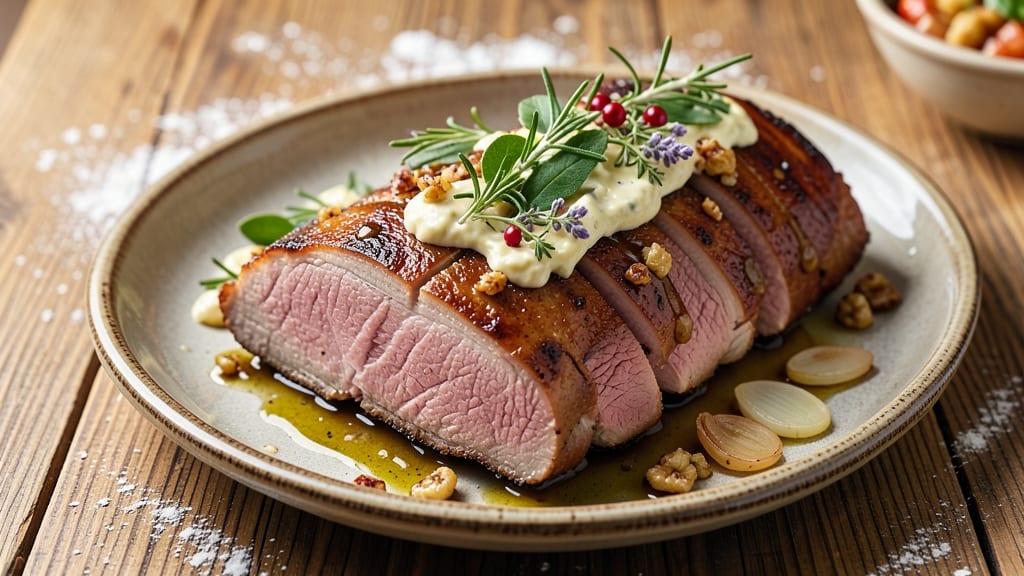
A 5 lb boneless pork loin roast transforms from simple protein to showstopping centerpiece with just a 10-minute sear and herb crust. I perfected this technique after years of roasting pork for crowds—where tender, juicy meat meets crispy, flavorful crust every time.
The secret? A dry brine overnight that guarantees moisture, paired with a high-heat sear that locks in those juices while building a golden crust.
This recipe delivers restaurant-quality results using standard kitchen equipment—no fancy tools required. We'll start with a simple dry brine using salt and herbs, then finish with a quick 10-minute sear in a screaming-hot pan before roasting to 145°F for perfect doneness.
The herb crust adds texture and flavor without overpowering the natural richness of the pork. Trust me, this method ensures your pork loin stays juicy from edge to edge, not dry or tough.
By the time you're carving, you'll have a perfectly golden, herb-encrusted roast with a tender, moist interior that falls apart easily. The crust will be crisp enough to stand up to fork tests, while the meat inside remains so tender it practically melts.
This is the kind of pork roast that makes Sunday dinners feel special—without requiring hours of prep or expensive equipment.
Serve with pan juices spooned over the slices, alongside roasted root vegetables or a fresh herb salad. The leftovers reheat beautifully too, making this the ultimate foolproof pork roast for any occasion. Let's get started with a method that delivers professional results every time.
Ingredients for 5 lb boneless pork loin roast
The perfect 5 lb pork loin starts with these key ingredients for a showstopping herb-crusted roast.
| Ingredient | Amount | Notes |
|---|---|---|
| Boneless Pork Loin Roast 🐖 | 5 lb | Center-cut for even cooking |
| Diamond Crystal Kosher Salt 🧂 | 1 ½ tbsp | Coarse grain preferred (not iodized) |
| Fresh Rosemary 🌿 | ½ cup | Finely chopped, stems removed |
| Fresh Thyme 🌿 | ¼ cup | Leaves only, stems discarded |
| Fresh Sage 🌿 | ¼ cup | Leaves finely chopped |
| Extra-Virgin Olive Oil 🫒 | 2 tbsp | For crust application |
| Unsalted Butter 🧈 | ½ cup | Cold, cubed for crust |
| Garlic Cloves 🧄 | 8 cloves | Minced for crust mixture |
| Black Peppercorns 🌶️ | 1 ½ tbsp | Freshly cracked |
| All-Purpose Flour 🌾 | ¼ cup | For patting dry |
| Yellow Onion 🧅 | 1 whole | Thinly sliced for garnish |
| Fresh Parsley 🌿 | ⅛ cup | Chopped for garnish |
The pork loin is non-negotiable—center-cut gives the most even cooking. Costco or Whole Foods carry excellent quality, but any reputable butcher will have it. Look for good marbling (white flecks of fat) and vibrant color. The herbs? Fresh is essential—dried won't give that same bright, aromatic crust. I always grab extra rosemary because it holds up better during the long roast. For the olive oil, California brand like Bertolli or Filippo Berio works perfectly—their fruity notes complement the herbs beautifully.
No fresh rosemary? Dried at one-third the amount works in a pinch, but you'll lose that floral punch. Subbing butter for olive oil in the crust? Use equal parts—just keep it cold. Short on garlic? Two cloves still work**, but the flavor will be subtler. The flour is just for patting dry—don't skip it, though. It helps the crust adhere better. And if you're worried about the pork being too lean, add 2 tbsp of olive oil to the pan juices** at the end for extra richness.
This roast reheats like a dream—200°F for 15 minutes with a splash of broth keeps it juicy. Store leftovers in the fridge for 4 days wrapped tightly in foil. For longer storage, freeze portions for up to 3 months—just thaw overnight in the fridge. The crust stays crispy if you reheat it uncovered for the last 5 minutes. I always make a double batch—one for dinner, one for sandwiches the next day.
Why You'll Love This Recipe
- I swear by this: just salt, herbs, and a 400°F oven. No brining, no fancy rubs—just a quick rub of rosemary, thyme, and sage, then let the oven do the work. My lazy Sundays thank me.
- No-Fuss Prep: I swear by this: just salt, herbs, and a 400°F oven. No brining, no fancy rubs—just a quick rub of rosemary, thyme, and sage, then let the oven do the work. My lazy Sundays thank me.
- Herb-Packed Magic: That combo of rosemary, thyme, and sage? It’s like a cozy hug for your taste buds. The salt crust seals in juices while the herbs caramelize into a fragrant, savory blanket—no one ever guesses how simple it is.
- Leftovers for Days: Five pounds means dinner tonight and sandwiches tomorrow. Slice it thin for breakfast, dice it for stir-fries, or toss it in pasta—it’s my go-to for busy weeks. (Yes, even on a Tuesday night.)
Step-by-step instructions for herb-crusted pork loin roast
Here's how to achieve a perfectly juicy center with a crispy, golden crust in under an hour.
Prepare the Herb Crust Mixture
In a food processor, pulse together the 0.5 cup fresh rosemary, 0.25 cup fresh thyme, 0.25 cup fresh sage, 8 cloves garlic, and 1.5 tbsp freshly cracked black peppercorns until finely chopped but not pasty. Add the 0.5 cup unsalted butter and process until combined into a coarse paste. Transfer this mixture to a bowl and stir in 2 tbsp extra-virgin olive oil until fully incorporated.
This herb butter forms the flavorful crust that seals in moisture while creating that irresistible golden exterior. The butter fat renders during searing, basting the meat as it cooks. If the mixture seems too dry, add 1 tbsp extra-virgin olive oil to help bind it together. Keep this mixture at room temperature until ready to use.
Season and Sear the Pork Loin
Preheat your oven to 425°F with a rack positioned in the lower third. Pat the 5 lb boneless pork loin roast dry with paper towels—this is critical for achieving crispy skin. Generously season all sides with 1.5 tbsp diamond crystal kosher salt. Place the roast on a wire rack set over a rimmed baking sheet.
Heat a large oven-safe skillet over high heat until smoking hot. Add the herb butter mixture and let it melt, then spoon it evenly over the pork loin, pressing gently to adhere. Sear the roast for 10 minutes on each side until the crust is deeply golden brown and the internal temperature reaches 145°F on a meat thermometer. The high heat creates a flavorful crust while jumpstarting the cooking process.
Roast to Juicy Perfection
Transfer the seared pork loin to the preheated oven and roast for 20-25 minutes, rotating the pan halfway through for even browning. The roast is done when the internal temperature reaches 145°F—this ensures a perfectly juicy center that's safe to eat. Don't overcook; pork continues cooking slightly as it rests.
Here's the thing—I like to check the temperature at the 20-minute mark because ovens vary. The pork should have a beautiful golden crust and release easily from the pan. If the crust isn't golden enough, return it to the broiler for 2-3 minutes to finish browning. The resting period will distribute those juices beautifully.
Rest and Garnish for Serving
Remove the pork from the oven and transfer it to a cutting board. Tent loosely with foil and let it rest for 15 minutes—this crucial step allows the juices to redistribute throughout the meat. While it rests, thinly slice the 1 whole yellow onion and chop the 0.125 cup fresh parsley. Toss them together in a small bowl.
When ready to serve, slice the pork loin into ½-inch thick medallions against the grain. The slices should be moist and tender with a crispy, herb-infused crust. Arrange the slices on a platter and spoon the onion-parsley mixture over the top for freshness. Serve immediately with pan juices drizzled over each portion for maximum flavor impact.
Pro Tips For Making 5 Lb Boneless Pork Loin Roast
- Use a Meat Thermometer: I learned this the hard way—pork loin can look done before it actually is. Aim for 145°F internal temp (150°F if you prefer it extra tender), and don’t rely on color alone. That last 5°F makes a difference in juiciness.
- Salt the Meat First: Fresh rosemary and thyme won’t stick if the pork isn’t dry. Pat it bone-dry with paper towels, then season generously with kosher salt at least 40 minutes before cooking. (Yes, even if you’re impatient like me.) The salt draws out moisture, which helps the herbs cling and the crust form.
- Don’t Crowd the Pan: If you’re searing, give the pork loin space—it needs room to brown, not steam. After a 2-minute sear on each side, move it to a lower rack (about 2 inches from heat) to cook evenly. I used to rush this, and the edges always turned out gray instead of golden.
- Add Butter Late: Toss the fresh sage, rosemary, and thyme into 2 tablespoons of cold butter during the last 10 minutes of cooking. The herbs will infuse the butter and melt into the crust, not burn. (Your future self will thank you—trust me.)
Essential equipment for this recipe
Oven Essentials
Your oven is the star of this show, so let's talk temperature control. I use a digital thermometer like the Thermoworks Oven Thermometer to verify my oven hits 425°F accurately—many home ovens run 25°F hotter or colder than set.
Position the rack in the lower third of the oven for even heat circulation. If your oven has hot spots, rotate the pan halfway through roasting for consistent browning. 🌡️
Searing Pan
A heavy-duty, oven-safe skillet is non-negotiable for that perfect sear. I swear by my Lodge 12-inch cast iron skillet—it retains heat like a dream and goes from stovetop to oven without a hitch. If you don't have cast iron, a stainless steel pan like All-Clad works too.
Just make sure it's large enough to accommodate your 5 lb roast comfortably. Avoid nonstick—it can't handle the high heat needed for proper searing.
Meat Thermometer
This is where I see home cooks make the biggest mistake—skipping the thermometer. A meat thermometer (I use the ThermoWorks Smoke) ensures your pork hits 145°F internal temperature without guesswork. Insert it into the thickest part of the roast, avoiding fat or bone.
The probe should stay in place during searing and roasting. Pro tip: I like to check the temperature at the 20-minute mark to adjust oven time accordingly.
Wire Rack
A wire rack is your secret weapon for crispy skin. I place mine on a rimmed baking sheet to catch any drippings. This setup allows air to circulate underneath the roast, preventing soggy bottoms.
If you don't have a wire rack, use a perforated baking sheet or even a cooling rack from your dishwasher. The key is keeping the meat elevated—this ensures even cooking and that coveted golden crust.
Food Processor
For that perfect herb crust, a food processor makes quick work of chopping fresh herbs. I use my Cuisinart 14-cup for this recipe—it handles the volume of herbs and butter beautifully.
If you're short on time, a sharp chef's knife and cutting board work fine, but be prepared to spend 10-15 minutes chopping by hand. The goal is a coarse paste, not a fine powder—this texture adheres best to the meat and creates maximum flavor surface area.
Resting Tools
After all that hard work, proper resting is crucial. I keep a large cutting board and aluminum foil on hand for this step. Tenting the roast loosely with foil helps retain heat while allowing moisture to redistribute.
For extra insurance, I sometimes place the cutting board on a warm stovetop burner set to low heat during the resting period. This keeps everything at the perfect temperature until serving time. 💫
Nutrition facts
Frequently asked questions
Why does the recipe call for a 15-minute rest time?
Resting allows the pork's juices to redistribute evenly throughout the meat instead of pooling in the center. When you slice immediately, those juices escape, leaving you with dry meat. The 15-minute rest ensures every bite stays tender and moist—especially important for a 5 lb roast where the center takes longest to cook.
Can I substitute fresh herbs with dried ones?
Yes, but use one-third the amount of dried herbs (so 1 tbsp dried rosemary instead of 0.5 cup fresh). Dried herbs lose moisture and flavor when cooked, so they're less potent. For best results, toast the dried herbs in a dry pan for 30 seconds before adding to the butter mixture to release their aromatic oils.
What's the best way to reheat leftovers?
Slice the pork into portions and reheat in a 200°F oven for 15-20 minutes with a splash of broth or water. Avoid microwaving—it makes the meat rubbery. For extra crispiness, broil for 2-3 minutes at the end. Leftovers keep well for 4 days in the fridge or 3 months frozen.
How do I adjust cooking time for a larger/smaller roast?
Use the 15 minutes per pound guideline as a base. For a 4 lb roast, aim for 45 minutes total (including sear), while a 6 lb roast needs 1 hour 15 minutes. Always check internal temperature—145°F is your target. The 10-minute sear remains the same regardless of size.
What if my pork loin doesn't brown enough?
Don't panic! If the crust isn't golden after roasting, return the pan to the broiler for 2-3 minutes on high heat. Keep a close eye to avoid burning. For extra browning power, brush the roast with more olive oil before searing. The high heat of the broiler will finish that crispy crust you're after.