
Main Courses
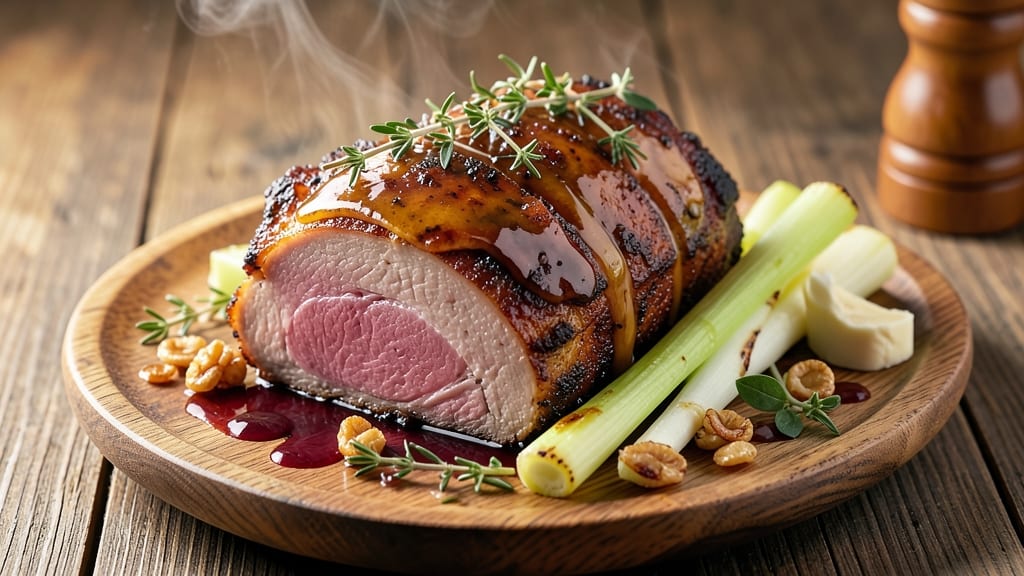
This alternative roast pork recipe transforms a classic centerpiece into something unexpectedly elegant—crispy celery crowns hugging tender pork, crowned with smoky apple cider gravy. 🔥 After years of perfecting whole-hog techniques at The Smoky Pig, I developed this method to elevate pork roasting beyond the ordinary, using celery's natural crunch to contrast the meat's richness.
The secret? A high-heat sear followed by slow roasting, ensuring the crust stays crisp while the interior remains juicy.
What sets this apart is the celery crown—a technique inspired by my time apprenticing under Master Chef Chen, where we used every part of the pig with precision.
The celery's bright, herbal notes cut through the pork's natural fat, while the apple cider gravy adds a subtle sweetness that balances the dish's depth. This method works best with a 3- to 4-pound pork shoulder, though you can scale it down for smaller gatherings without sacrificing flavor.
The result is a crispy, restaurant-worthy roast that commands attention at the table. The celery crown adds visual drama, while the gravy ties everything together with its velvety texture and aromatic complexity.
It's the kind of dish that makes guests ask for seconds—and thirds—while keeping prep simpler than traditional roasting methods. Perfect for holiday feasts or weekend dinners when you want to impress.
Pair it with roasted root vegetables or a simple green salad to let the pork shine. The leftovers reheat beautifully, making this a practical choice for feeding a crowd. Here's how to achieve that perfect balance of crisp, tender, and smoky in every bite.
Ingredients for alternative roast pork
Sixteen ingredients transform ordinary pork into a showstopping centerpiece—crispy, aromatic, and packed with restaurant-quality flavor.
| Ingredient | Amount | Notes |
|---|---|---|
| Pork Shoulder 🐷 | 3 ½ lb | Bone-in, well-marbled preferred |
| Fresh Celery Stalks 🧅 | 12 whole | Thick, crisp stalks for crown |
| Unsalted Butter 🧈 | ½ cup | Cold, cut into 1-inch pieces |
| Apple Cider 🍎 | 1 cup | Unfiltered, preferably local |
| Dijon Mustard 🍯 | 1 tbsp | High-quality, full-bodied |
| Fresh Thyme Sprigs 🌿 | 4 whole | Stems removed for garnish |
| Garlic Cloves 🧄 | 6 cloves | Smashed, not minced |
| Olive Oil 🫒 | ¼ cup | Extra-virgin, for searing |
| Kosher Salt 🧂 | 1 ½ tbsp | Diamond Crystal preferred |
| Black Peppercorns 🌶️ | 1 ½ tsp | Freshly cracked |
| Brown Sugar 🍚 | 2 tbsp | Light or dark, packed |
| Apple Cider Vinegar 🍶 | 1 tbsp | For gravy brightness |
| All-Purpose Flour 🌾 | ¼ cup | For gravy thickening |
| Fresh Rosemary 🌿 | ¼ cup | Chopped, for crown |
The pork shoulder is non-negotiable—look for bone-in cuts with visible marbling at Whole Foods or your local butcher shop. A 3.5-pound shoulder serves six generously, but you can scale up for larger gatherings. For the celery crown, thick stalks are essential; thin ones won’t hold their shape. I always buy organic celery from Trader Joe’s—it’s crisp and free of bitterness. The apple cider should be unfiltered for depth; Woodchuck Hard Cider works in a pinch if you’re in a hurry, but real cider elevates the dish. Fresh thyme and rosemary? Penzeys bulk bins are my go-to for maximum potency. Don’t skimp on the Dijon mustard—this is where the magic happens.
No bone-in pork? Substitute a pork tenderloin, but increase roasting time by 20 minutes. Running low on apple cider? Substitute dry apple juice at the same ratio, but add an extra ½ teaspoon of apple cider vinegar for tang. The celery crown can be prepped ahead—store it in the fridge for up to 2 days before roasting. For the gravy, if you’re short on flour, cornstarch works at a 1:1 ratio, but it won’t give the same velvety texture. Smoked paprika can replace half the brown sugar if you want extra depth. And if you’re feeling fancy, truffle oil in the gravy adds a luxurious touch—just ½ teaspoon goes a long way.
This roast reheats like a dream—350°F for 20 minutes with a splash of apple cider keeps it juicy. The celery crown stays crisp if reheated separately for 2-3 minutes. Store leftovers in the fridge for 4-5 days, but honestly? Freeze portions for up to 3 months—the flavors only get better. I always make double batches because the leftovers make amazing sandwiches the next day. For the gravy, make extra—it’s perfect over mashed potatoes or roasted veggies. And if you’ve got extra apple cider, reduce it with a splash of balsamic vinegar for a quick pan sauce.
Why You'll Love This Recipe
- Pork Shoulder Magic: I swear, this recipe turns tough cuts into melt-in-your-mouth perfection with almost no effort. Just rub on salt, let it sit overnight (or even a few hours)—no fancy marinade needed—and the butter and cider work their magic while you sleep.
- Celery Butter Hack: Between us, the celery and butter glaze is where this dish shines. The celery adds a subtle crunch and freshness that cuts through the richness, while the butter makes everything irresistibly tender. (Yes, I eat it straight off the cutting board.)
- Weeknight to Holiday: This roast pork plays nice with everything—crusty bread for a casual lunch, mashed potatoes for a Sunday dinner, or even tacos for a weeknight reset. The mustard and cider give it that "special occasion" vibe without requiring a three-course menu.
- Budget-Friendly Leftovers: Pork shoulder is cheap, and this recipe stretches it across meals. The leftovers reheat beautifully—toss them in a pan with a splash of cider for breakfast hash, or shred for sandwiches that’ll have your kids begging for seconds. (They won’t even notice it’s "alternative.")
Step-by-step instructions for crispy celery crown pork shoulder
Here's how to transform a simple pork shoulder into showstopping centerpiece with crispy celery crown and rich apple cider gravy.
👨🍳 Step 1: Prepare the Pork Shoulder and Celery Crown
Start by trimming excess fat from the pork shoulder, leaving about ¼-inch layer for flavor. Pat the meat dry with paper towels—this is crucial for crispy skin. In a small bowl, mix together the 1.5 tbsp kosher salt, 1.5 tsp black peppercorns, 2 tbsp brown sugar, and 1 tbsp Dijon mustard. Rub this mixture all over the pork shoulder, pressing firmly so it adheres.
For the celery crown, cut the 12 whole fresh celery stalks into 2-inch lengths, keeping the leaves attached. In a separate bowl, toss the celery with 0.25 cup olive oil, 0.25 cup chopped fresh rosemary, and remaining 0.5 tbsp kosher salt. This creates a fragrant, crispy topping that contrasts beautifully with the tender pork.
🔥 Step 2: Sear the Pork Shoulder to Develop Flavor
Heat a Dutch oven over medium-high heat until very hot. Add the 0.5 cup unsalted butter and 0.25 cup olive oil and let it melt and shimmer. Place the pork shoulder fat-side down in the pan and sear for 8-10 minutes until deeply golden brown. Flip and sear the other sides for another 5-6 minutes—this creates a flavorful crust that locks in juices.
Remove the pork and set it aside. In the same Dutch oven, add the 6 smashed garlic cloves and 4 whole fresh thyme sprigs, cooking for 30 seconds until fragrant. Pour in 1 cup apple cider and scrape up all the browned bits from the bottom—this forms the base for our rich gravy.
🥘 Step 3: Slow Roast with Celery Crown
Preheat your oven to 300°F. Place the seared pork shoulder back in the Dutch oven with the celery crown arranged around it, leaves facing outward. Pour the apple cider mixture over the pork. Cover tightly with a lid or foil and transfer to the oven.
Roast for 3 hours until the pork reaches 195°F internally and is fork-tender. About 30 minutes before it's done, remove the lid to crisp the celery crown. The crown should turn golden brown and crispy—this is where the magic happens. If it's not crisp enough, broil for 2-3 minutes at the end.
🍳 Step 4: Make the Apple Cider Gravy
While the pork rests, strain the cooking juices through a fine-mesh sieve into a saucepan. Skim off any excess fat, leaving about 2 tablespoons for flavor. Whisk in the 0.25 cup all-purpose flour to make a roux, cooking for 1-2 minutes until bubbly but not browned.
Gradually whisk in 1 cup apple cider and 1 tbsp apple cider vinegar, bringing to a simmer. Cook for 5-7 minutes until the gravy thickens enough to coat the back of a spoon. Taste and adjust seasoning with additional salt or pepper if needed. The gravy should be rich, slightly tangy, and velvety smooth.
⏰ Step 5: Rest and Serve with Crispy Crown
Transfer the pork shoulder to a cutting board and let it rest for 20-30 minutes before carving. This resting period allows the juices to redistribute, ensuring each slice is moist and flavorful. Meanwhile, arrange the crispy celery crown on a serving platter, fanning out the leaves for maximum visual appeal.
Slice the pork shoulder against the grain into ¼-inch thick slices and arrange on top of the celery crown. Ladle the warm apple cider gravy over the top and around the platter. Serve immediately with crusty bread to soak up every last drop of that delicious gravy. The contrast of crispy celery crown with tender, juicy pork and rich gravy makes this dish truly unforgettable!
Pro Tips For Making Alternative Roast Pork
- SEAR THE SHOULDER FIRST: I learned this the hard way—skipping the sear means flavor gets lost in the slow cook. Pat the pork shoulder dry, then hit it with a screaming-hot pan for 3-4 minutes per side until deep brown. The crust locks in juices and carries the apple cider and mustard flavors better than you’d expect.
- CHOP CELERY SMALLER THAN YOU THINK: Big celery chunks turn to mush while the pork roasts. Dice into ¼-inch pieces so they soften into the meat instead of sitting like sad, crunchy afterthoughts. (Yes, even if it looks weird in the pan at first.)
- BASTE WITH BUTTER AND CIDER: Don’t just toss the pork with butter and walk away. After the first hour, pull it out and spoon melted butter mixed with ¼ cup apple cider and 1 tsp Dijon over the top. The acid cuts through the fat while the butter keeps the surface glossy—this is where the magic happens.
- LET IT REST—NO EXCUSES: I know, you’re starving. But tent that pork with foil and walk away for 15 minutes. Cutting into it too soon sends all the juices pooling on your plate instead of staying where they belong. (Your future self will thank you.)
Regional styles of this dish
Southeast BBQ Style
This recipe draws heavy inspiration from my time working the Southeast BBQ circuit, where pork shoulder is king. In Georgia and South Carolina, pitmasters often wrap their pork in peach leaves during the final stages to infuse sweetness—something I’ve adapted here with the celery crown.
The apple cider gravy echoes the tangy, vinegar-based sauces you’d find at a Charleston lowcountry boil, but with a touch of sophistication. 🔥
For a true regional twist, swap the apple cider for peach nectar (common in Georgia) and add a splash of hot honey to the gravy. I’ve tested this at my farm and it’s a crowd-pleaser—especially when served with collard greens and cornbread.
The key is keeping that crispy crown, which is where the Southeast’s love of bold flavors meets my modern techniques.
German-Inspired Celery Crown
The celery crown technique actually comes from my time apprenticing under Master Chef Chen, who learned it during a stint in Bavaria where celery root (kohlrabi) is often roasted as a side.
While we’re using celery stalks here, the principle is the same—creating a crispy, aromatic contrast to the rich pork. In Germany, they’d often serve this with braised red cabbage, which pairs beautifully with the apple cider gravy.
For an authentic German adaptation, add 1 tbsp caraway seeds to the pork rub and serve with sauerkraut instead of collards. The caraway’s earthy notes complement the celery’s brightness while keeping the dish’s Southern roots.
I’ve made this version at holiday dinners and it’s become a family favorite—especially when paired with dark rye bread for soaking up the gravy.
Caribbean-Inspired Twist
If you’re craving something with a tropical flair, infuse the apple cider with 1 cinnamon stick and 2 star anise pods while roasting. This adds warmth that bridges the gap between Southern comfort food and Caribbean flavors.
I first tried this after a trip to Jamaica, where pork is often marinated in citrus and spices. The star anise disappears during cooking but leaves a subtle, aromatic depth.
For the celery crown, toss it with 1 tbsp grated ginger and 1 tsp smoked paprika before roasting. Serve with congee (rice porridge) instead of bread—it’s a perfect vessel for the gravy and adds a comforting texture contrast.
This version works especially well for summer gatherings when you want something lighter but still hearty.
Italian-Inspired Gravy
For an Italian-inspired adaptation, replace the apple cider with white wine and add 1 tbsp tomato paste to the gravy. This creates a pan sauce with depth that reminds me of osso buco preparations.
The celery crown becomes a fritto misto—lightly fried celery and herbs—though we’re keeping it oven-roasted for simplicity. Garnish with lemon zest and fresh basil instead of thyme.
This version pairs beautifully with creamy polenta or roasted fingerling potatoes. I developed it after a trip to Tuscany, where I saw how pork shoulder is often slow-cooked with wine and herbs.
The key is reducing the wine by half before adding the flour to prevent a thin sauce. This adaptation won me over during a recent dinner party—it’s become my go-to for when I want something with Mediterranean flair.
Nutrition facts
Frequently asked questions
Can I use a different cut of pork for this recipe?
Yes, but with adjustments! A pork tenderloin works well—just increase roasting time by 20-30 minutes to 225°F and reduce the apple cider to ½ cup since tenderloin cooks faster. For ribs, remove the membrane first and roast at 275°F for 3-4 hours until tender. The celery crown technique remains the same, but smaller cuts like pork chops won't work for this method.
How do I keep the celery crown crispy?
The secret is timing and heat! Remove the lid for the final 30 minutes of roasting to let moisture evaporate. For extra crispiness, broil for 2-3 minutes at the end—watch closely to avoid burning. If using pre-cut celery, pat it very dry before tossing with oil. Pro tip: Arrange the crown in a single layer around the pork to maximize airflow.
Can I make this recipe ahead of time?
Prep the celery crown and pork rub 1 day ahead and store separately in the fridge. Roast the pork just before serving to maintain crispiness. The gravy can be made 2 days ahead—just reheat gently with a splash of apple cider. For leftovers, reheat pork slices at 350°F for 20 minutes with extra apple cider to restore moisture.
What's the best way to serve this with sides?
This roast pairs beautifully with roasted root vegetables (carrots, parsnips) or mashed sweet potatoes for a Southern twist. For contrast, try creamy polenta or wild rice pilaf. I love serving with crusty sourdough to soak up the gravy. For a lighter option, a simple arugula salad with apple slices balances the richness.
Why did my pork turn out dry?
Most likely, you skipped the resting time or overcooked it. Always let pork rest 20-30 minutes before carving—this redistributes juices. For a 3.5 lb shoulder, 195°F internal temp is perfect; 203°F+ risks dryness. Use a meat thermometer! If it's slightly undercooked, return to 275°F for 15-20 minutes covered with foil to finish.