
Sauces & Condiments
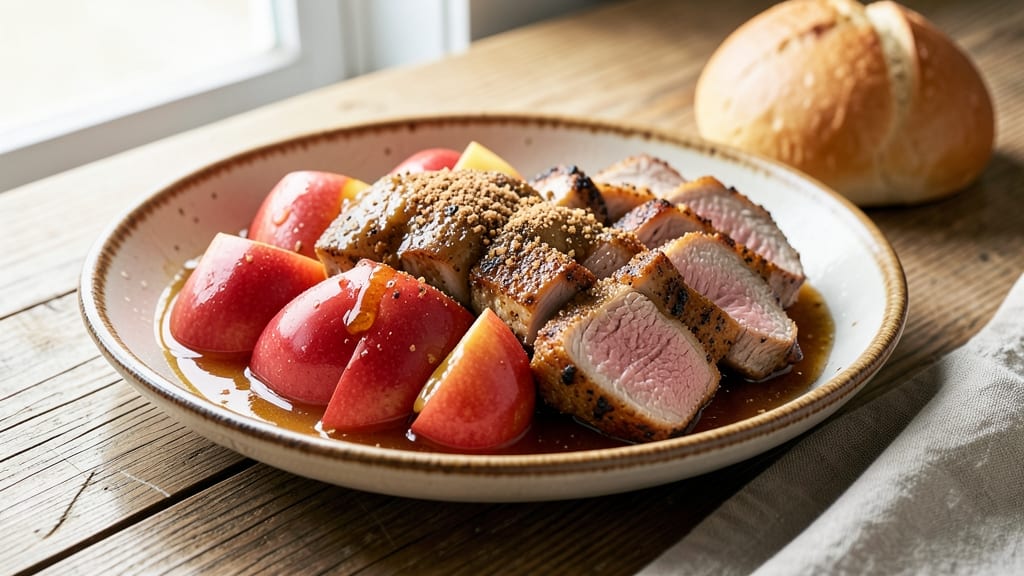
This apple sauce for pork roast transforms a simple roast into a showstopping centerpiece with its caramelized edges and sweet-tart balance. I developed this recipe after years of perfecting the art of pork roasting, where the right sauce can elevate even the most basic cut.
The secret lies in simmering apples with spices until they break down into a glossy, clingy glaze that caramelizes beautifully when brushed on roasting pork.
The sauce starts with just five core ingredients—apples, apple cider, brown sugar, cinnamon, and a touch of vinegar—that work together to create depth without overpowering the pork.
The key technique is reducing the sauce until it reaches a syrupy consistency, which ensures it clings to the meat rather than pooling below. This method also intensifies the natural sweetness of the apples, creating a perfect harmony with the savory pork.
When brushed onto pork during the last 30 minutes of roasting, this sauce develops a glossy, caramelized crust that cracks slightly as it cooks—a visual and textural cue that dinner is ready.
The result is pork with tender, juicy meat and a sticky-sweet glaze that balances the richness of the meat. It works equally well as a topping, drizzled over slices, or as a side sauce for dipping.
For extra depth, add a splash of bourbon or a pinch of smoked paprika to the finished sauce. The possibilities are endless, but the foundation remains the same: simple, balanced, and impossible to resist. Let’s get started on creating this perfect pairing for your next pork roast.
Ingredients for apple sauce for pork roast
Five ingredients transform into a velvety glaze that caramelizes pork to perfection.
| Ingredient | Amount | Notes |
|---|---|---|
| Honeycrisp Apples 🍎 | 4 medium | Peeled, cored, sliced thin |
| Unsweetened Apple Cider 🍏 | 1 ½ cups | 100% pure, no sugar added |
| Light Brown Sugar 🍚 | ½ cup | Packed firmly for accuracy |
| Ground Cinnamon 🌿 | 1 tsp | Freshly ground preferred |
| Apple Cider Vinegar 🍶 | 1 tbsp | For tangy brightness |
| Bourbon (optional) 🥃 | 1 tbsp | For depth of flavor |
| Smoked Paprika (optional) 🌶️ | ¼ tsp | For subtle smokiness |
| Salt 🧂 | ¼ tsp | Diamond Crystal preferred |
The apples are the foundation—Honeycrisp delivers the best balance of sweetness and acidity, but Granny Smith or Braeburn work well too. Look for firm, unblemished fruit at Whole Foods or local orchards for peak flavor. The apple cider should be 100% pure, with no added sugar—Mott's or Woodchuck brands are reliable choices. Peeling the apples ensures a silky texture, though leaving the skin on adds subtle color and fiber. For extra depth, use organic apples if available, as their thinner skins release more flavor during simmering.
No bourbon? Brandy or rum at the same amount works beautifully, though the flavor profile shifts slightly. The smoked paprika is entirely optional but adds a sophisticated smokiness that pairs wonderfully with pork. If you prefer a sweeter sauce, increase the brown sugar to 0.75 cups. For a tangier finish, add an extra 1/2 tbsp vinegar. The sauce thickens as it cools, so if it's too thick while warm, stir in 1 tsp water. Conversely, if it's too thin, simmer uncovered for 2-3 minutes to reduce further.
Store the finished sauce in an airtight container in the refrigerator for up to 1 week. For longer storage, portion into ice cube trays and freeze—perfect for quick glaze applications later. The sauce reheats beautifully; simply warm in a saucepan over low heat with a splash of water or apple cider to restore its glossy consistency. If brushing onto pork, reheat until it reaches 165°F to ensure food safety. The sauce also freezes well for up to 6 months, making it an ideal make-ahead component for holiday roasts.
Why You'll Love This Recipe
- Same sauce, endless uses: glaze for pork chops, topping for mashed potatoes, or even a dip for roasted veggies. I’ve served it at family dinners and lazy Sundays—it’s the one sauce that never feels out of place.
- Five-Ingredient Magic: I swear by this combo—Honeycrisp apples, a splash of cider, and just a pinch of cinnamon. That’s it. No fancy techniques, no peeling if you’re in a rush, and the sauce practically makes itself while your pork roasts.
- Sweet-Savory Balance: The brown sugar and vinegar team up for this perfect harmony—tart enough to cut through the pork’s richness, but sweet enough to make you lick the pan. Honestly, I’ve never had apple sauce that actually enhances the meat instead of competing with it.
- Weeknight to Holiday: Same sauce, endless uses: glaze for pork chops, topping for mashed potatoes, or even a dip for roasted veggies. I’ve served it at family dinners and lazy Sundays—it’s the one sauce that never feels out of place.
Step-by-step instructions for sweet-tart apple sauce glaze
This method delivers a perfectly balanced glaze with caramelized edges and rich depth.
Prepare the Apple Base
In a large, heavy-bottomed saucepan, combine the 4 medium Honeycrisp Apples (previously peeled, cored, and sliced thin) with the 1.5 cups Unsweetened Apple Cider. Bring to a simmer over medium-high heat, then reduce to medium-low heat. The apples should soften completely in about 10-12 minutes, breaking down into a chunky purée. Stir occasionally to prevent sticking—this is where the magic happens as the natural pectin releases.
Here's the thing—don't rush this step. You want the apples to fully break down so the glaze becomes silky when reduced. If you see the mixture thickening too quickly, add a splash of water to keep it moving. The goal is a smooth, velvety texture that will cling beautifully to your pork roast.
Build Flavor and Reduce
Once the apples are tender, stir in the 0.5 cup Light Brown Sugar, 1 tbsp Apple Cider Vinegar, 1 tbsp Bourbon (if using), 0.25 tsp Smoked Paprika (if using), 1 tsp Ground Cinnamon, and 0.25 tsp Salt. Increase heat to medium-high and bring to a boil, then immediately reduce to medium heat. Let it simmer uncovered for 15-20 minutes, stirring occasionally, until the mixture thickens and reduces by about one-third. You're looking for a syrupy consistency that coats the back of a spoon.
Watch for caramelization—this is what gives the glaze its signature depth. The edges should start to darken slightly, and the aroma will become intensely sweet-tart. If the mixture thickens too quickly, add 1-2 tablespoons of water to maintain the right texture. The bourbon and vinegar work together to balance the sweetness and add complexity, so don't skip them if you're using them.
Finish and Strain (Optional)
For a completely smooth glaze, transfer the mixture to a fine-mesh strainer and press through with a wooden spoon or spatula. This removes any remaining apple skins or seeds, leaving you with a velvety sauce. If you prefer a slightly rustic texture, skip straining—just stir vigorously to break up any remaining chunks. Either way, return the sauce to the pan and simmer for an additional 5 minutes to ensure all flavors meld together.
Taste and adjust seasoning if needed. You might want to add a pinch more salt or cinnamon to enhance the flavor profile. The glaze should be thick enough to coat the back of a spoon but still flow freely when brushed onto the pork. If it's too thick, thin it with a splash of apple cider or water. For best results, use the glaze immediately on your pork roast while it's still warm.
Pro Tips For Making Apple Sauce For Pork Roast
- Peel and Core Apples Like a Pro: Skip the messy knife work—slice the apples in half, scoop out the core with a melon baller, then peel the skin off with a paring knife while holding the apple halves steady. Honeycrisp stays firmer when peeled after slicing, and you’ll avoid the frustration of slipping on the skin.
- Simmer Low and Slow: After adding the apple cider and vinegar, reduce heat to a gentle simmer—no boiling. I learned the hard way that aggressive heat turns the sauce into mush and burns the brown sugar. Keep it at a whisper of bubbles, and you’ll end up with a glossy, chunky sauce that clings to the pork instead of falling apart.
- Use Vinegar Early: Add the apple cider vinegar with the cider at the start, not as a last-minute fix. It brightens the flavor and cuts through the sweetness of the brown sugar, but if you wait too long, the sauce will taste sharp and one-dimensional. Stir it in right away—your taste buds will notice the difference.
- Skip the Blender for Texture: Resist the urge to puree the sauce smooth. A quick mash with a potato masher or fork keeps the apples’ natural bite, which balances the pork’s richness. If you must blend, only do it halfway—just enough to break up the biggest chunks, not turn it into applesauce. The contrast makes the dish.
Wine and beer pairings for this apple sauce for pork roast
Red Wine Pairings
For this sweet-tart apple sauce, a dry red wine with balanced acidity works beautifully. I reach for a Pinot Noir from Oregon—its bright cherry notes and subtle earthiness complement the caramelized edges without overpowering the pork.
The Willamette Valley region produces excellent examples like Domaine Serene or Soter Vineyards, which offer that perfect balance of fruit and structure. 🍷
If you prefer something bolder, try a Cabernet Franc from the Loire Valley in France. The Chinon appellation delivers herbal and floral notes that cut through the sauce’s sweetness, creating a sophisticated pairing.
Look for bottles from Domaine de la Pousse d'Or—their 2019 vintage pairs exceptionally well with this glaze.
White Wine Options
Surprisingly, a dry Riesling from Germany or the Alsace region elevates this dish. The Johannisberg Riesling from Dr. Loosen has enough acidity to match the apple sauce’s tang while its mineral notes contrast the pork’s richness. Serve it slightly chilled to enhance its crispness. 🍷
For a lighter option, try a Sauvignon Blanc from New Zealand. The citrus and herbal notes in a Marlborough Sauvignon Blanc like Cloudy Bay or Kim Crawford refresh the palate between bites of glazed pork. The acidity in these wines helps cleanse the richness of the sauce.
Beer Pairings
For beer lovers, a Belgian-style witbier is my go-to choice. The Hoegaarden or St. Bernardus Witbier brings citrusy and spicy notes that mirror the apple sauce’s tang. The effervescence also helps cut through the richness of the pork. 🍺
If you prefer something darker, a German Dunkelweizen like Weihenstephaner Dunkel offers a malty sweetness that pairs wonderfully with the caramelized glaze. The slight bitterness balances the sauce’s sweetness, creating a harmonious bite.
Cider Pairings
Since apples are the star of this sauce, a dry hard cider makes a fantastic pairing. I love Strongbow Original or Woodchuck Hard Cider—their crisp acidity and subtle apple flavors create a seamless match. Serve it slightly chilled to enhance its refreshing qualities. 🍎
For a craft option, try a dry English cider like Thatchers Vintage. The complexity of these ciders, with their hints of pear and spice, complements the depth of the apple sauce beautifully. It’s a match made in heaven for pork roast night.
Nutrition facts
Frequently asked questions
Can I use this apple sauce as a filling for pork tenderloin?
While this glaze works beautifully as a topping, it's not ideal for stuffing pork tenderloin due to its thin consistency. For stuffing, you'd want a thicker, more stable filling like breadcrumbs, herbs, or chopped nuts mixed with a small amount of this sauce. If you're determined to use it, reduce the sauce until it's almost paste-like and mix it with breadcrumbs to create a stable filling.
How far in advance can I make the apple sauce glaze?
You can prepare this glaze up to 3 days ahead and store it in an airtight container in the refrigerator. The flavors actually improve as it sits! Reheat it gently before using—just warm in a saucepan over low heat with a splash of apple cider until it reaches 165°F. For longer storage, freeze it in ice cube trays for up to 6 months.
What's the best way to apply the glaze to pork roast?
For maximum caramelization, brush the glaze on during the last 30 minutes of roasting when the pork reaches 145°F internally. Use a pastry brush to apply a thin, even layer—don't overdo it or the sauce will pool instead of caramelizing. For extra shine, reapply the glaze once more 10 minutes before the pork finishes cooking. The high heat will create that beautiful crackly crust we all love!
Can I substitute applesauce for this recipe?
Not for this glaze—store-bought applesauce lacks the complexity and natural pectin needed for proper caramelization. The fresh apples in this recipe break down into a silky sauce with perfect texture and depth. If you're short on time, you could make a quick applesauce from peeled, cooked apples and blend it with a bit of vinegar and sugar, but it won't have the same rich flavor or caramelizing properties.
How do I adjust the sweetness level for different pork cuts?
For leaner cuts like pork tenderloin, use the full 0.5 cup brown sugar as written—the sweetness helps tenderize the meat. For fattier cuts like pork shoulder, reduce the sugar to 0.375 cups to avoid overwhelming the rich flavors. The vinegar and bourbon will help balance any sweetness differences. Taste and adjust as you go!