
Main Courses
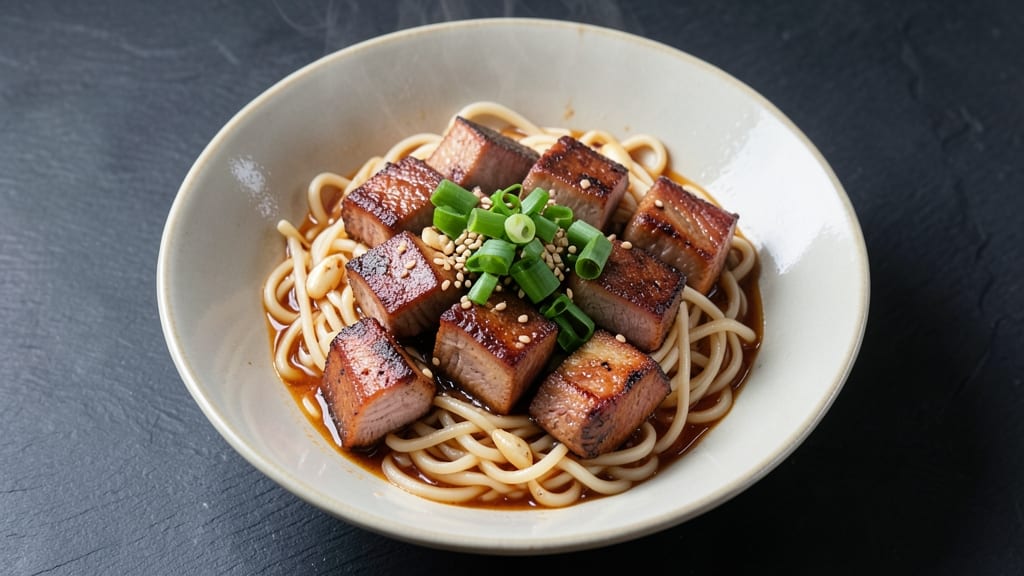
This Asian pork noodle bowl recipe delivers restaurant-quality flavor in one bowl—wok-seared pork, aromatic broth, and chewy noodles that come together in under 30 minutes. Growing up in Georgia, I learned how pork transforms any dish, and this recipe captures that versatility with bold umami and smoky depth.
The key lies in properly searing the pork and balancing sweet, salty, and savory elements in the sauce.
What sets this dish apart is the umami-packed broth, built from a simple base of soy sauce, fish sauce, and a touch of brown sugar—no complicated ingredients, just deep flavor.
The pork gets marinated in a blend of garlic, ginger, and five-spice powder before wok-searing, creating a caramelized crust that holds up perfectly to the noodles. Fresh herbs like cilantro and Thai basil add brightness at the end, cutting through the richness.
The result is a complete meal with tender pork, rich broth, and satisfying noodles—no leftovers needed. This recipe works as a quick weeknight dinner or a showstopper for guests, with room to customize based on your favorite Asian flavors.
Whether you prefer Vietnamese pho-inspired broth or Japanese tonkotsu richness, the technique stays the same.
Ready in just 30 minutes, this bowl proves you don’t need a wok to deliver restaurant-quality results. The pork stays juicy, the noodles hold their bite, and the sauce coats every component perfectly. Here’s how to make it—once you try this, you’ll never go back to takeout again.
Ingredients for asian pork noodle bowl
Pork shoulder, aromatic broth, and chewy noodles—just 15 ingredients for a bowl that tastes like takeout.
| Ingredient | Amount | Notes |
|---|---|---|
| Pork Shoulder 🥩 | 1 ½ lb | Cut into 1-inch cubes |
| Rice Noodles 🍜 | 12 oz | Flat or round, uncooked |
| Soy Sauce 🥄 | ½ cup | Low-sodium preferred |
| Fish Sauce 🍶 | 2 tbsp | Red Boat brand recommended |
| Brown Sugar 🍯 | 2 tbsp | Packed, light or dark |
| Garlic Cloves 🧄 | 6 cloves | Minced, fresh preferred |
| Fresh Ginger 🌿 | 2 tbsp | Grated, peeled |
| Five-Spice Powder 🌶️ | 1 tsp | Toasted for depth |
| Sesame Oil 🫒 | 1 tbsp | Toasted, for aroma |
| Vegetable Oil 🫒 | 2 tbsp | High smoke point |
| Fresh Cilantro 🌿 | ¼ cup | Chopped, for garnish |
| Thai Basil 🌿 | ¼ cup | Packed, stems removed |
| Lime Wedges 🍋 | 2 whole | For serving |
| Sriracha 🌶️ | 1 tbsp | Optional, for heat |
| Sesame Seeds 🌾 | 1 tsp | Toasted, for crunch |
The pork shoulder is your secret weapon here—it stays juicy even after searing. Grab a bone-in cut if you can, as it adds depth to the broth. I always hit the Asian market for this, but the regular grocery store works too. Look for well-marbled meat, not too lean. The Red Boat fish sauce is worth the splurge—it’s the real deal, but the store brand gets you close. Fresh ginger and garlic? Don’t skimp—they’re the backbone of the flavor. Toast your five-spice powder in a dry pan for 30 seconds before using—trust me, it’s a game-changer.
No fish sauce? Extra soy sauce plus a dash of Worcestershire works in a pinch. Running low on Thai basil? Regular basil or cilantro will do, though the anise notes are key. The rice noodles should be firm when raw—if they’re mushy, soak them in warm water for 10 minutes before cooking. For extra richness, swap half the vegetable oil for duck fat if you’ve got it. And if you’re feeling fancy, add a splash of Shaoxing wine to the marinade—it adds a layer of complexity that’s hard to beat.
This dish reheats beautifully—just add a splash of water to the noodles and microwave for 30 seconds. Keeps 3-4 days in the fridge, but honestly, it’s best fresh. Double the batch and freeze half for lazy nights. I like to prep the marinade and chop all the herbs ahead of time, so cooking day is just about searing and assembling. The leftovers? Even better the next day—the flavors meld into something magical.
Why You'll Love This Recipe
- Pork Falls Apart: I swear by the slow-cooked pork shoulder—it shreds so easily, you’ll wonder why you ever bought pre-shredded. Just toss it in a pot with soy sauce, brown sugar, and a splash of water, let it simmer until tender, and you’ve got melt-in-your-mouth bites with almost no effort.
- Umami Bomb Combo: Fish sauce and soy sauce team up to create a sauce that’s salty, sweet, and deep—the kind that makes you take a second bite without thinking. That caramelized brown sugar edge? Pure satisfaction in every spoonful.
- Lunchbox Hero: Between us, this is my go-to for packed lunches. Cook a big batch of noodles and sauce, portion the pork, and you’ve got a meal that travels well, reheats beautifully, and still tastes like you slaved over it. (Spoiler: You didn’t.)
- Budget Stretch: Pork shoulder is cheap, rice noodles last forever, and a little fish sauce goes a long way. I’ve made this feed four people for under $15—no fancy ingredients, just big flavors that make it feel like a splurge. My wallet thanks me every time.
Step-by-step instructions for Asian pork noodle bowl
Here's how to build a restaurant-worthy bowl with perfectly seared pork and rich, aromatic broth.
Prep and Marinate the Pork Shoulder
Cut the 1.5 lb pork shoulder into 1-inch cubes and place them in a bowl. In a separate small bowl, whisk together 0.5 cup soy sauce, 2 tbsp fish sauce, 2 tbsp brown sugar, 1 tsp five-spice powder, and 1 tbsp sesame oil. Pour this marinade over the pork cubes, ensuring each piece is fully coated. Cover and refrigerate for at least 30 minutes—this lets the flavors penetrate deeply and tenderizes the meat.
While the pork marinates, toast the 1 tsp sesame seeds in a dry skillet over medium heat for 1-2 minutes until fragrant and golden. Set aside for garnish later. The toasted seeds add a nutty crunch that contrasts beautifully with the tender pork and silky noodles.
Cook the Rice Noodles Al Dente
Bring a large pot of water to a rolling boil and add the 12 oz rice noodles. Cook according to package instructions—typically 4-6 minutes—but remove them 1 minute early when they're still slightly firm. This ensures they finish cooking perfectly in the hot broth later without turning mushy.
Drain the noodles and rinse briefly under cold water to stop the cooking process. Toss them with 1 tbsp vegetable oil to prevent sticking and keep them separate. The noodles should be pliable but not soft—think "al dente" pasta. If they're too firm, let them sit in a bowl of warm water for 2-3 minutes before assembling the bowls.
Wok-Sear the Pork for Maximum Flavor
Heat 2 tbsp vegetable oil in a wok or large skillet over high heat until shimmering. Remove the pork from the marinade (reserve the marinade for later) and add it to the pan in a single layer. Let it sear undisturbed for 2-3 minutes until a deep golden crust forms—this is your flavor foundation. Flip the pieces and cook another 2-3 minutes until fully browned on all sides.
Once the pork is seared, remove it from the pan and set aside. Pour the reserved marinade into the same pan and bring to a simmer over medium-high heat. Let it reduce by half—about 3-4 minutes—until it thickens slightly and coats the back of a spoon. This concentrated sauce will become the umami-packed broth for your noodles.
Build the Umami-Packed Broth
Return the seared pork to the pan along with the reduced marinade. Add the 6 cloves minced garlic and 2 tbsp grated fresh ginger, stirring to combine. Let the mixture simmer for 2-3 minutes until the garlic is fragrant but not burned—this prevents bitterness and adds depth to the broth.
Taste the broth and adjust seasoning if needed. You want a balance of salty (soy sauce), sweet (brown sugar), and funky (fish sauce). If it needs more richness, add 1-2 tbsp hot water to loosen it slightly. The broth should coat the back of a spoon but still be pourable—this ensures it clings beautifully to the noodles.
Assemble and Garnish the Bowls
Divide the cooked rice noodles among 4 bowls. Ladle the hot pork and broth mixture over the noodles, ensuring each serving gets an equal share of tender pork and flavorful sauce. The residual heat will finish cooking the noodles to perfection while infusing them with the aromatic broth.
Garnish each bowl with 0.25 cup chopped fresh cilantro, 0.25 cup packed Thai basil, and the toasted sesame seeds. Serve immediately with 2 whole lime wedges on the side—squeeze a little over each bowl to brighten the flavors. For an extra kick, drizzle with 1 tbsp sriracha or serve it on the side for those who prefer less heat.
Pro Tips For Making Asian Pork Noodle Bowl
- CUT PORK IN STRIPS: Pork shoulder’s got fat—use it. Slice against the grain into ½-inch strips, but leave the fat attached. The fat renders down and keeps the meat juicy, which is especially important when stir-frying. I used to trim it all off, and the pork ended up dry and chewy. Now I embrace the marbling.
- SOAK NOODLES CORRECTLY: Rice noodles stick like glue if you over-soak them. Drop them in hot water (not boiling) for 3-5 minutes until just pliable—you should still feel a little bite. Drain immediately and toss with a splash of oil to prevent clumping. I learned this the hard way when my noodles turned into a sad, mushy lump.
- BALANCE SAUCE SALTY-SWEET: Taste your sauce before tossing with noodles. Soy and fish sauce pack a punch—start with 1 tablespoon each, then adjust. Brown sugar should caramelize slightly, but don’t let it burn. I used to eyeball it and end up with either a bland or overpowering bowl. Now I mix a small batch first.
- STIR-FRY IN BATCHES: Crowd the pan, and your pork turns to rubber. Cook in two batches over medium-high heat—just enough to sear without steaming. The second batch will cook faster, so keep the first one warm. I was skeptical until I tried it; now my pork stays tender and caramelized, not tough.
Wine and beer pairings for this recipe
Vietnamese-Inspired White Wine
For this dish, I reach for a crisp dry Riesling from the Mosel Valley—its bright acidity and subtle honeyed notes mirror the umami depth of the pork without overpowering it. The slight sweetness in Riesling also complements the brown sugar in the broth beautifully.
I’ve found that a 2022 Dr. Loosen Blue Slate Riesling (around $25) strikes the perfect balance, but any dry Riesling will work. Chill it to 45°F before serving to enhance its refreshing qualities. 🍷
Japanese Sake for Tonkotsu Depth
If you’re leaning into a Japanese-inspired tonkotsu-style broth, a dry junmai sake like Dassai 23 (around $30) elevates the dish to new heights. The sake’s clean, slightly nutty profile enhances the pork’s richness while adding a subtle earthiness.
Serve it slightly chilled (40-45°F) to let its crispness shine against the fatty pork. For a more affordable option, Suntory Tokkuri Junmai (around $15) delivers a similar punch without breaking the bank.
Chinese Beer Pairings
For a Chinese-inspired twist, a light lager like Tsingtao or Snow Beer (both under $5) cuts through the dish’s richness without competing. The beer’s mild carbonation also cleanses the palate between bites.
If you prefer something with a bit more character, try a Chinese pale ale like Snow River—its citrusy notes play nicely with the five-spice marinade. Serve it ice-cold (35°F) to highlight its crispness. 🍺
Spicy Korean Soju Cocktail
For a Korean-inspired spicy kick, mix 1.5 oz soju (like Chum Churum) with 0.5 oz chili-infused honey and a splash of sparkling water. The soju’s clean finish balances the dish’s heat, while the honey adds a touch of sweetness that mirrors the brown sugar in the broth.
Serve it well-chilled (38°F) in a small glass alongside the bowl. This cocktail is a crowd-pleaser and adds a fun, interactive element to your meal.
Non-Alcoholic Options
Don’t drink alcohol? No problem. A sparkling yuzu soda (like San Pellegrino Yuzu) adds a citrusy brightness that cuts through the pork’s richness. For something warmer, try hibiscus tea (brewed with 1 tbsp dried hibiscus flowers steeped in 1 cup hot water for 5 minutes).
The tart, cranberry-like flavor pairs surprisingly well with the umami broth. Serve the tea room temperature to let its flavors fully develop. ✨
Nutrition facts
Frequently asked questions
Can I use ground pork instead of pork shoulder for this recipe?
Ground pork works differently than cubed pork shoulder—it won't develop the same caramelized crust or rich texture. For best results, stick with pork shoulder cut into 1-inch cubes, which stays juicy and flavorful when seared. If you're set on ground pork, try forming it into small patties and cooking them separately over medium-low heat to avoid drying them out.
How do I adjust the spice level for sensitive eaters?
Skip the sriracha entirely and reduce the fish sauce to 1 tbsp—it contains some natural heat. For extra mildness, add a pinch of sugar to balance any lingering funkiness. The lime wedges will also help brighten the flavors without adding spice. Always serve heat on the side so everyone can customize their bowl!
What's the best way to reheat leftovers without drying out the noodles?
Add 1-2 tablespoons of water to each serving and microwave for 30-45 seconds on high. The steam will revive the noodles while keeping the pork moist. For stovetop reheating, simmer the bowl in a small amount of broth for 2-3 minutes over low heat. Leftovers actually improve overnight as flavors meld!
Can I make this dish vegetarian?
Swap the pork for extra-firm tofu pressed and cubed, or use mushroom stems (like shiitake) for umami depth. Marinate the protein in the same sauce (without fish sauce if avoiding animal products) and sear until browned. The noodles and broth will still shine—just add 1 tsp soy sauce to the broth for extra savory punch.
Why did my pork turn out dry instead of tender?
Overcooking is the most common mistake—pork shoulder should be seared quickly over high heat for just 2-3 minutes per side. The marinade also needs at least 30 minutes to tenderize the meat. If using a thin-cut shoulder, reduce cooking time by 30 seconds per side. For extra juiciness, baste with the reserved marinade while searing.