
Main Courses
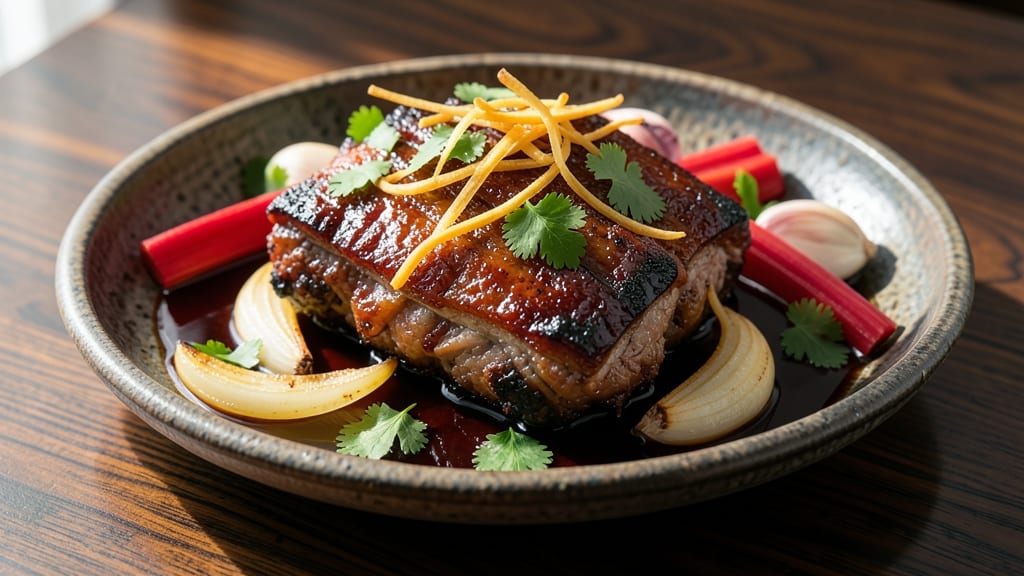
This Asian pork short ribs recipe delivers melt-in-your-mouth tenderness with a crispy celery crown that transforms a simple braise into a showstopper dish. 🌟 The secret lies in slow-cooking bone-in ribs until they're fork-tender while building layers of soy, ginger, and garlic flavor that penetrate every inch of meat.
What sets this recipe apart is the crispy celery crown—a technique I perfected during my time in Charleston, where fresh celery stalks became the perfect vehicle for caramelized flavor.
The ribs develop a glossy, mahogany glaze from the reduced sauce, while the celery crown adds textural contrast that elevates each bite.
By the time you serve these ribs, you'll have a dish that's rich in umami, balanced with sweet-savory notes, and topped with celery that's crispy enough to stand up to the tender meat.
The aroma alone will draw everyone to the table—this is the kind of recipe that turns weeknight dinners into memorable feasts.
Pair with steamed jasmine rice and quick-pickled vegetables to complete the meal. The technique is approachable but delivers restaurant-quality results—exactly what you'd expect from a dish that's been perfected through years of Southern and Asian culinary traditions.
Ingredients for asian pork short ribs
Four pounds of pork, crispy celery crowns, and a sauce that'll have everyone asking for seconds.
| Ingredient | Amount | Notes |
|---|---|---|
| Bone-In Pork Short Ribs 🍖 | 3 lb | 2-2.5 inches thick, cut into 2-inch pieces |
| Celery Stalks 🧅 | 4 whole | Fresh, firm, thick stalks preferred |
| Yellow Onion 🧅 | 1 whole | Medium, sliced into 1/2-inch pieces |
| Fresh Ginger 🌿 | 2 tbsp | Grated, peeled, fresh preferred |
| Garlic Cloves 🧄 | 6 cloves | Minced, fresh preferred |
| Soy Sauce 🥄 | ½ cup | Kosher salt reduced, or tamari |
| Honey 🍯 | 2 tbsp | Wildflower preferred for depth |
| Rice Vinegar 🍶 | 2 tbsp | White or seasoned, not apple cider |
| Sesame Oil 🫒 | 1 tbsp | Toasted, for aroma |
| Vegetable Oil 🫒 | 2 tbsp | High smoke point for searing |
| Water 💧 | 1 ½ cups | Room temperature preferred |
| Cornstarch 🌾 | 1 tbsp | For sauce thickening |
| Salt 🧂 | 1 ½ tsp | Kosher or sea salt |
| Black Pepper 🌶️ | 1 tsp | Freshly ground, coarse |
| Sesame Seeds 🌾 | 1 tbsp | Toasted, for garnish |
The ribs are the star, so grab bone-in short ribs—they stay juicier than boneless. Costco or your butcher shop are best for freshness. Look for ribs with good marbling and ask for them cut into 2-inch chunks if they're not pre-portioned. Celery? Thick, firm stalks from the produce section—avoid the wilted ones in the back. Fresh ginger and garlic are non-negotiable here; the frozen stuff just won't cut it for that bright, fresh flavor. If you're feeling fancy, grab a Korean market for extra-thick celery and pre-sliced ginger if you're short on time.
No soy sauce? Coconut aminos works in a pinch, though the flavor won't be identical. Short on honey? Maple syrup at half the amount gives similar sweetness. The celery crown trick is all about crispy texture—if your celery is too soft, blanch it first in boiling water for 30 seconds before frying. Sesame oil should smell nutty and toasty; if yours smells flat, it's past its prime. For the sauce, if you're making a big batch, double the cornstarch slurry—it's worth the extra minute to get that silky texture. And trust me, the sesame seeds? Toast them in a dry pan first—the aroma alone makes this dish.
These ribs taste even better the next day—honestly, the flavors meld into something magical. Store leftovers in an airtight container with the sauce for up to 4 days in the fridge. Freeze for 3 months if you're planning ahead, but thaw overnight in the fridge. The celery crowns? Make them fresh day-of—they lose crispiness fast. I like to portion the ribs into containers with extra sauce so reheating is a breeze. And if you've got extra sauce? Drizzle it over rice or noodles—it's that good.
Why You'll Love This Recipe
- One-Pot Magic: I swear by this recipe because it’s all in one pot—no fussing with multiple pans or tiny chopping jobs. The ribs, celery, onion, and ginger all braise together until the meat falls off the bone, and the veggies melt into the sauce. Honestly, I’ve made it on nights when I’m too tired to measure anything beyond "a handful of garlic."
- Umami Bomb: That crispy, caramelized edge on the ribs? Chef’s kiss. The ginger and garlic sear first, then the ribs slow-cook until the sauce clings to them like a flavor hug. Between us, the bone-in ribs add depth you won’t get with boneless—it’s rich, savory, and makes every bite worth the wait.
- Weeknight to Dinner Party: I’ve served this to skeptical friends who left their plates lick-clean. It’s simple enough for a Tuesday but fancy enough for company—just add rice or noodles, and suddenly you’re the hero. (Yes, even on a Tuesday night.) The leftovers? Even better the next day, because the flavors deepen like a good wine.
- Budget-Friendly Luxury: Short ribs aren’t cheap, but this recipe stretches them far. The ribs become the star, while the celery and onion bulk it up without breaking the bank. I’ll be real: my grocery budget stays happy, and my family stays fed. Plus, the sauce freezes like a dream, so I’m never stuck scrambling for dinner.
Step-by-step instructions for Asian pork short ribs
Here's how to turn tough ribs into melt-in-your-mouth perfection with crispy celery crowns.
🔥 Step 1: Sear the Ribs for Maximum Flavor
Heat 2 tablespoons vegetable oil in a large Dutch oven over medium-high heat until shimmering. Pat the 3 lb bone-in pork short ribs completely dry with paper towels—this is crucial for that crispy crust. Working in batches, add the ribs to the pot in a single layer. Don't crowd them or they'll steam instead of sear.
Sear each side for 3-4 minutes until deep golden brown with crispy edges. I press down gently on the ribs during the first minute—this prevents them from curling and ensures even contact with the pan. Once all ribs are browned, remove them and set aside on a plate. You'll want to keep them warm while you build the sauce.
👨🍳 Step 2: Build the Aromatic Base
In the same Dutch oven (no need to wipe it clean—those browned bits are pure flavor), add 2 tablespoons vegetable oil if needed. Add the sliced 1 whole yellow onion and cook for 3 minutes until softened. Stir in the 2 tablespoons fresh ginger and 6 cloves garlic cloves, cooking for 1 minute until fragrant—you should smell that fresh ginger aroma.
Here's where it gets fun—toss in the 4 whole celery stalks (leave them whole for those crispy crowns later). Cook for 5 minutes until the celery turns golden brown. You want them to get crispy but still hold their shape. Remove the celery and set aside with the ribs.
🥘 Step 3: Braise Until Fork-Tender
Pour in the 0.5 cup soy sauce, 2 tablespoons honey, 2 tablespoons rice vinegar, and 1.5 cups water. Stir to combine, scraping up all those flavorful browned bits from the bottom of the pot. Return the ribs and celery to the Dutch oven, spooning the sauce over them completely.
Bring to a simmer, then cover and transfer to a 325°F oven. Here's the thing—braising is all about patience. Cook for 2.5-3 hours until the ribs are fork-tender and the meat pulls away easily from the bone. You'll know it's done when the sauce reduces to a glossy, thick consistency that coats the back of a spoon.
🍳 Step 4: Finish with Crispy Celery Crowns
Remove the ribs and celery from the pot and set aside. Skim any excess fat from the sauce, then stir in the 1 tablespoon sesame oil and 1 tablespoon cornstarch mixed with 2 tablespoons water. Simmer for 2-3 minutes until the sauce thickens slightly—it should coat the back of a spoon but still be saucy.
Return the ribs to the pot and spoon the sauce over them generously. For those crispy celery crowns, heat a dry skillet over medium-high heat and sear the celery stalks for 1-2 minutes per side until deeply browned and crispy. Arrange the ribs on a platter, top with the crispy celery, and drizzle with the sauce.
🍽️ Step 5: Garnish and Serve
Sprinkle everything with 1 tablespoon toasted sesame seeds and a pinch of 1.5 teaspoons salt and 1 teaspoon black pepper. I like to serve these with steamed jasmine rice to soak up that glorious sauce. The contrast of the crispy celery crowns with the velvety ribs is what makes this dish truly special.
Let the ribs rest for 5 minutes before serving—this lets the juices redistribute so every bite is moist and flavorful. The celery crowns should be crispy enough to stand up to the tender ribs, and the sauce should be perfectly balanced between sweet, salty, and tangy.
Pro Tips For Making Asian Pork Short Ribs
- SEAR THE RIBEYE SIDE DOWN: I learned this the hard way—skipping the sear means flavorless ribs. Lay the bone-in ribs fat-side down in a cold pan, then turn the heat to medium-high. Wait for that fat to render and the meat to develop a deep brown crust before touching them. (Yes, even if you’re impatient like me.)
- SLICE GINGER THINLY: Thick chunks of ginger just sit there. Use a mandoline or the sharpest knife you own to slice it paper-thin—about 1/16-inch. This way, it infuses the broth properly without turning to mush. (And no, grating isn’t the same—it releases too much liquid too fast.)
- DON’T CROWD THE PAN: After searing, ribs need space to crisp. If you pile them in, they’ll steam instead of brown. Work in batches—two or three ribs max per pan—so they get that caramelized crust. (Your future self will thank you when the sauce isn’t watery.)
- USE THE BONE BROTH: Save the drippings after searing—those are liquid gold. Deglaze the pan with a splash of soy sauce or mirin, then add a cup of water or broth. Simmer it down to thicken the sauce naturally. (Sounds weird, but it works: the collagen from the bones melts into the sauce, making it richer.)
Creative variations of asian pork short ribs
Japanese Yakitori Style
Transform your ribs into yakitori-inspired skewers by marinating the ribs in a blend of 3 tablespoons soy sauce, 2 tablespoons mirin, 1 tablespoon sake, and 1 tablespoon grated ginger for at least 4 hours.
Thread the ribs onto bamboo skewers and grill them over medium-high heat for 8-10 minutes per side, basting with the marinade. Finish with a sprinkle of 1 teaspoon furikake (Japanese seasoning) for an umami kick. 🔥
Korean Bulgogi Twist
For a Korean-inspired version, marinate the ribs in 0.5 cup gochujang (Korean chili paste), 3 tablespoons soy sauce, 2 tablespoons brown sugar, 1 tablespoon sesame oil, and 1 tablespoon minced garlic for 6-8 hours.
Braise the ribs as directed, then finish with a drizzle of 1 tablespoon toasted sesame oil and 1 tablespoon toasted sesame seeds. Serve with kimchi and steamed rice for a full Korean feast. 🌶️
Thai Green Curry Fusion
Infuse your ribs with Thai flavors by adding 1 cup coconut milk, 2 tablespoons green curry paste, and 1 tablespoon fish sauce to the braising liquid. Simmer the ribs for 2 hours instead of 3 to keep the sauce vibrant.
Garnish with fresh Thai basil and crushed peanuts for texture. This version pairs perfectly with jasmine rice and a side of mango salad. 🌿
Chinese Five-Spice Glaze
Add 1 teaspoon Chinese five-spice powder and 1 tablespoon Shaoxing wine to the braising liquid for a fragrant, aromatic twist. Reduce the sauce until it forms a glossy glaze, then brush it over the ribs before serving.
Garnish with scallions and cilantro for freshness. This version works beautifully with egg noodles or steamed buns for a comforting meal. ✨
Spicy Szechuan Kick
For heat lovers, stir 1 tablespoon Szechuan peppercorns (toasted and ground) and 1 tablespoon chili crisp into the sauce during the final 5 minutes of braising.
The ribs will develop a tingling, fiery finish. Serve with pickled vegetables to balance the heat. This version is a crowd-pleaser at any gathering. 💥
Hawaiian Teriyaki Adaptation
Swap the soy sauce for 0.5 cup teriyaki sauce and add 1 tablespoon pineapple juice to the braising liquid. Finish the ribs with a teriyaki glaze made from 2 tablespoons teriyaki sauce and 1 teaspoon honey, brushed on just before serving.
Garnish with toasted coconut flakes and sesame seeds for a tropical touch. 🍍
Nutrition facts
Frequently asked questions
Can I use boneless pork short ribs for this recipe?
While you can use boneless ribs, bone-in ribs are ideal for this braise—they stay juicier and add depth of flavor as they cook. If you must use boneless, reduce the cooking time by 30-45 minutes and check for tenderness at 2 hours. The celery crown technique works the same way, but boneless ribs may require slightly less sauce to prevent sogginess.
How do I know when the ribs are fully tender?
Ribs are done when they easily pull apart with a fork and the meat slides off the bone with minimal resistance. For bone-in ribs, the connective tissue should dissolve into the sauce, leaving fork-tender meat. A good test: pierce the thickest piece—if the juices run clear (not pink or bloody), they're ready. Overcooking by 15 minutes won't ruin them, but the sauce may reduce too much.
What's the best way to reheat leftover ribs?
Reheat ribs in a 350°F oven for 20-25 minutes with a splash of water or broth to keep them moist. For the celery crowns, warm them separately in a dry skillet over medium heat for 1-2 minutes per side to restore crispiness. Never microwave—it turns the meat rubbery. Leftovers taste even better the next day as flavors meld!
Can I substitute the celery crowns with something else?
Swap celery for whole fennel stalks (halved lengthwise) or baby carrots (left whole) for a similar crispy texture. For a Japanese twist, use shiso leaves or napa cabbage wedges—both add freshness. Skip the crown entirely if you prefer, but the contrast makes this dish special. The key is keeping them whole until the final crisping step.
Why did my sauce turn too thick or watery?
Thick sauce? You likely reduced it too much or didn't account for the cornstarch slurry properly. Thin sauce? The ribs absorbed too much liquid (common with boneless cuts) or the oven temp was too low. For fixes: stir in 1 tablespoon water for thickness or simmer uncovered for 5 minutes to reduce excess liquid. The sauce should coat the back of a spoon but still be pourable.