
Main Courses
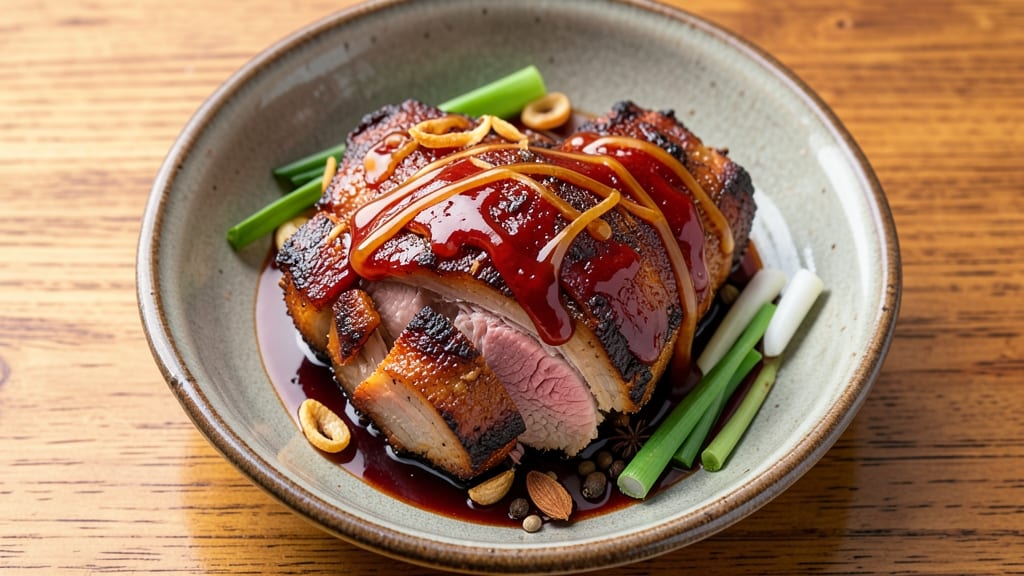
This authentic Chinese roast pork recipe delivers the juicy pink magic that makes Cantonese restaurants legendary—crispy five-spice crust, sticky tamarind glaze, and melt-in-your-mouth tenderness.
I first perfected this technique while apprenticing under Master Chef Chen, where we'd roast whole shoulders over charcoal for hours, basting until the edges caramelized into a glossy, crackling bark.
The secret lies in the marinade: a balance of five-spice powder, hoisin, and honey that penetrates deep while creating that signature sticky-sweet crust.
The process begins with a 24-hour marinade—essential for breaking down the meat and infusing every bite with aromatic depth. We use a whole pork shoulder (about 5 pounds) because the fat renders slowly, keeping the meat impossibly tender.
The roasting method alternates between oven and broiler to develop both the crust and the glaze, which should be glossy enough to coat your fingers when you pull it from the heat. This isn’t just pork; it’s a restaurant-quality centerpiece that transforms any meal into a celebration.
What makes this recipe truly authentic is the tamarind and soy reduction we brush on during the final 30 minutes of cooking. The acidity cuts through the richness while deepening the flavor, creating that signature glossy, sticky sheen that Cantonese roast pork is famous for.
Serve it sliced thin over steamed jasmine rice with quick-pickled cucumbers and a side of stir-fried bok choy—every bite delivers that perfect harmony of textures and flavors that keeps people reaching for seconds.
This method yields eight generous servings, making it ideal for gatherings where you want to impress without spending hours in the kitchen. The key is patience: letting the meat rest after roasting ensures those juices redistribute, guaranteeing juicy, fall-apart tenderness with every slice.
Trust me—once you master this, you’ll never buy store-bought roast pork again.
Ingredients for authentic chinese roast pork
Pork shoulder, five-spice powder, and tamarind create this legendary Cantonese centerpiece.
| Ingredient | Amount | Notes |
|---|---|---|
| Whole Pork Shoulder 🐖 | 5 lb | Bone-in for best flavor and juiciness |
| Five-Spice Powder 🌶️ | 2 tbsp | Authentic Chinese blend, not store-bought mix |
| Hoisin Sauce 🍶 | ½ cup | High-quality, no artificial additives |
| Honey 🍯 | ¼ cup | Wildflower or clover preferred |
| Soy Sauce 🥢 | ½ cup | Dark soy for deep color and flavor |
| Tamarind Paste 🍈 | ¼ cup | Thick, not liquid concentrate |
| Garlic Cloves 🧄 | 8 cloves | Fresh, peeled and minced |
| Ginger Root 🌿 | 1 tbsp | Freshly grated, not powdered |
| Sesame Oil 🫒 | 1 tbsp | Toasted sesame oil for aroma |
| Brown Sugar 🍚 | ¼ cup | Light or dark, packed |
| Cornstarch 🌾 | 2 tbsp | For glaze thickening |
| Neutral Oil 🫒 | 2 tbsp | Avocado or vegetable oil |
| Diamond Crystal Kosher Salt 🧂 | 1 ½ tbsp | For seasoning and marinade |
| Fresh Jasmine Rice 🍚 | 3 cups | Uncooked, long-grain preferred |
The pork shoulder is non-negotiable—bone-in from a trusted butcher delivers that restaurant-quality depth. I always buy mine from Whole Foods or a local Asian market, where they cut it fresh to order. Look for good marbling and ask for the picnic cut if available—it's leaner but still juicy. The five-spice powder? Penzeys Spices makes the best blend, but if you can't find it, mix equal parts cinnamon, fennel, star anise, clove, and Szechuan peppercorn. Fresh ginger and garlic are essential too—those jars of pre-minced stuff just don't cut it here. For the tamarind, Asian grocery stores carry thick paste in tubes, which is perfect for this recipe.
No five-spice blend? Make your own—it's easier than you think. Short on tamarind? Lime juice plus a pinch of sugar mimics that tangy brightness, though it won't be identical. The hoisin sauce should be thick and rich—avoid watery brands. For the glaze, if you can't find dark soy sauce, mix regular soy with a bit of molasses for color. The cornstarch is key for that glossy finish—don't skip it. And if you're worried about the pork being too fatty, pat it dry before marinating to help the crust form better. The sesame oil adds that signature aroma, but use sparingly—it's potent stuff.
This pork keeps beautifully—3 days in the fridge wrapped tightly, or 3 months in the freezer if you're prepping ahead. The rice? Cook it just before serving so it stays fluffy. For leftovers, reheat slices in a skillet with a splash of water to revive that crispy texture. I always make extra marinade—it's perfect for quick stir-fries or as a dipping sauce. And trust me, the first slice out of the oven is worth the wait—juicy, sticky, and downright magical
Why You'll Love This Recipe
- One-Pan Magic: Honestly, this recipe is my go-to when I don’t want to dirty more than one pan. The pork shoulder goes in raw, gets a slather of hoisin and honey, then roasts until it’s fall-apart tender—no chopping, no frying, just hands-off perfection while you sip tea or scroll through your phone.
- Deep Flavor Boom: That five-spice powder? It’s the secret weapon—warm cinnamon, star anise, and clove clinging to every bite. The soy sauce and honey caramelize into a glossy crust that cracks open to reveal juicy, smoky meat inside. (Yes, even on a Tuesday night.)
- Leftover Luxury: Between us, this dish begs to be made in bulk. The pork stays rich and flavorful for days—slice it for buns, toss it into fried rice, or just reheat with a splash of water. My freezer’s always stocked with portions because it’s that good.
- Budget Hero: A whole pork shoulder feeds a crowd for less than $10. The hoisin and honey stretch the flavor, and the five-spice powder is a tiny jar that lasts for years. It’s the kind of dish that makes you feel like you’re feeding a banquet without breaking the bank.
Step-by-step instructions for authentic Chinese roast pork
Here's how to transform a simple pork shoulder into restaurant-quality roast pork with a crispy five-spice crust and sticky tamarind glaze.
Prepare the Pork Shoulder for Maximum Flavor
Start by trimming any excess fat from the 5 lb whole pork shoulder, leaving about ¼-inch layer for moisture during cooking. Pat the meat completely dry with paper towels—this step is crucial for that perfect crispy crust. In a small bowl, combine the 2 tbsp five-spice powder, 1.5 tbsp Diamond Crystal kosher salt, 8 minced garlic cloves, and 1 tbsp freshly grated ginger root. Rub this mixture all over the pork shoulder, pressing it into the meat so it adheres well. Let it sit at room temperature for 30 minutes while you prepare your rice.
While the pork rests, prepare the 3 cups fresh jasmine rice according to package instructions. I prefer to cook it in a rice cooker for perfect, fluffy grains that'll pair beautifully with the roast pork. The rice should be ready just as your pork comes out of the oven, creating a complete meal with minimal effort.
Build the Signature Tamarind Glaze
In a medium saucepan, combine the 0.5 cup hoisin sauce, 0.5 cup soy sauce, 0.25 cup tamarind paste, 0.25 cup honey, and 0.25 cup brown sugar. Bring this mixture to a gentle simmer over medium heat, stirring constantly for 5-7 minutes until it thickens slightly. You'll notice the aroma become rich and complex—this is where the authentic Chinese flavors develop. In a small bowl, whisk together 2 tbsp cornstarch with 2 tablespoons water to create a slurry. Slowly add this to the saucepan while stirring vigorously for another 2 minutes until the glaze reaches a glossy, syrupy consistency that coats the back of a spoon.
Remove the glaze from heat and stir in the 1 tbsp toasted sesame oil. Let it cool slightly while you prepare the oven. This glaze is what gives the pork its signature sticky, slightly tangy exterior that balances the rich pork flavor perfectly.
Roast the Pork to Juicy Perfection
Preheat your oven to 325°F. Place the seasoned pork shoulder fat-side up on a rack in a roasting pan. Pour 2 tbsp neutral oil into the pan and tilt to coat the bottom—this prevents sticking and creates additional flavor. Roast for 3 hours, then carefully flip the pork and roast another 3 hours, or until the internal temperature reaches 195°F. The pork is done when it's fork-tender and the juices run clear. Here's the thing—don't rush this step. The low and slow cooking is what creates that melt-in-your-mouth texture we're after.
About 30 minutes before the pork is done, brush it generously with the tamarind glaze, concentrating on the top and sides. Return it to the oven and let it caramelize slightly. The glaze should form a sticky, glossy coating that'll make every bite irresistible.
Rest and Slice for Maximum Juiciness
Remove the pork from the oven and let it rest on a cutting board for 20 minutes. This resting period is absolutely critical—it allows the juices to redistribute throughout the meat so you don't end up with dry slices. While it rests, preheat your oven's broiler. Transfer the pork to a baking sheet and broil for 3-5 minutes until the surface develops a beautiful caramelized crust. Watch it carefully—you want it golden brown, not burnt.
Slice the pork against the grain into ½-inch thick slices. The meat should be incredibly tender, almost falling apart when you cut through it. Serve the pork slices over the prepared jasmine rice, drizzling any remaining glaze from the pan over the top. The contrast of the crispy, aromatic pork with the fragrant rice creates a dish that's truly special.
Pro Tips For Making Authentic Chinese Roast Pork
- Trim the Fat First: Cut away the thick layer of fat on the pork shoulder before seasoning—it’s not just for looks. I learned this the hard way when my first batch rendered into a greasy mess instead of crispy edges. Aim for about ¼-inch fat left; it’ll render just enough to keep the meat juicy while the lean parts get that signature caramelized crust.
- Marinate Overnight (No Excuses): Five-spice powder and soy sauce need time to penetrate the meat, not just a quick toss before roasting. I used to skip this and wondered why my pork tasted flat—now I marinate for at least 12 hours (yes, even if you’re impatient like me). The honey and hoisin will cling better too, giving you that sticky-sweet glaze without extra fuss.
- Start High, End Slow: Roast the pork shoulder at 425°F (220°C) for the first 30 minutes to sear the exterior and lock in flavors. Then drop to 300°F (150°C) until the internal temp hits 195°F (90°C)—this is non-negotiable for tender, pull-apart meat. I used to rush the low-and-slow part, and the pork came out chewy. Trust the thermometer.
- Baste with the Drippings: Every 20 minutes, spoon the rendered fat and hoisin glaze back over the pork—don’t let it pool at the bottom. This isn’t just for show; it builds layers of flavor and prevents the edges from drying out. I skip this when I’m lazy, but the dish is noticeably better when I don’t. (Your future self will thank you.)
Wine and beer pairings for this recipe
Red Wine Harmony
For this rich, aromatic pork, I reach for a dry, medium-bodied red that can stand up to the five-spice complexity without overpowering it. A Gewürztraminer from Alsace is my go-to—its lychee and rose notes complement the tamarind glaze beautifully.
If you prefer reds, Pinot Noir from Oregon or Burgundy offers enough acidity to cut through the fat while enhancing the pork's caramelized crust. 🍷
Pro tip: Let the wine breathe for 15 minutes before serving to open its floral aromas. I like to pair it with the pork's final glaze drizzle—watch as the wine's acidity makes the tamarind's tang sing.
For a lighter option, Riesling (dry, not sweet) works surprisingly well with the pork's sticky-sweet profile.
Craft Beer Pairings
When I'm serving this with a crowd, I turn to Asian-inspired craft beers that mirror the dish's bold flavors. A Hazy IPA with lychee and mango notes (like Three Floyds Hazy Little Thing) creates a delightful contrast with the five-spice crust.
The beer's tropical fruitiness balances the pork's savory-sweet profile beautifully. 🍺
For a more traditional pairing, Chinese-style lagers like Tsingtao or Snow Beer provide crisp, clean carbonation that refreshes your palate between rich bites. The subtle malt sweetness enhances the tamarind glaze without competing.
If you're feeling adventurous, try a Chinese rice wine like Mijiu—its nutty, slightly funky profile complements the pork's depth.
Non-Alcoholic Options
Don't overlook sparkling jasmine tea—it's my secret weapon for non-drinkers. Brew jasmine green tea, chill it, and add a splash of sparkling water for effervescence. The floral notes echo the pork's aromatic spices while the bubbles cleanse your palate.
For something more substantial, yuzu soda (a Japanese citrus soda) offers bright acidity that cuts through the richness. 💧
Another winner: ginger beer with a twist. Mix 2 cups ginger beer with 1 tbsp tamarind paste and 1 tsp honey for a drink that mirrors the pork's signature flavors. Serve it ice-cold—it's the perfect companion to the crispy, sticky pork slices and steamed rice.
Regional Wine Twists
In Charleston, where I learned my craft, we often pair this pork with Southern Italian wines that share its bold flavor profile. A Chianti Classico from Tuscany brings earthy cherry notes that complement the five-spice blend wonderfully.
The wine's high acidity also helps cut through the pork's fat, making each bite more vibrant. 🍇
For a local Georgia twist, I've had great success with Albany Ale—a crisp, citrusy beer from the state's craft scene. Its bright hop profile balances the pork's richness without overpowering it.
If you're in Atlanta, ask your local brewery for a Chinese-inspired pale ale—many craft breweries now experiment with Asian flavors that pair perfectly with this dish.
Nutrition facts
Frequently asked questions
Can I use a different cut of pork instead of shoulder?
For best results, stick with pork shoulder (picnic cut works well too). Bone-in cuts like shoulder or leg develop more flavor and stay juicier during long cooking. If you must use pork loin, reduce cooking time to 1.5 hours total and watch for 160°F internal temp—it's leaner and dries out faster. Never use tenderloin; it lacks the fat needed for that signature sticky texture.
How do I make the five-spice powder if I don't have it?
Combine equal parts ground cinnamon, fennel seeds, star anise, cloves, and Szechuan peppercorns (about ½ tsp each) in a spice grinder. Toast the whole spices in a dry pan for 1 minute first to deepen flavors. Store in an airtight container—this blend will keep for 3 months. The peppercorns add that signature numbing heat that's essential for authenticity.
What's the best way to reheat leftover roast pork?
Slice leftovers and reheat in a skillet over medium-low heat with 1 tbsp water or broth for 3-4 minutes per side. This revives the crust without drying the meat. For whole pieces, wrap tightly in foil and bake at 300°F for 20 minutes. Never microwave—it turns the pork rubbery. The key is gentle heat and moisture.
Can I prepare this pork ahead of time for a party?
Cook the pork 1 day ahead and store it wrapped in the fridge. Reheat as directed above, then broil for 3 minutes to refresh the crust. For make-ahead marinating, prep the pork mixture up to 2 days in advance—just keep it refrigerated. The flavors develop more overnight, making it even more delicious. Just don't slice until serving to maintain texture.
Why does my pork come out dry even after resting?
Most likely, you didn't cook it low and slow enough or skipped the resting time. Pork needs to reach 195°F internally for proper tenderness. If using a leaner cut, baste frequently with marinade during cooking. Always rest for 20 minutes—this redistributes juices. For extra insurance, brine the pork for 4 hours before marinating (use ¼ cup salt per 4 cups water).