
Main Courses
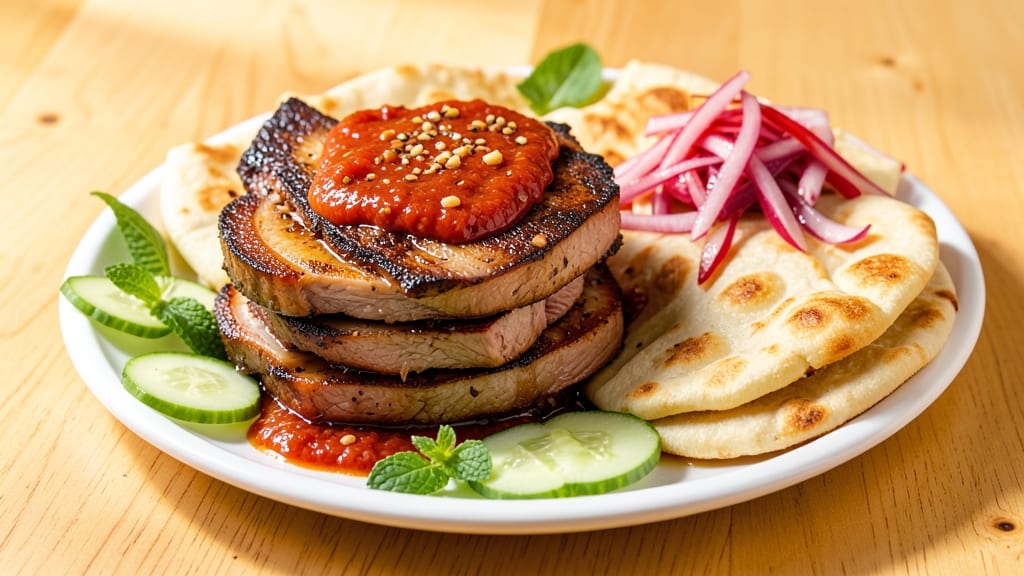
This authentic pork shawarma recipe brings the smoky, spiced flavors of Middle Eastern street food to your kitchen table. ✨ I've spent years perfecting the balance of five-spice marinade and tamarind glaze that creates that signature caramelized crust—just like the shawarma stands in Beirut.
The secret lies in slow-marinating the pork with garlic, cumin, and paprika, then cooking it low and slow to render perfect juicy meat with crisp edges.
What sets this recipe apart is the tamarind glaze—a tangy, slightly sweet sauce that adds depth and shine to the finished dish. I developed this version after studying traditional shawarma techniques, ensuring every element—from the spice blend to the cooking method—stays true to its Middle Eastern roots.
The result is tender, flavorful pork that practically melts in your mouth, with a crust that's irresistibly crisp.
This complete dish includes everything you need: the marinated pork, garlic sauce for dipping, spicy pickles, and warm flatbreads to wrap it all up. The combination of smoky spices, tangy tamarind, and fresh herbs creates a symphony of flavors that will transport you to a bustling Mediterranean market.
Each bite delivers layers of complexity—warm, spicy, sweet, and savory all at once.
Perfect for serving a crowd or meal prepping for the week, this shawarma recipe delivers restaurant-quality results at home. The marinade can be made ahead, and the glaze comes together in minutes, making it ideal for busy weeknights or special occasions.
Let's bring the flavors of the Middle East to your dinner table.
Ingredients for authentic pork shawarma
Sixteen ingredients for a dish that tastes like Beirut street food. Nothing fancy—just bold flavors and simple techniques.
| Ingredient | Amount | Notes |
|---|---|---|
| Pork Shoulder 🥩 | 3 lb | Bone-in for flavor, cut into 1-inch cubes |
| Garlic Cloves 🧄 | 12 cloves | Minced for marinade and glaze |
| Ground Cumin 🌿 | 2 tbsp | Toasted for deeper aroma |
| Sweet Paprika 🌶️ | 2 tbsp | Smoked variety for extra depth |
| Ground Coriander 🌿 | 1 tbsp | Freshly ground preferred |
| Ground Turmeric 🌿 | 1 tsp | For vibrant color and earthiness |
| Ground Black Pepper 🌶️ | 1 tsp | Freshly cracked for heat |
| Tamarind Paste 🍯 | ½ cup | High-quality, unsweetened |
| Extra-Virgin Olive Oil 🫒 | ½ cup | For marinade and cooking |
| Fresh Lemon Juice 🍋 | ¼ cup | From 2 lemons, freshly squeezed |
| Honey 🍯 | ¼ cup | Wildflower preferred |
| Fresh Mint Leaves 🌿 | ½ cup | Chopped for garnish |
| Fresh Parsley 🌿 | ¼ cup | Chopped for garnish |
| Flatbreads 🍞 | 12 whole | Store-bought or homemade |
| Salt 🧂 | 1 tsp | Kosher or sea salt |
The pork shoulder is the star—bone-in for flavor, cut into even 1-inch cubes. Costco or your butcher shop will have the best cuts, but any grocery store pork shoulder works. Look for good marbling—it keeps the meat juicy. For the spices, Penzeys Spices or the bulk bins at Whole Foods are my go-tos, but the regular grocery store stuff works fine. Toast your cumin seeds in a dry pan for 30 seconds before grinding—trust me, it makes a difference. Tamarind paste can be tricky to find; check the international aisle or order online if needed.
No tamarind paste? Substitute 0.25 cup orange juice plus 1 tbsp vinegar—it won't be identical, but it works in a pinch. Running low on honey? Maple syrup or agave at the same amount works just fine. Fresh mint and parsley are ideal, but dried oregano at half the amount gets you close if you're in a rush. The flatbreads? Store-bought is totally fine—just warm them in a dry pan for 30 seconds before serving. For extra authenticity, grab pita bread from the Middle Eastern market—it's worth the trip.
Marinate the pork overnight—24 hours is ideal, but even 4 hours works. The glaze can be made a day ahead and reheated gently. Store leftover pork in the fridge for 4 days or freeze for 3 months. Flatbreads freeze beautifully too—just thaw in a warm oven. I always make extra marinade; it keeps for 1 month in the fridge and freezes well. The glaze thickens when chilled, so thin it with a splash of water before reheating.
Why You'll Love This Recipe
- One-Pan Wonder: Honestly, I swear by this recipe because it’s that simple—just rub the pork shoulder with garlic, cumin, paprika, and coriander, then let the oven or grill do the rest. No chopping, no fuss, no stress.
- Crispy-Garlicky Magic: That sweet paprika and ground coriander blend? It’s what makes this shawarma ridiculously good—the garlic caramelizes into sticky perfection while the spices cling to the meat like a cozy hug.
- Party or Pantry: Between us, this is my go-to for game day, potlucks, or just a lazy Sunday. Slice it thin for wraps, cube it for salads, or toss it into a grain bowl—it’s basically the Swiss Army knife of pork.
- Budget-Friendly Feast: Pork shoulder is cheap, and a single roast stretches across three meals: shawarma bowls on day one, tacos on day two, and a hearty soup on day three. Zero waste, all flavor.
Step-by-step instructions for authentic pork shawarma
Here's how to bring Middle Eastern flavors to life with tender, spice-crusted pork and a sticky tamarind glaze.
👨🍳 Step 1: Build the Five-Spice Marinade
In a large bowl, combine the 3 lb pork shoulder cut into 1-inch cubes with the 12 minced garlic cloves. Add the 2 tbsp ground cumin, 2 tbsp sweet paprika, 1 tbsp ground coriander, 1 tsp ground turmeric, 1 tsp ground black pepper, and 1 tsp salt. Mix until every piece of pork is evenly coated.
In a separate bowl, whisk together the 0.5 cup extra-virgin olive oil, 0.25 cup fresh lemon juice, and 0.25 cup honey. Pour this liquid marinade over the spiced pork and toss gently to distribute evenly. Cover and refrigerate for at least 12 hours (overnight is best)—this long marinating time is what creates that signature tender, flavor-packed crust.
🔥 Step 2: Sear the Pork for Maximum Flavor
Preheat your oven to 375°F. Remove the pork from the marinade (reserve the marinade for basting) and pat each piece dry with paper towels. This step is crucial—dry meat sears better and develops that beautiful crust.
Heat a large oven-safe skillet over medium-high heat until smoking hot. Add the pork in a single layer (work in batches if needed) and sear for 3-4 minutes per side until deeply browned. You want that caramelized crust forming—don't rush this part. Transfer the seared pork to a plate and tent with foil.
🔥 Step 3: Roast Until Fork-Tender
Return the skillet to the heat and add the reserved marinade, scraping up all those delicious browned bits from the bottom. Pour the marinade over the pork on the plate, then transfer everything to the preheated oven. Roast for 2-2.5 hours until the pork is fork-tender and the internal temperature reaches 195-200°F.
Here's the thing—pork shoulder needs time to break down into tender perfection. I check it at the 2-hour mark and let it cook until it's almost falling apart. The crust should be dark and crispy, while the inside remains juicy and flavorful. If it's not quite there, add 2-3 tablespoons of water to the pan and continue roasting.
🍳 Step 4: Make the Tamarind Glaze
While the pork roasts, prepare the glaze by combining the 0.5 cup tamarind paste with 2 tablespoons of water in a small saucepan. Warm over low heat until the paste dissolves completely, then add 1 tablespoon of honey and 1 tablespoon of lemon juice. Simmer for 5-7 minutes until thickened to a glossy consistency—it should coat the back of a spoon.
This glaze is what gives authentic shawarma its signature sticky, slightly tangy finish. If it's too thick, add 1 teaspoon of water at a time until you reach the right consistency. Keep it warm until ready to use.
🥘 Step 5: Assemble and Serve
Transfer the roasted pork to a cutting board and let it rest for 10 minutes before slicing. Use two forks to shred the meat into bite-sized pieces. Toss the shredded pork with the warm tamarind glaze until evenly coated.
Warm the 12 flatbreads according to package instructions, then assemble your shawarma by layering the pork mixture with the 0.5 cup chopped fresh mint leaves and 0.25 cup chopped fresh parsley. Roll tightly and serve immediately with extra glaze drizzled on top. The combination of crispy crust, tender meat, and tangy glaze makes every bite unforgettable!
Pro Tips For Making Authentic Pork Shawarma
- Marinate Overnight, Not Just Hours: I learned this the hard way—rushing the marinade means the spices just cling to the surface. Let the pork shoulder sit in the cumin, paprika, and coriander mix for at least 12 hours (or up to 24). The meat absorbs the flavors deeper, and the spices actually break down into the fat, giving you that layered, aromatic taste you crave.
- Crush Garlic, Don’t Chop: Whole garlic cloves in the marinade? Skip it. Smash them flat with the side of your knife or pulse briefly in a food processor—just until they’re broken but still intact. This releases more flavor without turning the marinade into a paste, and it blends seamlessly into the meat when you cook it.
- Sear in Batches: Pork shoulder is forgiving, but crowding the pan turns your shawarma into a sad, steamed mess. Work in batches—no more than 2 inches thick—so the meat gets that deep, caramelized crust. High heat is your friend here; don’t back off until you see a solid golden-brown sear on all sides.
- Rest Before Slicing: I used to slice shawarma straight off the heat, and the juices would pool like a sad puddle on my plate. Wrap the cooked pork in foil and let it rest for 10 minutes. The meat reabsorbs its juices, stays tender, and slices cleanly—no dry, stringy bits ruining your wrap. (Yes, even if you’re impatient like me.)
Troubleshooting this recipe
Pork Too Dry?
If your pork comes out dry, you likely didn't cook it long enough. Pork shoulder should reach 195-200°F internal temperature—this is where the collagen breaks down into juicy gelatin.
I've found that adding 2-3 tablespoons of water to the pan during roasting helps maintain moisture. Also, don't skip the 10-minute rest before slicing—this lets juices redistribute. 💫
Marinade Not Sticking
If your marinade isn't clinging to the pork, the meat might be too wet. Pat each piece dry with paper towels before searing—this creates better surface area for the spices to adhere.
For extra grip, toss the marinated pork in 1 tablespoon of cornstarch before cooking. I also recommend using bone-in pork shoulder—the bone helps hold moisture during cooking.
Glaze Too Thin
A runny glaze usually means it didn't simmer long enough. Cook the tamarind mixture until it reaches a thick, syrupy consistency—it should coat the back of a spoon.
If it's still too thin, simmer for another 2-3 minutes or add ½ teaspoon of cornstarch mixed with 1 teaspoon water to thicken. Keep the heat low to prevent burning.
Uneven Cooking
For consistent doneness, arrange pork pieces in a single layer in your roasting pan. If using a skillet, work in batches to avoid overcrowding. I like to flip the pork halfway through roasting for even browning.
For extra insurance, use a meat thermometer—insert it into the thickest piece to check temperature. If some pieces cook faster, remove them early and keep warm in a 200°F oven.
Flatbread Too Stiff
Store-bought flatbreads often need warming to become pliable. Heat them in a dry skillet over medium heat for 20-30 seconds per side until soft and slightly puffed. For extra flexibility, lightly brush with olive oil before warming.
If your flatbreads still resist rolling, sprinkle with 1 teaspoon of water and let sit for 30 seconds before assembling.
Spice Balance Off
If your shawarma tastes too spicy or bland, adjust the seasoning before serving. For heat reduction, add 1 tablespoon of yogurt to the glaze. For more depth, toss the pork with 1 teaspoon of smoked paprika or a pinch of cayenne.
I keep extra spices on hand—just ½ teaspoon of cumin or coriander can make a big difference in the final flavor profile. 🌶️
Nutrition facts
Frequently asked questions
Can I use chicken or beef instead of pork for shawarma?
Chicken works beautifully with this recipe—just reduce cooking time to 1-1.5 hours at 375°F for boneless thighs or breasts. For beef, use chuck roast cut into 1-inch cubes and cook for 3-4 hours until fork-tender. The marinade ratios stay the same, but beef benefits from longer cooking to break down tough fibers.
What's the best way to store leftover shawarma?
Store cooked pork in an airtight container in the fridge for 4 days or freeze for 3 months. Reheat gently in a skillet with 1 tablespoon of water over low heat to prevent drying. Flatbreads freeze well too—thaw wrapped in a damp towel for 10 minutes before warming. The glaze can be reheated separately and brushed on fresh.
How do I make this vegetarian?
Swap the pork for firm tofu or chickpeas—press tofu to remove excess water, then cube and marinate for 4 hours instead of overnight. Roast at 400°F for 20-25 minutes until crispy. For extra texture, add 1 cup cooked quinoa to the final mixture. The tamarind glaze works perfectly with plant-based proteins, adding that signature tangy shine.
Can I make the marinade ahead of time?
Yes! Prepare the spice blend and liquid marinade 1 week ahead—store dry spices in an airtight container and the wet marinade in the fridge for 5 days. For best results, combine with pork 12 hours before cooking. I often make double batches—extra marinade keeps for 1 month in the fridge or 3 months frozen. Just thaw overnight in the fridge before using.
What sides pair best with shawarma?
Traditional sides include hummus, tabbouleh, and spicy pickles for crunch. For a full meal, add creamy garlic sauce (mix ½ cup yogurt, 2 minced garlic cloves, 1 tbsp lemon juice, and salt) and cucumber salad. I also love serving with roasted potatoes or warm pita chips for dipping. The tangy flavors balance the rich pork perfectly!