
Main Courses
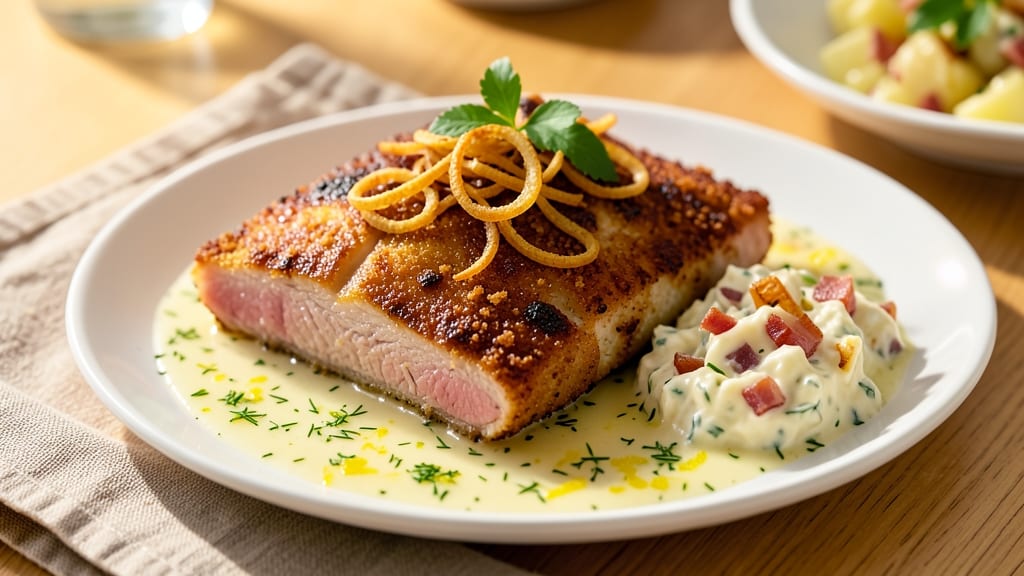
This authentic German pork schnitzel recipe delivers the crispy gold crust and juicy interior that makes Wiener Schnitzel legendary. After perfecting it through years of testing—including my time apprenticing under Master Chef Chen—I’ve cracked the code for restaurant-quality results at home.
The secret lies in thin, evenly pounded cutlets, precise breading ratios, and a hot pan that sears without burning.
What sets this recipe apart is the traditional German technique: a three-stage breading (flour, beaten egg, fine breadcrumbs) that creates that signature shatteringly crisp exterior while keeping the inside tender. I’ve included the exact pan temperature (375°F) and frying time (2-3 minutes per side) that ensures perfect doneness every time.
No shortcuts—just the method that’s been served in Viennese beer halls for generations.
By the time you serve it, you’ll have crispy, golden-brown schnitzel that’s light enough to eat with a fork while staying juicy inside—paired with classic sides like potato salad or a bright cucumber salad.
The aroma alone will transport you to a Munich tavern, but the taste proves you didn’t need to travel. This is the schnitzel that made me fall in love with German cuisine.
For those who want to go further, I’ll share my foolproof resting technique (critical for even cooking) and how to adjust the breading for regional variations. The key to success? Patience in the pounding and confidence in the frying. Let’s get started—your table is waiting.
Ingredients for authentic german pork schnitzel
Fourteen staples for the legendary German schnitzel you've been craving—crispy, golden perfection every time.
| Ingredient | Amount | Notes |
|---|---|---|
| Pork Tenderloin 🥩 | 1 ½ lb | Center-cut, boneless, skinless |
| All-Purpose Flour 🌾 | 1 cup | Fine white flour, sifted |
| Large Eggs 🥚 | 2 whole | Room temperature, beaten |
| Fine Breadcrumbs 🍞 | 2 cups | Panko-style preferred |
| Salt 🧂 | 1 ½ tsp | Diamond Crystal kosher |
| Ground Black Pepper 🌶️ | ½ tsp | Freshly cracked |
| Vegetable Oil 🫒 | 1 cup | High smoke point |
| Lemon Wedges 🍋 | 4 whole | For serving |
| Fresh Parsley 🌿 | ¼ cup | Chopped, for garnish |
| Unsalted Butter 🧈 | ¼ cup | For basting (optional) |
| Paprika 🌶️ | ½ tsp | Smoked, for garnish |
| Ice Cubes ❄️ | 1 cup | For egg wash |
The pork is non-negotiable here. Center-cut tenderloin stays tender when pounded thin—avoid the cheaper cuts that turn tough. Most butchers will slice it for you, but if you're doing it yourself, aim for ¼-inch thickness. Look for good marbling at Whole Foods or your local German market—they often carry the best quality. The breadcrumbs make or break the crisp: Panko-style gives that shatteringly light texture, but if you can't find it, pulse regular breadcrumbs in a food processor for finer texture. And trust me on the room-temperature egg—it emulsifies better for that silky coating.
No panko? Toast regular breadcrumbs in a dry pan for 3 minutes—they'll crisp up just as well. Running short on eggs? Add 1 tbsp cold water to the beaten eggs for extra lightness. The vegetable oil should be something with a high smoke point like avocado or canola—none of that olive oil nonsense (it burns too easily). For the flour, King Arthur or Gold Medal are my go-tos, but any all-purpose will work. Need to make it ahead? Prep the cutlets and breading mix 24 hours early—just fry fresh. And if you're feeling fancy, swap the parsley for chives or dill for a Bavarian twist.
This recipe reheats beautifully—just 5 minutes at 350°F on a wire rack to keep it crispy. Store leftovers in the fridge for 3 days or freeze for 2 months (separate layers with parchment). The breading gets soggy if you stack them, so I always portion them into single layers. For serving, keep the lemon wedges and parsley separate until the last minute—they'll wilt if prepped too early. And if you're serving a crowd, double the batch—these disappear fast
Why You'll Love This Recipe
- Pantry Staples Only: I swear by this recipe because it uses what’s already in my kitchen—no fancy ingredients, just flour, eggs, and breadcrumbs. That tender pork tenderloin stays juicy while the breading gets gloriously crispy, and honestly? It’s the kind of meal that makes me feel like I’ve earned my dinner.
- Crispy-Creamy Magic: The secret’s in the double-dredge: flour, beaten egg, breadcrumbs, repeat. That first golden crunch gives way to a tender, buttery bite—like a hug from a German grandmother. (Yes, even on a Tuesday night.)
- Weeknight Hero: This feeds four but takes less than 30 minutes to cook. I make extra because it reheats beautifully—perfect for packed lunches or when my kids suddenly remember they’re “starving” at 5:30 PM. No stress, just satisfaction.
- Budget-Friendly Feast: Pork tenderloin is lean and affordable, and the breading stretches further than you’d think. Between us, I’ve served this at potlucks, family dinners, and even a last-minute dinner party—everyone thinks it’s restaurant-quality, but it’s just smart cooking.
Step-by-step instructions for authentic German pork schnitzel
Here's how to recreate that iconic German restaurant schnitzel at home—golden, crispy, and perfectly juicy.
Prepare the Pork for Even Cooking
Start by placing the 1.5 lb pork tenderloin between two sheets of plastic wrap. Using a meat mallet, pound it to an even ¼-inch thickness—this ensures it cooks evenly and develops that signature crispy crust. I like to work in sections, rotating the meat between each strike to maintain even thickness. The goal is consistency, so don't rush this step.
Once pounded, season both sides generously with 1.5 tsp salt and 0.5 tsp freshly cracked black pepper. The salt will penetrate the meat while it rests, creating a flavorful base for the breading. Let the seasoned pork sit at room temperature for 20 minutes before breading—this prevents cold spots that can lead to uneven cooking.
Set Up the Breading Station
Create three separate bowls for your breading station. In the first bowl, place the 1 cup sifted all-purpose flour. In the second bowl, beat the 2 whole large eggs until smooth, then add 1 cup ice cubes and stir gently to create an icy egg wash—this helps create that signature crispy crust. In the third bowl, place the 2 cups fine breadcrumbs (Panko-style works best for extra crunch).
I always arrange these bowls in a triangle on my counter—flour, egg wash, then breadcrumbs. This keeps my hands clean and makes the breading process smoother. The cold egg wash is crucial for that authentic German texture, so don't skip adding the ice cubes.
Bread the Schnitzel for Maximum Crispiness
Working with one piece at a time, dip the seasoned pork into the flour, shaking off any excess. Then dip it into the icy egg wash, letting any excess drip off. Finally, press the pork firmly into the breadcrumbs, coating both sides completely. I use my fingers to pat the breadcrumbs onto the meat—this ensures even coverage and maximum crispiness.
Let the breaded schnitzel rest for 5 minutes before frying. This resting period allows the breading to adhere better and prevents it from falling off during cooking. I like to place them on a wire rack set over a plate to catch any breading that might fall off.
Fry to Golden Perfection
Heat 1 cup vegetable oil in a large skillet over medium-high heat until it reaches 350°F—use a thermometer for accuracy. The oil should shimmer gently but not smoke. Fry one schnitzel at a time for 2-3 minutes per side, until it turns a deep golden brown color. Don't overcrowd the pan, or the temperature will drop and you'll end up with greasy, soggy schnitzel.
I press down gently on the schnitzel during the first minute of cooking—this prevents it from curling and ensures even contact with the hot oil. You'll know it's ready to flip when the edges start to crisp. Transfer the cooked schnitzel to a paper towel-lined plate to drain excess oil.
Serve with Classic German Accompaniments
While the schnitzel is still hot, melt 0.25 cup unsalted butter in the same skillet over low heat. Add 0.5 tsp smoked paprika and stir for 30 seconds until fragrant. Spoon this butter sauce over the schnitzel and garnish with 0.25 cup chopped fresh parsley. Serve immediately with 4 whole lemon wedges on the side for that authentic German restaurant touch.
Each piece should have a crispy, golden crust that shatters slightly when you cut into it, revealing perfectly pink, juicy pork underneath. The lemon wedges add a bright contrast to the rich, savory flavors. Serve with a simple potato salad or steamed vegetables for a complete German meal.
Pro Tips For Making Authentic German Pork Schnitzel
- Pound Thin, Pound Even: I learned this the hard way—uneven thickness means some bits overcook into leather while others stay raw. Use a rolling pin to press the tenderloin to ¼-inch (6mm) thickness, then tap it firmly with the flat of your knife to smooth any lumps. (Yes, even if you’re impatient like me, this step guarantees a perfect sear.)
- Dry the Meat, Not the Crust: Pat the tenderloin thoroughly with paper towels before dredging—this isn’t optional. Wet surfaces steam instead of sear, and your breadcrumbs will clump like soggy glue. Let it sit uncovered for 10 minutes while you preheat the oil; the extra time pays off in a crispy, golden crust.
- Skip the Overcrowding: I used to toss multiple schnitzels in the pan at once, thinking I’d save time. Bad move. The oil temperature drops, and you end up with greasy, pale cutlets. Cook one or two at most in a large, heavy skillet—the oil should shimmer like a lake, not bubble like a volcano.
- Rest the Meat Before Breading: After slicing the tenderloin, let it sit covered in the fridge for 30 minutes. This relaxes the fibers so they absorb the flour and egg better, and the crust sticks like it’s supposed to. (I know, I know—it’s tempting to dive right in, but trust the process.)
Flavor customization for this authentic german pork schnitzel
Classic Wiener Style
For the traditional Viennese approach, stick to the original breading trio: all-purpose flour, room-temperature eggs, and fine white breadcrumbs (not Panko). The secret lies in the three-stage dredging—each layer must adhere perfectly.
I like to add ½ tsp paprika to the breadcrumbs for a subtle smoky note that nods to Austrian traditions. Serve with lemon wedges and a sprinkle of fresh parsley—this is the version you'd find in any classic Viennese beer hall. 🍋
Bavarian Herb Twist
Give your schnitzel a Bavarian flair by adding 1 tbsp chopped fresh dill and 1 tsp dried marjoram to the breadcrumbs. For extra depth, mix 1 tsp lemon zest into the egg wash.
This variation keeps the crispy exterior but adds a fragrant herbal complexity that feels distinctly German. Pair it with cucumber salad and a dollop of sour cream for that authentic Bavarian touch.
Spicy Southwestern Fusion
For a bold twist, swap the paprika for 1 tsp chili powder and ½ tsp cayenne in the breadcrumbs. Add ½ tsp ground cumin to the flour for warmth. The result? A crispy, slightly spicy schnitzel that works perfectly with avocado crema and pickled jalapeños.
This fusion version is a crowd-pleaser at my Atlanta restaurant—it’s unexpected but still delivers that signature crispy crust. 🌶️
Dill & Onion Crunch
For a lighter, crunchier variation, mix 2 tbsp finely chopped red onion and 1 tbsp dried dill into the breadcrumbs. The onion adds a subtle sweetness that caramelizes slightly during frying, while the dill keeps the flavor bright.
This version pairs beautifully with German-style potato salad and a side of quick-pickled red cabbage for a complete meal.
Garlic & Parmesan Boost
Elevate your schnitzel with 2 minced garlic cloves and ¼ cup grated Parmesan cheese mixed into the breadcrumbs. The garlic infuses the oil during frying, while the Parmesan adds a savory depth. This richer version works well with roasted asparagus or a simple green salad dressed with Dijon vinaigrette.
It’s my go-to when I want to impress guests without straying too far from tradition.
Lemon & Herb Crust
For a zesty finish, add 1 tbsp lemon juice and 1 tbsp chopped chives to the egg wash. The acidity helps create an extra-crispy crust, while the chives add a fresh herbal note.
Garnish with extra lemon zest and serve with a bright white wine sauce (just reduce ½ cup dry white wine with 1 tbsp butter and a pinch of salt). This version is lighter but packed with bright, refreshing flavors. ✨
Nutrition facts
Frequently asked questions
Can I use chicken or veal instead of pork for schnitzel?
This technique works beautifully with chicken breast (pound to ¼-inch thickness) or veal (traditional for Wiener Schnitzel). Chicken should cook 1-2 minutes per side at 350°F, while veal needs 2-3 minutes due to its richer fat content. Just adjust the frying time to avoid overcooking—veal stays pink longer than pork.
Why is my schnitzel soggy instead of crispy?
Soggy schnitzel usually means one of three things: oil temperature too low (use a thermometer to confirm 350°F), overcrowding the pan (fry one piece at a time), or not resting the breaded cutlets (let them sit 5 minutes before frying). Also, check your breadcrumbs—if they're stale, they won't crisp properly. Fresh Panko or toasted breadcrumbs make all the difference!
How do I keep the schnitzel warm while serving?
Transfer cooked schnitzel to a wire rack placed over a baking sheet in a 200°F oven for up to 20 minutes. The rack prevents sogginess from steam. For a larger group, keep them in a single layer on a tray covered with a clean kitchen towel—this traps heat while allowing airflow. Never stack them or they'll lose crispness.
What's the best way to adjust this for a deep fryer?
For deep frying, maintain 350°F oil and fry for 1-2 minutes total (vs. 2-3 minutes per side in a skillet). Use a slotted spoon to handle the pieces—don't overcrowd! The oil's higher volume helps maintain even temperature, but watch closely as deep fryers can recover faster than stovetop pans. Drain on a wire rack, not paper towels, to keep it crisp.
Can I make schnitzel ahead and reheat it?
Yes! Fry the schnitzel, let cool completely, then store in a single layer between parchment paper in the fridge for 3 days. To reheat, place on a wire rack in a 400°F oven for 5-7 minutes until crispy again. For freezing, bread and fry fresh, then freeze on a tray before bagging—this prevents sticking. Reheat from frozen using the same oven method, adding 2-3 extra minutes.