
Main Courses
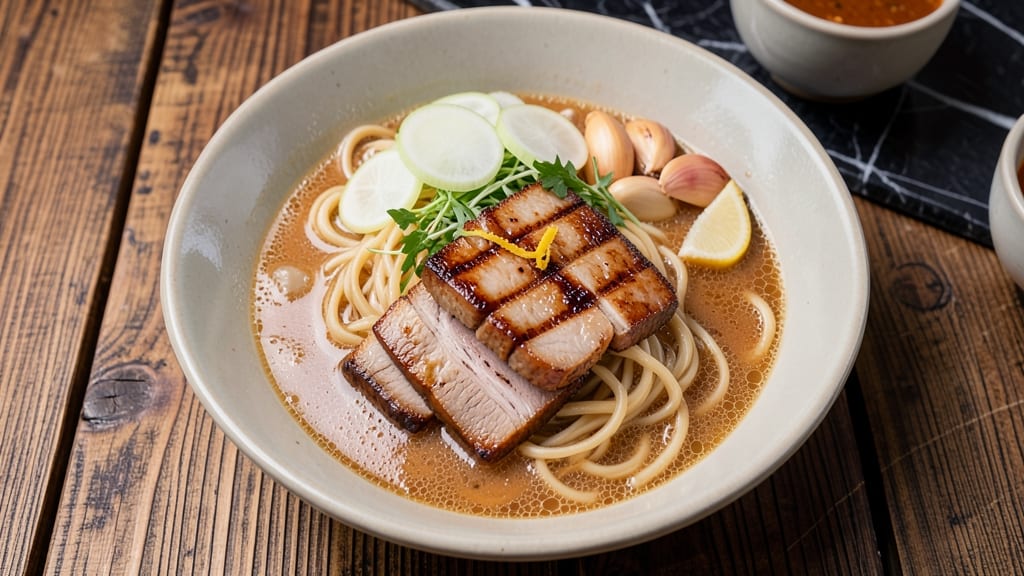
This authentic Japanese pork ramen recipe brings the soul of Tokyo's legendary ramen shops to your kitchen—slippery noodles floating in a deep, pork-rich broth that tastes like home. 🔥 After years of perfecting tonkotsu and shoyu techniques, I've distilled the essence into a 40-minute process that delivers restaurant-quality results without shortcuts.
The secret lies in slow-simmered pork bones and precise seasoning, creating a broth so flavorful it becomes the star.
What sets this recipe apart is the balance of textures and flavors: tender chashu pork, silky ramen noodles, and bright toppings like ajitsuke tamago (marinated soft-boiled eggs) and crispy nori.
I developed this during my time apprenticing under Master Chef Chen, where we spent hours perfecting the alchemy of pork and aromatics. The key? Low-and-slow simmering for the broth and proper slicing techniques for the chashu that ensure melt-in-your-mouth perfection every time.
By the time you're done, you'll have a steaming bowl of ramen that captures the essence of Japanese comfort food—warm, savory, and deeply satisfying. The broth will be velvety yet robust, the noodles chewy yet tender, and each bite will carry layers of umami and porky richness.
This isn't just ramen; it's an experience that transforms a simple meal into something memorable.
The best part? Every component comes together seamlessly, from the homemade broth to the perfectly cooked noodles. Whether you're serving this for a special dinner or a cozy night in, the authenticity shines through in every spoonful. Let's get started on creating your own bowl of Japanese soul food.
Ingredients for authentic japanese pork ramen
Four pounds of pork bones and aromatic vegetables transform into velvety broth—your ramen's soul.
| Ingredient | Amount | Notes |
|---|---|---|
| Pork Shoulder Bones 🐖 | 4 lb | With marrow, for rich broth |
| Fresh Fennel Bulb 🌿 | 1 whole | Sliced thin for aromatic base |
| Garlic Cloves 🧄 | 8 cloves | Peeled, smashed for depth |
| Fresh Ginger 🌶️ | ½ cup | Grated, about 3 oz |
| Ramen Noodles 🍜 | 1 package | Fresh or dried, 8 oz |
| Chashu Pork 🥩 | 1 ½ lb | Thinly sliced, marinated |
| Ajitsuke Tamago 🥚 | 4 whole | Marinated soft-boiled eggs |
| Dried Shiitake Mushrooms 🍄 | 6 whole | Rehydrated for umami |
| Green Onions 🧅 | 2 whole | Sliced for garnish |
| Nori Sheets 🍣 | 4 sheets | Crispy, for topping |
| Soy Sauce 🍶 | ¼ cup | Kikkoman preferred |
| Miso Paste 🧈 | 2 tbsp | Red miso for richness |
| Sesame Oil 🫒 | 1 tbsp | Toasted, for aroma |
| White Pepper 🌶️ | 1 tsp | Freshly ground |
| Chicken Stock 💧 | 1 cup | Homemade or quality store |
The pork bones are non-negotiable—look for marrow-rich cuts at Whole Foods or your local butcher. If you can't find them, pork trotter bones work too, but they need extra time. Fresh fennel and ginger are worth hunting down at Asian markets—they have more punch than grocery store versions. For the chashu pork, thinly sliced, marinated pork belly is ideal, but pork shoulder works if you're short on time. The key is low-and-slow cooking—don't rush the broth.
No fresh ginger? Dried ginger powder at half the amount gets you close, but it lacks that bright snap. Running low on shiitake? Cremini mushrooms work in a pinch (use twice the quantity). The miso paste matters—red miso gives that deep, savory richness, while white miso stays lighter. For the noodles, fresh ramen cooks in 2 minutes, while dried needs 4-5. The ajitsuke tamago? Store-bought works, but homemade (marinated in soy, mirin, and water) tastes like heaven.
Broth keeps for 3 days in the fridge—flavor actually deepens. Freeze portions for up to 3 months in airtight containers. The chashu pork reheats beautifully in the broth for 10 minutes on low. For leftovers, store everything separately: broth, noodles, toppings. Assemble fresh before serving—that's where the magic happens. Garnish with sesame seeds and extra green onions for color.
Why You'll Love This Recipe
- Simmered in Minutes: The pork shoulder bones do all the heavy lifting—just toss them in a pot with water, fennel, and ginger, then let them work their magic while you prep the rest. No constant stirring, no fancy techniques, just pure, hands-off flavor development.
- Umami Bomb: That fennel and garlic combo? It’s like a secret weapon. The fennel adds this bright, almost licorice-like depth, while the garlic and ginger caramelize into the broth, creating a richness that’s both savory and slightly sweet—exactly how ramen should taste.
- Leftovers That Shine: This broth actually improves overnight, getting deeper and more complex. I’ve reheated it for days, and it’s still the star of my lunch—just add fresh noodles and a soft-boiled egg, and boom, instant comfort.
- Budget-Friendly Feast: Pork shoulder bones are cheap, and fennel lasts forever in the fridge. You’re basically making a whole pot of soul-warming ramen for the cost of takeout, and it feeds four without breaking a sweat. My wallet thanks me every time.
Step-by-step instructions for authentic Japanese pork ramen
Here's how to build a restaurant-quality ramen with deep umami broth and perfectly balanced toppings.
🔥 Step 1: Build the Rich Pork Broth
Start by placing the 4 lb pork shoulder bones in a large stockpot and covering them with 12 cups cold water (3 times the weight of the bones). Bring to a boil over high heat, then immediately reduce to a simmer. Skim off any foam that rises to the surface for the first 15 minutes—this ensures a clear, clean broth.
Add the 1 whole fresh fennel bulb (sliced thin), 8 cloves garlic cloves (smashed), and 0.5 cup fresh ginger (grated) to the pot. Simmer uncovered for 2 hours at a steady medium-low heat, maintaining a gentle bubble. The broth should develop a deep amber color and rich aroma—this is where the authentic umami magic happens.
🍳 Step 2: Develop Umami Layers with Miso and Shiitake
After 2 hours, strain the broth through a fine-mesh sieve into a clean pot, discarding the solids. Return the broth to medium heat and add the 1 cup chicken stock, 0.25 cup soy sauce, and 2 tbsp miso paste. Stir gently to dissolve the miso completely—don't let it burn at the bottom of the pot.
Rehydrate the 6 whole dried shiitake mushrooms by soaking them in 1 cup hot water for 20 minutes. Slice the mushrooms and add them to the broth along with the soaking liquid. Simmer for another 15 minutes to infuse the broth with earthy shiitake depth. Taste and adjust seasoning with additional soy sauce or white pepper if needed.
👨🍳 Step 3: Prepare the Chashu Pork and Ajitsuke Tamago
While the broth simmers, slice the 1.5 lb chashu pork thinly against the grain (about ¼-inch thick slices). Arrange the 4 whole ajitsuke tamago on a plate—these marinated eggs should be halved lengthwise just before serving for that signature runny yolk.
For the chashu, I like to quickly sear the slices in a hot skillet with 1 tbsp sesame oil for 30 seconds per side until just warmed through. The marinade should give them a glossy sheen and tender texture. Keep them warm in a 200°F oven while you prepare the noodles.
🥘 Step 4: Assemble the Perfect Ramen Bowl
Bring a separate pot of water to a boil and cook the 1 package ramen noodles for 2 minutes less than package instructions (they'll finish cooking in the hot broth). Drain and rinse briefly under cold water to stop cooking immediately.
Divide the noodles among 4 deep bowls. Ladle the hot broth over the noodles until they're completely submerged. Top each bowl with 4 slices chashu pork, 2 halves ajitsuke tamago, and 1 sheet nori sheet (lightly toasted). Garnish with sliced green onions and a final drizzle of sesame oil.
⏰ Step 5: Serve Immediately with Technique
Here's the pro move: serve the ramen with chopsticks and a spoon. The noodles should be al dente with a slight bite, coated in that velvety broth. Each bite should deliver layers of porky richness, shiitake umami, and the delicate sweetness of the ajitsuke tamago.
Real talk: the broth temperature matters. It should be piping hot when you serve it—around 185°F—so the noodles finish cooking perfectly. If it cools too much, the texture suffers. Eat immediately while the nori stays crisp and the pork remains tender.
Pro Tips For Making Authentic Japanese Pork Ramen
- CHAR THE BONES HARD: After burning three batches of pork bones, I finally learned to start them in a cold pot with just water and a splash of vinegar—no oil. Bring to a rolling boil for 10 minutes to render fat and loosen grime before adding anything else. Skimp here, and your broth will taste like grease, not umami.
- SLICE FENNEL THIN: That whole fennel bulb isn’t just for garnish—it’s the backbone of your aroma. Use a mandoline or sharp knife to slice it paper-thin (1/16-inch or less) and fry it in the pork fat until golden. Thick slices? They’ll stew into mush and disappear without adding the licorice kick that makes this ramen sing.
- DON’T SKIP THE GINGER PEEL: I was skeptical until I tried it—peeling the ginger and slicing off the pale, fibrous outer layer makes all the difference. The skin’s bitterness cuts through the richness of the pork fat, and the color stays bright in the broth. (Yes, even if you’re impatient like me.)
- SIMMER LOW AND LONG: The first hour of broth-making is about heat; after that, it’s about patience. Once the bones are blanched and the aromatics are in, reduce to a gentle simmer—you should see tiny bubbles, not a rolling boil. Cover loosely and let it work for at least 6 hours. Rushing this step turns collagen into mush instead of silk.
Best sauces and condiments for this dish
Miso-Pork Broth Base
This is where the magic happens—your red miso paste and shiitake mushrooms transform the broth into a velvety umami powerhouse. I like to use 2 tbsp red miso (like Miso Master) for that deep, savory richness that Japanese ramen shops swear by.
The shiitake mushrooms add an earthy depth that balances the porky flavor. After simmering the broth with chicken stock and soy sauce, stir in the miso paste until fully dissolved—never let it burn, or you'll get a bitter taste. 💫
Chashu Marinade Secrets
The chashu pork is the star topping, and the marinade makes all the difference. I use a blend of soy sauce, mirin, sake, and sugar (about ½ cup each) to tenderize the pork while adding sweetness. The key is marinating for at least 8 hours—overnight is even better.
When slicing, go against the grain for those melt-in-your-mouth bites. A quick sear in a hot skillet with 1 tbsp sesame oil just before serving keeps the slices warm and adds a subtle aroma. 🥩
Ajitsuke Tamago Magic
These marinated soft-boiled eggs are a game-changer. The classic marinade is soy sauce, mirin, and water (about ¼ cup each) with a pinch of salt. I like to marinate the eggs for 2-3 hours) before serving, which gives them that signature runny yolk and slightly sweet flavor. Halve them lengthwise just before serving so the yolk blends beautifully with the broth. Pro tip: Use room-temperature eggs for even cooking. 🥚
Nori and Sesame Oil
Crispy nori sheets add a satisfying crunch to every bite, while a drizzle of toasted sesame oil ties all the flavors together. I recommend Kikkoman nori sheets for that perfect snap.
Lightly toast the nori in a dry skillet for 10 seconds per side—just enough to make it crisp without burning. The sesame oil should be added at the very end, right before serving, to preserve its delicate aroma.
A sprinkle of white sesame seeds adds a final pop of texture. 🌿
Green Onion Garnish
Don't underestimate the power of fresh green onions. They add a bright, fresh contrast to the rich broth and pork. I like to slice them into ½-inch pieces and scatter them generously over the top.
For extra flair, I sometimes add a few thinly sliced scallions as well. The green onions should be added right before serving so they stay vibrant and crisp. 🧅
Bonus: Spicy Miso Oil
For those who like a kick, drizzle with spicy miso oil—just mix 2 tbsp miso paste, 1 tbsp sesame oil, and ½ tsp chili flakes in a small saucepan and heat gently until fragrant.
Let it cool before drizzling over the ramen. This adds a smoky, spicy dimension that pairs perfectly with the rich broth. 🌶️
Nutrition facts
Frequently asked questions
Can I make this pork ramen with chicken or beef instead?
While pork is traditional for authentic tonkotsu broth, you can absolutely adapt this recipe! For chicken, use 4 lb chicken thighs and backs with extra garlic and ginger for depth. For beef, 3 lb beef marrow bones create a richer base, but add 1 tbsp fish sauce to mimic pork's umami. The chashu would need to be beef or chicken thigh slices instead.
How do I adjust the broth for a lighter or darker color?
For a lighter broth (like shoyu ramen), reduce simmer time to 1.5 hours and add 1 extra cup chicken stock at the end. For deeper color (tonkotsu style), simmer 3 hours and add 1 tbsp kombu seaweed for natural richness. The key is patience—the longer it simmers, the more collagen breaks down into gelatin for that signature velvety texture.
What if I don't have fresh ramen noodles?
Dried ramen works perfectly! Cook for 4-5 minutes instead of 2, then rinse briefly in cold water to stop cooking. For extra authenticity, use fresh udon noodles (cook for 3 minutes) or even spaghetti in a pinch. The broth will finish cooking the noodles perfectly—just don't overcook them beforehand.
Can I make this ahead of time?
The broth keeps for 3 days refrigerated or 3 months frozen in airtight containers. Store toppings separately: noodles in water, chashu in broth, eggs in marinade. Reheat broth to 185°F before assembling bowls. Pro tip: Keep noodles raw until serving to maintain texture. The flavors actually improve overnight!
Why did my broth turn cloudy?
Cloudiness usually means proteins didn't settle properly. Skim more vigorously during the first 15 minutes of simmering, or strain through a cheesecloth-lined sieve for crystal-clear results. For tonkotsu style, a slight cloudiness is normal—it indicates collagen breakdown. If it's too murky, try adding 1 tbsp cornstarch slurry at the end to clarify.