
Main Courses
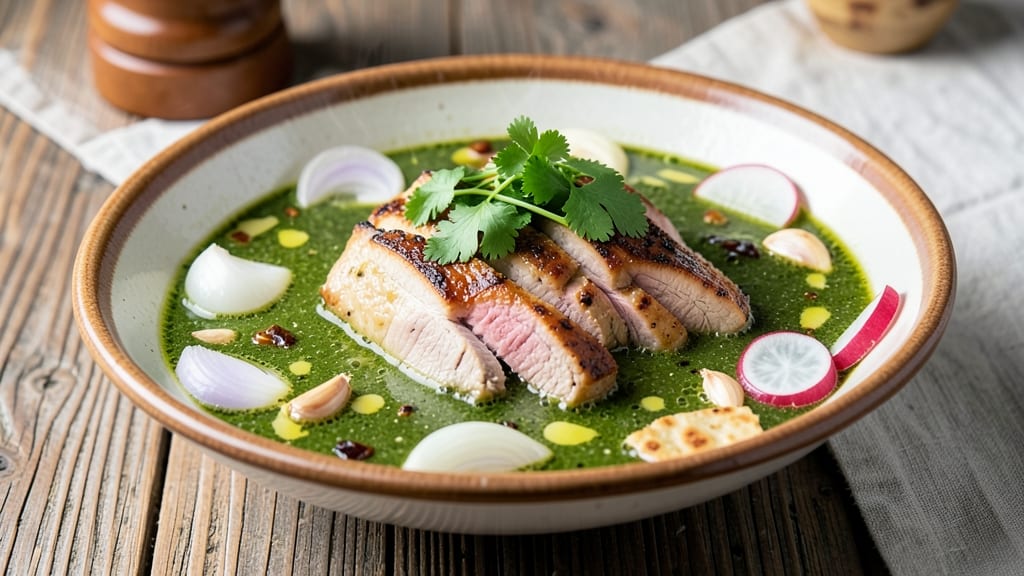
This authentic pork pozole verde brings the soul-warming flavors of Mexican home cooking to your table. 🌟 Growing up in Georgia, I learned that pork and hominy create comfort in every bowl, and this recipe captures that homestyle warmth with tender pork, smoky tomatillo broth, and a perfect balance of chiles.
The secret lies in slow-cooking the pork until it practically falls apart, then simmering it with fresh tomatillos and herbs to create a broth that's both vibrant and deeply satisfying.
What sets this pozole verde apart is its attention to authenticity—using dried chiles, fresh tomatillos, and a blend of herbs that transform simple ingredients into something extraordinary.
The process may take time, but every step is worth it for the rich, aromatic broth and tender pork that make this dish a centerpiece for gatherings. I've perfected this recipe over years of cooking for crowds, ensuring it delivers restaurant-quality results at home.
The result is a steaming bowl of pozole verde with tender pork, hearty hominy, and a broth so flavorful it'll have everyone asking for seconds. The traditional toppings—crisp radishes, fresh cilantro, lime wedges, and avocado—add layers of texture and brightness that balance the richness of the soup.
This is the kind of dish that feels like a hug in a bowl, perfect for family dinners or celebrations.
Whether you're serving it at a weekend gathering or a weeknight dinner, this pozole verde brings the flavors of Mexico to your kitchen with authenticity and warmth. Let's get cooking—your taste buds will thank you.
Ingredients for authentic pork pozole verde
Sixteen ingredients for a soul-warming bowl that tastes like Mexican home cooking.
| Ingredient | Amount | Notes |
|---|---|---|
| Pork Shoulder 🥩 | 3 lb | Bone-in for flavor, cut into chunks |
| Fresh Tomatillos 🍅 | 2 lb | Husk removed, rinsed, quartered |
| White Onions 🧅 | 2 whole | Quartered, skins on |
| Garlic Cloves 🧄 | 8 cloves | Peeled, smashed |
| Dried Guajillo Chiles 🌶️ | 4 whole | Stems/seeds removed |
| Dried Ancho Chiles 🌶️ | 2 whole | Stems/seeds removed |
| Fresh Cilantro 🌿 | ½ cup | Chopped, stems included |
| Fresh Epazote 🌿 | ¼ cup | Chopped, if available |
| Canned White Hominy 🌽 | 2 cans | 15 oz each, drained |
| Chicken Broth 💧 | 6 cups | Low-sodium preferred |
| Lime Juice 🍋 | ¼ cup | Freshly squeezed |
| Salt 🧂 | 2 tsp | Kosher or sea salt |
| Ground Black Pepper 🌶️ | ½ tsp | Freshly ground |
| Cumin Seeds 🌿 | 1 tbsp | Toasted lightly |
| Bay Leaves 🍃 | 2 whole | For depth of flavor |
The pork shoulder is non-negotiable—bone-in gives the broth incredible depth. Look for well-marbled cuts at local butchers or the meat section of H-E-B or Walmart (yes, they've got good meat!). Tomatillos can be tricky to find—Mexican markets have them year-round, but regular grocery stores usually stock them in summer. If you can't find fresh, tomato sauce works in a pinch, but it won't be authentic. The dried chiles? Penzeys sells them online if your local store doesn't carry them—guajillo and ancho are the holy grail for pozole verde.
No epazote? Fresh oregano at half the amount works, but it's not the same. Short on tomatillos? Green tomatoes (peeled) get you close. The hominy cans should say 'white hominy'—not yellow. For the broth, low-sodium is key unless you're adding extra salt. Cumin seeds should be toasted in a dry pan for 30 seconds before adding—trust me on this. The bay leaves add subtle earthiness that makes the whole dish sing. And if you're feeling fancy, toast the garlic cloves with the cumin seeds for extra depth.
Pork chunks keep 3 days in the fridge before cooking. Tomatillos and chiles last 1 week in the fridge if sealed. The cooked pozole tastes even better the next day—always make extra. Freeze portions in airtight containers for up to 3 months. Pro tip: Label containers with the date so you remember what you're thawing!
Why You'll Love This Recipe
- No Chopping Chaos: I’ll be real—this recipe only needs two veggies prepped (onions and tomatillos), and honestly? My kids can handle that. The pork shoulder does the heavy lifting—slow-cooked until it falls apart, while the guajillo chiles and garlic work their magic in the broth. Less mess, more flavor.
- Tangy, Smoky Magic: That first bite? The tomatillos and guajillo chiles give it this bright, herby punch, but the pork shoulder adds deep, smoky richness. It’s not just a soup—it’s a full-on flavor party where every spoonful balances crisp and creamy. (Yes, even on a Tuesday night.)
- Leftovers That Beg for More: Between us, pozole verde tastes better the next day. The broth thickens just enough, the pork gets even more tender, and I swear it’s the only meal that makes my freezer look less empty. I portion it into containers and label them “DO NOT IGNORE”—because I’ll be back for seconds.
- One-Pot, Crowd-Pleaser: This feeds six with ease, and I’ve used it for everything from game-day snacks to Sunday dinners. The secret? The broth stretches far, the toppings (like radishes or avocado) turn it into a build-your-own bowl, and the cost per serving is ridiculously good. Budget-friendly? Check. Stress-free? Double check.
Step-by-step instructions for authentic pork pozole verde
Let's bring this traditional Mexican stew to life—rich, smoky, and packed with homestyle flavor.
🔥 Step 1: Toast the Chiles and Spices for Deep Flavor
In a dry skillet over medium heat, toast the 1 tablespoon cumin seeds for 1-2 minutes until fragrant and lightly golden. Remove and set aside. In the same skillet, add the 4 whole dried guajillo chiles and 2 whole dried ancho chiles (stems/seeds removed) and toast for 30 seconds per side until they darken slightly and smell aromatic.
Here's the thing—this toasting step unlocks the chiles' natural oils and smoky depth. If they burn, you'll taste it later. Keep a close eye and remove them immediately when they darken. Transfer the toasted chiles to a bowl and cover with 2 cups hot water (from the kettle) to soften while we prep the rest.
🍳 Step 2: Build the Tomatillo Base
In the same skillet (no need to clean it—those chile oils are flavor gold), add 2 whole quartered white onions with skins on and cook over medium heat for 8-10 minutes until softened and caramelized. Add the 8 smashed garlic cloves and cook for 30 seconds until fragrant.
Add the 2 lb quartered tomatillos and cook for 5 minutes until they soften and release their juices. Pour in the chile-soaking liquid (strain out the chiles) and scrape up any browned bits from the bottom. This creates the vibrant green base that defines pozole verde.
🥘 Step 3: Simmer the Pork and Broth
In a large Dutch oven, combine the pork shoulder chunks with 6 cups chicken broth, the 2 whole bay leaves, and the 2 teaspoons salt. Bring to a boil, then reduce heat to low and simmer uncovered for 1 hour, skimming off any foam that rises to the surface. This step ensures tender, fall-apart pork.
After 1 hour, add the tomatillo mixture to the Dutch oven. Stir in the 0.5 teaspoon ground black pepper and the toasted cumin seeds. Return to a simmer and cook for another 1 hour, until the pork is fork-tender and falling apart. Here's where the magic happens—the broth absorbs all those smoky, herby flavors.
👨🍳 Step 4: Finish with Fresh Herbs and Hominy
Drain the 2 cans white hominy and add them to the pozole along with the 0.25 cup chopped epazote (if using) and 0.5 cup chopped cilantro. Simmer gently for 10 minutes to let the flavors meld. Taste and adjust seasoning—you might need a pinch more salt or a squeeze of lime juice to brighten the flavors.
Real talk: The epazote adds that authentic Mexican touch, but if you can't find it, don't stress—just use more cilantro. The hominy should be tender but still hold its shape. The soup should be rich, slightly tangy, and packed with layers of chile and herb flavors.
🍽️ Step 5: Serve with Traditional Accompaniments
Ladle the pozole into bowls and serve immediately with lime wedges, chopped onion, avocado slices, and crumbled queso fresco (if available). The traditional way to eat pozole verde is to assemble each bowl with these toppings—every bite should balance the rich broth with fresh, bright flavors.
This is the moment that matters: The contrast of warm, smoky pozole with cool lime and creamy avocado makes it unforgettable. Don't skip the toppings—they're what turn this from a great soup to an authentic Mexican experience.
Pro Tips For Making Authentic Pork Pozole Verde
- BLISTER THE CHILES: After burning three batches of guajillo chiles, I learned to hold them over a gas flame (not the burner—direct heat) until they blacken and smell smoky. Drop them in hot water for 10 minutes, then peel off the charred skin. This makes a real difference in depth of flavor without bitterness creeping in.
- SEAR THE PORK IN BATCHES: Crowding the pan turns your pork shoulder into soggy gray meat. Work in 2-3 batches over medium-high heat for 4-5 minutes per side until deep brown crust forms. The Maillard reaction here is non-negotiable—it’s what carries through the long simmer.
- ROAST THE TOMATILLOS: Skip the raw tomatillos—roast them whole on a sheet pan at 400°F (200°C) for 15 minutes first. The skins blister and soften, making them easier to peel and giving the sauce a sweeter, more complex base. Yes, it’s one more pan, but your pozole will taste like it came from a market stall.
- SIMMER LOW AND LONG: After the initial 30 minutes of boiling, drop the heat to a bare simmer—you should see maybe 2-3 bubbles at a time. I used to rush this, and the broth turned cloudy. Let it go for 2 hours minimum; the collagen in the pork will dissolve into a rich, velvety sauce. (Your future self will thank you.)
Troubleshooting great authentic pork pozole verde
Pork Too Tough
If your pork isn't falling apart after 2 hours of simmering, it's likely not cooked long enough. I've found that bone-in pork shoulder needs at least 2.5-3 hours at low heat for perfect tenderness.
Add 2 cups water to the pot and cover with a lid to trap steam—this helps break down collagen faster. Check internal temp with a meat thermometer; it should read 203°F for ideal texture. 💡
Broth Too Thin
A watery broth often means too much liquid was added early. Pozole verde should coat the back of a spoon but still allow you to see the bottom of the pot. If yours is too thin, simmer uncovered for 15-20 minutes to reduce.
For extra richness, stir in 2 tablespoons cornstarch mixed with 2 tablespoons cold water and simmer for 5 minutes. I also recommend using low-sodium chicken broth—it concentrates better than store-bought varieties.
Chiles Too Bitter
Over-toasted chiles develop bitter flavors that ruin the balance. Toast guajillo and ancho chiles for only 30 seconds per side—they should darken slightly but not burn.
If they're already too bitter, remove them and soak 2 fresh tomatillos in 1 cup hot water for 10 minutes, then blend and stir into the pozole. This adds fresh acidity to cut through the bitterness. 🌶️
Hominy Too Soft
Overcooked hominy turns mushy and loses its texture. Once added, simmer for only 10 minutes—any longer and it'll disintegrate. If using canned hominy, drain it well and rinse under cold water to remove excess starch.
For extra heartiness, add ½ cup cooked white beans along with the hominy. I like to use cannellini beans for their mild flavor and sturdy texture.
Lacking Depth of Flavor
If your pozole tastes flat, it's likely missing the herbaceous notes. Fresh epazote is non-negotiable for authenticity, but if unavailable, use ½ cup fresh oregano or 2 tablespoons dried. For extra complexity, add 1 chipotle pepper in adobo sauce when combining the tomatillo mixture.
I also recommend toasting the garlic cloves with the cumin seeds—this adds a nutty depth that elevates the entire dish.
Toppings Not Balancing
The toppings should contrast the rich broth, not compete with it. If your pozole feels one-dimensional, add ¼ cup chopped radishes for crunch and 2 tablespoons pickled jalapeños for tang. For creaminess, top with ¼ cup Mexican crema or a dollop of sour cream.
The key is balance—every bite should have a mix of textures and temperatures. Serve with warm corn tortillas on the side for dipping. ✨
Nutrition facts
Frequently asked questions
Can I substitute chicken for pork in this pozole verde?
While pork is traditional for pozole verde, you can use chicken thighs or breasts for a lighter version. For best results, marinate the chicken in lime juice and garlic before cooking, and reduce the simmering time to 30-40 minutes to prevent drying. The broth will be less rich, but the method remains the same.
Where can I find tomatillos if my local store doesn't carry them?
Tomatillos are often stocked in the produce section during summer months, but if unavailable, try Mexican grocery stores or order online from specialty vendors like Penzeys or La Tienda. As a last resort, use green tomatoes (peeled) or unripe regular tomatoes—they'll mimic the tangy flavor, though not perfectly.
How long will this pozole verde keep in the fridge?
The flavors actually improve after 24 hours! Store in an airtight container for up to 4 days in the fridge. For longer storage, freeze portions in airtight containers for up to 3 months. Reheat gently on the stove, adding 1-2 tablespoons water to prevent drying.
What's the difference between pozole verde and pozole rojo?
Pozole verde uses tomatillos and green chiles for its vibrant color and tangy flavor, while pozole rojo relies on dried red chiles (like ancho or pasilla) for a deeper, smokier taste. The pork preparation is identical, but the broth base and toppings differ—rojo often includes more cheese and fewer fresh toppings.
Can I make this pozole verde vegetarian?
Replace the pork with mushrooms (like portobello or shiitake) or extra-firm tofu (pressed and marinated). For umami depth, add 1 cup soy sauce or mushroom broth to the broth. The hominy and chile base remain the same, ensuring that authentic pozole verde flavor.