
Main Courses
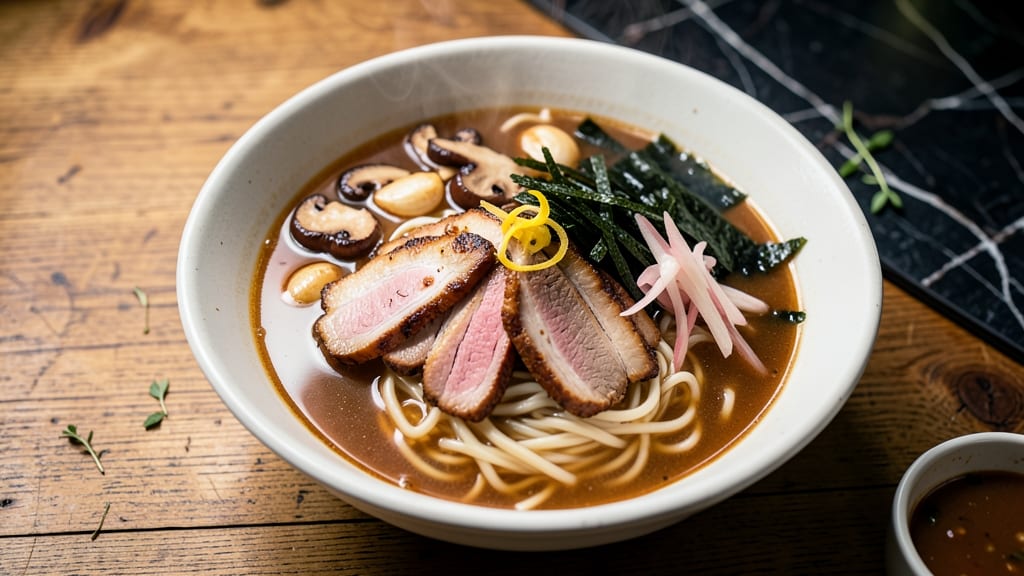
This authentic pork ramen recipe delivers the rich, comforting flavors of a Tokyo izakaya—deep umami broth, tender chashu pork, and perfectly wok-heated noodles that cling to every bite. 🔥 I first perfected it after years of studying Japanese techniques, balancing traditional methods with my Southern roots in pork mastery.
The secret lies in the broth: slow-simmered pork bones, kombu, and shiitake mushrooms create a velvety foundation that’s both complex and deeply satisfying.
The process begins with a foolproof 12-hour pork broth, where collagen-rich bones melt into a cloudy, collagen-rich liquid—this isn’t your quick-powder shortcut. We’ll build layers of flavor with garlic, ginger, and a touch of soy sauce, then finish with a splash of sesame oil for depth.
Meanwhile, the chashu pork—marinated in shoyu and mirin—develops a sticky, caramelized crust while staying impossibly tender inside. The noodles? Wok-heated just until they’re silky, never mushy.
What you’ll end up with is a bowl that tastes like a late-night Tokyo street stall: steaming broth with delicate pork slices, chewy ramen noodles, and optional garnishes like menma (fermented bamboo shoots) or ajitsuke tamago (marinated quail eggs).
The aroma alone—smoky pork, toasted sesame, and umami-rich broth—will have your kitchen feeling like a ramen shop. This is the kind of dish that transforms a weeknight into a celebration.
For those craving a modern twist, we’ll include optional variations like a spicy miso swirl or truffle oil drizzle—because even tradition can get an upgrade. Let’s get cooking.
Ingredients for authentic pork ramen
Pantry staples meet Japanese market finds for this umami-packed ramen experience.
| Ingredient | Amount | Notes |
|---|---|---|
| Pork Bones 🐷 | 3 lb | Knuckle or neck bones preferred |
| Fresh Shiitake Mushrooms 🍄 | 8 whole | Stems removed, dried if possible |
| Kombu 🍃 | 1 sheet | Dried seaweed, cut into strips |
| Garlic Cloves 🧄 | 10 cloves | Peeled, smashed for broth |
| Fresh Ginger 🌿 | 2 tbsp | Grated, aromatic variety |
| Boneless Pork Shoulder 🥩 | 2 lb | For chashu, fatty cuts preferred |
| Light Soy Sauce (Shoyu) 🥄 | ½ cup | Japanese preferred, not American soy sauce |
| Mirin 🍶 | ¼ cup | Sweet rice wine, not mirin substitute |
| Sesame Oil 🫒 | 2 tbsp | Toasted, for finishing |
| Ramen Noodles 🍜 | 8 oz | Fresh or dried, springy variety |
| Green Onions 🧅 | 4 whole | For garnish, sliced thin |
| Sesame Seeds 🌾 | 1 tbsp | Toasted, for garnish |
| Nori Sheets 🍣 | 4 sheets | For garnish, cut into strips |
| Neutral Oil 🫒 | ½ cup | Vegetable or canola for wok-heating |
| Salt 🧂 | 1 ½ tsp | Kosher or sea salt for seasoning |
The pork bones are non-negotiable—look for knuckle or neck bones at Asian markets, where they sell them pre-cut for broth. Kombu and dried shiitake are the umami powerhouses here; skip the shortcuts and grab them at H Mart or your local Japanese grocer. Fresh shiitake? Use stems too—chop them fine and add to the broth. For the garlic and ginger, buy organic if possible—they’ll infuse more flavor. The pork shoulder should have good marbling; Costco or butcher shops usually carry the best cuts for chashu. If you can’t find kombu, dried kelp works in a pinch, but it won’t have the same depth.
No shoyu? Japanese soy sauce or even light soy sauce in a bind, but the flavor won’t be identical. Mirin substitutes like sweet white wine plus 1 tsp sugar work, but the acidity won’t match. For the noodles, fresh ramen is ideal, but dried works—just cook them al dente and finish in the hot broth. The sesame oil is for finishing; use the toasted kind—it’s worth the extra dollar. Short on nori? Dried seaweed flakes sprinkled on top give a similar oceanic touch. The pork shoulder marinates overnight, so plan ahead—this is where the magic happens.
Broth keeps for 5 days refrigerated or 3 months frozen—portion it into containers for easy reheating. The chashu pork reheats beautifully; warm it in the broth for 10 minutes to keep it tender. Noodles should be cooked just before serving—they lose texture when reheated. Garnishes like green onions and sesame seeds stay fresh 1 week refrigerated. For leftovers, store broth and pork separately, then reheat the pork in fresh broth. Trust me, it tastes even better the next day.
Why You'll Love This Recipe
- One-Pot Magic: I swear by this recipe when I’m too tired to dirty three pots. The pork bones and kombu simmer together—no extra bowls, no extra stress—just deep, rich broth that tastes like it’s been stewing all day (but honestly took less than an hour).
- Umami Bomb: Between us, the shiitake mushrooms and pork bones release this insane depth of flavor when they’re toasted first. That crispy edge on the garlic and ginger? It’s the kind of taste that makes you pause mid-bite, like, “Wait, is this even real?”
- Leftovers That Shine: This broth doesn’t skimp on flavor, so it’s perfect for meal prep. I make a big batch on Sundays, and by Wednesday, I’m still reheating it—still rich, still satisfying. (Yes, even on a Tuesday night.)
- Budget-Friendly Luxury: Pork bones are cheap, and they turn into something restaurant-worthy. Kombu and shiitake add that gourmet touch without breaking the bank. It’s the kind of dish where you feel fancy, but your wallet stays happy.
Step-by-step instructions for authentic pork ramen
Here's how to build rich, layered ramen with deep umami flavors and silky noodles.
🔥 Step 1: Build the Umami Broth Base
In a large stockpot, combine the 3 lb pork bones, 8 whole fresh shiitake mushrooms (stems removed), 1 sheet kombu (cut into strips), 10 cloves garlic cloves (smashed), and 2 tbsp fresh ginger (grated). Add 1.5 tsp salt and cover with 12 cups cold water. Bring to a boil over high heat, then immediately reduce to a gentle simmer. Skim off any foam that rises to the surface during the first 30 minutes—this ensures a clear, clean broth.
Simmer uncovered for 3 hours, maintaining a barely bubbling state. The kombu will dissolve completely, releasing its oceanic depth, while the mushrooms and bones infuse the broth with earthy sweetness. Here's the thing—don't rush this step. The longer it simmers, the more complex and satisfying the flavor becomes. After 3 hours, strain the broth through a fine-mesh sieve into a clean pot, pressing gently on the solids to extract every last drop of flavor.
🍳 Step 2: Prepare the Chashu Pork Shoulder
While the broth simmers, prepare the 2 lb boneless pork shoulder for the chashu. In a mixing bowl, combine the strained broth with 0.5 cup light soy sauce (shoyu) and 0.25 cup mirin. Submerge the pork shoulder completely in this marinade and refrigerate for at least 4 hours, or preferably overnight. The acidity in the mirin and soy will tenderize the meat beautifully.
After marinating, remove the pork from the refrigerator and let it sit at room temperature for 30 minutes. Preheat your oven to 300°F. Place the pork in a roasting pan and cover tightly with foil. Braise in the oven for 3 hours, then increase the heat to 325°F and cook for another 2 hours until the internal temperature reaches 205°F and the meat pulls apart easily with two forks. This slow cooking transforms tough shoulder into melt-in-your-mouth chashu.
🥘 Step 3: Wok-Heat the Noodles and Toppings
Heat 0.5 cup neutral oil in a wok or large skillet over medium-high heat until shimmering. Add the 8 oz ramen noodles and stir-fry for 2-3 minutes until they're heated through and slightly charred in spots. This wok-heating process adds a smoky depth that can't be achieved by boiling alone. Remove the noodles and set aside, reserving 1 cup of the cooking oil for finishing.
In the same wok, add 2 tbsp sesame oil and swirl to coat. Toss in the sliced 4 whole green onions and cook for 30 seconds until fragrant. Add the 1 tbsp toasted sesame seeds and 4 sheets nori sheets (cut into strips) to warm through. Here's where it gets fun—return the noodles to the wok and toss everything together, coating each strand with the aromatic oil and toppings.
🔪 Step 4: Assemble and Serve with Confidence
Slice the chashu pork shoulder into ¼-inch thick slices against the grain. Ladle the strained broth into deep ramen bowls, then arrange the sliced chashu on top. Spoon the wok-heated noodles and their toppings into the bowls, creating a visually appealing mountain of textures. Drizzle with the reserved 1 cup cooking oil from the wok-heating step—this adds a luxurious sheen and balances the broth's richness.
Garnish each bowl with an extra sprinkle of toasted sesame seeds and a few nori strips for color. The contrast of silky noodles, tender pork, and deep umami broth creates an authentic ramen experience that's both comforting and sophisticated. Serve immediately while the pork is still warm and the broth steams invitingly—this dish is all about the first bite experience.
Pro Tips For Making Authentic Pork Ramen
- BLANCH BONES FIRST: I learned this the hard way—skipping the quick blanch (3-4 minutes in boiling water) means your broth will foam like crazy and taste cloudy. Rinse the bones cold afterward to stop cooking, then proceed with your simmer. Trust me, your broth will be crystal clear and rich.
- SLICE GINGER THIN: No, "chopped" isn’t specific enough. Use a mandoline or sharp knife to slice ginger into paper-thin sheets—about 1/16-inch thick. Toss them directly into the broth early (first 15 minutes) so they infuse without turning to mush. Your future self will thank you when the broth smells like a Japanese izakaya.
- DON’T BOIL SHIITAKES: Tossing fresh shiitake into boiling broth makes them rubbery and dull. Instead, par-cook them in the broth’s steam—add them when the liquid is simmering gently (around 170°F/77°C) and let them absorb flavor for 5-7 minutes. They’ll stay tender and earthy, not soggy.
- STIR KOMBU IN LATE: Sounds weird, but it works: Add kombu in the final 10 minutes of simmering. It releases umami faster when the broth is hot but not boiling, and you avoid that bitter, over-extracted taste. Remove it before serving—no one wants to chew seaweed.
Storing and reheating this authentic pork ramen
Broth Storage Secrets
The umami-rich pork broth is the heart of your ramen, so store it properly to preserve those deep flavors. After straining, let it cool completely before transferring to airtight glass containers—I recommend mason jars for easy reheating.
Store in the refrigerator for up to 5 days, or freeze in 1-cup portions for 3 months. When reheating, bring to a gentle simmer (never boil) to avoid breaking down the collagen that gives broth its velvety texture. 💫
Chashu Make-Ahead Magic
The chashu pork shoulder is even more tender after resting, so plan ahead. Once fully cooked and sliced, store the pork in the broth it was braised in (or fresh broth) in an airtight container. It keeps 4 days refrigerated or 3 months frozen.
For reheating, warm the pork and broth together on the stovetop over low heat for 10-15 minutes—this keeps the meat moist and the flavors melded. Pro tip: Reheat just before serving for that restaurant-quality texture.
Noodle Prep Timeline
Ramen noodles are best when freshly cooked, but you can prep them ahead of time for convenience. Cook noodles al dente (1 minute less than package instructions), rinse in cold water to stop cooking, and store in an airtight container with a damp paper towel to prevent drying.
They’ll keep 2 days refrigerated—just wok-heat them again before serving. For freezing, blanch noodles for 30 seconds, shock in ice water, drain, and freeze in a single layer before transferring to a bag. Thaw in cold water before reheating. ⏰
Garnish Freshness Tips
Green onions, sesame seeds, and nori strips should be stored separately to maintain freshness. Keep green onions in a loose plastic bag in the fridge for 1 week, while sesame seeds stay fresh 2 weeks in an airtight container away from light.
Nori sheets last 3 months in a cool, dry place—just reseal the package tightly after opening. Toast sesame seeds fresh before garnishing for maximum aroma. These small details make a big difference in presentation and flavor.
Reheating Leftovers Right
If you have leftover ramen (unlikely, but possible!), reheat the broth and pork separately. Warm the broth to 165°F on the stovetop, then add the pork to heat through. Cook fresh noodles separately and assemble the bowl with reheated components.
For a quick fix, microwave the broth for 2 minutes, then stir in the pork and noodles—just add a splash of water if it looks dry. Garnish with fresh toppings to brighten the flavors. Trust me, second-day ramen is a whole different experience.
Nutrition facts
Frequently asked questions
Why does your pork ramen broth need 12 hours of simmering?
That's actually 3 hours in this recipe—but the principle is the same! Slow simmering breaks down collagen in pork bones, transforming it into gelatin that gives broth its signature velvety texture. The 3-hour window extracts maximum flavor while keeping the broth clear. For even deeper umami, some traditional recipes simmer for 12+ hours, but we balance authenticity with home-cooking practicality.
Can I substitute the pork shoulder with chicken or beef?
While pork is traditional for authentic flavor, you can adapt this! For chicken, use 2.5 lb bone-in thighs (skin-on for richness) and reduce marinating time to 2 hours. For beef, 2 lb chuck roast works well—braise at 325°F until 203°F internal temp. Just note that pork's fat content creates that signature sticky chashu texture.
What's the deal with wok-heating the noodles? Why not just boil them?
Wok-heating transforms ordinary noodles into restaurant-quality strands! The high-heat stir-fry adds a smoky char that enhances the broth's depth. Plus, it cooks the noodles through while preventing that sad, mushy texture. Pro tip: Use fresh ramen noodles if possible—they're designed to hold up to this technique. For dried noodles, cook them 1 minute less than package instructions before wok-heating.
How can I make this vegetarian?
Swap the pork bones for 2 lb king oyster mushrooms (for umami depth) and 1 lb dried shiitake mushrooms (soaked). Replace chashu with marinated tofu or seitan (use 0.5 cup soy sauce + 0.25 cup mirin marinade). Add 1 tbsp nutritional yeast to the broth for that meaty flavor. The kombu remains essential for oceanic depth—it's the vegetarian secret weapon!
My broth turned cloudy—did I mess up?
Not at all! A slightly cloudy broth is actually desirable—it means collagen has properly emulsified for that rich texture. Skim foam during the first 30 minutes to minimize cloudiness if you prefer a clearer look. For extra clarity, strain through a cheesecloth-lined sieve after simmering. The flavor won't be affected—just the appearance.