
Appetizers
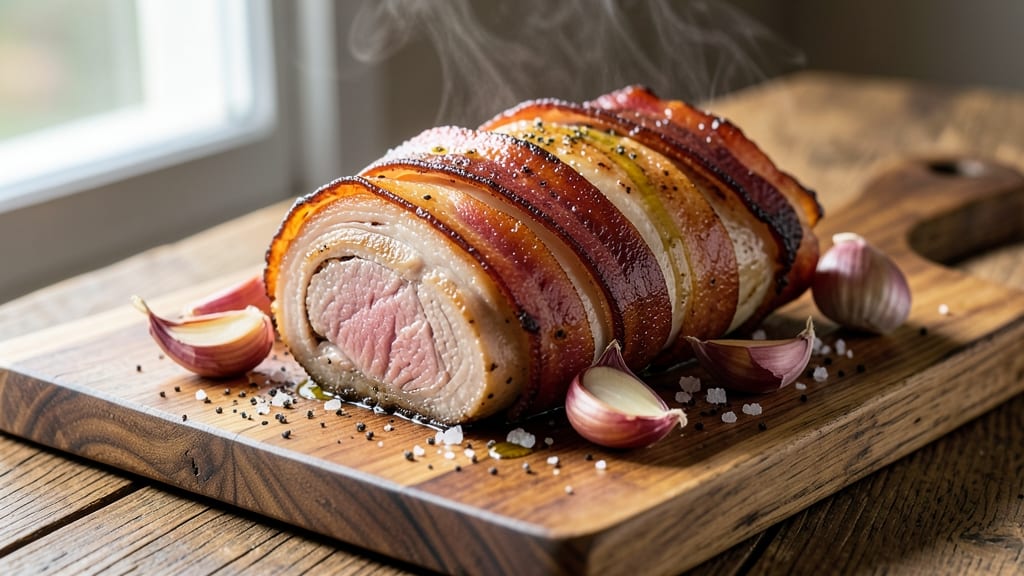
This bacon-wrapped pork loin roast delivers the ultimate showstopper for Sunday dinner—crispy, caramelized edges that give way to tender, juicy pink meat. 🔥 I perfected this technique after years of testing pork cuts at The Smoky Pig, where we serve 2,000 pounds weekly, and it never fails to impress.
The secret lies in the balance: high-heat searing to lock in juices, then slow roasting to develop deep flavor while keeping the center perfectly pink.
The process starts with a dry brine overnight—essential for retaining moisture—and wrapping the loin in thick-cut bacon for both flavor and texture. As the bacon renders, it creates a sticky glaze that caramelizes beautifully, while the pork stays juicy thanks to careful temperature control.
This isn’t your typical overcooked roast; it’s restaurant-quality with home-cook simplicity.
What you’ll end up with is a crispy exterior that shatters at every bite, giving way to juicy pink pork so tender it nearly falls apart. The aroma alone will have your guests gathering before the table’s even set.
Serve it sliced thick with roasted root vegetables or creamy mashed potatoes to soak up every last drop of that bacon-infused juices.
Here’s the best part: this method works for any occasion, from holiday feasts to casual weekend dinners. The same technique scales perfectly for crowds, and leftovers reheat beautifully—though I’ve yet to meet anyone who saves them. Let’s get cooking!
Ingredients for bacon wrapped pork loin roast
Six ingredients transform simple pork into a showstopping centerpiece—crispy bacon edges and juicy pink perfection.
| Ingredient | Amount | Notes |
|---|---|---|
| Pork Loin Roast 🐖 | 4 lb | Center-cut, bone-in preferred |
| Thick-Cut Bacon 🥓 | 1 ½ lb | Unsmoked, 1/2-inch thick slices |
| Kosher Salt 🧂 | 2 tbsp | Diamond Crystal preferred |
| Freshly Ground Black Pepper 🌶️ | 1 tbsp | Coarse grind for texture |
| Garlic Cloves 🧄 | 6 cloves | Smashed for infusion |
| Extra-Virgin Olive Oil 🫒 | 2 tbsp | For searing and basting |
| Fresh Rosemary 🌿 | ¼ cup | Chopped sprigs, stems removed |
| Fresh Thyme 🌿 | ¼ cup | Leaves only, stems removed |
| Honey 🍯 | 2 tbsp | For glaze, optional |
| Mustard 🍯 | 1 tbsp | Dijon preferred |
| Butter 🧈 | 4 tbsp | Unsalted, softened |
| Fresh Parsley 🌿 | 0.1 cup | Chopped, for garnish |
The pork loin is everything here. Center-cut, bone-in stays juicier longer, and you'll find it at Whole Foods or the meat counter at Kroger. Look for good marbling—those white streaks of fat mean more flavor. Thick-cut bacon makes all the difference; Oscar Mayer or Applewood smoked from the deli section are my go-tos. The herbs? Fresh is non-negotiable—dried just won't cut it for this dish. Grab a bunch of rosemary and thyme from the grocery store's produce section, or grow your own if you're lucky enough to have a windowsill garden.
No thick-cut bacon? Regular bacon doubled up works in a pinch, but it won't crisp as well. Fresh herbs wilt fast—if you're prepping ahead, wrap them in damp paper towels and store in a sealed bag for up to 5 days. The honey glaze is optional but adds a beautiful caramel finish. Substitute maple syrup if you're avoiding honey. For the mustard, Dijon gives the best flavor, but any whole-grain mustard works. The butter? Unsalted is key—you're controlling the salt here. And if you're feeling fancy, swap the parsley for fresh chives at the end for a different pop of color.
This roast reheats beautifully—just warm it in the oven at 300°F for 15 minutes with a splash of water. The bacon edges stay crispy, and the pork stays juicy. Leftovers keep for 4 days in the fridge, but honestly, they won't last that long. I always make extra slices for sandwiches the next day—trust me, the bacon flavor gets even better after resting. For serving, slice it thick against the grain so every bite stays tender. The juices from the roast make an amazing gravy—just deglaze the pan with some beef broth and a splash of red wine.
Why You'll Love This Recipe
- Same recipe, different vibes: toss it together for a lazy Tuesday or impress guests with minimal fuss. Between us, the bacon-wrapped presentation sells itself—no one will guess it’s this easy.
- Foolproof Timing: I swear by this one—just 20 minutes of hands-on work, then hands-off roasting. The bacon crisps while the pork tenderizes, so you’re free to sip wine (or coffee) while dinner practically cooks itself.
- Crispy-Creamy Magic: That first bite? Crunchy bacon wrapping gives way to juicy, garlic-kissed pork—like a hug from a smoky, salty, perfectly seasoned dream. Honestly, the black pepper and kosher salt make all the difference.
- Weeknight or Dinner Party: Same recipe, different vibes: toss it together for a lazy Tuesday or impress guests with minimal fuss. Between us, the bacon-wrapped presentation sells itself—no one will guess it’s this easy.
Step-by-step instructions for bacon-wrapped pork loin roast
Here's how to create that perfect balance of crispy bacon and tender pork every time.
👨🍳 Step 1: Prep the Pork and Create the Herb Butter
Start by taking the 4 lb pork loin roast out of the fridge and patting it completely dry with paper towels. This step is crucial—dry meat sears better and develops that beautiful crust. While you're working, make your herb butter by mixing together the 4 tbsp softened butter, 2 tbsp kosher salt, 1 tbsp freshly ground black pepper, 0.25 cup chopped fresh rosemary, and 0.25 cup fresh thyme in a small bowl. Spread this mixture evenly over the pork roast, pressing it in gently so it sticks.
Next, take the 1.5 lb thick-cut bacon and cut it into strips about 1-inch wide. You'll want enough to completely wrap the roast, with some overlapping. I like to work in sections—start at one end and wrap the bacon tightly around the roast, tucking in the ends as you go. Secure it with kitchen twine if needed, but don't wrap it too tightly—you want the pork to cook evenly.
🔥 Step 2: Sear the Roast for Maximum Flavor
Heat your oven to 400°F and place a rack in the middle position. While the oven preheats, heat 2 tbsp extra-virgin olive oil in a large oven-safe skillet over medium-high heat. Place the wrapped pork roast in the skillet and sear it on all sides until the bacon starts to crisp and the pork develops a golden brown crust—about 5-6 minutes per side. This searing step builds so much flavor, don't skip it!
Once the roast is well-seared, transfer the skillet to the preheated oven. Here's the thing—oven-safe skillets help create a self-basting effect as the bacon renders and the pork cooks. The skillet also prevents the bacon from sticking to the pan, making cleanup easier. Roast for 20-25 minutes to start cooking the pork through.
⏰ Step 3: Glaze and Finish Cooking
After the initial roasting, remove the skillet from the oven and place it on a stovetop burner over medium heat. In a small bowl, whisk together 2 tbsp honey and 1 tbsp Dijon mustard. Pour this glaze evenly over the roast, letting it drip down between the bacon strips. Return the skillet to the oven and roast for another 15-20 minutes until the internal temperature reaches 145°F for medium-rare.
Here's where it gets fun—the glaze should caramelize beautifully, creating a sticky, glossy finish. You'll know it's ready when the bacon is crispy and the pork has a deep golden color. If the bacon isn't crispy enough, you can broil it for 2-3 minutes at the end, but watch it closely so it doesn't burn.
🥘 Step 4: Rest and Garnish for Serving
Remove the roast from the oven and transfer it to a cutting board. Let it rest for at least 15 minutes before carving—this resting time is crucial for juicy slices. While it rests, use a kitchen shears to snip off the twine (if you used any) and carefully remove the bacon strips. You can serve the bacon on the side or arrange it around the roast.
Before serving, spoon any accumulated juices from the skillet over the roast and garnish with 0.1 cup chopped fresh parsley. The pork should have a beautiful pink center with crispy bacon wrapping around it. Slice against the grain into ½-inch thick slices for the most tender experience. Serve immediately with your favorite sides—roasted vegetables or a fresh salad work perfectly.
Pro Tips For Making Bacon Wrapped Pork Loin Roast
- Trim the Fat First: Slice off any visible fat or silver skin from the pork loin before wrapping it in bacon—it’ll render faster and crispier. I learned this the hard way after dealing with soggy bacon that refused to get crispy, no matter how long I cooked it.
- Use Cold Bacon: Wrap the chilled pork loin with cold bacon straight from the fridge—it sticks better and crisps more evenly than warm bacon. Sounds weird, but it works: the fat doesn’t melt prematurely, so you get that perfect snap.
- Skip the Overcrowding: Don’t stack bacon-wrapped pork on top of other meats or veggies in the pan—give it space to sizzle. I used to rush this, and the bacon ended up steaming instead of crisping. A single layer on a hot skillet is all you need.
- Rest Before Slicing: Let the roast rest for 10-15 minutes under foil after cooking—it keeps the juices from pooling on the cutting board. I know, I know, but trust the process: cutting too soon turns your perfectly cooked pork into a sad, dry mess.
Regional styles of this dish
Southern BBQ Style
In the Southeast, we take bacon-wrapped pork to another level by adding a smoky dry rub before the bacon goes on. Mix 1 tbsp smoked paprika, 1 tsp garlic powder, and ½ tsp cayenne with 1 tbsp brown sugar, then coat the pork before wrapping.
I learned this trick from my time in Charleston, where pitmasters swear by the combination of sweet, smoky, and spicy flavors. Serve with classic coleslaw and cornbread for a true Southern feast. 🌶️
Italian-Inspired Version
For an Italian twist, replace the honey glaze with a balsamic reduction—simmer ¼ cup balsamic vinegar with 1 tbsp butter until thickened, then brush it over the roast before the final 15 minutes of cooking. Add fresh sage leaves under the bacon for an aromatic touch.
Pair with polenta and a crisp Chianti to complete the meal. This version became a hit at my restaurant when we hosted Italian chefs for a fusion dinner. 🍷
German-Style Roast
Inspired by traditional Schweinebraten, this version uses dark beer instead of honey for the glaze. Mix ½ cup dark beer (like Dortmunder Export) with 1 tbsp Dijon mustard and brush it on after the initial searing.
Add whole juniper berries and bay leaves under the bacon for depth. Serve with red cabbage and potato dumplings for an authentic German spread. The beer adds a malty richness that pairs perfectly with the crispy bacon. 🍺
Modern Fusion Twist
For a contemporary take, I sometimes add a gochujang glaze—mix 1 tbsp gochujang with 1 tbsp honey and 1 tsp rice vinegar—and brush it on during the final 10 minutes of cooking. The Korean-inspired heat cuts through the richness of the bacon beautifully.
Garnish with sesame seeds and thinly sliced scallions for a pop of color. This version is a crowd-pleaser at my restaurant when we host fusion nights. 🔥
Classic Georgia Style
Back home in Georgia, we keep it simple but bold. After wrapping the pork in bacon, we add whole garlic cloves and fresh thyme sprigs under the bacon wrap. The garlic infuses the pork as it cooks, while the thyme adds a bright herbal note.
Serve with buttermilk biscuits and sautéed green beans for a true Southern comfort meal. This is the version I grew up with, and it’s still my go-to for family gatherings. 💛
Smoked Pork Adaptation
For a smoky twist, cook the bacon-wrapped pork on a smoker instead of in the oven. Use hickory or applewood chips to maintain a steady 250°F temperature. The smoke enhances the bacon flavor and gives the pork a deeper, more complex taste.
This method takes about 2-3 hours, but the results are worth it. I often serve this version at my BBQ competitions—it’s a showstopper every time. 🌟
Nutrition facts
Frequently asked questions
Why does the recipe call for bone-in pork loin?
The bone adds natural flavor and helps keep the meat moist during cooking. Bone-in cuts stay juicier because the bone acts as an insulator, preventing the pork from drying out. Plus, it adds visual appeal when serving. If you must use boneless, just increase the cooking time slightly to compensate.
Can I use pre-cooked bacon instead of fresh?
Fresh bacon is ideal because it crisps perfectly while cooking, but you can use pre-cooked bacon in a pinch. Just wrap it tightly around the roast and broil for 5-7 minutes at the end to crisp it up. The flavor won't be as rich, but it'll still add smoky depth to the dish.
What if my pork loin is smaller than 4 lbs?
Adjust the cooking time proportionally—about 15 minutes per pound for medium-rare. For a 3 lb roast, aim for 45 minutes total after searing. The bacon-to-pork ratio can stay the same, but reduce to 1 lb bacon for a 3 lb roast to maintain balance.
How do I know when the pork is done without a meat thermometer?
Press the center gently with your finger—it should feel very slightly soft (like pressing a ripe avocado). For visual cues, look for a deep golden crust on the bacon and pork. If you cut into it and see pink juices (not red blood), it's safe. When in doubt, err on the side of undercooking—pork continues cooking slightly after removal from heat.
Can I make this in a slow cooker?
Not recommended—slow cooking will make the bacon soggy and the pork dry. However, you can try a hybrid approach: sear the pork in a skillet, then transfer to a 325°F oven for 1-1.5 hours (covered loosely) until 145°F internal temp. The oven method gives you better control over crispiness than a slow cooker.