
Main Courses
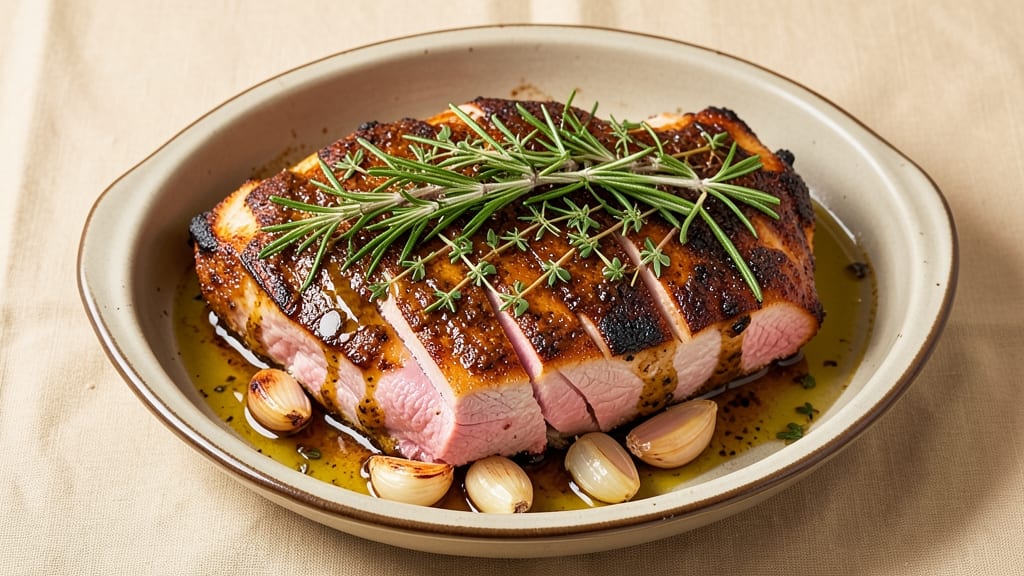
This baked pork loin roast recipe delivers the perfect balance of herb-crusted exterior and juicy pink center—the kind of tender, flavorful roast that makes Sunday dinner feel like a restaurant meal.
I developed this method after years of perfecting pork at The Smoky Pig, where we process 2,000 pounds weekly, and it's the one I bring home for my family.
The secret lies in a simple herb crust that locks in moisture while creating a golden, aromatic bark, paired with precise cooking times that guarantee no dry, overcooked pork.
The technique is straightforward but critical: truss the loin to maintain shape, season generously with salt and pepper, then coat with a blend of fresh rosemary, thyme, and garlic—just enough to infuse flavor without overpowering.
Baking at 325°F ensures even cooking, while a resting period after removing from the oven redistributes juices for that melt-in-your-mouth texture. This isn't your grandmother's dry pork roast; it's restaurant-quality with minimal effort, perfect for impressing guests or treating yourself to a special meal.
What you'll end up with is a tender, herb-scented roast that slices easily and delivers rich, savory flavors in every bite. The crust stays crisp, the meat remains moist, and the aroma fills your kitchen with warmth—like a hug from a Sunday dinner table.
Serve with roasted root vegetables or a tangy apple-cider glaze to elevate it further. This is the kind of pork roast that leaves everyone asking for seconds, and the best part? It's foolproof for home cooks.
For those who love leftovers, this roast reheats beautifully—just warm gently in the oven with a splash of broth to keep it moist. I've tested it with different herb blends (try sage and mustard seeds for a twist) and always return to this classic because it never fails.
Whether you're hosting a gathering or simply craving a comforting meal, this recipe delivers juicy, flavorful pork that tastes like it came from a pitmaster's table.
Ingredients for baked pork loin roast
Six ingredients lock in juicy perfection—herb crust, salt, and patience make all the difference.
| Ingredient | Amount | Notes |
|---|---|---|
| Pork Loin Roast 🐖 | 3 lb | Bone-in, center-cut preferred |
| Kosher Salt 🧂 | 2 tbsp | Diamond Crystal preferred |
| Fresh Rosemary 🌿 | ¼ cup | Finely chopped, stems removed |
| Fresh Thyme 🌿 | 0.15 cup | Leaves only, stems removed |
| Garlic Cloves 🧄 | 6 cloves | Minced, for herb crust |
| Extra-Virgin Olive Oil 🫒 | 2 tbsp | For crust, high quality |
| Ground Black Pepper 🌶️ | 1 tsp | Freshly cracked preferred |
| Fresh Sage 🌿 | 0.1 cup | Optional, for extra flavor |
| Mustard Seeds 🌶️ | ½ tsp | Toasted for depth (optional) |
| Apple Cider Vinegar 🍎 | 1 tbsp | For glaze (optional) |
| Honey 🍯 | 1 tbsp | For glaze (optional) |
| Vegetable Oil 🫒 | 1 tbsp | For trussing |
| Butcher's Twine 🧵 | 1 piece | For trussing |
The pork loin is where it all starts. Bone-in, center-cut roasts stay juicier longer—skip the fancy cuts if you're on a budget, but avoid the leanest ends. I always grab mine from Whole Foods or my local butcher, asking for a roast with good marbling. If you're trussing, vegetable oil on the twine makes it slide on easier. For the herbs, fresh is non-negotiable—dried won't give that aromatic crust. Rosemary and thyme are my go-tos, but I've also used sage and mustard seeds for a twist that works beautifully.
No fresh rosemary? Dried at one-third the amount gets you close, but the flavor won't be the same. Short on thyme? Oregano or marjoram work in a pinch. The olive oil for the crust should be extra-virgin and fruity—cheap oil tastes like soap. For the glaze, apple cider vinegar and honey are my favorites, but balsamic and maple syrup work too. If you're skipping the glaze, brush with melted butter instead. The mustard seeds? Toast them in a dry pan for 30 seconds—it brings out their nutty flavor. And trust me, the trussing isn't just for looks—it keeps the roast uniform so it cooks perfectly.
Pork roast reheats like a dream—just warm it gently in the oven with a splash of broth. Leftovers keep for 4-5 days in the fridge, and you can freeze portions for up to 3 months. I always make extra because it's that good. Store the roast wrapped tightly in foil, and let it come to room temperature before reheating. For the herb crust mix, keep it in an airtight container in the fridge for up to 1 week—it's perfect for other roasts or even chicken. The glaze ingredients? They'll keep forever, so no rush there.
Why You'll Love This Recipe
- No-Fuss Prep: The pork loin stays whole—no slicing, no fuss. Just a quick rub of salt, crushed garlic, and fresh herbs, then straight into the oven. Between us, that’s my kind of cooking.
- Herb-Packed Punch: That rosemary and thyme? They cling to the meat like a hug, especially when you brown it first. Honestly, the aroma alone makes my kitchen smell like a French bistro—no exaggeration.
- Weeknight to Dinner Party: Same recipe, different vibes. Toss it on a sheet pan for a lazy Tuesday, or dress it up with a red wine reduction for guests. I’ve served this to both my book club and my kid’s soccer team—zero judgment.
- Leftover Goldmine: One roast feeds my family for days. Slice it thin for sandwiches, dice it into fried rice, or shred it for tacos. Not the prettiest leftovers, but the taste makes up for it every time.
Step-by-step instructions for herb-crusted pork loin roast
Here's how to achieve that perfect juicy pink center with a fragrant herb crust every time.
Prepare the Herb Crust Mixture
In a small bowl, combine the 0.25 cup fresh rosemary, 0.15 cup fresh thyme, 0.1 cup fresh sage, 6 cloves minced garlic, and 0.5 tsp mustard seeds. Add the 2 tbsp extra-virgin olive oil and 1 tbsp vegetable oil to help bind everything together. Mix thoroughly until you have a thick, paste-like consistency.
If using the optional mustard seeds, lightly toast them in a dry skillet over medium heat for 1-2 minutes until fragrant before adding to the herb mixture. This adds incredible depth of flavor to your crust. The oils help distribute the herbs evenly and create a beautiful golden crust when baked.
Season and Truss the Pork Loin
Pat the 3 lb pork loin roast completely dry with paper towels—this is crucial for achieving crispy skin. Rub the entire surface with half of the herb mixture, pressing it firmly into the meat so it adheres well. Then season generously with the 2 tbsp kosher salt and 1 tsp ground black pepper, making sure to get into any crevices.
Use the 1 piece butcher's twine to truss the roast by tying it into an oval shape, bringing the ends together and tying them securely. This helps the roast cook more evenly and gives you a more attractive presentation. The truss also prevents the roast from opening up during baking, which can lead to uneven cooking.
Create the Glaze and Preheat the Oven
In a small bowl, whisk together the 1 tbsp apple cider vinegar and 1 tbsp honey to create a simple glaze. This combination adds a touch of sweetness and tang that pairs beautifully with the herb crust. Set this mixture aside while you preheat your oven to 325°F.
Place the pork loin roast on a rack set inside a roasting pan. The rack allows hot air to circulate around the roast, ensuring even cooking and crispy skin. Let the roast sit at room temperature for 30 minutes before baking—this helps it cook more evenly and prevents cold spots in the center.
Bake to Juicy Perfection
Once the oven reaches 325°F, place the roast in the oven and bake for 1 hour and 15 minutes for a medium-rare center. This timing ensures your pork loin remains juicy and tender with a beautiful pink center. About 30 minutes before the roast is done, brush it generously with the glaze mixture.
To check for doneness, use a meat thermometer inserted into the thickest part of the roast. It should read 140°F for medium-rare. If your thermometer doesn't have a pork setting, remember that pork is safe to eat at 145°F, but for the juiciest results, aim for 140°F. The roast will continue to rise in temperature by about 5°F as it rests.
Rest and Slice for Maximum Juiciness
Remove the roast from the oven and let it rest on a cutting board for at least 15 minutes before slicing. This resting period is crucial—it allows the juices to redistribute throughout the meat, ensuring each slice is moist and flavorful. Don't skip this step, no matter how tempting it is to cut into the roast immediately.
Once rested, remove the twine and slice the roast into ½-inch thick slices against the grain for maximum tenderness. The herb crust should be fragrant and slightly crisp, while the meat should be juicy with a perfect pink center. Serve immediately with your favorite sides and enjoy the incredible flavors of this herb-crusted pork loin roast!
Pro Tips For Making Baked Pork Loin Roast
- USE A MEAT THERMOMETER: I learned this the hard way—pork loin can go from juicy to dry faster than you think. Pull it at 145°F internal temp (not just by time), and let it rest 5-10 minutes under foil before slicing. That’s when all the juices redistribute, or you’ll end up with a sad, dry cut.
- SALT THE PORK 40 MINUTES EARLY: Don’t just sprinkle salt on top right before baking. Pat the loin dry, then rub it with 1.5 teaspoons kosher salt per pound and let it sit uncovered in the fridge. This seasoning penetrates deeper, and the crust forms better—no more bland outer layers or overly salty edges.
- SKIP THE CROWDED PAN: If you’re searing the pork first, resist the urge to overcrowd the pan. Use a 12-inch skillet (or larger) and cook in batches if needed. Overcrowding steams the meat instead of browning it, and you’ll miss out on that flavorful crust that makes all the difference when it goes into the oven.
- CHOP HERBS FINE, THEN RUB: Tiny herb pieces stick better and infuse more flavor. Pulse 2 tablespoons chopped rosemary + 2 tablespoons thyme with the minced garlic in a food processor (just a quick pulse—don’t turn it into pesto). Then, mix it with softened butter and slather it under the skin or on top. Big chunks? They’ll just burn or fall off.
Serving suggestions for baked pork loin roast
Classic Southern Sides
Nothing complements this herb-crusted pork like creamy mashed sweet potatoes—I make mine with ½ cup sour cream, ¼ cup brown sugar, and a pinch of cinnamon, then pipe them into elegant swirls.
For a heartier option, serve with cornbread muffins (I use Jiffy mix with a splash of buttermilk) and crispy fried okra tossed in cornmeal and cayenne. These sides are staples at my family gatherings in Georgia, where pork and sweet potatoes go together like peaches and pecans. 🍠
Fresh Vegetable Pairings
For a lighter option, roasted Brussels sprouts with balsamic glaze cut through the richness beautifully. Toss 1 lb halved Brussels sprouts with 2 tbsp olive oil, 1 tsp smoked paprika, and ½ tsp salt, then roast at 400°F for 20 minutes.
Finish with a drizzle of reduced balsamic vinegar and crumbled feta. Another favorite is garlic-parmesan green beans—sauté 1 lb green beans with 3 minced garlic cloves, ¼ cup grated parmesan, and a splash of lemon juice. Both sides keep the meal balanced and vibrant. 🥦
Glazed and Saucy Options
If you loved the apple cider glaze on the pork, take it further with caramelized onion jam—sauté 2 large onions in 2 tbsp butter until deep brown, then simmer with 2 tbsp apple cider vinegar and 1 tbsp honey.
Spoon this over slices of pork for a sweet-savory contrast.
For a tangy kick, serve with spicy mustard sauce (mix ½ cup Dijon mustard, 2 tbsp apple cider vinegar, and 1 tsp honey), or a creamy horseradish cream (whisk ½ cup sour cream, 2 tbsp prepared horseradish, and 1 tsp lemon juice).
These sauces elevate the dish from weeknight dinner to special occasion. 🍯
Bread and Starch Suggestions
Warm crusty sourdough bread is a must—toss it with garlic butter and fresh rosemary for dipping. For a Southern twist, serve with buttermilk biscuits (I use Pillsbury Grands for a shortcut) and a side of sharp cheddar cheese for pulling.
If you're feeling fancy, scalloped potatoes (layers of thinly sliced potatoes in heavy cream, cheddar, and garlic) add a comforting, creamy element that pairs perfectly with the pork’s herbaceous notes. 🥖
Make-Ahead Sides
Plan ahead with roasted root vegetables—toss carrots, parsnips, and sweet potatoes with olive oil, salt, and rosemary, then roast at 400°F for 30 minutes.
These keep well in the fridge for 3 days and reheat beautifully. Creamy mac and cheese (use sharp cheddar and a splash of buttermilk) is another great make-ahead side—just bake it alongside the pork for 10 minutes to melt the top.
For a no-cook option, simple arugula salad with lemon vinaigrette adds freshness without effort. 🧀
Nutrition facts
Frequently asked questions
Can I use bone-in or boneless pork loin for this recipe?
This recipe works best with a bone-in, center-cut pork loin—the bone helps retain moisture and adds flavor. If you must use boneless, look for a roast with good marbling (visible fat) to prevent dryness. A 3 lb bone-in roast yields about 4-6 servings, while boneless may shrink slightly. Never use the leanest end cuts—they're more prone to drying out.
What's the best way to check if the pork is done?
Always use a meat thermometer for accuracy. Insert it into the thickest part of the roast—it should read 140°F for medium-rare (the juiciest result). Pork is safe at 145°F, but it'll continue rising 5°F while resting. Never guess by color or time alone—overcooking turns pork tough. The thermometer is your best friend here!
Why is my herb crust not sticking to the pork?
This usually happens when the pork isn't dry enough or the herb mixture isn't pressed firmly. Pat the roast completely dry with paper towels first, then press the herb crust on with your fingers or a spoon. For extra grip, lightly oil your hands. If it still falls off, mix 1 tbsp Dijon mustard into the herb paste—it acts as a natural glue. The crust should stay put during baking!
Can I make this ahead of time for a dinner party?
Prep the herb crust and season the pork up to 1 day ahead, storing it wrapped in plastic in the fridge. For the full roast, cook it 2 hours ahead, then refrigerate. Reheat gently in a 300°F oven with a splash of broth for 20 minutes before serving. The flavors actually deepen overnight, making it perfect for stress-free entertaining.
What's the difference between medium-rare and well-done pork?
Medium-rare pork (140°F) has a pink center and tender texture—ideal for this recipe. Well-done (160°F+) turns pork dry and stringy. The 145°F USDA minimum is safe but less flavorful. For the juiciest results, aim for 140°F and slice against the grain. The herb crust works best with medium-rare to well-medium (150°F) for optimal texture.