
Main Courses
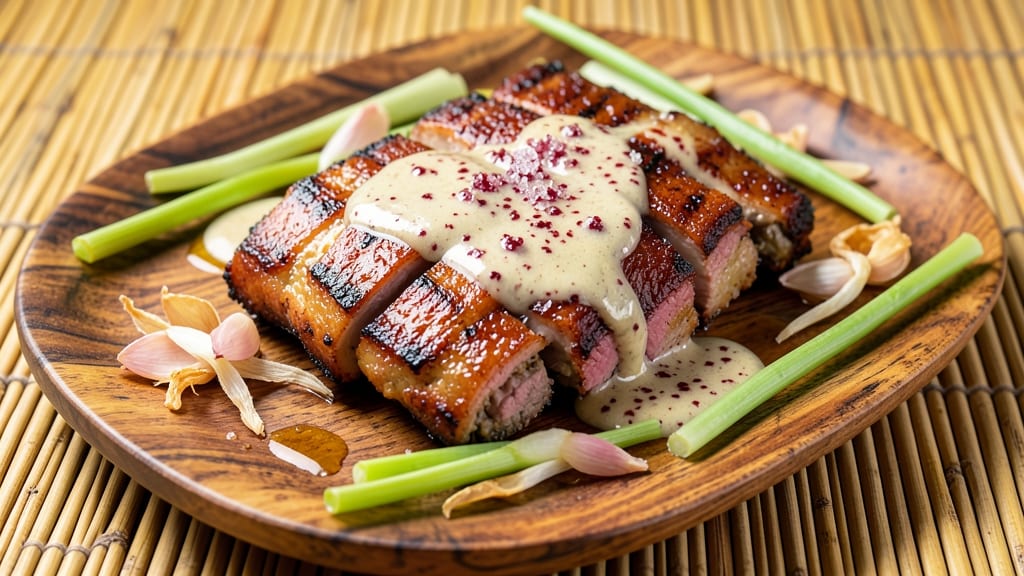
This Bali pork ribs recipe transports you straight to Indonesia’s sun-drenched shores with a glaze so rich and sticky it clings to every rib like a promise. 🌟 The marriage of coconut milk and tamarind creates a balance of sweet, tangy, and umami that transforms tough ribs into melt-in-your-mouth perfection.
I first tasted this dish in Ubud’s back-alley warungs, where the smoke from charcoal grills mingled with the scent of lemongrass and chili—now I bring that same magic to your kitchen.
The secret lies in the marinade: a blend of coconut milk, tamarind paste, and aromatic spices like turmeric and coriander that tenderize the meat while infusing it with depth. We slow-cook the ribs over indirect heat, basting them repeatedly with the sticky glaze until they’re glossy and caramelized.
This isn’t just another BBQ recipe—it’s a celebration of Balinese flavors that turns a simple pork cut into something extraordinary.
By the time you’re done, you’ll have ribs with a crispy exterior and fall-apart tenderness, each bite bursting with coconut creaminess and a bright tamarind tang. The glaze isn’t just for show—it’s the soul of the dish, clinging to every rib like a second skin.
Serve them with steamed jasmine rice and a side of sambal for the full experience, or let the ribs shine as the star of the meal.
This recipe scales beautifully for gatherings, but it’s just as impressive for a weeknight dinner. The slow-cooking process means you can focus on other dishes or simply relax while the oven does the work.
Trust me—once you taste the difference between store-bought ribs and these, you’ll never go back to the ordinary.
Ingredients for bali pork ribs
Pantry staples meet exotic flavors—all you need for ribs that taste like Bali.
| Ingredient | Amount | Notes |
|---|---|---|
| Pork Ribs 🥓 | 3 lb | Baby back ribs, meaty ends included |
| Coconut Milk 🥥 | 1 ½ cups | Full-fat canned, no additives |
| Tamarind Paste 🍯 | ½ cup | Unsweetened, thick consistency |
| Brown Sugar 🍚 | ½ cup | Packed, light brown preferred |
| Lemongrass 🌿 | 1 whole | Fresh, bruised stems only |
| Galangal 🌱 | 2 tbsp | Fresh, grated (about 1-inch piece) |
| Garlic Cloves 🧄 | 6 cloves | Peeled, roughly chopped |
| Turmeric Powder 🌶️ | 1 tbsp | Freshly ground preferred |
| Coriander Seeds 🌿 | 1 tbsp | Toasted, ground |
| Red Chili Flakes 🔥 | 1 tbsp | Adjust for heat preference |
| Fish Sauce 🍶 | 1 tbsp | Red Boat preferred |
| Olive Oil 🫒 | 2 tbsp | For searing ribs |
| Salt 🧂 | 1 ½ tsp | Kosher or sea salt |
| Black Pepper 🌶️ | 1 tsp | Freshly ground |
The galangal is what gives this dish its signature depth—it’s like ginger’s more exotic cousin with a citrusy kick. Find it at Asian markets (look for fresh, pale yellow rhizomes), or sub with ginger if you’re in a pinch—but trust me, it’s worth hunting down. The lemongrass should be vibrant green and flexible, not woody. I always grab extra at H Mart or Trader Joe’s when they’re on sale. For the ribs, baby backs are ideal, but spare ribs work too—just add 30 minutes to the cook time. The coconut milk? Full-fat canned only—light versions won’t give you that rich, creamy glaze.
No tamarind paste? Mango pulp plus lime juice mimics the tang (use 0.25 cup mango + 1 tbsp lime). Running low on fish sauce? Soy sauce plus a pinch of sugar gets you close. The coriander seeds need toasting—dry toast in a pan for 2 minutes until fragrant, then grind. Pre-ground loses its punch fast. Chili flakes can be swapped for fresh red chili (seeds removed, finely chopped)—just halve the amount. And if you’re worried about the ribs drying out, brush with extra coconut milk every 30 minutes during cooking.
This glaze gets better with time—plan ahead. Store leftovers in a sealed container with a thin layer of oil on top to preserve freshness. Keeps 4 days in the fridge, 3 months frozen. I double the recipe for parties and freeze portions—just thaw overnight in the fridge before reheating. The ribs reheat beautifully: wrap tightly in foil and bake at 300°F for 20 minutes, basting with a bit of the reserved glaze. Leftovers make killer sandwiches the next day—trust me on that.
Why You'll Love This Recipe
- One-Pot Magic: I swear by this recipe when I’m too tired to wash pots—just ribs, coconut milk, and a few pantry staples in one pan. The tamarind paste does all the work while I scroll through my phone.
- Tangy-Sweet Bliss: That balance of tamarind’s sharp bite and brown sugar’s caramelized richness? It’s like a party in your mouth. The lemongrass adds this bright, herbal kick that makes it feel special without extra effort.
- Leftovers That Beg: These ribs taste even better the next day—crispy edges soften just enough, and the sauce thickens into a glossy glaze. I make a double batch because my kids will fight over the fridge container.
- Budget Feast: Pork ribs are cheaper than you’d think, and coconut milk stretches far with spices. Honestly, for the cost of takeout, I feed my whole family with leftovers that don’t feel like leftovers.
Step-by-step instructions for Bali pork ribs
Here's how to make ribs so sticky and flavorful, they'll disappear off your plate.
🔥 Step 1: Sear the Ribs for Maximum Flavor
Preheat your oven to 300°F—we'll use it later, but first, we need a perfect sear. Pat the 3 lb pork ribs dry with paper towels, then season both sides generously with 1.5 tsp salt and 1 tsp black pepper. Let them sit at room temperature for 20 minutes while you prep the rest.
Heat a heavy oven-safe skillet over medium-high heat until it's screaming hot. Add 2 tbsp olive oil and let it shimmer. Place the ribs bone-side down and sear undisturbed for 5-6 minutes until deep golden brown. Flip and sear the meaty side for another 3-4 minutes. You want that crust—it locks in moisture and adds texture.
👨🍳 Step 2: Build the Aromatic Paste
While the ribs cool slightly, we'll make the magic paste that'll cling to every bone. In a food processor, combine 6 cloves garlic cloves, 2 tbsp galangal (that's the ginger-like root), 1 whole lemongrass (bruised stems only), 1 tbsp coriander seeds, and 1 tbsp red chili flakes. Pulse until it's a thick, fragrant paste—about 30 seconds.
Transfer this to a bowl and mix in 1 tbsp turmeric powder, 1 tbsp fish sauce, and 0.5 cup brown sugar. This paste is the soul of our glaze—it balances sweet, spicy, umami, and herbal notes perfectly. Taste it (yes, really) and adjust the chili or fish sauce if needed. The ribs deserve this attention.
🥘 Step 3: Layer the Glaze and Braise
Place the seared ribs back in that same skillet, meat-side up. Spread the aromatic paste evenly over the meat, pressing it into the crevices. Pour in 1.5 cups coconut milk and 0.5 cup tamarind paste, then scrape up any browned bits from the bottom—those are flavor bombs.
Transfer the skillet to the preheated 300°F oven and cover tightly with foil. Braise for 2 hours, rotating the pan halfway through. You're looking for ribs that fall off the bone with just a gentle pull. The tamarind and coconut milk will create a glossy, sticky glaze that clings like glue—this is the moment you've been waiting for.
🔥 Step 4: Finish with a Sticky Glaze
After 2 hours, remove the foil and increase oven temperature to 425°F. Uncover the ribs and let them caramelize for 10-15 minutes. You'll see the glaze thicken and darken—this is when it gets irresistible. The high heat concentrates the flavors and creates that perfect balance of sweet, tangy, and smoky.
Let the ribs rest for 5 minutes before serving. The glaze should be so sticky it drips off your fork. Serve with steamed jasmine rice to soak up every last drop of that incredible sauce. The ribs should be tender enough to pull apart with your hands, with a caramelized exterior that's crispy in spots and glossy in others.
Pro Tips For Making Bali Pork Ribs
- Blanch ribs first: Toss the ribs in boiling water for 30 seconds before braising—this loosens the connective tissue and cuts cooking time by 20 minutes. I learned this the hard way when my first batch turned out chewy instead of tender.
- Use thick coconut milk: Skip the light stuff—full-fat, thick coconut milk (the kind with a solid layer) gives a richer, creamier sauce that won’t separate. Thin versions work in a pinch, but the texture suffers.
- Don’t rush the tamarind: Tamarind paste is sour, so start with 1 tablespoon and taste as you go. Adding it all at once can overpower the dish, and you’ll regret it when the sauce tastes like vinegar.
- Sear ribs after braising: Once the ribs are tender, pull them out, sear them skin-side down in a hot pan for 2 minutes, then slice. The caramelized crust makes all the difference—it’s the thing that matters most when plating.
Perfect pairings for this recipe
Balinese Rice Pairings
No Bali pork ribs are complete without jasmine rice—its delicate floral aroma complements the rich, sticky glaze beautifully. Cook 1.5 cups uncooked jasmine rice with 2.5 cups water and a pinch of salt for perfectly fluffy grains.
I like to steam it in a bamboo rice cooker for that authentic texture, but a standard rice cooker works too. 🌱
For extra indulgence, try coconut rice: Replace ½ cup water with ½ cup coconut milk> and add ½ tsp pandan extract> (found in Asian markets). The nutty coconut flavor echoes the ribs' glaze while keeping the dish light. Garnish with toasted sesame seeds for crunch.
Spicy Sambal Contrast
A side of sambal matah (Balinese chili paste) cuts through the sweetness with its fiery kick. Mix ½ cup red chilies>, 2 shallots>, 1 clove garlic>, and 1 tsp shrimp paste> in a food processor, then stir in 1 tbsp lime juice>.
Serve it on the side for dipping or drizzle lightly over the ribs. For a milder version, reduce chilies to ¼ cup> and add 1 tsp brown sugar>. 🌶️
Vegetable Sides
Balance the richness with steamed bok choy or green beans tossed in 1 tbsp toasted sesame oil> and a pinch of salt. I also love blanched cabbage with a squeeze of lime—its crisp texture contrasts perfectly.
For a heartier option, serve Balinese gado-gado (a peanut sauce salad) with sliced cucumber, bean sprouts, and hard-boiled eggs. 🥬
Drink Pairings
Cool down with es jeruk (Balinese sweet tea) made from 4 tea bags>, 4 cups water>, and ½ cup palm sugar syrup>. Brew tea, sweeten, and serve over ice.
For alcohol lovers, a crisp Bali white wine like Bintang or a lychee martini (vodka, lychee juice, and lime) complements the dish beautifully. 🍹
Garnish Like a Pro
Finish your plate with fresh cilantro and lime wedges for brightness. I also sprinkle crushed peanuts> for texture and a touch of toasted coconut flakes to tie in the coconut flavors. The contrast of temperatures (warm ribs, cool garnishes) makes every bite exciting. 💫
Nutrition facts
Frequently asked questions
Can I substitute galangal if I can't find it?
Yes! Galangal is the secret to authentic flavor, but you can use ginger as a substitute—just reduce the amount by half (1 tbsp ginger instead of 2 tbsp galangal). For extra depth, add ½ tsp citrus zest (lemon or lime) to mimic galangal's citrusy notes. The dish will still be delicious, though slightly less complex.
How do I make the glaze extra sticky?
Simmer the glaze separately after removing the ribs: pour ½ cup of the reserved sauce into a saucepan, add 1 tbsp brown sugar, and reduce over medium heat until it thickens to a syrupy consistency (3-5 minutes). Brush this back over the ribs before serving. The key is patience—don't rush the reduction!
Can I grill these ribs instead of oven-braising?
After searing, transfer the ribs to a grill over indirect heat at 250°F. Cover and cook for 2.5-3 hours, basting with the glaze every 30 minutes. Finish with 10 minutes over direct heat to caramelize. Use fruitwood (mango or coconut) for a smoky-sweet aroma that pairs perfectly with the glaze.
Why did my ribs turn out dry?
Overcooking or skipping the sear are the most common culprits. Always sear first to lock in moisture, and never exceed 2 hours at 300°F. If using spare ribs, add 30 extra minutes to the braising time. For extra tenderness, wrap ribs in foil with ½ cup water during the first 1.5 hours of cooking.
How can I make this recipe kid-friendly?
Reduce the chili flakes to ½ tbsp and omit the fish sauce (sub with 1 tbsp soy sauce). Serve the ribs with mild sambal on the side instead of drizzled on top. Kids love the sweet coconut glaze—it's often their favorite part! Cut the ribs into smaller pieces for easier handling.