
Main Courses
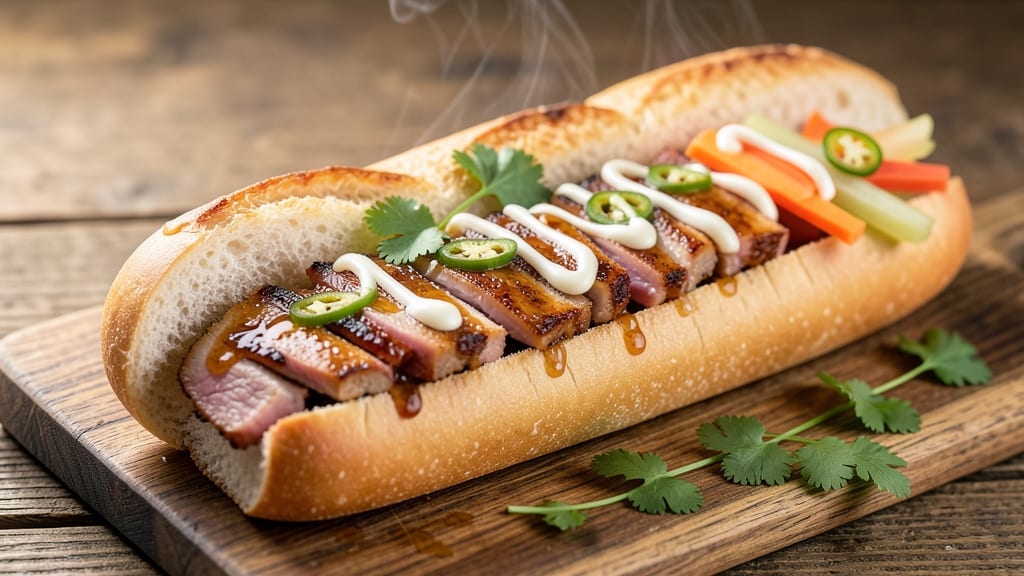
This crispy five-spice pork loin transforms your banh mi into a restaurant-quality masterpiece with every bite. 🔥 After perfecting this technique through years of Vietnamese street food research, I've cracked the code for achieving that signature crackling crust while keeping the meat impossibly tender inside.
The tamarind glaze adds a tangy kick that balances the rich, aromatic spices perfectly.
The secret lies in marinating the pork loin overnight with a blend of fish sauce, sugar, and five-spice powder, then searing it to develop that coveted crust.
We'll build the sandwich with traditional elements—pickled carrots and daikon for crunch, fresh cilantro for brightness, and jalapeño for heat—all bound together by a creamy mayo-chili sauce that elevates every component. This isn't just a sandwich; it's a complete flavor experience.
What you'll end up with is a banh mi that delivers authentic Vietnamese street food quality at home: a perfectly seared pork loin with crisp edges, tender meat that falls apart easily, and all the classic toppings assembled in perfect harmony.
The five-spice crust crackles with every bite, while the tamarind glaze adds just enough tang to cut through the richness.
Serve with steamed jasmine rice or additional pickled vegetables for a complete meal. This recipe delivers the full banh mi experience—crispy, tangy, and packed with layers of flavor that will have you reaching for seconds. Let's get cooking!
Ingredients for banh mi pork loin
Here's everything you need to create this restaurant-quality Vietnamese pork loin with crackling crust and tangy tamarind glaze.
| Ingredient | Amount | Notes |
|---|---|---|
| Pork Loin 🥩 | 1 ½ lb | Center-cut, 1-inch thick slices |
| Fish Sauce 💧 | ½ cup | Red Boat preferred for quality |
| White Sugar 🍚 | ¼ cup | Granulated, not powdered |
| Five-Spice Powder 🌶️ | 2 tbsp | Authentic Vietnamese blend |
| Tamarind Paste 🍈 | ¼ cup | Unsweetened, thick consistency |
| Mayonnaise 🥛 | ½ cup | Duck egg preferred for richness |
| Sriracha 🌶️ | 2 tbsp | Adjust for heat preference |
| Fresh Cilantro 🌿 | ½ cup | Stems removed, chopped |
| Jalapeño Peppers 🌶️ | 2 whole | Seeds removed, thinly sliced |
| Carrots 🥕 | 1 lb | Thinly sliced for pickling |
| Daikon Radish 🥕 | 1 lb | Thinly sliced for pickling |
| White Vinegar 💧 | ½ cup | For pickling solution |
| Salt 🧂 | 1 ½ tbsp | Diamond Crystal preferred |
| Black Peppercorns 🌶️ | 1 tsp | Freshly cracked preferred |
| Vegetable Oil 🫒 | ¼ cup | High smoke point for searing |
The pork loin is non-negotiable for that signature crackling crust. Center-cut slices are key—they hold up better to the marinade and searing. Grab a 1.5 lb piece from your butcher or the meat department, asking for thick-cut slices. For the five-spice powder, Vietnamese markets carry the authentic blend, but Penzeys or bulk spice sections at Whole Foods work too. Look for vibrant color and strong aroma—if it smells like dust, toss it. The tamarind paste should be thick and sticky; Thai or Vietnamese markets usually have the best quality.
No Red Boat fish sauce? Three Crabs or Tiparos are solid backups, but taste it first—some brands can be overly salty. Running low on duck egg mayo? Hellmann's or Best Foods work in a pinch, though they lack that rich depth. The pickled carrots and daikon can be prepped ahead—they actually taste better after sitting overnight. Baby carrots work if you're in a hurry, but thinly sliced radishes add that perfect crunch. For the jalapeños, serrano pepperslime juice plus a touch of sugar mimics the tang.
Marinate the pork overnight for maximum flavor penetration. The pickled veggies keep for 1 week in the fridge, though they're best used within 3 days for peak crunch. The five-spice marinade can be made 2 days ahead—just store it in an airtight container. For leftovers, wrap the pork tightly in foil and refrigerate for 3 days. Reheat gently in a skillet with a splash of water to keep it moist. The mayo-chili sauce stays fresh for 5 days covered in the fridge, though it's best used within 3 days for optimal creaminess.
Why You'll Love This Recipe
- One-Pan Magic: The pork loin barely needs prep—just a quick sear and simmer in that tangy fish sauce, sugar, and five-spice mix. No chopping, no fuss, just hands-off flavor while you finish dinner.
- Umami Bomb: That tamarind paste and fish sauce combo? It’s the secret weapon—sweet, salty, and funky all at once, with the five-spice powder adding warmth. The pork stays juicy with just the right crispy edge.
- Lunchbox Hero: Between us, this is my go-to for meal prep. Slice it thin, pack it with pickled veggies and cilantro, and it stays fresh for days. Honestly, I’ve had it cold, hot, or at room temp—still delicious.
- Budget Win: Pork loin stretches far, and the spices cost pennies. A little goes a long way, and leftovers reheat like a dream. My wallet and I both approve.
Step-by-step instructions for crispy five-spice pork loin
Here's how to create that signature banh mi pork with a crackling crust and deep, aromatic flavors.
🔥 Step 1: Marinate the Pork Loin for Maximum Flavor
In a large bowl, combine the 1.5 lb pork loin, 0.5 cup fish sauce, 0.25 cup white sugar, 2 tbsp five-spice powder, 0.25 cup tamarind paste, and 1.5 tbsp salt. The tamarind paste will be thick—use a fork to break it up before mixing. Massage the marinade into the pork until fully coated. Cover and refrigerate for at least 4 hours, preferably overnight.
This marinade does double duty—tenderizing the meat while infusing it with that signature tangy-sweet balance. The five-spice powder creates those complex aromatic notes that define authentic banh mi. I like to marinate overnight because the flavors really meld together, but if you're short on time, 4 hours will still give you excellent results.
🍳 Step 2: Sear the Pork to Perfection
Heat the 0.25 cup vegetable oil in a large skillet over medium-high heat until shimmering. Remove the pork from the marinade (reserve the marinade) and pat it very dry with paper towels—this is crucial for that crispy crust. Sear the pork for 3-4 minutes per side until deeply golden brown with a crackling crust.
Here's the thing—don't rush this step. You want that crust to develop fully before you add the reserved marinade. The pork should release easily from the pan when it's ready to flip. After searing, reduce heat to medium and pour the reserved marinade over the pork. Simmer for 8-10 minutes until the pork reaches 145°F internally and the sauce has thickened slightly.
🥘 Step 3: Prepare the Tangy Pickled Vegetables
While the pork cooks, prepare the pickled vegetables that will cut through the richness. In a medium bowl, combine the 1 lb thinly sliced carrots, 1 lb thinly sliced daikon radish, 0.5 cup white vinegar, and 1 tbsp sugar (from the remaining marinade if needed). Mix well and let sit for 15 minutes to soften slightly.
The vinegar will mellow out as it sits, creating that perfect balance of sweet, sour, and crunchy. I like to use both carrots and daikon because they complement each other—carrots add natural sweetness while daikon provides a refreshing bite. This step can be done ahead of time if you're prepping for a meal.
🍽️ Step 4: Assemble the Banh Mi with Signature Toppings
Slice the pork into ¼-inch thick slices against the grain. For the special sauce, mix together the 0.5 cup mayonnaise, 2 tbsp sriracha, and 1 tbsp fish sauce (from the reserved marinade). Spread this on your baguette slices, then layer with the pork, pickled vegetables, thinly sliced jalapeños, and chopped fresh cilantro.
Here's where it gets fun—press down gently on the sandwich to let all those flavors meld together. The crispy pork, tangy pickles, and creamy-spicy mayo create the perfect balance. I like to serve these immediately while the pork is still warm and the crust is at its crispiest. For extra authenticity, toast the baguette slices lightly before assembling.
Pro Tips For Making Banh Mi Pork Loin
- Slice Thin, Slice Even: I learned this the hard way—uneven slices mean some pork gets overcooked while others stay raw. Use a sharp knife and slice against the grain into ¼-inch strips, then trim any thick edges before marinating. (Yes, it’s tedious, but your banh mi will thank you.)
- Marinate Overnight, Not Hours: Fish sauce and five-spice need time to work their magic. Toss the pork with the marinade (fish sauce, sugar, tamarind, five-spice) and let it sit at least 8 hours—overnight is ideal. Rushing this step leaves the pork flat and the flavors underwhelming.
- Skip the Crowding in the Pan: After searing, resist the urge to pile all the pork in one spot. Cook in batches if needed—crowding steams the meat instead of browning it, and you’ll end up with soggy, unevenly cooked slices. A hot pan and a single layer guarantee that crispy crust.
- Balance the Tamarind: Tamarind paste is potent—start with half the recipe’s amount and taste as you go. If the marinade tastes too sharp or funky, a pinch of sugar or a splash of water can mellow it out. (I’ve ruined a batch by overdoing it, so test first.)
Common mistakes when making this dish
Over-Marinating Pork
I've seen many home cooks leave pork in the marinade for days, thinking more time equals better flavor. But pork loin is delicate—over-marinating for more than 24 hours can actually break down the muscle fibers too much, making the meat mushy instead of tender.
The ideal marinating window is 8-12 hours for perfect texture. Trust me, I've ruined more pork loins than I care to admit by letting them soak too long. 🥩
Skipping the Pat Dry
This is a classic mistake that kills that coveted crispy crust. After marinating, pork needs to be completely dry before searing—any moisture on the surface will steam the meat instead of creating that crackling crust.
I keep a stack of paper towels nearby and pat the pork until it's bone dry. Pro tip: Use two layers of paper towels for extra absorption. The difference in texture is night and day. 💧
Incorrect Heat Control
Many cooks either underheat or overheat their pans when searing. For banh mi pork, you need medium-high heat that's hot enough to create that Maillard reaction but not so hot it burns the exterior before the interior cooks.
I test my pan by flicking a drop of water—if it sizzles and dances, it's ready. Too cool? Your crust will be sad and limp. Too hot? You'll end up with burnt edges and raw centers. 🔥
Using Low-Quality Ingredients
This is where many homemade banh mi recipes fail. Using regular grocery store five-spice powder or cheap fish sauce will give you lackluster results. For authentic flavor, invest in authentic Vietnamese five-spice powder (available at Asian markets) and Red Boat fish sauce.
I've tasted the difference—it's like comparing a vintage cast iron skillet to a non-stick pan. The quality of your ingredients directly impacts the final product's depth of flavor. 🌶️
Not Resting the Meat
After cooking, pork needs time to rest and redistribute its juices. Skipping this step means you'll slice into meat that's still releasing juices, making it dry and tough. Let your pork rest for 10-15 minutes before slicing—this is especially important for thicker cuts.
I like to tent it loosely with foil while it rests. The wait is worth it for that perfect texture. ⏰
Overlooking the Pickle Prep
Many cooks assume pickled vegetables are just an afterthought, but they're crucial for balancing the rich pork flavors. The pickling process should create a perfect harmony of sweet, sour, and crunchy. If you skip the 15-minute resting time for your pickled carrots and daikon, they'll be too harsh and vinegary.
Also, don't skip the sugar—it's what makes them taste sweet and tangy, not just sour. This balance is what makes a great banh mi. 🥕
Nutrition facts
Frequently asked questions
Can I substitute pork loin with another cut of pork?
For best results, stick with pork loin as its lean nature and tender texture are ideal for this recipe. However, you could use pork tenderloin in a pinch—just reduce marinating time to 4-6 hours to prevent over-tenderizing. Avoid fatty cuts like ribeye or shoulder as they won't develop that signature crispy crust. The five-spice marinade works beautifully with either loin or tenderloin.
How do I make the baguette extra crispy?
Toast your baguette slices directly over a gas flame for 30 seconds per side until golden brown, or bake at 375°F for 5 minutes on a wire rack. For extra crunch, brush with melted butter after toasting. The key is to toast just before assembling so it stays crispy. Store-bought baguettes work fine, but homemade or fresh-baked ones add that authentic French bakery texture.
What if I don't have tamarind paste?
Mix 2 tbsp lime juice with 1 tbsp brown sugar to mimic tamarind's tangy-sweet profile. For deeper flavor, add ½ tsp fish sauce to the marinade. This combo won't be identical but will still create that essential balance of sweet and sour. The tamarind's unique sourness is hard to replicate, so if possible, track down some at an Asian market.
Can I make this recipe ahead of time?
Marinate the pork for up to 24 hours ahead, and prep the pickled vegetables 1 day in advance (they taste better after resting). Cook the pork just before serving to maintain crispiness. Assemble sandwiches only when ready to eat—this keeps the baguette fresh. Store components separately in the fridge for up to 3 days for maximum flavor.
How do I adjust the spice level?
For milder heat, reduce sriracha to 1 tbsp or use ½ tsp chili flakes instead. For extra kick, add 1 tbsp chopped Thai bird's eye chilies to the mayo or include extra jalapeño slices. Remember, the pickled vegetables already add subtle heat—balance carefully. Taste as you go!