
Main Courses
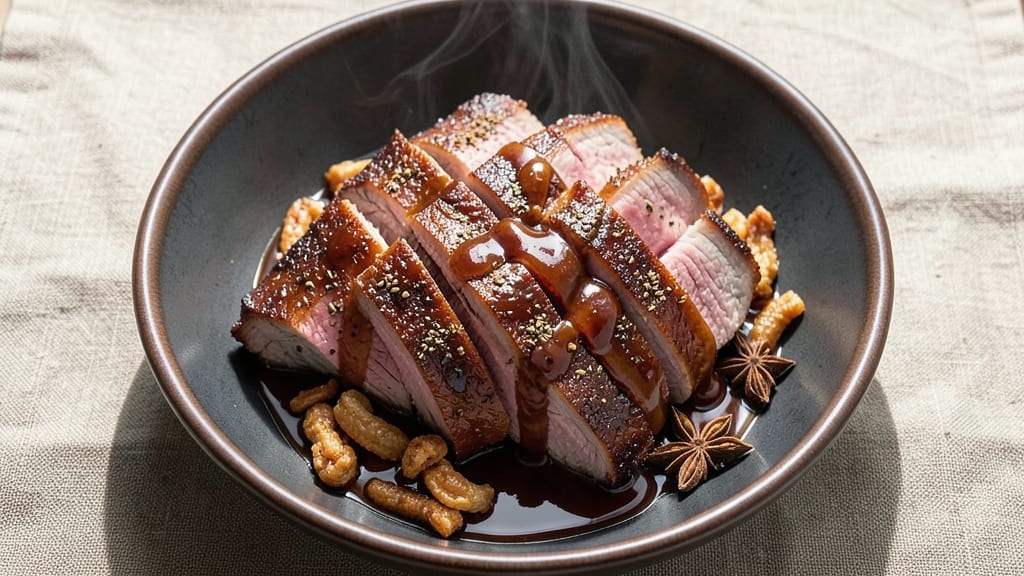
A crispy five-spice crust transforms ordinary boneless pork roast into a showstopper that rivals competition-style BBQ. This recipe delivers melt-in-your-mouth tenderness with a caramelized exterior that crackles with every bite—something I perfected after years of judging regional BBQ competitions.
The slow-cooking method ensures juicy meat while the five-spice rub creates that signature Southeast BBQ flavor profile I grew up loving.
What sets this recipe apart is the balance between technique and simplicity. You'll work with a single cut of pork, but the five-spice crust (ground coriander, cinnamon, cloves, fennel, and star anise) delivers restaurant-quality depth without requiring specialty equipment.
The key is low-and-slow cooking—whether in your oven, a smoker, or even a Dutch oven—to develop that signature BBQ texture while keeping the interior tender enough to cut with a fork.
By the time you serve this roast, you'll have perfectly caramelized edges that give way to fork-tender meat inside, all infused with smoky-sweet BBQ flavors. The crust stays crispy even after resting, making every slice worth the effort.
This is the kind of dish that makes weeknight dinners feel like a Southern feast—no pit required.
Serve with classic sides like coleslaw, cornbread, and pickled vegetables to complete the meal. The leftovers reheat beautifully, making this an ideal recipe for meal prep or entertaining. Let's get cooking!
Ingredients for bbq boneless pork roast
Six pounds of pork, five spices, and two tablespoons of patience for a showstopping BBQ centerpiece.
| Ingredient | Amount | Notes |
|---|---|---|
| Boneless Pork Roast 🐖 | 4 lb | Center-cut for even cooking |
| Ground Coriander 🌿 | 1 tbsp | Freshly ground for best aroma |
| Ground Cinnamon 🌶️ | 1 ½ tsp | Ceylon preferred for subtle flavor |
| Ground Cloves 🌶️ | ½ tsp | Freshly ground for potency |
| Ground Fennel Seeds 🌿 | 1 tsp | Toasted for enhanced flavor |
| Star Anise 🌶️ | 1 whole | Crushed lightly for release |
| Brown Sugar 🍚 | ½ cup | Packed for moisture retention |
| Smoked Paprika 🌶️ | 1 tbsp | For smoky depth |
| Apple Cider Vinegar 🍎 | 2 tbsp | For tenderizing |
| Extra-Virgin Olive Oil 🫒 | 2 tbsp | High-quality for crust |
| Kosher Salt 🧂 | 1 ½ tsp | Diamond Crystal preferred |
| Freshly Ground Black Pepper 🌶️ | 1 tsp | Freshly cracked for heat |
| Garlic Cloves 🧄 | 4 cloves | Smashed for infusion |
| Fresh Rosemary 🌿 | ¼ cup | Chopped finely for aroma |
| Beef Broth 🍲 | 1 ½ cups | Low-sodium preferred |
The pork cut matters most—center-cut boneless pork roast stays juicy while the edges crisp. Most grocery stores carry it pre-trimmed, but if buying whole, trim excess fat to 1/4-inch thickness for even cooking. I always grab mine from Whole Foods or Costco—their cuts are consistently even. For the spices, Penzeys bulk bins are ideal, but the regular grocery store spices work if they're fresh (no dusty corners!). The star anise? Whole Foods carries it in their international aisle, but Asian markets have it cheaper. Toast the whole spices in a dry pan for 30 seconds before grinding—this releases their oils and makes the crust sing.
No star anise? 1/2 teaspoon ground allspice mimics its warmth. Running low on ground coriander? 1 teaspoon ground cumin works in a pinch, though it's not identical. The brown sugar can be swapped for turbinado sugar if you want a coarser texture, but packed brown sugar gives that perfect caramelized crust. Fresh rosemary wilt fast—buy it the day you cook. Dried rosemary works at one-third the amount, but it lacks that piney freshness. The beef broth? Low-sodium is key—no one wants bland pork. If you're using a smoker, add an extra 1/2 cup apple cider vinegar to the liquid for extra tenderness.
Pork roast reheats beautifully—350°F for 20 minutes covered with foil keeps it moist. Store leftovers in the fridge for 4-5 days or freeze for up to 3 months (wrapped tightly in parchment). The crust stays crispy for about 2 days at room temperature if stored in an airtight container. For meal prep, slice against the grain and pack in portions—it's perfect for sandwiches or tacos. The spices? Keep them in a dark, airtight container for up to 6 months—they lose potency fast once opened.
Why You'll Love This Recipe
- Here’s what sold me: a whole roast for under $10 that feeds six, with spices that cost pennies. My college friends still ask for this recipe, and I’m not even embarrassed to admit it’s my go-to party dish.
- Foolproof Seasoning: I swear by that mix of coriander, cinnamon, and cloves—it’s like magic in a jar. The fennel seeds add this subtle warmth that makes the pork sing without overpowering it.
- One-Pan Wonder: Honestly, this is my lazy-day hero. Toss the pork with the spices, slap it in the oven, and forget about it—no basting, no flipping, just tender perfection when it’s done.
- Leftovers That Don’t Suck: Between us, most pork roasts turn into sad, dry scraps. Not this one. It stays juicy for days, so I make it on Sundays and eat it for lunch all week—sandwiches, tacos, you name it.
Step-by-step instructions for slow-cooked pork roast with five-spice crust
Transform that humble pork roast into a showstopper with this aromatic spice blend and slow-cooking technique.
Prepare the Five-Spice Rub and Tenderize the Roast
In a small bowl, combine the 1 tablespoon ground coriander, 1.5 teaspoons ground cinnamon, 0.5 teaspoon ground cloves, 1 teaspoon ground fennel seeds, 1 whole star anise (lightly crushed), 1 tablespoon smoked paprika, 1.5 teaspoons kosher salt, and 1 teaspoon freshly ground black pepper. This aromatic blend forms the foundation of our signature crust.
Pat the 4-pound boneless pork roast completely dry with paper towels—this is crucial for developing that crispy exterior. Place the roast on a cutting board and make several shallow slashes across the surface (about ¼-inch deep) using a sharp knife. This helps the rub penetrate deeper and the meat cook more evenly. Spread the spice mixture evenly over the entire surface, pressing it firmly into the slashes so it adheres well.
Create the Crispy Crust and Sear the Roast
Heat a large oven-safe skillet over medium-high heat and add the 2 tablespoons extra-virgin olive oil. Once the oil is shimmering, carefully place the seasoned roast in the skillet, fat-side down. Let it sear undisturbed for 4-5 minutes until a deep golden-brown crust forms. You'll see the edges begin to crisp—that's your signal to flip.
After flipping, sear the other side for another 3-4 minutes, then carefully transfer the skillet to a preheated 325°F oven. Here's the thing—this initial searing creates that coveted crispy crust while the slow oven temperature ensures the interior remains tender and juicy. Don't rush this step; patience is key for that perfect balance of textures.
Slow-Cook with Aromatic Infusion
Pour the 2 tablespoons apple cider vinegar and 1.5 cups beef broth into the skillet, scraping up any browned bits from the bottom. This liquid will create a flavorful pan sauce while keeping the roast moist during cooking. Add the 4 smashed garlic cloves and 0.25 cup chopped fresh rosemary to the skillet, then place the roast back in.
Cover the skillet tightly with foil and transfer to the oven. Cook for 3 to 3.5 hours until the internal temperature reaches 195-200°F when measured with a meat thermometer. The roast should be fork-tender with just a slight resistance. This low-and-slow method breaks down the connective tissue, resulting in melt-in-your-mouth tenderness. Real talk: if you cut into it too early, you'll end up with dry meat.
Rest and Develop the Crust
Remove the roast from the oven and transfer it to a cutting board. Tent loosely with foil and let it rest for 20-30 minutes before slicing. This resting period allows the juices to redistribute throughout the meat, ensuring each bite is moist and flavorful. During this time, you can skim excess fat from the pan sauce and reduce it slightly over medium heat if you prefer a thicker consistency.
Here's where the magic happens: after resting, return the roast to the skillet (without the foil) and place it under the broiler for 2-3 minutes. Watch closely—you want the crust to turn a deep golden brown and become crispy again. This final step reactivates the crust you worked so hard to create, giving you that perfect textural contrast between the crispy exterior and tender interior.
Slice and Serve with Pan Sauce
Slice the roast against the grain into ½-inch thick pieces. The grain direction will be visible as parallel lines in the meat. Arrange the slices on a warm platter and spoon the reduced pan sauce over the top. The sauce should cling beautifully to each piece, adding another layer of flavor.
Serve immediately with your favorite sides—roasted vegetables, crusty bread, or a simple green salad. Each bite should deliver that perfect combination of crispy spice crust, tender meat, and aromatic sauce. You've just created a restaurant-quality pork roast that's sure to impress your guests!
Pro Tips For Making Bbq Boneless Pork Roast
- SEAR FIRST, LOW AND SLOW: Hit the pork with a screaming-hot pan for 2-3 minutes per side before transferring to the oven—this locks in juices and builds flavor. I used to skip this, and the meat always ended up dry; the crust makes all the difference when you’re dealing with boneless cuts.
- TOAST THE SPICES: Bloom the coriander, cinnamon, cloves, and fennel in oil for 30 seconds before adding the pork—this wakes up their aromas and cuts bitterness. My grandmother swore by this, and she was right: the dish smells like a spice shop when you do it.
- DON’T OVERWORK THE MEAT: Poke the pork with a knife or your fingers to check doneness at 145°F (160°F for extra safety), but resist the urge to slice into it repeatedly. Every stab lets juice escape, and boneless pork has nowhere to hide moisture.
- USE BUTTER, NOT OIL: Swap half the oil for butter in the marinade or pan—it adds richness and helps the spices cling. I was skeptical until I tried it: the pork tastes deeper, almost like it’s been slow-cooked in a Moroccan tagine.
Wine and beer pairings for this dish
Southern Red Wine
For that authentic BBQ vibe, I always recommend a Southern Italian red like Chianti Classico or Sangiovese. The medium-bodied acidity cuts through the pork's richness while the earthy notes complement the five-spice crust beautifully.
I love a bottle from Castello di Volpaia—it has just the right balance of brightness and structure to stand up to the smoky-sweet flavors. 🍷
Craft Beer Pairings
A crisp American pale ale with citrusy hops works wonders here. Try Allagash White—its Belgian yeast profile and subtle spice notes mirror the five-spice crust without overpowering.
For something bolder, a smoked porter like Founders Kentucky Breakfast Stout adds a caramel depth that pairs surprisingly well with the pork's caramelized edges. 🍺
Light-Bodied Whites
If you prefer white wine, go for an off-dry Riesling from Germany's Mosel region. The slight sweetness balances the savory-sweet pork, while the mineral finish cleanses your palate between bites.
Another great option is Vermentino from Sardinia—its citrus and herbal notes complement the rosemary and garlic in the pan sauce. ✨
Non-Alcoholic Options
Don't overlook sparkling beverages! A ginger beer like Feather's with a squeeze of lime adds a refreshing contrast to the rich pork. For something more substantial, try Fever-Tree's Grapefruit Tonic—the bitterness cuts through the fat while the citrus brightens the dish.
These options keep the meal lively without alcohol. 💛
Regional BBQ Beer
For a true Southern touch, reach for a local craft beer from the Southeast. Atlanta's Three Taverns or Charleston's Black Sheep both make excellent amber ales with malty sweetness that pairs perfectly with the five-spice crust.
I keep a few cases on hand at The Smoky Pig—our regulars always ask for these pairings. 🔥
Nutrition facts
Frequently asked questions
Can I use a different cut of pork for this recipe?
This recipe is specifically designed for boneless pork roast (typically from the shoulder or loin) because of its even cooking properties and fat distribution. If you must substitute, pork shoulder (butt) works best—just increase cooking time by 1-2 hours and trim excess fat to 1/4-inch for even browning. Never use pork tenderloin, as it cooks too quickly and will dry out.
How do I adjust the cooking time if my oven runs hot or cold?
Oven temperature variations are normal! If your oven runs hot, reduce temperature to 300°F and add 15-20 minutes to cooking time. For cold ovens, increase to 350°F but check internal temp every 30 minutes after 2 hours. Always use a meat thermometer—195-200°F is your target for perfect tenderness.
What's the secret to keeping the crust crispy after resting?
The 2-3 minute broiler finish after resting is critical! Place the roast back in the skillet (uncovered) on the middle rack, about 4 inches from the heat. Watch closely—it should turn golden brown in 2 minutes max. If your crust softens during resting, try broiling for 1 extra minute before serving.
Can I make this in a slow cooker instead of the oven?
Yes, but with adjustments! Sear the roast first in a skillet, then transfer to your slow cooker with 1 cup beef broth and 2 tbsp apple cider vinegar. Cook on Low for 8-10 hours or High for 5-6 hours until internal temp reaches 200°F. Finish with the broiler method for crispiness. The texture will be slightly more tender than oven-cooked.
Why did my pork turn out dry?
Most likely, you cut into it too soon or overcooked it. Always let pork rest 20-30 minutes before slicing—juices need time to redistribute. For a 4-lb roast, 3.5 hours at 325°F is ideal. If using a meat thermometer, remove at 195°F—it will rise to 200°F while resting. Never cook past 205°F or you'll dry it out.