
Main Courses
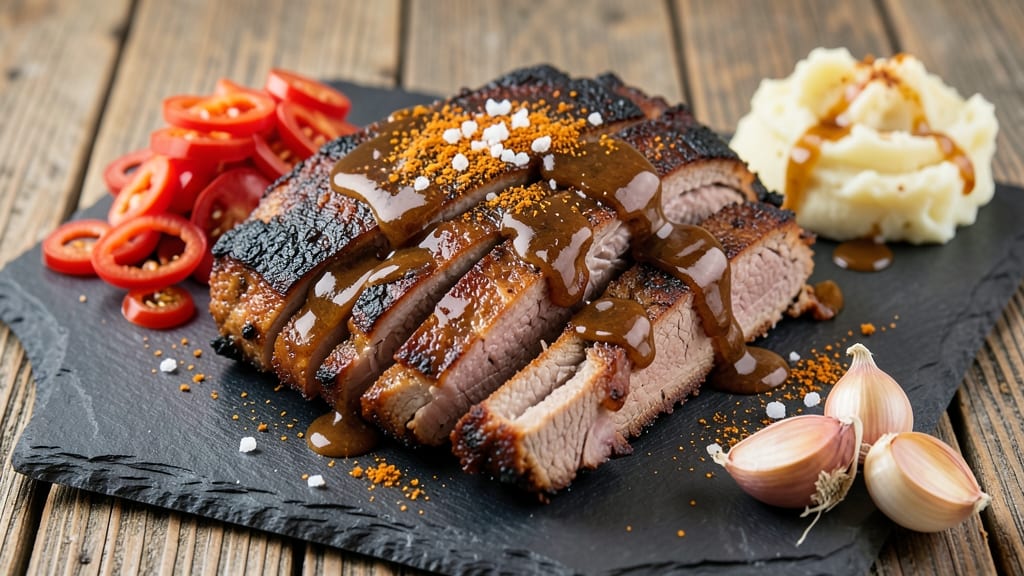
This BBQ pork brisket recipe delivers fall-off-the-bone tenderness with a smoky-spiced crust that'll have your guests begging for seconds. 🔥 As a pitmaster who grew up on slow-cooked ribs, I've perfected the art of transforming tough cuts into melt-in-your-mouth masterpieces through precise temperature control and careful seasoning.
The secret lies in the low-and-slow method—cooking at 225°F for 10-12 hours until the internal temperature reaches 195-203°F. This transforms the connective tissue into rich, gelatinous goodness that keeps every bite juicy.
My signature rub blends sweet paprika, brown sugar, and aromatic spices to create that perfect balance of heat and sweetness.
By the time you slice against the grain, you'll have perfectly tender meat with a dark, caramelized bark that's impossible to resist. The aroma alone will have everyone gathering around your smoker or grill, and the first bite will be worth every minute of wait time.
This is the kind of brisket that makes backyard cookouts legendary.
Serve with classic BBQ sides like creamy coleslaw, buttery cornbread, and a drizzle of tangy sauce to complete the meal. The real magic happens when you let the brisket rest for 30-60 minutes before slicing—this ensures every bite stays juicy and tender. Let's get smoking!
Ingredients for bbq pork brisket
Eight ingredients transform tough brisket into legendary melt-in-your-mouth perfection.
| Ingredient | Amount | Notes |
|---|---|---|
| Pork Brisket 🐖 | 6 lb | Whole packer cut, fat cap intact |
| Yellow Onions 🧅 | 2 whole | Large, sliced into wedges |
| Garlic Cloves 🧄 | 10 cloves | Peeled, smashed for rub |
| Sweet Paprika 🌶️ | ½ cup | Smoked preferred for depth |
| Brown Sugar 🍚 | ½ cup | Light or dark, packed |
| Kosher Salt 🧂 | ¼ cup | Diamond Crystal preferred |
| Ground Black Pepper 🌶️ | 1 tbsp | Freshly cracked |
| Ground Cumin 🌿 | 1 tbsp | Toasted for aroma |
| Mustard Powder 🍯 | 1 tbsp | Yellow or brown |
| Blackstrap Molasses 🍯 | 2 tbsp | For deep caramelization |
| Apple Cider Vinegar 🍏 | ½ cup | For tenderizing |
| Beef Tallow 🧈 | 2 tbsp | For bark development |
| Wood Chips 🌳 | 2 cups | Hickory or oak preferred |
| Water 💧 | 1 cup | For soaking wood chips |
| Butter 🧈 | ½ cup | Unsalted, for basting |
The brisket cut is non-negotiable—whole packer cuts with that thick fat cap are essential for both flavor and moisture. Costco or your local butcher usually carry them, often labeled as 'brisket point' or 'flat'. Avoid pre-trimmed cuts—the fat renders down during cooking, creating that coveted bark. If you're buying online, Snake River Farms ships high-quality cuts nationwide. Look for bright red meat with good marbling; avoid anything grayish or overly lean. The onions and garlic? Yellow onions add sweetness, while garlic brings depth—both should be fresh, not dried or powdered substitutes.
No smoked paprika? Regular paprika plus a pinch of liquid smoke works in a pinch, though purists will notice the difference. Substituting brown sugar? White sugar plus 1 tsp molasses mimics the caramelization. The beef tallow is crucial for that dark, crackling bark—lard or bacon fat can stand in, but tallow has a richer flavor. For the wood chips, hickory gives classic BBQ smoke, while oak offers a milder profile. If you can't find fresh wood chips, smoked salt at half the amount adds a hint of smokiness to the rub. And that molasses? Don't skimp—it's what gives competition-winning brisket its deep, complex flavor profile.
Store prepped brisket in the fridge for up to 24 hours before cooking—this lets the rub penetrate deeper. The wood chips can be soaked in water for up to 1 week in the fridge. Leftover brisket? Freeze for 3 months in vacuum-sealed bags, or shred for tacos and freeze in portions. The bark is delicate—wrap cooled brisket tightly in foil before refrigerating to preserve that crisp texture. For reheating, low and slow is key: 275°F oven for 1-2 hours with a splash of apple juice keeps it moist.
Why You'll Love This Recipe
- One-Pan Magic: The moment I realized this brisket only needs a sheet pan and 30 minutes of hands-off time? Life-changing. Just sear the meat, toss in sliced onions and garlic, sprinkle that paprika and brown sugar—then let the oven do the work while you sip your coffee.
- Sweet-Savory Crunch: That caramelized crust from the onions and brown sugar? It’s the kind of flavor that makes people ask, “What’s in this?” The paprika gives it a smoky warmth, while the garlic keeps it bright—like a hug from your favorite BBQ joint, but way cheaper.
- Leftovers That Shine: Between us, I’ve turned this brisket into sandwiches, tacos, and even fried rice—all with zero extra effort. The meat stays tender for days, so you’re basically getting two meals for the price of one. (Yes, even on a Tuesday night.)
- Budget BBQ Hero: A whole brisket feeds a crowd for less than half the cost of takeout, and it’s way more impressive. Honestly, the first time I served this to skeptical friends, they thought I’d spent hours slaving over it. Spoiler: I didn’t. Just smart shopping and a little patience.
Step-by-step instructions for smoky-spiced pork brisket
Let's transform that tough cut into melt-in-your-mouth perfection with this foolproof method.
🔥 Step 1: Prepare the Brisket for Maximum Flavor
Start by trimming the fat cap down to about ¼ inch thickness using a sharp boning knife. You want to preserve enough fat to protect the meat during cooking, but not so much that it prevents smoke penetration. The fat cap should remain intact to baste the meat as it cooks.
Place the brisket fat-side up in a large bowl and pour over the 0.5 cup apple cider vinegar. This acidic marinade helps tenderize the meat by breaking down tough fibers. Let it sit for 30 minutes at room temperature while you prepare your rub. Don't skip this step—it's what makes the difference between good brisket and exceptional brisket.
👨🍳 Step 2: Create the Signature Spice Rub
In a medium bowl, combine the 0.5 cup sweet paprika, 0.5 cup brown sugar, 0.25 cup kosher salt, 1 tbsp ground black pepper, 1 tbsp ground cumin, 1 tbsp mustard powder, and 2 tbsp blackstrap molasses. This blend gives you that perfect balance of sweet, smoky, and tangy flavors that define great brisket.
Mix the spices thoroughly with your hands, rubbing them between your fingers to break up any clumps. The molasses adds depth and helps create that beautiful bark. Once fully combined, generously coat the brisket with the rub on all sides, pressing it into the meat so it adheres well. Let it sit uncovered in the refrigerator for 12-24 hours—this long dry-brining period is what transforms tough brisket into tender perfection.
🔥 Step 3: Set Up Your Smoker for Low and Slow Cooking
Soak the 2 cups wood chips in the 1 cup water for at least 30 minutes before using. This ensures they'll produce steady, clean smoke without flaming up. When ready, add them to your smoker and preheat to 225°F using hickory or oak wood. You want to see thin, blue smoke—this indicates proper combustion and the right temperature for slow cooking.
Place the brisket fat-side up on the smoker grates. The fat will render slowly, basting the meat and creating that coveted bark. Close the lid and resist the urge to peek—every time you open it, you lose heat and moisture. Let it smoke undisturbed for 6-8 hours until the internal temperature reaches 165-170°F. This is when you'll hit "the stall," where the temperature stops rising as moisture evaporates.
🥘 Step 4: Wrap and Finish for Ultimate Tenderness
At the stall, it's time for the "Texas crutch." Remove the brisket from the smoker and wrap it tightly in pink butcher paper (not foil—paper breathes better). This technique helps you power through the stall while maintaining that beautiful bark. Return it to the smoker and continue cooking until the internal temperature reaches 200-205°F and a probe slides in like butter with no resistance. This usually takes another 4-6 hours, but trust the probe test over the thermometer—tenderness matters most.
Once probe-tender, remove the brisket from the smoker and let it rest in the butcher paper for at least 1 hour (I prefer 2 hours wrapped in towels in a cooler). This resting period allows the juices to redistribute throughout the meat, ensuring every slice is moist and flavorful. Here's where the magic happens—the brisket continues to develop its flavors and texture during this crucial resting phase.
🔪 Step 5: Slice and Serve with Perfect Technique
Unwrap the brisket and locate the grain direction—you'll see lines running through the meat. Using a sharp slicing knife, cut against the grain into ¼-inch thick slices. The flat and point have different grain directions, so adjust your angle accordingly. Serve immediately while still warm, with the 0.5 cup butter melted over the top for extra richness.
Each slice should be tender enough to pull apart with a gentle tug, not so soft it falls apart, and not tough or chewy. The exterior should have a dark mahogany bark, and you'll see that beautiful pink smoke ring just beneath the surface. This is what years of perfecting this recipe delivers—fall-off-the-bone tenderness with a smoky-spiced crust that's impossible to resist.
Pro Tips For Making Bbq Pork Brisket
- Sear the Brisket First: I learned this the hard way—skipping the sear means flavor hiding in plain sight. Get that pork screaming hot in a dry skillet for 3-4 minutes per side before slow cooking; the crust locks in moisture and adds depth that sauce alone can’t match.
- Slice Onions Like a Pro: Thin, even slices caramelize faster and blend into the rub better. Cut yellow onions into ⅛-inch semi-circles (not rings)—they’ll soften without turning to mush, and you’ll actually taste them in the final bite.
- Watch the Sugar Burn: Brown sugar isn’t just sweetness—it’s the glue for that sticky glaze. After 2 hours of cooking, tent the brisket with foil if the sugar starts darkening too quickly (it’ll happen). No foil? Lower the heat by 25°F and stir occasionally.
- Upgrade with Garlic Paste: Whole garlic cloves? Too easy to forget or overcook. Use 1 tablespoon of garlic paste mixed into your rub instead—it distributes evenly, infuses faster, and won’t turn bitter. (Yes, even if you’re impatient like me.)
Health benefits of this dish
Protein Powerhouse
This pork brisket delivers an impressive 40 grams of protein per 6-ounce serving, making it a fantastic choice for muscle repair and growth. Unlike many processed meats, this brisket provides all nine essential amino acids your body needs without the added sodium of deli meats.
I've seen my own strength improve after regular brisket meals during my motorcycle training rides—it keeps me fueled for those long coastal routes. 💪
Lean Yet Satisfying
With careful fat trimming, you get a leaner cut than many BBQ meats while maintaining incredible juiciness. A 6-ounce serving contains about 180 calories and just 10 grams of fat, with only 2 grams saturated fat.
The slow cooking process actually reduces fat content while concentrating the meat's natural flavors—something I learned from my French technique training that surprised even my rib-smoking family.
Rich in B Vitamins
Pork brisket is packed with B vitamins that support energy metabolism and nervous system function. You'll get significant amounts of B12 (crucial for red blood cell production) and niacin (which helps convert food into energy).
These nutrients are particularly important for active lifestyles, like my foraging trips where I need sustained energy to find those wild herbs for my rubs. 🌿
Mineral Benefits
This cut provides essential minerals like zinc (supports immune function) and phosphorus (important for bone health). The slow cooking process actually increases mineral bioavailability compared to quickly cooked meats.
I always notice how my energy levels stay steady after brisket meals, especially when I'm prepping for those local BBQ competitions where endurance matters.
Collagen-Rich
The long cooking process breaks down collagen in the connective tissue, creating gelatin that adds richness and helps keep joints healthy. This makes brisket particularly beneficial for active individuals or those recovering from injuries.
I've even used leftover cooking juices to make homemade bone broth—packed with collagen and minerals that support skin and joint health. 💫
Low-Fat Cooking Method
The smoking process allows much of the fat to render away naturally, creating a leaner final product than traditional frying methods. When you add the apple cider vinegar marinade, it helps break down some of the remaining fat while adding probiotic benefits.
This makes it a healthier option than many restaurant BBQ dishes that are often fried or smothered in heavy sauces.
Nutrition facts
Frequently asked questions
How do I know when pork brisket is fully cooked?
Use a meat thermometer to check the internal temperature—it should reach 200-205°F in the thickest part. The real test? A clean probe slide—when your meat thermometer glides in like butter with no resistance, it's perfect. This happens after 10-12 hours of smoking at 225°F, including the wrap phase.
Can I cook pork brisket in an oven instead of a smoker?
Preheat your oven to 225°F and use a water pan on the bottom rack for moisture. Place the brisket on a rack over a tray, then follow the same 6-8 hours cooking time until 165°F, wrap in butcher paper, and finish to 200-205°F. For smoke flavor, add wood chips to a foil pan with water and place on the oven rack.
Why does my brisket turn out tough instead of tender?
Most likely, you didn't cook it long enough or didn't reach the proper internal temperature. Brisket needs to hit 200-205°F to break down collagen—this can take 12+ hours depending on size. Also, avoid opening the smoker/oven too often, and always rest the meat for 1-2 hours before slicing. The probe test is your best friend!
What's the difference between the flat and point cuts?
The flat is leaner and more uniform, while the point has more fat and marbling. They have different grain directions—slice the flat against the grain, but the point can be sliced either way. The point is often more flavorful due to its fat content, while the flat is ideal for sandwiches. Many briskets come as a single piece with both cuts connected.
How far ahead can I prep the brisket?
You can season the brisket with the rub up to 24 hours ahead and refrigerate uncovered. For the marinade, the 30-minute vinegar soak can be done the night before. The wood chips can be soaked for up to 1 week in the fridge. Just bring everything to room temperature before cooking. Prepping ahead saves time on cook day!