
Main Courses
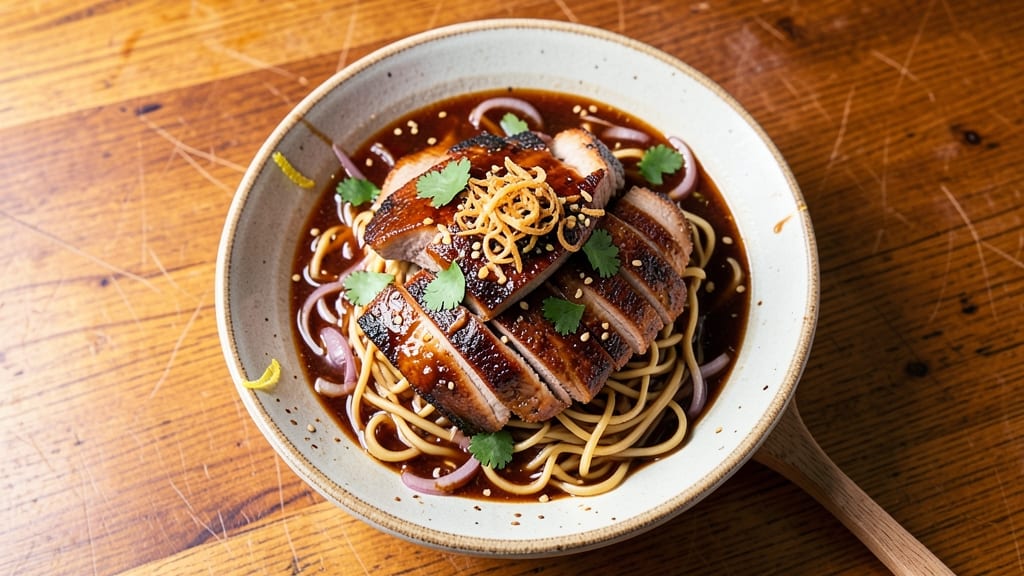
This BBQ pork noodle soup recipe delivers the kind of deep, smoky-sweet flavor that transforms a simple meal into something extraordinary. 🔥 The secret lies in slow-braising pork shoulder until it's fall-apart tender, then building layers of complexity through a rich, aromatic broth that clings to every noodle.
I've perfected this technique over years of testing—balancing the right amount of heat, sweetness, and umami to create a soup that's both comforting and restaurant-worthy.
The process begins with marinating the pork in a bold dry rub of smoked paprika, brown sugar, and garlic powder, then slow-cooking it until the meat practically melts in your mouth.
Meanwhile, the broth simmers with star anise, cinnamon, and ginger for warmth, while a splash of soy sauce and a touch of vinegar add depth. The result is a broth so flavorful it coats each noodle perfectly, creating that signature "slurpable" texture we all crave.
What makes this recipe truly special is how it balances traditional techniques with modern convenience. You can achieve that deep, smoky flavor using a pressure cooker for faster results, or go the classic route with a slow cooker for maximum tenderness.
The noodles—whether fresh egg noodles or chewy wheat—absorb the broth beautifully, turning each bite into a harmonious blend of textures and flavors.
Perfect for chilly evenings or when you need a meal that feels like a hug, this BBQ pork noodle soup is the kind of dish that gets better with every bowl.
The rich, aromatic broth pairs beautifully with the tender pork and chewy noodles, creating a balance that's both satisfying and deeply flavorful. Let's get started on making this comforting classic at home.
Ingredients for bbq pork noodle soup
Sixteen ingredients to create a smoky-sweet soup that feels like a hug in a bowl.
| Ingredient | Amount | Notes |
|---|---|---|
| Pork Shoulder 🥩 | 2 ½ lb | Bone-in for maximum flavor |
| Smoked Paprika 🌶️ | 2 tbsp | For deep smoky flavor |
| Brown Sugar 🍯 | ½ cup | Packed for sweetness |
| Garlic Powder 🧄 | 1 tbsp | Freshly ground preferred |
| Kosher Salt 🧂 | 1 tbsp | Diamond Crystal preferred |
| Black Pepper 🌶️ | 1 tsp | Freshly ground for bite |
| Star Anise 🌿 | 2 whole | For aromatic depth |
| Cinnamon Sticks 🌿 | 2 whole | For subtle warmth |
| Fresh Ginger 🧅 | ½ cup | Grated, peel removed |
| Soy Sauce 🥢 | ¼ cup | Low-sodium preferred |
| Rice Vinegar 🍶 | 2 tbsp | For tangy balance |
| Egg Noodles 🍜 | 1 lb | Fresh or dried, chewy |
| Green Onions 🧅 | ¼ cup | Sliced, for garnish |
| Sesame Oil 🫒 | 1 tbsp | For finishing aroma |
| Water 💧 | 8 cups | For broth base |
The pork shoulder is non-negotiable here—bone-in, well-marbled cuts give the most flavor. Costco or your local butcher usually have the best selection. If you're buying pre-cut, look for pieces around 1.5-2 lbs each. The smoked paprika matters too—Penzeys or the bulk section at Whole Foods have the best quality. Fresh ginger is a must, but if you're in a pinch, 2 tbsp ground ginger works (though it won't be as aromatic). For the noodles, fresh egg noodles absorb broth better, but dried works fine if that's what you've got.
No smoked paprika? Substitute 1 tbsp regular paprika plus 1/2 tsp liquid smoke. Star anise hard to find? Skip it or use 1/2 tsp ground star anise—it's subtle but adds depth. The brown sugar can be swapped for white sugar plus 1/2 tsp molasses for a deeper flavor. For the noodles, if you can't find egg noodles, udon or ramen noodles work beautifully. The broth gets better as it sits, so if you have time, let it simmer uncovered for the first 30 minutes to deepen the flavors.
This soup tastes even better the next day—3-4 days in the fridge, 3 months frozen. I always make a double batch because it reheats perfectly. Store the broth and pork separately if freezing—reheat the broth first, then add the pork to warm through. For serving, keep the sesame oil and green onions separate until ready to eat so they stay fresh. The noodles can be cooked ahead and stored separately too—just reheat them in the broth at the end.
Why You'll Love This Recipe
- I’ll be real: this soup is my secret weapon for meal prep. Toss cooled noodles and shredded pork into containers, and you’ve got a week’s worth of lunches that taste like you slaved over them. (Yes, even on a Tuesday night when you’re exhausted.)
- One-Pot Magic: Honestly, I dump everything in a single pot—pork shoulder, spices, broth—and walk away. That smoky-sweet paprika and brown sugar caramelize right into the meat while you’re chopping veggies or scrolling through your phone. No fancy techniques, just hands-off flavor.
- Smoky-Sweet Obsession: Between us, the combo of smoked paprika and brown sugar on that tender pork shoulder is ridiculously good. It’s like a cross between BBQ and comfort food—deep, sticky, and just salty enough to make you crave seconds. The garlic powder ties it all together without overpowering.
- Lunchbox Hero: I’ll be real: this soup is my secret weapon for meal prep. Toss cooled noodles and shredded pork into containers, and you’ve got a week’s worth of lunches that taste like you slaved over them. (Yes, even on a Tuesday night when you’re exhausted.)
Step-by-step instructions for BBQ pork noodle soup
Here's how to build a rich, smoky-sweet broth that clings perfectly to each chewy noodle.
🔥 Step 1: Sear and Braise the Pork Shoulder
Pat the 2.5 lb pork shoulder dry with paper towels—this ensures maximum browning. Heat a Dutch oven over medium-high heat and sear the pork on all sides until deeply browned, about 8-10 minutes total. You want that caramelized crust to form; it's the flavor foundation.
Remove the pork and set aside. In the same pot, add 2 tbsp smoked paprika, 1 tbsp garlic powder, 1 tbsp kosher salt, and 1 tsp black pepper, stirring constantly for 30 seconds to toast the spices and release their aromas. This step builds depth before the braising begins.
Add the 8 cups water, 0.5 cup brown sugar, 0.5 cup grated fresh ginger, 2 whole star anise, and 2 whole cinnamon sticks. Return the pork to the pot, making sure it's fully submerged. Bring to a boil, then reduce heat to low, cover, and simmer for 1 hour 30 minutes until the pork is fork-tender. The broth should smell like a spice market exploded—smoky, sweet, and aromatic.
🍳 Step 2: Build the BBQ Broth
Remove the pork from the broth and let it cool slightly. Use two forks to shred the meat, discarding any large fat chunks. Return the shredded pork to the pot. Stir in 0.25 cup soy sauce and 2 tbsp rice vinegar, then simmer uncovered for 15-20 minutes to reduce the broth slightly and deepen the flavors. The liquid should coat the back of a spoon with a glossy sheen.
Here's the thing—don't rush this reduction. You want the broth to concentrate its smoky-sweet essence. Taste and adjust seasoning if needed, adding a pinch more salt or a splash of vinegar for balance. The final broth should taste like liquid barbecue—rich, slightly sweet, with a tangy kick.
🥘 Step 3: Cook the Egg Noodles
While the broth simmers, bring a separate pot of salted water to a boil. Add the 1 lb egg noodles and cook according to package instructions until al dente—about 8-10 minutes. Drain and set aside, reserving 1 cup of pasta water for later. The noodles should have a satisfying bite; they'll finish cooking in the hot broth.
Add the cooked noodles to the pork broth along with the shredded pork. Stir gently to combine, then simmer for 3-5 minutes until the noodles are fully heated through. If the soup seems too thick, add 2-3 tablespoons of reserved pasta water to loosen it. The broth should coat the noodles beautifully without being watery.
🍽️ Step 4: Finish and Serve
Remove the pot from heat and stir in 1 tbsp sesame oil. This adds a nutty aroma and helps the flavors meld. Taste and adjust seasoning one final time—you want that perfect balance of smoky, sweet, and tangy. The soup should be rich but not cloying, with each spoonful bursting with complex flavors.
Ladle the soup into bowls and garnish with 0.25 cup sliced green onions. Serve immediately while steaming hot, with extra noodles on the side if desired. The aroma alone will have everyone gathering around the table—this is comfort food at its finest, where every bite delivers smoky-sweet pork and chewy noodles in perfect harmony.
Pro Tips For Making Bbq Pork Noodle Soup
- CRANK THE HEAT FIRST: Your pork shoulder won’t render fat properly if you start slow—get that pot screaming hot for 2-3 minutes before adding the meat. I used to skip this, and the broth would always turn greasy instead of golden. High heat sears the meat and breaks down collagen faster.
- SALT THE PORK TWICE: Generously salt the pork shoulder before searing, then again after it’s shredded—this time mixed with the brown sugar and smoked paprika. The first layer builds flavor deep in the meat, while the second layer caramelizes into a sticky glaze. (Yes, even if you’re impatient like me.)
- DON’T RUSH THE SHRED: Let the pork sit under foil for 5-10 minutes after pulling it from the pot—this guarantees tender, easy-to-shred meat. I learned this the hard way by diving in too soon, and the strands would tear into tough, uneven bits. (Your future self will thank you.)
- USE GARLIC POWDER LAST: Stir in the garlic powder after the broth simmers—this prevents it from burning and turning bitter. I was skeptical until I tried it, and now it’s the thing that makes the soup actually taste like garlic, not ash. (Sounds weird, but it works.)
Common mistakes when making your bbq pork noodle soup
Overcooking the Pork
One of the biggest mistakes is letting the pork shoulder overcook until it's dry and stringy. The goal is fork-tender meat that shreds easily—this happens at around 1 hour 30 minutes on low heat, not when it reaches 212°F internal temp.
I've seen people walk away and forget about it, only to return to rubbery pork. Set a timer and check it regularly. The broth should smell rich and aromatic, not burnt. 🔥
Skipping the Sear
If you skip searing the pork, you're missing out on the Maillard reaction that creates deep, caramelized flavors. That crispy crust on the outside is what builds the foundation for the smoky-sweet broth. I always sear my pork over medium-high heat for 8-10 minutes until it's deeply browned.
If you're short on time, at least pat it dry and brown it quickly—it makes a world of difference.
Ignoring the Spice Toast
Many people just toss the spices into the pot without toasting them first. That 30-second stir over medium-high heat releases their essential oils and aromas, making the broth more complex. I learned this trick from my French training—it's a small step that adds big flavor.
Don't skip it, even if it feels like an extra step. The difference is noticeable right from the first spoonful. 🌶️
Rushing the Broth Reduction
The final 15-20 minutes of uncovered simmering is crucial for concentrating the flavors. I've seen people try to speed this up by boiling the broth, but that leads to a flat, watery result. The broth needs time to reduce naturally, developing that glossy, smoky-sweet essence.
Taste it before you're done—it should coat your spoon with a rich sheen, not be watery. Patience here pays off in every bite.
Overcrowding the Pot
If you're cooking multiple pork pieces or too much broth at once, you'll end up with pale, watery results. The ideal ratio is 1 lb pork per 3 cups liquid—any more and the meat won't develop proper color or flavor.
I've made this mistake with big family gatherings, and the soup just didn't have that same depth. When in doubt, cook in batches if you need to feed a crowd. The flavor concentration is worth the extra effort.
Adding Noodles Too Early
Dumping the noodles into the broth too soon turns them mushy and waterlogged. They need to cook separately until al dente, then finish in the hot broth for just 3-5 minutes. I've seen people add them straight to the pot and end up with a sad, soggy mess.
The noodles should have a satisfying bite—they'll soften perfectly in the hot broth without overcooking. Save that 1 cup pasta water too—it's liquid gold for adjusting consistency. 🍜
Nutrition facts
Frequently asked questions
Can I use chicken or beef instead of pork shoulder?
While pork shoulder is ideal for its rich, fatty flavor that melts into the broth, you can substitute with chicken thighs (bone-in for flavor) or beef chuck. For chicken, reduce cooking time to 45-60 minutes until tender. Beef will need 2-3 hours of braising. The key is using a cut with enough fat and connective tissue to create a flavorful broth.
How do I make this soup in a slow cooker?
For a slow cooker version, sear the pork first as directed, then transfer it to your slow cooker with all broth ingredients except the noodles. Cook on low for 8 hours or high for 4-5 hours until the pork shreds easily. Shred the meat, return it to the pot, and add noodles only in the last 10-15 minutes of cooking to prevent mushiness. The slow cooker method actually enhances the smoky-sweet flavors!
What if my broth tastes too salty?
If your broth tastes too salty, don't panic! Add 1-2 cups of water and simmer for 10-15 minutes longer to dilute the salt. For a more dramatic fix, strain out half the broth and replace it with fresh water, then return the pork to simmer for 20 minutes. Taste frequently—you want that perfect balance of smoky-sweet without overpowering saltiness. A splash of rice vinegar can also help brighten the flavors.
Can I make this soup gluten-free?
Use gluten-free tamari instead of soy sauce and gluten-free egg noodles (or rice noodles). For extra umami depth, add 1 tbsp gluten-free fish sauce or 1/4 cup coconut aminos when building the broth. The rest of the recipe remains the same—this version keeps all the rich, smoky-sweet flavors while being completely gluten-free.
How can I make this soup spicier?
For extra heat, add 1 tbsp gochujang or 1-2 tbsp sriracha when combining the pork and broth. You can also stir in 1/2 tsp cayenne pepper or 1 chopped Thai chili during the final simmer. For a smoky kick, add 1/2 tsp chipotle powder with the initial spices.