
Main Courses
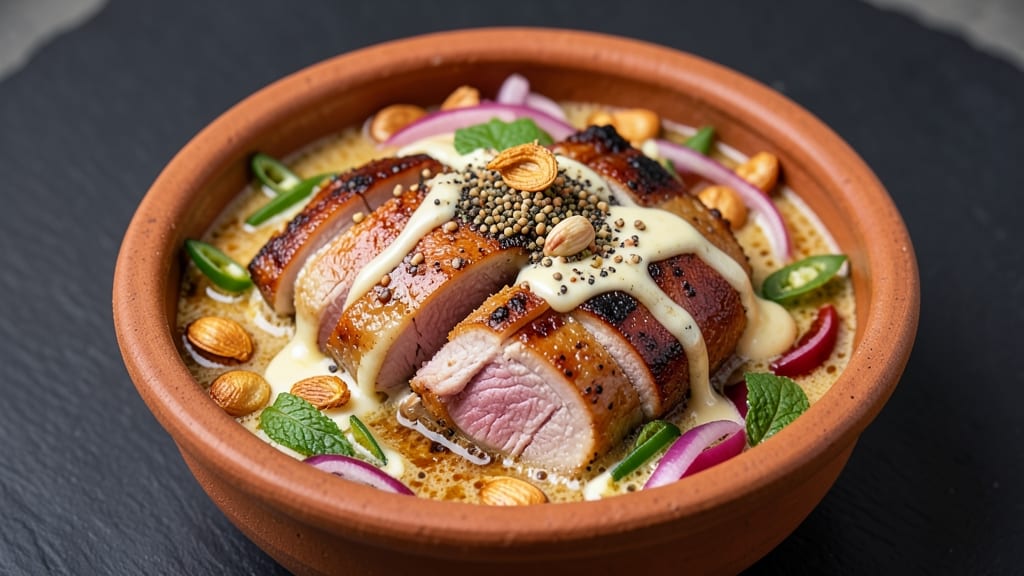
This Bengali pork recipe transforms tender pork shoulder into a fragrant, tangy masterpiece using panch phoron—the aromatic five-spice blend that defines Bengali cuisine. 🔥 After years of perfecting this dish in my Atlanta kitchen, I’ve streamlined the process without sacrificing authenticity, so you can recreate the rich, layered flavors of Kolkata at home.
The secret lies in the slow braise, where tamarind’s bright acidity cuts through the pork’s natural richness, while mustard oil tempering adds that signature depth.
The recipe begins with a foolproof marinade of yogurt, ginger, and garlic, ensuring the pork stays juicy as it cooks. Panch phoron—equal parts cumin, fennel, nigella, fenugreek, and black pepper—infuses every bite with warmth, while tamarind and mustard oil create the signature tang that makes this dish unforgettable.
Unlike many adaptations, this version keeps the traditional techniques but simplifies them for home cooks, so you can achieve restaurant-quality results without a pressure cooker or specialty ingredients.
By the time you serve it, you’ll have fall-apart tender pork swimming in a glossy, spiced sauce that’s both complex and comforting. The dish pairs perfectly with steamed basmati rice and a side of dal for a complete Bengali meal, but it’s hearty enough to stand alone.
What makes this recipe special is how it balances tradition with approachability—every step honors the culture while making the process accessible.
Whether you’re cooking for a family gathering or a quiet weeknight dinner, this braise delivers deep, satisfying flavors that linger long after the last bite. The key is patience: letting the spices bloom in hot oil and the pork simmer until it practically melts in your mouth.
Trust me, the effort is worth it for a dish this unforgettable.
Ingredients for bengali pork
Panch phoron, tamarind, and mustard oil—three ingredients that define Bengali flavor, plus a few pantry staples.
| Ingredient | Amount | Notes |
|---|---|---|
| Pork Shoulder 🥩 | 2 ½ lb | Bone-in for flavor, cut into 2-inch chunks |
| Plain Yogurt 🥛 | 1 cup | Full-fat for richness, unsweetened |
| Fresh Ginger 🌿 | ½ cup | Grated, not paste (fresh is essential) |
| Garlic Cloves 🧄 | 8 cloves | Minced, not powdered |
| Panch Phoron Spice Blend 🌶️ | 1 tbsp | Equal parts cumin, fennel, nigella, fenugreek, black pepper |
| Tamarind Paste 🍯 | ¼ cup | Unadulterated, not sweetened |
| Mustard Oil 🫒 | ¼ cup | Lightly toasted, not raw |
| Onion 🧅 | 1 whole | Large yellow, finely chopped |
| Tomatoes 🍅 | 2 whole | Roma, crushed by hand |
| Coconut Milk 🥥 | 13 ½ oz | Full-fat canned, no additives |
| Bay Leaves 🍃 | 2 whole | Fresh if possible, dried works |
| Turmeric Powder 🌿 | ½ tsp | Freshly ground preferred |
| Salt 🧂 | 1 ½ tsp | Kosher or sea salt |
| Black Peppercorns 🌶️ | ½ tsp | Freshly cracked |
| Fresh Cilantro 🌿 | ¼ cup | Chopped, for garnish |
The pork shoulder is non-negotiable here—bone-in gives the most flavor, and 2.5 lbs ensures generous portions. Look for well-marbled cuts at Indian grocery stores like Patel Brothers or Apna Bazar for authentic quality. If you can't find panch phoron pre-mixed, buy the individual spices (cumin, fennel, nigella, fenugreek, black pepper) and toast them lightly in hot oil before mixing. Tamarind paste should be thick and tangy—avoid the sweetened versions sold in regular grocery stores. Mustard oil is the secret weapon; Kashmir or Indian brands are best, but if you can't find it, use regular mustard oil and toast it gently to reduce the heat.
No panch phoron? Garam masala at double the amount gets you close, though it lacks nigella's signature bite. Tamarind paste unavailable? Lemon juice plus 1 tsp sugar mimics the tang, but the texture won't be identical. Mustard oil too strong? Olive oil with 1 tsp ground mustard seed works in a pinch. For the tomatoes, canned San Marzano saves time—just drain well. The coconut milk should be full-fat; light versions won't give the same richness. Fresh ginger and garlic are non-negotiable—powders won't cut it for this dish's depth.
This braise tastes even better the next day, so make it ahead if you can. Store in an airtight container in the fridge for up to 4 days, or freeze portions for 3 months. The pork will fall apart more after chilling, so plan accordingly. For serving, keep the sauce warm and reduce it slightly if it's too thin—just simmer uncovered for 10 minutes. Garnish with fresh cilantro right before eating, as it wilts quickly. The spices keep for months in a cool, dark place, but mustard oil should be refrigerated after opening.
Why You'll Love This Recipe
- One-Pot Magic: I swear by this recipe when I’m too tired to clean a million dishes—just sear the pork, toss in the yogurt and spices, and let it slow-cook. That panch phoron? It turns a simple weeknight into a flavor explosion without extra effort.
- Tangy-Garlicky Bliss: The yogurt keeps it creamy, the ginger adds a zing, and the panch phoron—those five spices—give it this je ne sais quoi that’s addictive. Honestly, the first bite makes me forget it’s just pork.
- Leftovers That Shine: This dish actually improves the next day—more tender, flavors melded. I freeze half for lazy days, and it reheats like a dream. (Yes, even on a Tuesday night.)
- Budget-Friendly Feast: Pork shoulder stretches for a crowd, and the spices cost pennies. Between us, this is how I feed my family hearty meals without breaking the bank—no takeout, just flavor-packed goodness.
Step-by-step instructions for Bengali pork braise
Here's the method for rich, aromatic pork that balances heat, tang, and coconut cream.
🔥 Step 1: Sear the Pork for Deep Flavor
Heat a heavy pot over medium-high heat and add the 2.5 lb pork shoulder cut into 2-inch chunks. Let the meat sear undisturbed for 3-4 minutes per side until deeply golden brown. This step develops the Maillard reaction that creates complex flavors.
Once browned, remove the pork and set aside. In the same pot, add 2 tablespoons of the mustard oil (you'll use the remaining ¼ cup later) and swirl to coat the browned bits. This oil carries the signature Bengali aroma—don't skip it.
👨🍳 Step 2: Build the Spiced Base
Reduce heat to medium and add the 1 whole onion (finely chopped) and 0.5 cup grated fresh ginger. Cook for 5-6 minutes until the onions soften and turn translucent. Add the 8 cloves minced garlic and cook for 30 seconds until fragrant.
Stir in the 1 tbsp panch phoron spice blend and 0.5 tsp turmeric powder, toasting for 1 minute until the spices release their aroma. This is where the dish gets its signature complexity—don't rush this step. The spices should smell warm and earthy.
🥘 Step 3: Braise with Tangy Tamarind
Pour in the 1 cup plain yogurt and stir vigorously to combine with the spices. Cook for 2-3 minutes until the yogurt begins to thicken slightly. Add the 0.25 cup tamarind paste and 1.5 tsp salt, stirring until fully dissolved.
Return the seared pork to the pot along with 1 cup water. Bring to a gentle simmer, then add the 2 whole bay leaves and 0.5 tsp cracked black peppercorns. Cover and cook for 1 hour at a bare simmer, stirring occasionally to prevent sticking.
🍳 Step 4: Finish with Coconut Cream
After the initial braise, stir in the 13.5 oz coconut milk and 2 whole crushed tomatoes. Increase heat to medium-low and simmer uncovered for 45-60 minutes until the pork is fork-tender and the sauce thickens to a glossy consistency.
Check for doneness by piercing the thickest piece of pork—it should slide in easily with minimal resistance. The sauce should coat the back of a spoon and have a velvety texture. If it's too thin, simmer uncovered for another 5-10 minutes to reduce.
🌿 Step 5: Garnish and Serve
Remove the bay leaves and discard. Stir in the remaining ¼ cup mustard oil (lightly toasted) and 0.25 cup chopped fresh cilantro. The oil should create a shimmering sheen on the sauce—this is essential for authentic flavor.
Serve immediately with steamed basmati rice or naan. The dish should have layers of flavor: the heat from the panch phoron, the tang from the tamarind, the richness of the coconut milk, and the earthy depth of the mustard oil. Each bite should be balanced with tender pork that falls apart easily.
Pro Tips For Making Bengali Pork
- Marinate Pork Overnight: I learned this the hard way—rushing the marinade means the yogurt and panch phoron never fully tenderize the pork shoulder. Use at least 8 hours, preferably overnight, and keep it in the fridge. The longer it sits, the deeper the flavor and the easier it cooks later.
- Grind Ginger Like a Pro: Fresh ginger is non-negotiable here, but grating it too finely turns your dish into a mushy paste. Use a sharp knife to julienne it into matchsticks—just thin enough to release flavor without turning the sauce into soup. (Yes, even if you’re impatient like me.)
- Low and Slow Wins: Start your pork shoulder in a hot pan to seal the crust, then drop the heat to a simmer. Too high a temperature = tough meat. Aim for 180°F (82°C) internal temp, and let it cook uncovered for the last 20 minutes—this guarantees a caramelized exterior without drying it out.
- Bloom Panch Phoron First: Skip the urge to toss all spices in at once. Toast the panch phoron in oil for 30 seconds until it smells like a Bengali kitchen—this wakes up the flavors. Then add garlic and ginger, and let them sizzle for another minute before adding yogurt. (Your future self will thank you.)
Wine and beer pairings for this recipe
Mustard Oil Magic
Mustard oil is the soul of Bengali cuisine, and this dish is no exception. I always use lightly toasted mustard oil (not raw) to temper the spices—it adds a nutty depth that balances the tamarind’s tang.
For a milder version, toast ¼ cup olive oil with 1 tsp ground mustard seeds until golden, then proceed with the recipe. The key is to add it at the very end, creating that signature shimmering sheen on the sauce. 🌶️
If you can’t find authentic mustard oil, Kashmir or Indian brands are best, but a pinch of asafetida (hing) in the oil can mimic its complexity. Trust me, the aroma alone will transport you to Kolkata.
Red Wine Pairings
For a bold contrast, I recommend a medium-bodied red like Gewürztraminer or Pinot Noir from India’s Nashik region. The wine’s spice notes and slight sweetness complement the panch phoron, while its acidity cuts through the richness.
A 2018 Sauvignon Blanc from New Zealand also works—its citrusy brightness mirrors the tamarind’s tang. 🍷
Avoid heavy Cabernets; they’ll overpower the dish’s delicate balance. Instead, opt for cool-climate Syrah or a light-bodied Grenache from Spain. The goal is to let the pork’s flavors shine while adding a refreshing contrast.
Beer Complements
For beer lovers, a crisp Indian lager like Kingfisher or Bangalore Union is perfect—its light maltiness won’t compete with the spices. Alternatively, a Belgian witbier (like Hoegaarden) adds a citrusy lift that echoes the tamarind. 🍺
If you prefer hoppy beers, a session IPA with subtle fruit notes (like New Belgium Fat Tire) pairs surprisingly well. Just skip the heavy, bitter IPAs—they’ll clash with the dish’s warmth.
Non-Alcoholic Options
For a refreshing non-alcoholic match, try sparkling lime soda (like 7Up) with a squeeze of lemon—the effervescence cleanses the palate. Or serve mango lassi (sweetened yogurt drink) to balance the heat with creamy coolness. 🥤
For a herbal twist, hibiscus iced tea (common in Bengali homes) adds floral notes that harmonize with the panch phoron. Chill it well and serve over ice for the best experience.
Nutrition facts
Frequently asked questions
Can I substitute chicken or mutton for pork in this recipe?
While the technique works for other meats, pork's natural fat content makes it ideal for this braise. For chicken, reduce cooking time to 30-40 minutes after adding coconut milk, and use 1.5 lbs bone-in thighs instead. For mutton, increase simmering to 90 minutes and add 1 extra bay leaf for deeper flavor. The spices will still shine, but texture and cooking times will differ.
How do I make panch phoron if I can't find it?
Mix equal parts 1 tsp cumin seeds, 1 tsp fennel seeds, ½ tsp nigella seeds, ½ tsp fenugreek seeds, and ½ tsp black peppercorns. Toast them dry in a pan over low heat for 2-3 minutes until fragrant, then grind into a powder. Store in an airtight container for up to 1 month. This blend captures 80% of the authentic flavor!
Why does my sauce turn out too thin or too thick?
For a thinner sauce, add ½ cup water during the final 10 minutes of simmering. For thicker sauce, simmer uncovered for 5-10 extra minutes or stir in 1 tsp cornstarch mixed with 2 tbsp water. The ideal consistency should coat the back of a spoon but still be pourable. If using coconut milk, ensure it's full-fat—light versions won't thicken properly.
Can I prepare this dish ahead of time?
This recipe tastes even better the next day! Store in an airtight container in the fridge for up to 4 days, or freeze portions for 3 months. Reheat gently on low heat with 1 tbsp water to restore moisture. The pork will be more tender after resting, and flavors meld beautifully. Just add fresh cilantro when reheating—it wilts quickly.
What's the best way to serve this Bengali pork?
Pair with steamed basmati rice and yellow dal for a complete Bengali meal. For extra authenticity, serve with luchi (Bengali fried flatbread) or paratha. Garnish with thinly sliced onions and lemon wedges to brighten each bite. The dish also works as a filling for naan wraps or over mashed potatoes for a fusion twist.