
Main Courses
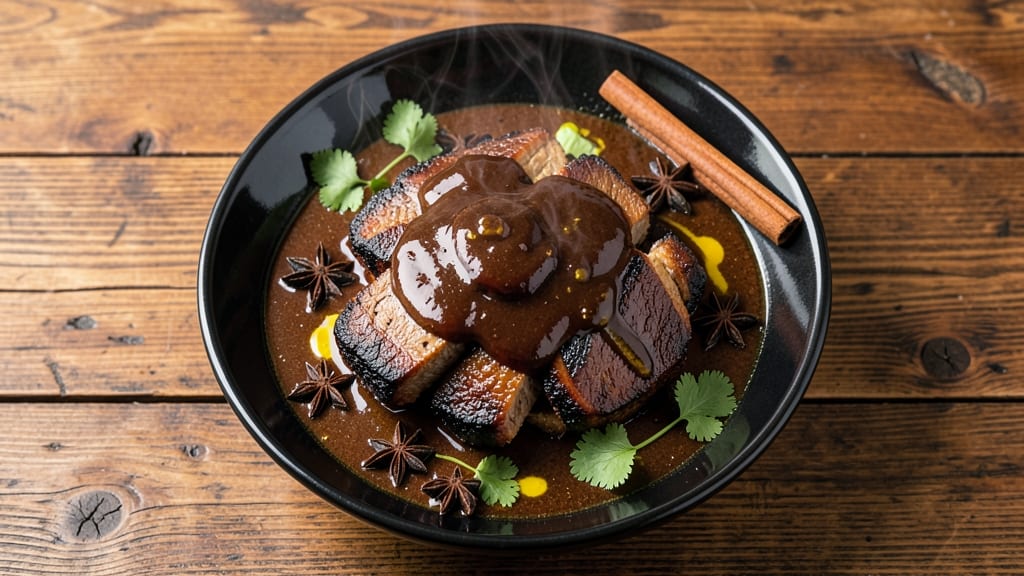
This black pork curry recipe delivers the kind of bold, aromatic depth that transforms simple pork into something extraordinary. 🔥 After years of perfecting the balance between smoky five-spice and tangy tamarind, I've created a dish that's both restaurant-worthy and achievable at home.
The secret lies in marinating the pork overnight—this step ensures tender, flavor-packed meat that falls apart with every bite.
What sets this curry apart is the careful layering of spices and aromatics. We start with a deep, fragrant base of star anise, cinnamon, and black peppercorns, then brighten it with tamarind and a touch of coconut milk for richness.
The slow cooking process allows all these flavors to meld together, creating a sauce that's both complex and perfectly balanced—never overpowering, always satisfying.
By the time you serve this dish, you'll have tender, caramelized pork swimming in a glossy, aromatic sauce that's rich with layers of flavor. The dish pairs beautifully with steamed jasmine rice or warm naan, making it ideal for family dinners or special occasions.
Each bite delivers a perfect harmony of smoky, sweet, and tangy notes that will have everyone asking for seconds.
This recipe is designed to be both approachable and impressive—ideal for home cooks who want to create restaurant-quality meals without the fuss. The key is patience: letting the flavors develop over time results in a dish that's far more nuanced than anything you'd find in a takeout container.
Let's get cooking!
Ingredients for black pork curry
Pork shoulder, aromatic spices, and coconut milk transform into this restaurant-worthy curry.
| Ingredient | Amount | Notes |
|---|---|---|
| Black Pork Shoulder 🥩 | 1 ½ lb | Bone-in for flavor, cut into 1.5-inch cubes |
| Five-Spice Powder 🌶️ | 2 tbsp | Homemade or store-bought blend |
| Tamarind Paste 🍯 | ½ cup | Use unsweetened for authentic tang |
| Coconut Milk 🥥 | 1 can | Full-fat for creaminess, 13.5 oz can |
| Star Anise 🌿 | 2 whole | Whole pods, crushed lightly |
| Cinnamon Sticks 🍃 | 2 whole | 2-inch pieces for infusion |
| Black Peppercorns 🌶️ | 1 tbsp | Crushed for depth of flavor |
| Garlic Cloves 🧄 | 6 cloves | Peeled and smashed |
| Shallots 🧅 | 3 whole | Minced for sweetness |
| Fresh Ginger 🌿 | 2 tbsp | Grated, not powdered |
| Fish Sauce 🍶 | 1 tbsp | Red Boat brand preferred |
| Brown Sugar 🍚 | 2 tbsp | Light or dark works |
| Lime Juice 🍋 | 2 tbsp | Freshly squeezed |
| Green Onions 🧅 | ¼ cup | Sliced for garnish |
| Vegetable Oil 🫒 | 2 tbsp | High smoke point |
The pork shoulder is your canvas here—bone-in cuts from the butcher counter add extra flavor. Look for well-marbled pork at stores like Whole Foods or Trader Joe's for the best texture. Five-spice powder is non-negotiable; Penzeys Spices makes a great blend if you don't want to mix your own. Tamarind paste can be tricky to find, but Asian markets usually carry it in small jars. If you're using a block, dissolve it in hot water first. Star anise and cinnamon sticks? Buy whole—they're cheaper and you can reuse them in other dishes.
No five-spice powder? Mix 1 tsp each of cinnamon, fennel, clove, star anise, and Szechuan peppercorn for a DIY version. Tamarind paste unavailable? Lime juice plus 1 tbsp brown sugar mimics the tang. Fish sauce is essential for umami—Red Boat is the gold standard, but any reputable brand works. The coconut milk can be light or full-fat; full-fat gives richer sauce. Brown sugar adds depth, but white sugar works in a pinch. Fresh ginger and garlic? No substitutes here—they're the flavor anchors.
Marinate the pork overnight in a sealed bag for maximum tenderness. The curry reheats beautifully—tastes even better the next day as flavors meld. Store leftovers in the fridge for 4-5 days or freeze for 3 months. Garnish with green onions right before serving—they add that final pop of freshness. Double the batch if you're feeding a crowd; it's worth the extra effort.
Why You'll Love This Recipe
- One-Pot Magic: I swear by this recipe when I’m too tired to wash pots—just brown the pork, toss in the five-spice and tamarind, then let it simmer. The coconut milk does all the heavy lifting while I’m scrolling through my phone.
- Deep, Smoky Richness: That five-spice powder (fennel, clove, cinnamon—oh my) clings to the pork like a second skin, while the tamarind cuts through the fat with a tangy kick. Star anise? It’s the secret weapon that makes this taste restaurant-quality without trying.
- Leftover Goldmine: Between us, this curry only gets better the next day. The pork stays tender, the sauce thickens just right, and I’ve reheated it for lunch three times this week. Pack it for work or freeze half—it’s that good.
- Budget-Friendly Feast: Black pork shoulder is cheaper than chicken, and a single jar of tamarind paste stretches across multiple batches. Honestly, I’ve made this for date night, family dinners, and even a potluck—no one ever guessed it was my “frugal hack.”
Step-by-step instructions for black pork curry
Let's create a rich, aromatic curry where deep five-spice warmth meets tangy tamarind brightness.
🔥 Step 1: Sear the Pork for Maximum Flavor
Heat the 2 tablespoons vegetable oil in a heavy pot over medium-high heat until shimmering. Add the 1.5 lb black pork shoulder cut into 1.5-inch cubes in a single layer, working in batches if needed. Don't crowd the pan—this ensures proper browning.
Sear each piece for 3-4 minutes per side until deeply golden brown and caramelized. You'll smell the pork's natural oils releasing—this is where the flavor foundation builds. Transfer the seared pork to a plate and set aside. Here's the thing—if the pork sticks, don't panic. Just add a splash of water and scrape up those browned bits (they're pure flavor).
🍳 Step 2: Build the Spice Base
In the same pot, reduce heat to medium and add the 3 whole shallots and 6 cloves garlic cloves (peeled and smashed). Sauté for 3-4 minutes until softened and fragrant—you should smell sweet shallots and pungent garlic. Add the 2 tablespoons fresh ginger and cook for another 1 minute until aromatic.
Now it's time for the star spices. Add the 2 whole star anise (lightly crushed), 2 whole cinnamon sticks, and 1 tablespoon black peppercorns (crushed). Stir for 30 seconds until the spices sizzle and fill your kitchen with their warm, earthy aroma. This is where the magic happens—these spices will infuse the entire curry with their complex flavors.
🥘 Step 3: Develop the Tamarind-Coconut Sauce
Pour in the 0.5 cup tamarind paste and stir vigorously to dissolve completely. Add the 2 tablespoons five-spice powder, 2 tablespoons brown sugar, and 1 tablespoon fish sauce. Cook for 2 minutes until the spices are fully incorporated and the mixture smells rich and complex.
Now add the 1 can coconut milk. Stir well and bring to a gentle simmer. Here's where patience pays off—let the curry cook uncovered for 10 minutes on medium-low heat, stirring occasionally. You want the sauce to thicken slightly and the coconut aroma to develop fully. The tamarind will give that signature tangy brightness that balances the richness.
🔥 Step 4: Simmer the Pork Until Tender
Return the seared pork to the pot, along with any accumulated juices. Add 1 cup water to help steam the meat. Bring to a gentle simmer, then reduce heat to low. Cover and cook for 1.5 hours until the pork is fork-tender. Here's the trick—I like to check the pork at the 1-hour mark to ensure it's on track. If the sauce reduces too quickly, add a splash more water.
After 1.5 hours, the pork should be falling apart easily when pierced with a fork. If not, continue cooking another 30 minutes until tender. The sauce should now coat the back of a spoon with a velvety texture. Taste and adjust seasoning—add more fish sauce for saltiness or brown sugar for sweetness if needed.
🍽️ Step 5: Finish and Serve with Fresh Accents
Remove the pot from heat and stir in the 2 tablespoons lime juice. This brightens the flavors and cuts through the richness. Add the 0.25 cup green onions (sliced) and stir gently. The lime juice will make the sauce glisten beautifully—this is your signal it's ready to serve.
Ladle the curry into bowls and serve immediately with steamed jasmine rice. The contrast of the tender pork against the fluffy rice makes every bite perfect. Garnish with extra green onions if desired. This curry tastes even better the next day as the flavors meld further, so make extra if you can!
Pro Tips For Making Black Pork Curry
- Brown the Pork First: Don’t skip the initial sear—black pork shoulder needs 10 minutes in a screaming-hot pan with 2 tablespoons of oil to develop that deep, caramelized crust. I used to rush this, and the curry always tasted flat until I realized the Maillard reaction is non-negotiable here.
- Bloom the Five-Spice: Toast the five-spice powder in the same pan for 30 seconds after removing the pork—it releases its aroma like magic. My grandmother swore by this, and she was right: skipping it leaves the curry tasting like it’s missing something, even if you can’t put your finger on it.
- Control the Tamarind: Tamarind paste is sneaky—start with 1 tablespoon and adjust to taste, because it’s easy to overdo the sourness. Stir it into the coconut milk first, then add to the pot; this way, you can taste-test before committing to the whole batch.
- Simmer, Don’t Boil: After adding coconut milk, keep the heat at a bare simmer (tiny bubbles, not rolling) for at least 45 minutes. I learned this the hard way—boiling splits the coconut milk and turns the curry greasy. Low and slow is the only way to get that velvety texture.
Best sauces and condiments for this dish
Tamarind Lime Glaze
This bright, tangy glaze elevates the dish by cutting through the richness of the pork and coconut milk. I like to finish the curry with 2 tablespoons lime juice and a touch of brown sugar (about 1 teaspoon) to balance the flavors.
For extra brightness, add 1 teaspoon tamarind paste dissolved in 1 tablespoon warm water—this deepens the tang without overpowering. Trust me, this step transforms a good curry into a showstopper. 💫
Coconut Milk Reduction
If your sauce feels too thin after simmering, reduce it by simmering uncovered for 5-10 minutes longer. For extra richness, stir in 1 tablespoon coconut cream (the thick part from a can of coconut milk) at the end.
This adds a luxurious texture without altering the flavor profile. I often use Thai Kitchen coconut cream—it’s reliable and affordable. The result? A velvety sauce that clings beautifully to the rice. 🥥
Spiced Yogurt Dip
Serve with a cooling yogurt dip to balance the heat and richness. Mix ½ cup plain Greek yogurt with 1 teaspoon five-spice powder, ½ teaspoon grated ginger, and a pinch of salt. Drizzle with 1 teaspoon honey for sweetness.
This dip is perfect for scooping up extra sauce or pairing with naan. I’ve found that Fage 5% plain yogurt works best—it’s thick enough to hold its shape. 🥛
Pickled Green Onions
For a crunchy, tangy contrast, pickle the green onions before serving. Thinly slice ¼ cup green onions and soak in ¼ cup rice vinegar with 1 teaspoon sugar and a pinch of salt for 10 minutes.
Drain and sprinkle over the curry just before serving. The acidity brightens the dish, and the crunch adds texture. This is a trick I learned from my time in Charleston—simple but effective. 🧅
Chili Crisp Garnish
Add a layer of heat and texture with 1 tablespoon chili crisp (like Lao Gan Ma) or 1 teaspoon sambal oelek. Sprinkle it over the curry right before serving. The smoky, spicy kick complements the five-spice and tamarind perfectly.
For a milder option, use ½ teaspoon chili flakes instead. This garnish is non-negotiable for me—it adds that final punch of flavor. 🌶️
Herb Oil Finishing Touch
Infuse 2 tablespoons vegetable oil with 1 tablespoon chopped cilantro, 1 tablespoon chopped mint, and 1 clove garlic (lightly crushed). Heat the oil over low heat for 2 minutes, then strain and drizzle over the curry just before serving.
This adds a fresh, aromatic finish that ties all the flavors together. I use this trick whenever I want to elevate a dish—it’s like a little flavor bomb. 🌿
Nutrition facts
Frequently asked questions
What cut of pork works best for this curry?
Use bone-in pork shoulder for the best flavor and texture—it stays tender while cooking and adds depth. If you must use boneless, opt for pork butt or pork loin, but bone-in always wins for authentic richness. Avoid lean cuts like tenderloin, as they dry out during the long simmer.
Can I make this curry without tamarind paste?
Yes! For tangy brightness, mix 2 tablespoons lime juice with 1 tablespoon brown sugar to mimic tamarind's flavor. If you want a deeper complexity, use 1 tablespoon soy sauce plus 1 teaspoon vinegar instead. The key is balancing sweet, sour, and umami—adjust to taste after cooking.
How do I know when the pork is fully tender?
The pork should fall apart easily when pierced with a fork or two chopsticks. Test at the 1-hour mark—if it's still tough, cook another 30-45 minutes. The sauce should also coat the back of a spoon with a velvety texture. Overcooking won't ruin it, but it may dry out slightly.
Can I use chicken or beef instead of pork?
While pork is traditional, you can adapt this for chicken thighs (cook 20-25 minutes less) or beef chuck (simmer 2.5-3 hours). For chicken, marinate 4-6 hours instead of overnight. Beef benefits from extra spices—add 1 extra teaspoon five-spice powder for depth. Just adjust cooking times!
Why does my curry taste too sweet?
Too much brown sugar or coconut milk can overpower the dish. Balance it by adding 1 extra tablespoon fish sauce (for saltiness) and 1 tablespoon lime juice (for acidity). Simmer uncovered for 5 minutes to reduce sweetness. Start with less sugar next time—this curry relies on tamarind's natural tang.