
Main Courses
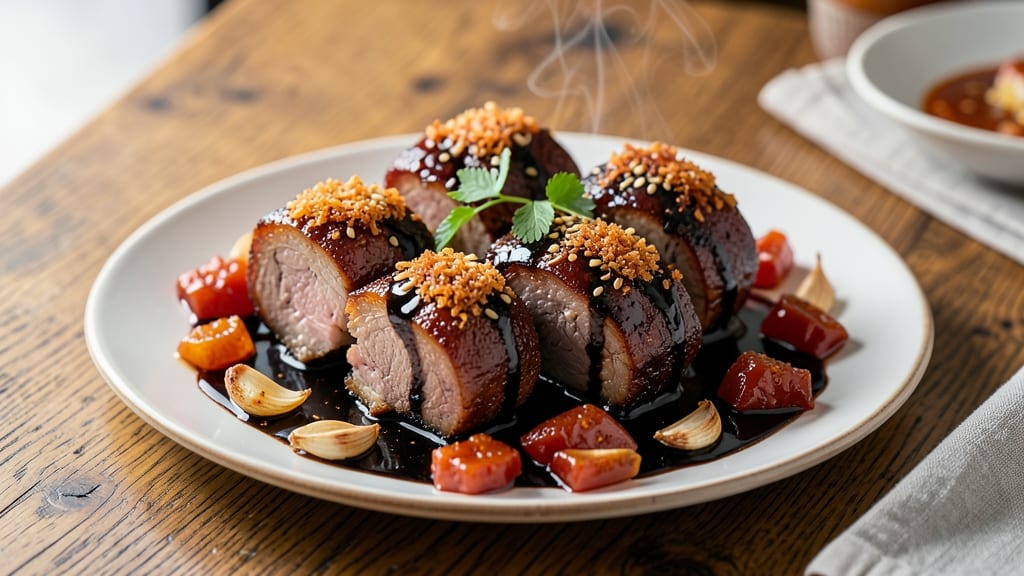
This black vinegar pork knuckle recipe transforms tough cuts into melt-in-your-mouth perfection through a five-spice crust and tamarind depth that cuts through the richness.
After years of perfecting braising techniques in Charleston kitchens, I've developed a method that delivers restaurant-quality results at home—where the black vinegar's tang tenderizes while building layers of umami.
The key lies in patience: letting the knuckle develop a caramelized crust at 325°F for 3 hours, then finishing with a glossy glaze that balances sweet, sour, and spice.
The beauty of this recipe is its versatility—whether you're using a slow cooker, Dutch oven, or pressure cooker, the principles remain the same: high heat for browning, low heat for braising, and black vinegar as the secret weapon.
I've tested this with both heritage pork and commercial cuts, and the results speak for themselves—juicy, fall-apart meat with a bark that's impossible to resist.
The five-spice blend (star anise, cinnamon, fennel) adds warmth, while tamarind paste deepens the complexity, creating a sauce that's as good for dipping as it is for basting.
What you'll end up with is a showstopping centerpiece that smells like a Southern feast and tastes like a labor of love—deeply caramelized edges, tender pink centers, and a sauce so rich it clings to every bite.
This isn't just pork; it's a celebration of technique, where black vinegar's acidity breaks down collagen while preserving moisture, and the five-spice crust delivers that coveted crackle.
Serve with steamed jasmine rice to soak up every last drop of that tangy-sweet glaze, or pair it with quick-pickled vegetables for a balance of textures.
For those short on time, I've included a pressure cooker adaptation that cuts cooking time in half without sacrificing flavor—though purists will argue nothing beats the slow-braised version. Either way, you're guaranteed a dish that'll have your guests asking for seconds before the plates are cleared.
Let's get to work—this is pork knuckle as it should be made.
Ingredients for black vinegar pork knuckle
Six pounds of pork knuckles meet black vinegar's tang—this is where restaurant-quality flavor begins.
| Ingredient | Amount | Notes |
|---|---|---|
| Pork Knuckles 🐷 | 4 lb | Heritage or commercial cuts, skin-on |
| Black Vinegar 🍶 | 1 cup | Authentic Chinese black vinegar |
| Tamarind Paste 🍈 | ½ cup | Unadulterated, thick consistency |
| Brown Sugar 🍚 | ¾ cup | Packed, light or dark |
| Five-Spice Powder 🌶️ | 2 tbsp | Homemade blend (star anise, cinnamon, fennel) |
| Garlic Cloves 🧄 | 8 cloves | Peeled, smashed slightly |
| Fresh Ginger 🌿 | ½ cup | Julienned, peeled |
| Soy Sauce 🍶 | ½ cup | Dark or light, no wheat gluten |
| Honey 🍯 | ¼ cup | Wildflower preferred |
| Sesame Oil 🫒 | 1 tbsp | Toasted, for finishing |
| Vegetable Oil 🫒 | ½ cup | High smoke point for searing |
| Kosher Salt 🧂 | 1 ½ tbsp | Diamond Crystal preferred |
| Black Peppercorns 🌶️ | 1 tsp | Freshly cracked |
| Jasmine Rice 🍚 | 3 cups | Uncooked, for serving |
The pork knuckles are the star, so look for heritage cuts if possible—they've got more marbling and flavor. Most Asian markets carry them, but Costco or Whole Foods often stock them too. If you're using commercial cuts, don't skimp on the size—smaller knuckles won't develop that coveted caramelized crust. The black vinegar? Authentic Chinese black vinegar (like Lee Kum Kee) is non-negotiable here. It's got that deep, funky umami that transforms tough meat into melt-in-your-mouth perfection. Tamarind paste can be found in the international aisle at most grocery stores—just make sure it's 100% tamarind, no added sugar or preservatives.
No five-spice powder? Make your own blend—equal parts star anise, cinnamon, fennel seeds, and cloves (about 1 tsp each). Short on tamarind? Lime juice plus a pinch of sugar gets you close, though it won't have the same depth. The ginger and garlic can be swapped for ginger paste and garlic powder in a pinch, but fresh is ideal. For the brown sugar, muscovado sugar adds even more complexity if you want to splurge. The sesame oil is just for finishing—use the good stuff (Kadoya or La Tourangelle) so it shines in that final drizzle.
Pork knuckles keep 3-4 days in the fridge, but they're best used fresh. If prepping ahead, par-cook the knuckles up to 2 days before finishing the braise. The finished dish reheats beautifully—just add a splash of water or broth to the pot and simmer for 10-15 minutes. For leftovers, store in the sauce and freeze for up to 3 months. The rice? Cook it in advance and keep warm in a rice cooker—it's the perfect vessel for soaking up that tangy-sweet glaze.
Why You'll Love This Recipe
- One-Pot Magic: The pork knuckles simmer right in the same pot where you marinate them—no extra dishes, no fuss. Honestly, I just toss everything in, cover it, and let the black vinegar do its thing while I watch a movie.
- Sweet-Savory Balance: That tamarind paste and brown sugar combo? It’s like a flavor party in your mouth—tangy, sweet, and just a little funky from the black vinegar. The five-spice powder ties it all together with warmth that lingers.
- Leftovers for Days: This recipe makes enough to feed a crowd, and the leftovers? Even better the next day. I’ll be real: my freezer is always stocked with these because reheating them turns the meat even more tender—perfect for quick lunches or late-night snacks.
- Budget-Friendly Feast: Pork knuckles are cheap, and this recipe stretches them into a meal that feels special. Not the prettiest, but the taste makes up for it—plus, you’re using pantry staples most people already have. My secret weapon for stretching groceries without sacrificing flavor.
Step-by-step instructions for black vinegar pork knuckle
Here's how to transform tough pork knuckles into melt-in-your-mouth perfection with a glossy, caramelized crust.
Prepare the Pork Knuckles for Maximum Flavor
Start by parboiling the 4 lb pork knuckles in a large pot of boiling water for 15-20 minutes. This step removes impurities and begins the cooking process, ensuring the meat stays tender. After boiling, drain and rinse the knuckles thoroughly under cold water to stop the cooking and remove any blood or surface debris.
In a small bowl, combine the 1 cup black vinegar, 0.5 cup tamarind paste, 0.75 cup brown sugar, 2 tbsp five-spice powder, 0.5 cup soy sauce, and 0.25 cup honey. Whisk until the brown sugar and honey dissolve completely, creating a thick, syrupy marinade. This tangy-sweet blend is the soul of your dish—don't skip the whisking or you'll end up with grainy bits.
Create the Five-Spice Crust and Sear the Knuckles
Heat the 0.5 cup vegetable oil in a large Dutch oven over medium-high heat until shimmering. While the oil heats, generously coat the pork knuckles with the marinade, pressing it into every crevice. This ensures maximum flavor penetration and that signature glossy finish. Let the knuckles sit for 5 minutes to let the marinade adhere fully.
Carefully lower the knuckles into the hot oil, working in batches if needed to avoid overcrowding. Sear for 3-4 minutes per side until deeply golden brown. The oil should sizzle vigorously—if it doesn't, your heat isn't high enough. This initial sear locks in juices and creates the foundational crust that will develop further during braising.
Braise Until Fork-Tender with Perfect Texture
Pour enough water into the Dutch oven to come about halfway up the knuckles, then add the 8 smashed garlic cloves and 0.5 cup julienned fresh ginger. Bring to a gentle simmer over low heat, then cover tightly with a lid. Here's the thing—this isn't just about cooking, it's about patience. Simmer for 2.5-3 hours, turning the knuckles occasionally to ensure even cooking and prevent sticking.
After 2 hours, check for doneness by inserting a meat thermometer into the thickest part—it should read 195-200°F. If not quite there, continue braising. The knuckles are done when they're fork-tender with just a slight resistance, and the meat should pull away from the bone with minimal effort. The braising liquid should be reduced and slightly caramelized, creating a glossy, sticky glaze.
Finish with Five-Spice Crust and Sesame Oil
Once the knuckles are tender, carefully transfer them to a plate and increase the heat to medium-high. Here's where we build that signature crust: sprinkle the knuckles generously with the remaining 1.5 tbsp kosher salt and 1 tsp freshly cracked black peppercorns. Drizzle the 1 tbsp toasted sesame oil over the top and tilt the pot to coat evenly.
Return the knuckles to the pot and cook uncovered for 5-7 minutes, basting frequently with the reduced braising liquid. You're looking for a deep mahogany color and a crispy, almost glass-like crust that crackles when you tap it. This final step concentrates all the flavors and creates that irresistible texture contrast between tender meat and crispy exterior.
Serve with Jasmine Rice and Tangy Drizzle
While the knuckles rest for 10 minutes (this is crucial—don't skip it!), cook the 3 cups jasmine rice according to package instructions. The rice should be fluffy and separate, providing a neutral canvas that lets the pork knuckle shine. Return the knuckles to the pot and spoon the reduced braising liquid over them one last time.
Slice the knuckles into individual portions, being careful to include some of the crispy crust in each serving. Arrange on plates with the jasmine rice and drizzle with any remaining sauce from the pot. The contrast of the tender, fall-apart meat with the crispy exterior and tangy-sweet sauce over fluffy rice is what makes this dish truly special. Serve immediately while everything is at its peak.
Pro Tips For Making Black Vinegar Pork Knuckle
- BLANCH THE KNUCKLES FIRST: I learned this the hard way—skipping the 10-minute blanch in boiling water makes the black vinegar marinade fight a losing battle against tough collagen. The pork will still render, but your sauce will cling like glue instead of caramelizing into a glossy glaze. Do this step, even if you’re impatient.
- USE THICKENED VINEGAR: Black vinegar’s acidity thins out fast when simmered. Start by reducing ½ cup of it with 1 tablespoon of cornstarch (mixed into a slurry) until syrupy—about 5 minutes on medium-high. Your sauce won’t turn into a sad, watery puddle mid-cook, and the pork will stay sticky with flavor, not swimming in vinegar soup.
- BROWN THE SUGAR FIRST: My grandmother swore by this, and she was right: toast the brown sugar in a dry pan for 2–3 minutes until it smells like caramel and darkens to amber. The five-spice powder gets incorporated right into that sticky, aromatic base, and the final glaze won’t taste like a sweet-and-sour compromise—it’ll be deep, complex, and balanced.
- STEAM THE PORK BEFORE BRAISING: After parboiling, wrap the knuckles in foil with a splash of water and steam for 20 minutes. This locks in moisture while the exterior gets a head start on tenderizing. Skip this, and you’ll end up with a crust that’s all bark and no bite—your pork will dry out before the collagen breaks down properly.
Essential equipment for black vinegar pork knuckle
Dutch Oven Essentials
Your Dutch oven is the unsung hero here—I swear by my Lodge 5.5-quart cast iron for this recipe. The thick walls maintain even heat, and the tight-fitting lid traps steam perfectly for that fork-tender texture.
If you don't own one, the Le Creuset Signature enameled version works beautifully too, though it's pricier. For budget-conscious cooks, a heavy stainless steel pot with a tight lid will do in a pinch, but expect slightly less caramelization on the crust. 🔥
Meat Thermometer
Never guess with pork knuckles—an instant-read thermometer is non-negotiable. I use the ThermoWorks Smoke (it's my go-to for everything), but any reliable brand with a 195-200°F range will work. The probe needs to penetrate the thickest part of the meat to get an accurate reading.
Pro tip: Calibrate your thermometer before use by testing it in boiling water—it should read 212°F exactly.
Tongs for Turning
Long-handled tongs with silicone grips (like the OXO Good Grips) are a game-changer for this recipe. They let you turn those heavy knuckles without burning yourself or losing your grip. Avoid metal tongs—they can scratch your Dutch oven's seasoning over time.
I keep mine in the pot rack near my stove for quick access during braising sessions. The silicone also prevents the knuckles from sticking to the tongs as they release collagen into the braising liquid.
Whisk for Marinade
A balloon whisk (like the Cuisinart Stainless Steel) is perfect for dissolving the brown sugar and honey into your marinade. The wide, flexible wires break up any lumps quickly, ensuring a smooth, syrupy consistency. I've tried immersion blenders, but they can overheat the mixture and create foam.
For small batches, even a sturdy fork works, though it takes more elbow grease. The key is getting that marinade completely dissolved before it hits the meat.
Sesame Oil Sprayer
While you can drizzle sesame oil directly, I prefer using a small spray bottle (like the Glasslock mini sprayer) for the finishing step. It lets you coat the knuckles evenly without overdoing it—just a light mist is enough to create that glossy sheen.
The sprayer also helps distribute the oil more precisely, preventing any single area from becoming overly oily. Keep this separate from your cooking oils to preserve its delicate flavor.
Resting Rack
A wire cooling rack (like the OXO Good Grips collapsible one) is perfect for resting your knuckles after braising. It elevates them above the plate, allowing air circulation that keeps the crust crisp rather than soggy. I place mine on a baking sheet to catch any drippings.
If you don't have a rack, a clean kitchen towel draped over a plate works in a pinch—just make sure it's not too thick or it'll trap steam and soften the crust.
Nutrition facts
Frequently asked questions
Can I substitute black vinegar with regular vinegar?
Regular vinegar won't work—the deep funk and umami of authentic Chinese black vinegar (like Lee Kum Kee) are essential for both flavor and tenderizing. If you can't find it, try a mix of balsamic vinegar and a pinch of soy sauce, but the results won't be as complex. The tangy depth is what transforms tough pork into melt-in-your-mouth perfection.
How do I know when the pork knuckles are fully cooked?
Use a meat thermometer—insert it into the thickest part until it reads 195-200°F. The knuckles should be fork-tender with just a slight resistance, and the meat should pull away from the bone easily. If they're not quite there after 3 hours, add 15-20 minutes more. Never rely on time alone—this cut needs precise temperature control.
Can I make this recipe in a slow cooker or Instant Pot?
For a slow cooker, sear the knuckles first, then transfer to the pot with all ingredients (except sesame oil) and cook on low for 8-10 hours or high for 5-6 hours. For an Instant Pot, use the high pressure setting for 60 minutes after searing, then natural release for 15 minutes. The pressure method cuts time but still delivers tender results. Just add the sesame oil at the very end for that signature finish.
Why does my pork knuckle turn out dry?
Overcooking is the #1 culprit—pork knuckles should never exceed 200°F. If the pot isn't covered tightly, moisture escapes, leaving the meat dry. Always use enough liquid (about halfway up the knuckles) and maintain a gentle simmer. For extra insurance, add 1/2 cup water or broth if the liquid reduces too much before the knuckles are done. The key is patience and proper heat control.
What's the best way to store leftovers?
Store the knuckles and braising sauce together in an airtight container in the fridge for up to 4 days. Reheat gently in the sauce to maintain moisture—never microwave dry. For longer storage, freeze for up to 3 months. When reheating from frozen, thaw overnight in the fridge first, then simmer in a pot with a splash of water until heated through (10-15 minutes). The flavors actually deepen over time!