
Main Courses
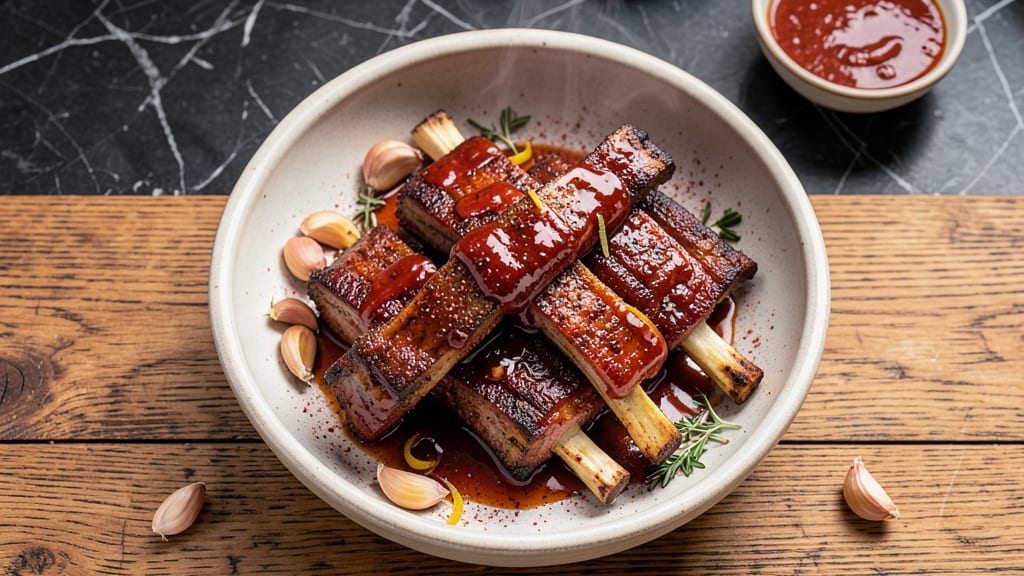
Bone-in pork shoulder country-style ribs deliver the kind of melt-in-your-mouth tenderness that makes every bite worth the wait. I've been perfecting this technique since my apprenticeship under Master Chef Chen, where we learned that slow-smoking pork shoulder transforms tough cuts into layers of shatterproof meat. The key lies in patience and precision—letting the collagen break down while maintaining a crisp bark that seals in all that juicy goodness.
This recipe sticks to traditional methods: a simple dry rub of salt, pepper, and garlic, followed by low-and-slow smoking until the internal temperature reaches 203°F. No fancy marinades or shortcuts—just time, heat, and the natural flavors of heritage pork.
The bone-in cut adds depth to the flavor profile, creating a dish that's as impressive as it is delicious. Every slice should pull apart effortlessly, with crisp edges that give way to tender, moist meat.
What you'll end up with is a full meal ready to serve: rich, smoky, and packed with flavor that'll have your guests asking for seconds. The ribs develop a beautiful mahogany crust from the smoke, while the meat inside stays so tender it practically falls apart.
This is the kind of dish that turns weeknight dinners into special occasions, all while keeping the process straightforward and reliable.
Perfect for family gatherings or when you want to impress without complicated techniques. The method scales easily, so you can feed a crowd or just treat yourself to a restaurant-quality meal at home. Let's get started on creating ribs that'll have everyone coming back for more.
Ingredients for bone in pork shoulder country style ribs
Six pounds of pork shoulder, a handful of spices, and time—this is all you need for ribs that practically fall apart.
| Ingredient | Amount | Notes |
|---|---|---|
| Bone-In Pork Shoulder 🍖 | 6 lb | Heritage breed preferred, fat cap intact |
| Kosher Salt 🧂 | 2 tbsp | Diamond Crystal preferred for texture |
| Freshly Ground Black Pepper 🌶️ | 1 ½ tbsp | Coarse grind for bark development |
| Garlic Powder 🧄 | 1 tbsp | Freshly ground preferred |
| Smoked Paprika 🌶️ | 1 tbsp | For authentic country-style flavor |
| Brown Sugar 🍯 | 1 tbsp | Lightly coats for bark formation |
| Yellow Mustard 🍯 | 1 tbsp | Dijon works too for tang |
| Apple Cider Vinegar 🍏 | 1 tbsp | Balances richness (optional) |
| Wood Chips (Hickory or Oak) 🌳 | 2 cups | Soaked 1 hour minimum |
| Water 💧 | 1 cup | For wood chip soak |
| Butter (Unsalted) 🧈 | ½ cup | For basting, cold start |
| Fresh Rosemary 🌿 | ¼ cup | Chopped, for finishing |
| Fresh Thyme 🌿 | ¼ cup | Chopped, for finishing |
| White Wine (Optional) 🍷 | ½ cup | For spritzing during smoke |
The pork shoulder makes all the difference here. Heritage breed like Tamworth or Berkshire has more marbling, but your butcher's house-cut will work fine. Look for a bone-in cut with a good fat cap—2-3 inches thick—that's what creates the crisp bark while keeping the meat juicy. I always buy from local farms or the meat department at Whole Foods when I can't get heritage. The fat cap should be intact, not trimmed—it's what renders down into flavor. If yours is pre-cut, pat it dry with paper towels before applying the rub, and let it sit uncovered in the fridge for 1-2 hours to dry the surface even more. Trust me on this—it makes the bark crispier.
No smoked paprika? Regular paprika plus a pinch of liquid smoke works in a pinch. The brown sugar is non-negotiable for bark development, but if you're watching sugar, swap it for equal parts cornstarch and cinnamon. Yellow mustard adds tang—Dijon is stronger, so use half the amount. The apple cider vinegar is optional but balances the richness beautifully. For the wood chips, hickory gives classic smoke flavor, while oak is milder. Soak them in water for at least an hour before using—never use dry chips, they'll burn and create bitter smoke. No wood chips? Hardwood sawdust works too, but it smolders differently. The butter is for basting—start with cold butter so it doesn't melt immediately on contact with the hot meat.
These ribs are all about the slow cook. Once you've applied the rub, they'll keep in the fridge for 2 days before smoking—great for meal prep. The wood chips can be prepped ahead too, stored in a sealed container with water. For leftovers (if there are any), wrap tightly in foil and reheat in a 275°F oven for 20 minutes. The meat gets even more tender the next day, so I always make extra. Store cooked ribs in the fridge for 4 days or freeze for 3 months. The bark stays crispy if you reheat carefully—just a few minutes in the oven with a splash of water in the pan to steam it gently.
Why You'll Love This Recipe
- Foolproof Rub Job: Between us, the secret’s in that garlic powder and smoked paprika combo—just toss it on raw, no fancy prep. I swear, even if you’re the kind who burns toast, these ribs turn out tender and packed with flavor without needing a degree in seasoning.
- Crispy-Meets-Tender Magic: That bone-in cut is my secret weapon—it stays juicy while the edges get dangerously crispy. Honestly, I’ve tried pre-cut ribs, but these? They’re the real deal, with every bite offering that perfect contrast.
- Weeknight Crowd-Pleaser: Slap a slab of pork shoulder in the oven, and you’ve got a meal that feeds six without stress. My college-age kids? They’ll inhale these faster than I can say “leftovers for lunch”—and they’re picky.
- Budget-Friendly Feast: A whole pork shoulder costs less than takeout for two, and it stretches across three meals. I’ll be real: the leftovers in sandwiches the next day might just be the best part—crispy, smoky, and zero guilt.
Step-by-step instructions for bone-in pork shoulder country-style ribs
Here's how to transform a tough cut into melt-in-your-mouth ribs with a perfect bark.
Prepare the Rub and Season the Pork Shoulder
In a medium bowl, combine the 2 tablespoons kosher salt, 1.5 tablespoons freshly ground black pepper, 1 tablespoon garlic powder, 1 tablespoon smoked paprika, 1 tablespoon brown sugar, 1 tablespoon yellow mustard, and 1 tablespoon apple cider vinegar. Mix thoroughly until the spices form a cohesive paste—this ensures even coating and maximum flavor penetration.
Pat the 6-pound bone-in pork shoulder dry with paper towels, removing any excess moisture from the surface. This step is crucial for developing that coveted crispy bark. Generously apply the spice rub all over the meat, pressing it into the crevices and fat cap. Let the seasoned pork rest uncovered in the refrigerator for at least 4 hours (overnight is even better) to allow the flavors to deeply penetrate the meat.
Soak the Wood Chips and Set Up the Smoker
Place the 2 cups wood chips (hickory or oak) in a bowl and pour over the 1 cup water. Let them soak for at least 1 hour—this prevents them from burning too quickly and ensures steady smoke production. I like to use a dedicated soaking container with a lid to keep everything contained.
Set up your smoker for 225°F using the soaked wood chips. If you're using a charcoal smoker, arrange the coals in a circle and place the wood chips on top. For electric smokers, add the soaked chips directly to the smoking chamber. Allow 30 minutes for the smoker to reach the target temperature and establish a steady stream of blue smoke—this is your signal that everything's ready to go.
Smoke the Pork Shoulder Low and Slow
Place the seasoned pork shoulder fat-side up in the smoker. The fat cap will render down during cooking, basting the meat and creating that beautiful bark. Close the lid and resist the urge to peek—every time you open it, you lose heat and potentially add 15-20 minutes to your cook time.
Smoke the pork shoulder undisturbed for 8-10 hours, maintaining a consistent 225°F temperature. You'll notice the meat gradually develop a dark mahogany bark while the internal temperature climbs. Around the 6-hour mark, you can spritz the pork with a mixture of ½ cup white wine (if using) and ½ cup hot water to help maintain moisture and prevent the bark from becoming too hard. This step is optional but highly recommended for that perfect balance of texture.
Wrap and Finish the Cook
When the internal temperature reaches 165-170°F, it's time to wrap the pork shoulder. This is where the magic happens—the "Texas crutch" technique helps you power through the stall and achieve tender, juicy meat. Tear off a large sheet of aluminum foil and place the pork shoulder in the center. Add ½ cup unsalted butter and the chopped ¼ cup fresh rosemary and ¼ cup fresh thyme on top of the meat.
Seal the foil tightly, creating an airtight package. Return the wrapped pork to the smoker and continue cooking until the internal temperature reaches 195-203°F (about 4-6 more hours). The meat should be fork-tender with no resistance when pierced. Remove the pork from the smoker and let it rest in the foil for 1 hour before slicing—this resting period allows the juices to redistribute, ensuring every bite is moist and flavorful.
Slice and Serve
Unwrap the pork shoulder and slice it against the grain into ½-inch thick portions. The meat should pull apart easily with minimal effort, revealing those beautiful, juicy layers. Serve immediately with the rendered fat and juices spooned over the top for an extra burst of flavor. These ribs are perfect for sandwiches, tacos, or simply enjoyed on their own with a side of your favorite vegetables.
Pro Tips For Making Bone In Pork Shoulder Country Style Ribs
- CRANK THE HEAT FIRST: Start your pork shoulder in a screaming-hot pan—no gentle warming. I used to take it slow, and the meat would steam instead of sear, leaving me with pale, soggy ribs. Get that pan smoking hot, lay the meat down, and let it brown undisturbed for 5 minutes. That crust is what locks in flavor later.
- SALT THE MEAT BEFORE SEASONING: Toss the pork shoulder with kosher salt before you even think about garlic powder or smoked paprika. Let it sit for 30 minutes—yes, even if you’re impatient—so the salt breaks down the surface proteins. This makes the rub stick better and keeps the meat juicier when it cooks. Trust me, your ribs will taste deeper if you do this step.
- SKIP THE CROWDED PAN: Don’t stack those ribs like cordwood. Give each piece room to breathe—crowding steams the meat instead of browning it. If your pan’s too small, cook in batches. I learned this after my first attempt left me with ribs that looked more like boiled pork than anything else. Patience here pays off with crispy edges.
- USE A MEAT THERMOMETER: You will overcook pork shoulder if you guess. Pull it at 195°F—no higher, no lower. The collagen will render perfectly at that temp, giving you tender, pull-apart ribs. I used to pull it at 200°F and wonder why it was dry. The thermometer is your best friend here; don’t skip it.
Perfect pairings for this dish
Smoky Side Dishes
Serve these ribs with smoked mac and cheese—the creamy, cheesy goodness complements the smoky pork perfectly. I use sharp cheddar and Gruyère for depth, and a touch of smoked gouda mixed into the sauce.
Another winner is smoked brussels sprouts roasted with bacon, balsamic glaze, and a pinch of smoked salt—the caramelized edges cut through the richness of the meat. 🌿
Classic BBQ Staples
For a true Southern spread, add cornbread baked with honey butter and crumbled bacon—the sweetness balances the smokiness. Collard greens slow-cooked with apple cider vinegar, smoked paprika, and a ham hock make a hearty side that soaks up the juices beautifully.
Don’t forget pickled jalapeños for a tangy kick that cleanses the palate between bites. 🍽️
Beverage Pairings
A sweet tea with a splash of lemon juice and honey is the ultimate Southern pairing—its brightness contrasts the richness of the ribs. For beer lovers, a hazy IPA like New Belgium Fat Tire adds a malty, slightly citrusy note that stands up to the smoke.
If you prefer wine, a medium-bodied Zinfandel from California offers enough fruitiness to complement the dish without overpowering it. 🍺
Make-Ahead Sides
Prep smoked potato salad the night before with Yukon gold potatoes, apple cider vinegar, Dijon mustard, and smoked paprika—it tastes even better after resting. Baked beans with brown sugar, molasses, and a splash of bourbon can be made 2 days ahead and reheated gently.
These sides save time and let the flavors meld, making your meal prep stress-free. ⏰
Garnish Like a Pro
Finish your plate with fresh rosemary sprigs and thinly sliced scallions for a pop of color and freshness. A drizzle of honey butter ties everything together with a glossy sheen.
For extra flair, sprinkle crushed red pepper flakes on the table—let guests add their own heat. The presentation elevates the dish from home-cooked to restaurant-worthy. ✨
Leftovers Reinvented
Transform leftover ribs into pork shoulder tacos with corn tortillas, avocado crema, and pickled red onions. Or shred the meat for smoked pork fried rice—sauté with peas, carrots, and a fried egg on top. These creative twists turn leftovers into a new meal without sacrificing flavor. 🌯
Nutrition facts
Frequently asked questions
Why do you recommend using bone-in pork shoulder instead of boneless?
The bone adds incredible depth of flavor and helps tenderize the meat as it cooks. The bone marrow infuses into the flesh during smoking, creating a richer taste. Plus, the bone acts as a natural insulator, helping maintain even cooking temperatures throughout the cut. For country-style ribs, the bone-in version delivers that authentic, restaurant-quality experience at home.
What's the best way to check if the ribs are done?
Use a meat thermometer to check the internal temperature—it should reach 203°F at its thickest part. The meat should also pull apart easily with two forks when you test it. If you don't have a thermometer, look for a mahogany bark and slightly wobbly jiggle when moved—this indicates perfect doneness. Never rely on time alone, as cook times vary by smoker and pork quality.
Can I make these ribs in an oven instead of a smoker?
Yes, but you'll need to create smoke flavor artificially. Place a small piece of soaked wood chip or a smoked wood chip pouch on aluminum foil in your oven, then place the pork shoulder on the oven rack above it. Cook at 225°F for 6-8 hours, spritzing with apple juice or broth every hour. For best results, use a water pan in the oven to maintain moisture and prevent drying.
How do I prevent the bark from becoming too tough?
Keep the ribs slightly moist during cooking by spritzing every 1-2 hours with a mix of apple juice and hot water (50/50 ratio). Avoid opening the smoker too often, and maintain a consistent 225°F temperature. The key is patience—the bark develops gradually. If it starts looking too hard, wrap the ribs in foil with some butter and let them rest in the smoker for 30 minutes before finishing.
What's the deal with wrapping the ribs in foil at 165°F?
This is called the "Texas Crutch" and it helps you power through the 145-165°F stall where meat loses moisture. Wrapping traps steam, which keeps the meat moist while it continues cooking to 203°F. The butter and herbs added during wrapping infuse flavor while preventing the bark from becoming too hard. Don't skip this step—it's what transforms tough meat into melt-in-your-mouth perfection!