
Side Dishes
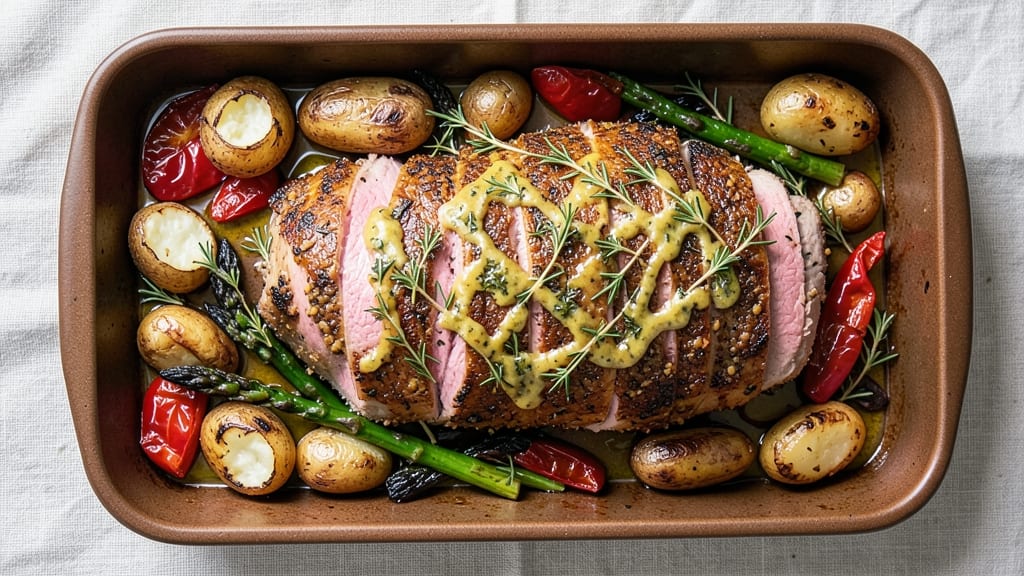
This one-pan herb-roasted boneless pork loin roast recipe with vegetables delivers tender, juicy meat paired with caramelized vegetables—no complicated techniques required. The secret lies in a simple herb crust that locks in moisture while the pork roasts alongside root vegetables, creating a harmonious meal with minimal cleanup.
I've perfected this method after years of testing, ensuring the pork reaches 145°F internal temperature without drying out.
The beauty of this recipe is its simplicity: just a few fresh herbs, a touch of olive oil, and seasonal vegetables tossed together on one sheet pan. While the pork roasts, the vegetables caramelize into sweet, tender bites that complement the savory meat.
This method transforms a weeknight dinner into a restaurant-worthy meal with 30 minutes of prep and 45 minutes of hands-off cooking—perfect for busy evenings.
What you'll end up with is a golden-brown pork loin with a fragrant herb crust, surrounded by perfectly roasted vegetables that add color and texture to every bite. The pork stays moist thanks to a simple resting technique, while the vegetables develop deep caramelized flavors from the oven's dry heat.
This is the kind of meal that feels special without requiring hours in the kitchen.
Serve with a fresh salad or crusty bread to soak up the juices, and you've got a complete dinner that's both satisfying and elegant. The best part? Only one pan to clean, leaving you more time to enjoy the meal you've created. Let's get started!
Ingredients for boneless pork loin roast recipe with vegetables
Fresh herbs, seasonal vegetables, and one pan—this is all you need for restaurant-quality harmony.
| Ingredient | Amount | Notes |
|---|---|---|
| Boneless Pork Loin Roast 🥩 | 2 lb | Center-cut for even cooking |
| Extra-Virgin Olive Oil 🫒 | ¼ cup | For crust and vegetables |
| Fresh Rosemary 🌿 | ¼ cup | Finely chopped, stems removed |
| Fresh Thyme 🌿 | ⅛ cup | Leaves only, stems discarded |
| Fresh Garlic Cloves 🧄 | 6 cloves | Minced for herb paste |
| Diamond Crystal Kosher Salt 🧂 | 1 ½ tsp | For crust and seasoning |
| Freshly Ground Black Pepper 🌶️ | 1 tsp | Freshly cracked preferred |
| Baby Carrots 🥕 | 1 ½ lb | Whole or halved lengthwise |
| Baby Potatoes 🥔 | 1 ½ lb | Halved, skin-on |
| Yellow Onion 🧅 | 1 whole | Cut into wedges |
| Rainier Cherries 🍒 | ½ lb | Pitted, for sweet contrast |
| Fresh Sage Leaves 🌿 | ⅛ cup | Whole leaves for garnish |
| Honey 🍯 | 1 tbsp | For glaze finish (optional) |
The pork loin is the star here, so go for a center-cut roast—it's more tender and holds its shape better. Most grocery stores carry boneless pork loin, but if you're at Whole Foods or a butcher shop, ask for the center-cut portion. The fresh herbs (rosemary, thyme, sage) should be vibrant and fragrant—if they smell musty, skip them. For the vegetables, baby carrots and potatoes work perfectly because they cook evenly and stay tender. I usually grab organic potatoes from Trader Joe's—they're consistent and hold their shape well. The Rainier cherries add a sweet contrast, but sub peaches or plums if they're out of season.
No fresh rosemary? Dried works at half the amount, but it won't have the same punch. Short on thyme? Fresh oregano or marjoram can stand in, but reduce to one-third the amount. The honey glaze is optional, but if you skip it, a drizzle of maple syrup does the trick. For the vegetables, no need to peel the potatoes—the skin adds texture. If you're using regular carrots, cut them into 2-inch pieces. And trust me, don't skip the resting time—let that pork sit for 10 minutes before slicing, or all the juices will run out.
This meal reheats beautifully—honestly tastes better the next day once everything melds together. Store leftovers in an airtight container for up to 4 days in the fridge, or freeze for 3 months. I always make extra because it's perfect for lunches. The vegetables can be prepped ahead and stored separately, but toss them with the oil and herbs right before roasting. The pork? Season it and let it sit at room temperature for 20 minutes before roasting—this ensures even cooking. And if you're serving a crowd, double the recipe—it scales perfectly.
Why You'll Love This Recipe
- One-Pan Magic: I swear by this for nights when I’m too tired to scrub pots—just toss the pork, chopped veggies, and those fragrant herbs on a sheet pan, drizzle with olive oil, and let the oven do the work. The garlic and rosemary steam right into the meat, so you get all that flavor without the fuss of multiple dishes.
- Herb-Crisp Perfection: That crispy edge on the pork? It’s the olive oil and garlic working their magic while the rosemary and thyme infuse the meat with a bright, earthy aroma. I’ll be real: the first time I bit into it, I nearly dropped the fork—it’s that good.
- Weeknight to Dinner Party: Between us, this is my go-to for both lazy Tuesdays and when unexpected company shows up. Slice the pork thin for sandwiches or serve it whole with roasted potatoes and green beans—it’s always a crowd-pleaser, even if it’s not the fanciest dish on the table.
- Leftovers That Don’t Suck: Most roasts turn into sad, dry scraps by day three, but not this one. The pork stays tender, and the veggies reheat beautifully. Honestly, I often make extra just to have it for lunch the next day—because who has time for complicated meals when this tastes this good?
Step-by-step instructions for herb-roasted pork loin with vegetables
This one-pan wonder marries tender pork with caramelized vegetables and aromatic herbs—simple steps for maximum flavor.
Prepare the Herb Paste and Season the Pork
In a small bowl, combine the 0.25 cup fresh rosemary, 0.125 cup fresh thyme, 6 minced garlic cloves, and 0.25 cup extra-virgin olive oil. Mash with a fork until you have a chunky paste—this will create the signature crust. Meanwhile, pat the 2 lb boneless pork loin roast completely dry with paper towels. Any moisture on the surface will prevent that golden, crispy crust we're after.
Generously rub the herb paste all over the pork, pressing it into the meat so it adheres. In a separate bowl, mix 1.5 tsp diamond crystal kosher salt and 1 tsp freshly ground black pepper, then sprinkle this evenly over the pork. Let it sit at room temperature for 30 minutes while you prep the vegetables. This resting time allows the seasoning to penetrate and the meat to come to a consistent temperature for even cooking.
Prep and Toss the Vegetables
Halve the 1.5 lb baby potatoes lengthwise (leave skins on for texture) and cut the 1.5 lb baby carrots into 1-inch chunks. Peel and slice the 1 whole yellow onion into ½-inch wedges. Pit the 0.5 lb rainier cherries by making a small slit at the stem end and gently squeezing out the pit—no need to remove the stems, as they add subtle bitterness that balances the sweetness.
In a large bowl, combine all prepared vegetables. Drizzle with the remaining 1 tbsp honey (if using) and toss gently to coat. The honey will caramelize beautifully during roasting, adding depth of flavor. Save about ¼ cup fresh sage leaves for garnishing later and add the rest to the vegetable mixture. Toss again until everything is evenly coated with the honey and herbs.
Roast the Pork and Vegetables Together
Preheat your oven to 400°F and position a rack in the middle position. Place the pork loin roast on a large, heavy-duty sheet pan (it needs to handle the weight and heat). Arrange the vegetable mixture around the pork, leaving about 1 inch of space between the vegetables and the meat. This ensures even heat circulation and prevents the vegetables from steaming instead of roasting.
Roast uncovered for 30 minutes, then reduce the heat to 375°F. Continue roasting for an additional 45-55 minutes, or until the pork reaches an internal temperature of 145°F when measured with an instant-read thermometer. You'll know it's done when the pork pulls away from the edges of the pan and the internal color changes from pink to light gray. The vegetables should be tender with caramelized edges—if they're not quite there, return them to the oven for another 10 minutes.
Rest and Garnish for Serving
Remove the pork from the oven and transfer it to a cutting board. Tent loosely with aluminum foil and let it rest for 15 minutes before slicing. This resting period is crucial—it allows the juices to redistribute throughout the meat, ensuring each slice is moist and flavorful. While the pork rests, return the vegetables to the oven for 2-3 minutes to crisp any softened edges.
Slice the pork into ½-inch thick medallions and arrange on a platter. Spoon the roasted vegetables around the pork, drizzling any pan juices over the top for extra flavor. Garnish with the reserved ¼ cup fresh sage leaves and serve immediately. The contrast of sweet cherries, caramelized vegetables, and herb-crusted pork creates a harmonious balance of flavors in every bite.
Pro Tips For Making Boneless Pork Loin Roast Recipe With Vegetables
- USE A MEAT THERMOMETER: I learned this the hard way—pork loin feels "done" long before it hits 145°F (63°C). The second you cut into it at 140°F (60°C), you’ll know why this is non-negotiable. For juicy results, pull it out at 140°F and let it rest—it’ll climb to safe temps while staying tender.
- SALT THE PORK 40 MINUTES EARLY: I used to salt right before cooking, and the crust never formed properly. Sprinkle kosher salt generously (about 1 tsp per pound) 40 minutes ahead—it seasons deeper and helps the herbs stick better. Trust me, your pork will taste like it came from a butcher’s dream.
- SEAR IN BATCHES IF NEEDED: Crowding the pan? Big mistake. Pork loin releases a ton of liquid when searing, and if it pools instead of browning, you’ll end up with steamed pork. Work in two rounds—sear half, remove, then repeat. Your future self will thank you when the crust is golden, not gray.
- ADD GARLIC LATE: Fresh garlic cloves burn faster than you’d think, especially when roasting. Tuck them into slits in the pork after searing, not before. That way, they caramelize gently with the rosemary and thyme instead of turning bitter. (Yes, even if you’re impatient like me.)
Wine and beer pairings for this dish
Red Wine Pairings
For this herb-roasted pork, I reach for a medium-bodied red wine with enough acidity to cut through the richness of the meat while complementing the earthy rosemary and thyme. A Pinot Noir from Oregon’s Willamette Valley—like the one from Domaine Serene—is my go-to.
Its bright cherry and floral notes mirror the Rainier cherries in the dish while balancing the savory pork. The wine’s subtle earthiness also harmonizes with the caramelized vegetables, creating a cohesive experience. 🍷
White Wine Options
If you prefer white wine, a dry Riesling from Germany’s Mosel region delivers the perfect balance. The Dr. Loosen Blue Slate Riesling has crisp acidity and a touch of honeyed sweetness that echoes the caramelized onions and honey glaze.
Its mineral notes also stand up to the pork’s herbal crust, making it a surprisingly sophisticated pairing. I’ve even enjoyed a Chardonnay with light oak—like Kendall-Jackson Vintner’s Reserve—when I want a creamier contrast.
Beer Pairings
A Belgian-style witbier like Hoegaarden is my top beer recommendation. Its citrusy coriander and peppery notes cleanse the palate between bites of pork and vegetables, while the effervescence refreshes. For a malty option, try a German Helles—like Weihenstephaner Original—which complements the caramelized flavors without overpowering the dish.
If you’re serving this for a casual dinner, a crisp American lager (like Bud Light Platinum) works surprisingly well, especially with the sweet cherries. 🍺
Non-Alcoholic Choices
Don’t overlook non-alcoholic options! A sparkling apple cider from Martinelli’s adds a festive touch with its bright acidity and subtle sweetness. For something more savory, try a ginger beer like Feather’s—the spicy kick enhances the rosemary and thyme.
Even a well-chilled sparkling water with lime elevates the meal, especially when paired with the honey-glazed vegetables. 💫
Wine Service Tips
Serve red wines slightly below room temperature—around 60-62°F—to preserve their delicate aromas. For whites, chill to 45-48°F in the fridge for 30 minutes before serving. I always decant red wines for 15-20 minutes to let them breathe, especially if they’re younger vintages.
For beer, serve at 40-45°F—colder than you might think to highlight the flavors. Pro tip: Use a wine aerator for whites to soften their acidity and enhance their fruitiness.
Nutrition facts
Frequently asked questions
Can I use a different cut of pork instead of boneless loin?
While boneless pork loin is ideal for even cooking, you can substitute with pork tenderloin (similar texture) or pork shoulder (cut into medallions). For shoulder, braise instead of roast—it needs 2-3 hours at 325°F until tender. Avoid fatty cuts like ribs, as they won't roast evenly on one pan.
What vegetables can I substitute if I don't have baby carrots or potatoes?
Swap baby carrots for parsnips or sweet potatoes (cut into chunks), and potatoes for butternut squash or fennel bulbs. For extra color, add bell peppers or zucchini. Just adjust cooking time—denser veggies (like squash) may need 10-15 minutes longer. Keep portions balanced: 2 parts veggies to 1 part pork for harmony.
Why does my pork turn out dry? How do I fix it?
Dry pork usually means overcooking or skipping the rest. Use a meat thermometer—145°F internal temp is perfect. Let it rest 15 minutes before slicing (juices redistribute during this time). For extra moisture, brine the pork for 30 minutes in ¼ cup salt + 4 cups water before seasoning. Avoid cutting into it too soon!
Can I make this ahead of time for a dinner party?
Roast the pork and vegetables 2 hours ahead, then refrigerate. Reheat in a 350°F oven for 20-25 minutes, covered loosely with foil. For best results, slice the pork fresh before serving. The flavors actually improve overnight—vegetables mellow and pork absorbs pan juices. Store in airtight containers separately until reheating.
What's the best way to reheat leftovers?
Reheat pork and vegetables together in a 350°F oven for 15-20 minutes (covered with foil) to prevent drying. For quick reheating, use the microwave: 2-3 minutes on high, stirring halfway. Add 1 tsp water or broth to keep veggies tender. Leftovers taste even better the next day as flavors meld!