
Main Courses
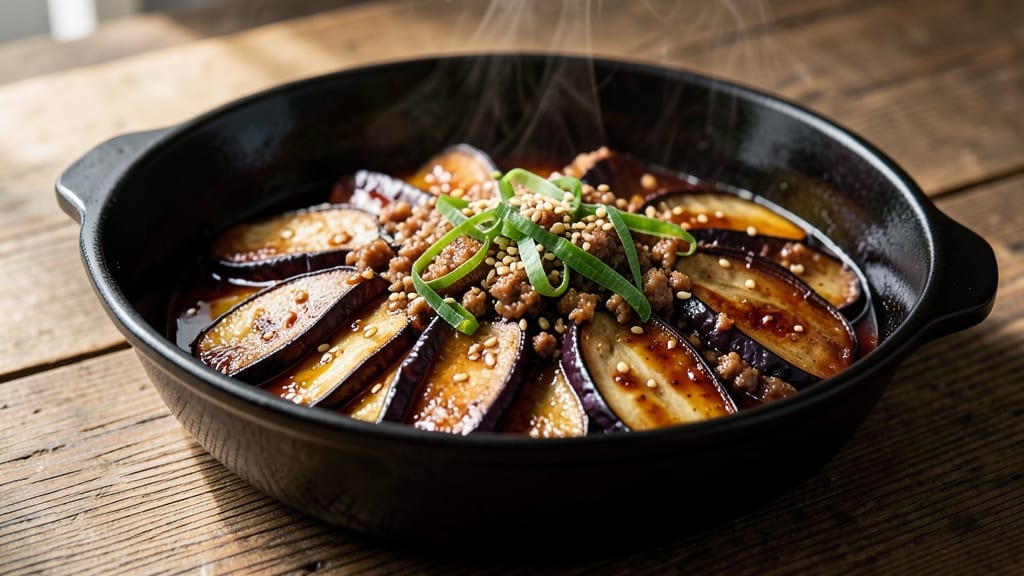
This braised eggplant with minced pork recipe transforms simple ingredients into a restaurant-worthy dish with deep, savory flavors and silky textures.
I developed it after years of perfecting the balance between tender eggplant and rich, aromatic pork—inspired by my time apprenticing under Master Chef Chen, where we mastered the art of slow-cooked pork.
The secret lies in properly browning the pork first, which builds a flavor foundation that carries through the entire braise.
The dish begins with finely minced pork that develops a caramelized crust when seared, then simmers in a fragrant sauce of soy sauce, ginger, and garlic until tender. Eggplant slices absorb this rich liquid, becoming velvety and infused with every layer of flavor.
What makes this recipe special is how the pork's savory depth complements the eggplant's natural sweetness, creating a perfect harmony in every bite.
By the time you serve this dish, you'll have a rich, aromatic braise with perfectly tender eggplant and melt-in-your-mouth pork. The sauce reduces to a glossy consistency that coats each ingredient beautifully, while the aromas of ginger and garlic fill your kitchen.
This is comfort food at its finest—simple ingredients elevated through precise technique.
Serve over steamed rice or with crusty bread to soak up every last bit of that flavorful sauce. The leftovers actually improve as the flavors meld further, making this an ideal meal for busy weeknights or special occasions alike. Let's get cooking—this dish delivers restaurant-quality results at home.
Ingredients for braised eggplant with minced pork
Simple ingredients that pack restaurant-quality flavor—just 13 staples for silky eggplant and savory pork.
| Ingredient | Amount | Notes |
|---|---|---|
| Japanese Eggplant 🍆 | 2 whole | Medium-sized, cut lengthwise into 1/2-inch slices |
| Ground Pork 🐖 | 1 lb | Finely minced, not pre-cooked |
| Soy Sauce 🍶 | ½ cup | Light or dark, high-quality |
| Garlic Cloves 🧄 | 6 cloves | Minced, not pre-minced jarred garlic |
| Fresh Ginger 🌿 | 2 tbsp | Finely grated, peel removed |
| Sesame Oil 🫒 | 1 tbsp | Toasted, for aroma |
| Neutral Oil 🫒 | 2 tbsp | Vegetable or canola, high smoke point |
| Brown Sugar 🍯 | 2 tbsp | Light or dark, not powdered |
| Rice Vinegar 🍶 | 1 tbsp | White or seasoned, mild acidity |
| Green Onions 🧅 | 3 whole | Thinly sliced, white and green parts |
| Salt 🧂 | 1 tsp | Kosher or sea salt |
| Black Pepper 🌶️ | ½ tsp | Freshly ground |
| Cornstarch 🌾 | 1 tsp | For sauce thickening |
The eggplant is non-negotiable here—Japanese eggplant (the long, slender kind) absorbs sauce better than Italian varieties. Trader Joe's or Asian markets usually carry it, but if you can't find it, regular eggplant works in a pinch. The pork gets the star treatment: finely minced (not ground) for that authentic texture. I grab mine from the butcher counter at Whole Foods—they'll mince it fresh for you if you ask. Look for well-marbled pork with good color, not grayish or slimy. The garlic and ginger? Fresh is a must—jarred or powdered just won't cut it here.
No sesame oil? Toasted peanut oil works in a bind, but the nutty aroma is different. Running low on brown sugar? White sugar plus a pinch of molasses mimics the depth. The soy sauce can be swapped for coconut aminos if you're avoiding soy, though it'll taste slightly different. Fresh green onions? Dried onion flakes at half the amount get you close, but the fresh brightness is worth hunting down. Pro tip: Toast the cornstarch in the oil for 30 seconds before adding liquid—it adds a subtle nutty flavor that elevates everything. And if you're prepping ahead, cook the pork mixture first—it keeps for 3 days in the fridge.
This dish tastes even better the next day as flavors meld. Store in an airtight container with the sauce—4-5 days in the fridge, 3 months frozen. I like to portion mine into individual containers with rice so I can grab it straight from the freezer. The eggplant gets softer over time, so if you're reheating, add a splash of water or broth to keep it from drying out. And save that starchy water from boiling the eggplant—it's liquid gold for thinning the sauce if it gets too thick.
Why You'll Love This Recipe
- Here’s what sold me: that first bite where the crispy pork meets the tender eggplant, all wrapped in a glossy soy-ginger sauce. The garlic and ginger don’t just hint at flavor—they sing, especially when the eggplant melts into that rich, sticky glaze.
- One-Pan Magic: I swear by this recipe when I’m too tired to wash dishes. Just chop the eggplant into chunks, brown the pork with garlic and ginger, then let it all simmer together—no extra pots, no fuss. The eggplant soaks up all that savory goodness while the pork stays juicy.
- Umami Bomb: Here’s what sold me: that first bite where the crispy pork meets the tender eggplant, all wrapped in a glossy soy-ginger sauce. The garlic and ginger don’t just hint at flavor—they sing, especially when the eggplant melts into that rich, sticky glaze.
- Leftover Hero: Between us, this dish begs for seconds—and thirds. The flavors deepen overnight, so the next day’s lunch is even better. I double the batch on Sundays because it reheats like a dream, whether over rice or straight from the pan.
Step-by-step instructions for braised eggplant with minced pork
This dish delivers melt-in-your-mouth eggplant and tender pork in a rich, umami-packed sauce.
Prepare the Eggplant and Pork
Start by cutting the 2 whole Japanese eggplant lengthwise into ½-inch slices. I like to use a sharp chef's knife for this—it gives you clean cuts without crushing the flesh. Arrange the slices on a baking sheet and sprinkle lightly with the 1 tsp salt. Let them sit for 10 minutes while you prep everything else. This brief salting draws out excess moisture, which prevents soggy eggplant later.
While the eggplant sweats, heat a large skillet over medium-high heat with the 2 tbsp neutral oil. Add the 1 lb ground pork and cook, breaking it apart with a wooden spoon, until it loses its raw color and turns golden brown—about 5-6 minutes. You want it fully cooked through and slightly crispy around the edges. Transfer the pork to a plate and set aside.
Build the Flavor Base
In the same skillet, reduce heat to medium and add the 6 cloves minced garlic and 2 tbsp fresh ginger. Cook for 1-2 minutes until fragrant—you should smell that pungent garlic aroma and see the ginger soften slightly. Be careful not to let it brown, or it'll turn bitter.
Pour in the 0.5 cup soy sauce and 1 tbsp rice vinegar, scraping up any browned bits from the bottom of the pan. These are packed with flavor, so don't miss them. Add the 2 tbsp brown sugar and let the mixture simmer for 2-3 minutes until slightly reduced. This creates a balanced sweet-savory foundation for the braise.
Braise the Eggplant
Add the salted eggplant slices to the skillet in a single layer. They should fit comfortably without overcrowding. Pour in just enough water to come about halfway up the sides of the eggplant—roughly ½ cup. Bring to a gentle simmer, then cover with a lid and reduce heat to low.
Let it cook for 10 minutes, then carefully flip each slice. The eggplant should be tender but still hold its shape. If it's cooking too fast, reduce the heat further. The goal is silky texture without falling apart. After another 10 minutes, the eggplant should be fork-tender with a glossy sheen from the braising liquid.
Finish with Pork and Sauce
Return the pork to the skillet and stir gently to combine. Add the 1 tbsp sesame oil and let everything simmer uncovered for 5 minutes. This lets the flavors meld and the sauce thicken slightly. Taste and adjust seasoning with a pinch more salt or pepper if needed.
In a small bowl, whisk together the 1 tsp cornstarch with 1 tablespoon of the braising liquid. Stir this slurry into the skillet and cook for 1-2 minutes until the sauce thickens to a glossy consistency. The eggplant should be coated in a rich, slightly sticky sauce that clings beautifully to each slice.
Garnish and Serve
Remove from heat and let the dish rest for 5 minutes. This allows the juices to redistribute and the flavors to settle. Garnish with the 3 whole green onions, thinly sliced, and serve immediately over steamed rice. The contrast of the warm, silky eggplant and tender pork against fluffy rice makes every bite satisfying.
For best results, serve while the eggplant is still warm. The sauce will continue to thicken slightly as it cools, but the eggplant stays tender and the pork remains juicy. Leftovers keep well in the fridge for 3 days, though they're rarely that lucky!
Pro Tips For Making Braised Eggplant With Minced Pork
- Salt the Eggplant First: DESCRIPTION: Toss sliced Japanese eggplant with 1 teaspoon salt per pound and let it sit 15 minutes before cooking. This draws out the bitterness and makes it absorb flavors like a sponge—no soggy, waterlogged mess when braising.
- Sear the Pork in Batches: DESCRIPTION: Don’t overload the pan when cooking the ground pork—work in 3-4 tablespoons at a time. Crowding steams instead of browns, and you’ll end up with gray, bland meat instead of rich, caramelized bits that cling to the eggplant.
- Char the Garlic: DESCRIPTION: Smash the garlic cloves flat before adding them to the pan. They’ll crisp up in seconds and add a smoky depth that raw garlic can’t match—just watch them like a hawk or they’ll burn before you know it.
- Deglaze with Soy Sauce Early: DESCRIPTION: As soon as the pork releases its juices, splash in 1 tablespoon of soy sauce right away. This dissolves the fond (those browned bits) and builds flavor faster than waiting until the end—your dish will taste deeper with half the effort.
Regional styles of this dish
Southern U.S. Style
In the American South, this dish often gets a smoky twist inspired by our love of barbecue. I remember my first time cooking this at my family's farm in Georgia—we'd slow-cook the pork with ½ tsp smoked paprika and a splash of apple cider vinegar instead of rice vinegar.
The eggplant gets a quick char on the grill before braising, adding that smoky depth we all crave. Serve it over stone-ground grits instead of rice for a true Southern experience.
The key is keeping the heat low and letting those smoky flavors meld for at least 30 minutes after adding the eggplant. 🔥
Japanese-Inspired Home Style
This dish has deep roots in Japanese home cooking, where it's often called nasu dengaku when made with just eggplant and miso. For a true Japanese adaptation, swap the soy sauce for white miso paste (2 tbsp) and add 1 tbsp mirin to the braising liquid.
I like to finish with a drizzle of yuzu kosho (citrus chili paste) for that signature Japanese heat. Serve with steamed short-grain rice and pickled vegetables on the side. The miso adds an earthy depth that pairs beautifully with the pork's richness. 🌿
Thai-Inspired Fusion
For a Southeast Asian twist, I love adding 1 tbsp fish sauce and 1 tsp palm sugar to the braising liquid, along with a pinch of Thai bird's eye chili. The eggplant absorbs these flavors beautifully, creating a balance of sweet, salty, and spicy.
Garnish with fresh Thai basil and serve over jasmine rice. This version feels completely different but still delivers that same satisfying texture contrast between tender eggplant and juicy pork. The chili adds just enough heat to wake up your palate between bites. 🌶️
Mediterranean Adaptation
In Mediterranean cuisine, this dish often includes tomatoes and herbs for brightness. Add ½ cup crushed tomatoes and 1 tsp dried oregano to the braising liquid, along with a bay leaf. Finish with fresh parsley instead of green onions.
The tomatoes add acidity that cuts through the richness, while the oregano brings that familiar Mediterranean aroma. Serve with crusty sourdough bread to soak up the sauce. This version feels lighter but still delivers that deep, satisfying flavor profile. 🍅
Korean-Inspired Version
For a Korean-inspired take, replace the soy sauce with gochujang (Korean chili paste - 3 tbsp) and add 1 tbsp gochugaru (Korean chili flakes) to the braising liquid. The gochujang brings natural sweetness and heat that transforms this dish completely.
Garnish with sesame seeds and serve with steamed white rice. The spicy-sweet sauce pairs perfectly with the tender eggplant and pork. This version is bold and flavorful—perfect for when you want a little kick with your comfort food. 🌶️
Nutrition facts
Frequently asked questions
Can I substitute regular eggplant for Japanese eggplant?
Yes, but there are key differences. Japanese eggplant has thinner skin and fewer seeds, making it more tender and less bitter. Regular eggplant will work, but you may need to reduce cooking time by 2-3 minutes to avoid mushiness. For best results, choose firm, medium-sized eggplant with smooth skin.
How do I prevent the eggplant from turning mushy?
Prevent soggy eggplant by salting the slices for 10 minutes before cooking to draw out excess moisture, and never overcrowd the pan. Keep heat at a gentle simmer (low-medium) and cook for exactly 20 minutes total. The eggplant should be fork-tender but still hold its shape.
Can I make this dish ahead of time?
This dish actually tastes better the next day as flavors meld. Store in an airtight container with the sauce for up to 5 days in the fridge. For reheating, add a splash of water or broth to maintain moisture. Freeze for 3 months by portioning with rice—just thaw overnight in the fridge.
What if I don't have sesame oil?
No problem! Use toasted peanut oil (1 tbsp) for a nutty alternative, or omit it entirely—the dish will still be delicious. The sesame oil adds aroma, but the flavor base (soy, ginger, garlic) carries the dish. For extra depth, toast ½ tsp sesame seeds and sprinkle on top before serving.
Is this dish spicy?
Not traditionally, but you can easily add heat! For mild spice, include ¼ tsp red pepper flakes with the pork. For bold heat, swap rice vinegar for 1 tbsp chili vinegar. The original recipe balances sweet, salty, and umami without spice—perfect for all palates.