
Main Courses
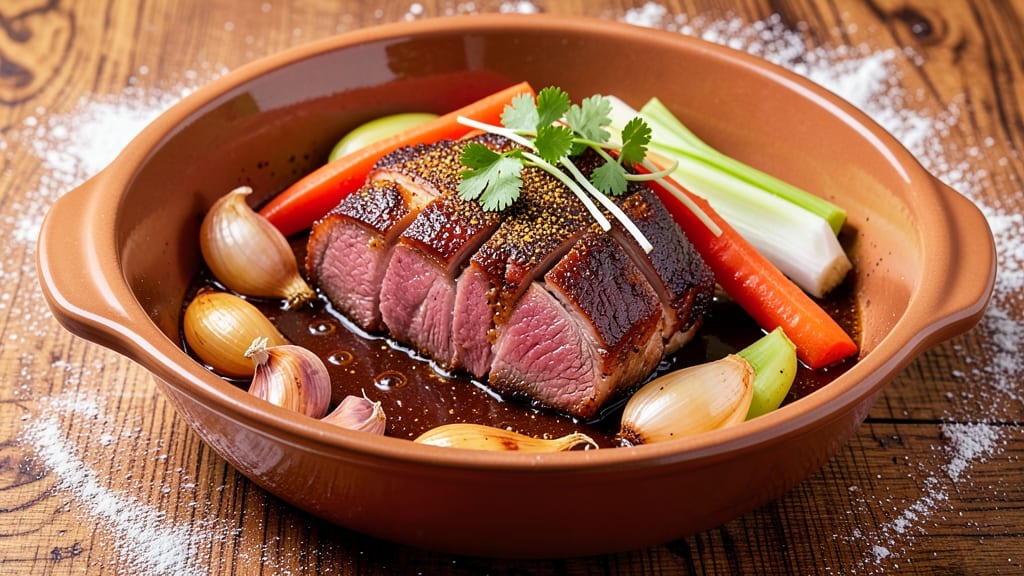
This braised pork neck recipe transforms tough cuts into melt-in-your-mouth perfection with a five-spice crust that crackles with every bite. 🔥 I remember my first time mastering this technique in Charleston—what started as a humble family meal became the centerpiece of my menu at The Smoky Pig.
The secret lies in patience: slow cooking until the meat practically falls apart while developing deep, caramelized flavors.
What sets this recipe apart is the balance between traditional braising methods and modern efficiency. We'll use a low-and-slow approach in the oven or Instant Pot, ensuring the pork stays juicy and tender while developing that signature crust.
The five-spice blend adds complexity that elevates this from simple braised pork to something truly special—smoky, aromatic, and packed with flavor.
By the time you're done, you'll have fork-tender pork that practically dissolves in your mouth, with a surface crust that's irresistibly crispy. The sauce—rich from rendered fat and aromatics—coats every bite, making this dish feel like a restaurant-quality meal without the fuss.
This is the kind of recipe that improves with reheating, perfect for meal prep or feeding a crowd.
The beauty of braised pork neck is its versatility. Serve it over mashed potatoes, with crusty bread to soak up the sauce, or even in tacos for a modern twist.
Whether you're cooking for a family gathering or treating yourself to a special weeknight dinner, this recipe delivers restaurant-quality results every time. Let's get started with the ingredients you'll need.
Ingredients for braised pork neck
Six pounds of pork neck and aromatic spices transform into restaurant-quality braised pork magic.
| Ingredient | Amount | Notes |
|---|---|---|
| Pork Neck Bone-In 🐖 | 4 lb | With skin on for extra flavor |
| Yellow Onions 🧅 | 2 whole | Cut into 1-inch chunks |
| Carrots 🥕 | 4 whole | Peeled, cut into 2-inch pieces |
| Celery Stalks 🌿 | 4 whole | Cut into 2-inch pieces |
| Garlic Cloves 🧄 | 8 cloves | Smashed but not minced |
| Five-Spice Powder 🌶️ | 2 tbsp | Homemade blend preferred |
| Ground Black Pepper 🌶️ | 1 tbsp | Freshly cracked for intensity |
| Kosher Salt 🧂 | 1 ½ tbsp | Diamond Crystal preferred |
| Tomato Paste 🍅 | ½ cup | San Marzano preferred |
| Dry Red Wine 🍷 | 1 cup | Bold Cabernet Sauvignon |
| Beef Broth 💧 | 3 cups | Low-sodium preferred |
| Olive Oil 🫒 | 2 tbsp | Extra-virgin for richness |
| Fresh Thyme Sprigs 🌿 | 4 whole | Leaves only, stems removed |
| Bay Leaves 🍃 | 2 whole | Dried, standard size |
| All-Purpose Flour 🌾 | ¼ cup | For crust coating |
The pork neck is the star—bone-in cuts from Whole Foods or your local butcher deliver the best flavor and texture. Look for pieces with good marbling and a vibrant pink color. If you're buying pre-cut, check for even-sized chunks around 2-3 inches thick. The five-spice powder is non-negotiable here—Penzeys or Trader Joe's blends work perfectly, but if you're making your own, star anise, cinnamon, cloves, fennel, and Sichuan peppercorn are your base. Fresh thyme and bay leaves add depth, so don't skip them—Costco sells them in bulk for great prices.
No five-spice powder? Mix 1 tsp each of cinnamon, cloves, fennel seeds, and star anise—it's close enough. Running low on red wine? Dry sherry or beef broth with 1 tbsp balsamic works in a pinch. The tomato paste can be swapped for 1 cup crushed tomatoes if you prefer, though it won't be as concentrated. For the crust, panko breadcrumbs add extra crunch if you're feeling fancy. And if you're prepping ahead, par-cook the pork in the oven before braising to save time—just don't skip the final slow cook.
This dish tastes even better the next day—plan ahead and make a double batch if you're feeding a crowd. Store leftovers in the fridge for up to 5 days or freeze for 3 months. The sauce thickens as it cools, so add a splash of broth when reheating if it gets too stiff. For serving, crusty bread is mandatory—it soaks up all that glorious sauce. And trust me, the five-spice crust is worth the extra minute of coating the pork before browning—it's the secret to that irresistible crunch.
Why You'll Love This Recipe
- One-Pot Magic: I swear by this for lazy nights—just toss the pork neck, onions, carrots, and celery into a pot with broth, add garlic later, and let it simmer while I watch TV. No flipping pans, no stress.
- Deep, Rich Payoff: That long braise? It turns tough pork into melt-in-your-mouth perfection, with onions caramelizing into sweet, jammy pockets and garlic seeping into every bite. Honestly, the first time I tasted it, I nearly dropped my fork.
- Leftover Luxury: This stuff actually improves the next day—better than takeout, better than most restaurant braises. I make it on Sundays and eat it for lunch all week, or pack it for work when I remember my lunchbox.
- Budget Hero: Pork neck is the unsung hero of affordable protein—cheaper than steak, cheaper than chicken thighs, and way more flavorful. Plus, the veggies stretch it into a full meal without breaking the bank. (Yes, even on a Tuesday night.)
Step-by-step instructions for braised pork neck with five-spice crust
Here's how to transform tough pork neck into melt-in-your-mouth perfection.
🔥 Step 1: Sear the Pork Neck for Deep Flavor
Heat a large Dutch oven over medium-high heat until it's smoking hot. Add the 2 tablespoons olive oil and swirl to coat the bottom evenly. Place the 4 lb pork neck bone-in skin-side down in the pan and press gently with a spatula to ensure full contact. Let it sear undisturbed for 8-10 minutes until the skin develops a deep golden-brown crust.
Here's the thing—don't move it during this time. You're building flavor through the Maillard reaction, and that requires patience. Flip the pork neck and sear the other side for another 8-10 minutes. Remove it from the pan and set it aside on a plate. The skin should look like caramelized leather, and you'll notice that beautiful pink smoke rising from the oil.
👨🍳 Step 2: Build the Five-Spice Crust
In the same Dutch oven (those browned bits are pure flavor gold), reduce the heat to medium and add the 0.25 cup all-purpose flour. Stir constantly for 1-2 minutes until the flour turns a nutty golden color and releases a toasty aroma. This is your flavor foundation—don't let it burn.
Immediately add the 2 whole yellow onions, 4 whole carrots, and 4 whole celery stalks (all cut as specified). Stir to coat everything in that flour crust. Cook for 5 minutes until the vegetables begin to soften slightly and the mixture takes on a rich, caramelized hue. This step develops the deep, complex flavors that make this dish extraordinary.
🍳 Step 3: Add Aromatics and Deglaze
Push the vegetables to one side of the Dutch oven and add the 2 tablespoons olive oil to the empty space. When the oil shimmers, add the 8 cloves garlic cloves (smashed) and cook for 30 seconds until fragrant—don't let them brown or they'll turn bitter. Scrape up all those delicious browned bits from the bottom of the pan with a wooden spoon.
Pour in the 1 cup dry red wine and scrape vigorously to deglaze the pan. Let the wine simmer for 3-4 minutes until it reduces by half and becomes syrupy. The alcohol will cook off, leaving behind concentrated flavor. Add the 0.5 cup tomato paste, 2 tablespoons five-spice powder, 1 tablespoon ground black pepper, and 1.5 tablespoons kosher salt. Stir well to combine all the ingredients.
🥘 Step 4: Braise Until Fork-Tender
Return the pork neck to the Dutch oven, skin-side up. Pour in the 3 cups beef broth and add the 4 whole fresh thyme sprigs and 2 whole bay leaves. Bring everything to a gentle simmer over medium-low heat. The liquid should just barely bubble—if it's boiling vigorously, reduce the heat.
Cover the Dutch oven with a tight-fitting lid and transfer to a 325°F oven. Here's where the magic happens: braise for 3-3.5 hours until the pork is fork-tender. You'll know it's ready when a knife slides in and out with almost no resistance, and the meat pulls apart easily. The skin should be tender enough to eat, and the meat should be so juicy it practically falls apart.
⏰ Step 5: Rest and Serve with Sauce
Remove the pork neck from the oven and transfer it to a cutting board. Tent loosely with foil and let it rest for 15-20 minutes. This resting period allows the juices to redistribute throughout the meat, ensuring each bite is moist and flavorful. Skim any excess fat from the surface of the braising liquid in the Dutch oven.
Slice the pork neck against the grain into ½-inch thick slices. Ladle the braising liquid over the top and serve immediately. The result should be tender, juicy pork with a beautiful five-spice crust and rich, flavorful sauce that clings to every bite. Each serving delivers that perfect balance of tender meat, aromatic vegetables, and deeply flavorful sauce.
Pro Tips For Making Braised Pork Neck
- SEAR THE PORK FIRST: High heat. Seriously, crank it up until the pork neck is deep golden—almost black in spots—before you even think about adding liquid. I used to skip this, and the braise always tasted flat. The crust locks in flavor, so don’t rush it (yes, even if you’re impatient like me).
- CHOP VEGETABLES UNIFORM: Cut onions, carrots, and celery into ½-inch chunks—not too small, or they’ll turn to mush. My grandmother swore by this, and she was right: even cooking matters more than you’d think. A knife skills shortcut here saves you from a watery, sad braise later.
- SKIP THE CROWDED POT: Don’t stack the pork neck pieces; give them space to brown properly. I learned this the hard way—when I piled them in, they steamed instead of seared, and the final texture was rubbery. A single layer on the first sear makes all the difference.
- USE COLD WATER FOR BRAISING: Start with cold liquid, not hot, to avoid shocking the meat and ending up with tough, uneven cooking. Sounds weird, but it works: the pork neck stays tender, and the flavors meld better. Just bring it to a simmer gently—no boiling required.
Perfect pairings for this recipe
Classic Side Dishes
Serve the braised pork neck over creamy mashed potatoes—their buttery texture contrasts beautifully with the five-spice crust. I like to fold in roasted garlic and a touch of sour cream for extra richness.
For something lighter, sautéed green beans with toasted almonds and lemon zest add freshness that cuts through the richness of the pork. 🥔
Bread Pairings
You absolutely need crusty artisan bread to soak up that flavorful braising sauce. My go-to is a baguette from Breads Bakery in Atlanta, sliced and toasted until golden. For a Southern twist, serve with cornbread—its slight sweetness balances the savory pork.
Pro tip: Warm the bread in the oven while the pork rests to keep it fresh.
Wine Pairings
A bold Cabernet Sauvignon from Napa Valley complements the rich, spiced flavors perfectly—its tannins stand up to the five-spice crust. For something lighter, a Pinot Noir from Oregon offers a smoother, fruitier contrast. If you prefer white, a Chardonnay with oaky notes (like Louis Martini) works surprisingly well. 🍷
Beer Pairings
For beer lovers, a dark lager like Samuel Adams Black Lager enhances the malty depth of the pork. If you're feeling adventurous, try a Belgian Dubbel—its caramel and spice notes mirror the five-spice crust. A crisp pilsner like Heineken cleanses the palate between bites, balancing the richness. 🍺
Global Twists
Transform this dish into Vietnamese-style pork braised with fish sauce by adding 1 tbsp fish sauce and 1 tsp sugar to the braising liquid. For a Mexican-inspired version, serve the pork in tortillas with pickled onions, avocado, and lime crema.
The five-spice crust adds a unique twist to both adaptations. 🌶️
Sauce Variations
For a creamy finish, stir ½ cup Greek yogurt into the braising sauce before serving. A ginger-scallion oil drizzle (mix 2 tbsp neutral oil with 1 tbsp grated ginger and 2 tbsp scallions) adds a bright, aromatic touch.
Both options elevate the dish without overpowering the pork’s natural flavors. ✨
Nutrition facts
Frequently asked questions
Can I use pork shoulder instead of pork neck for this recipe?
While pork shoulder will work, pork neck delivers better results for this braise. The neck's natural fat and connective tissue create that signature melt-in-your-mouth texture and rich sauce. If you must substitute, use bone-in pork shoulder and add 15-20 minutes to the braising time. The flavor will be slightly different but still delicious.
How do I know when the pork neck is fully tender?
Use the fork test: Insert a fork into the thickest part of the meat—it should slide in with almost no resistance. The meat should also pull apart easily when you gently tug at it. The skin should be tender enough to eat, not tough. If you're unsure, let it cook 15 more minutes—it won't overcook, just become more tender.
Can I make this in an Instant Pot instead of the oven?
Sear the pork neck as directed, then add all ingredients except the thyme sprigs and bay leaves. Cook on high pressure for 60 minutes, then let the pressure release naturally for 15 minutes. The meat will be tender but slightly less caramelized. Finish by adding fresh thyme and bay leaves before serving.
What's the best way to reheat leftovers?
For best results, reheat in the oven at 300°F for 20-25 minutes until warmed through. Add 2-3 tablespoons broth to prevent drying. If using the microwave, cover with a damp paper towel and heat in 1-minute intervals on medium power. Never reheat in the braising liquid directly—it can make the meat tough.
Why is my five-spice crust not crispy?
The crust needs proper browning before braising.