
Main Courses
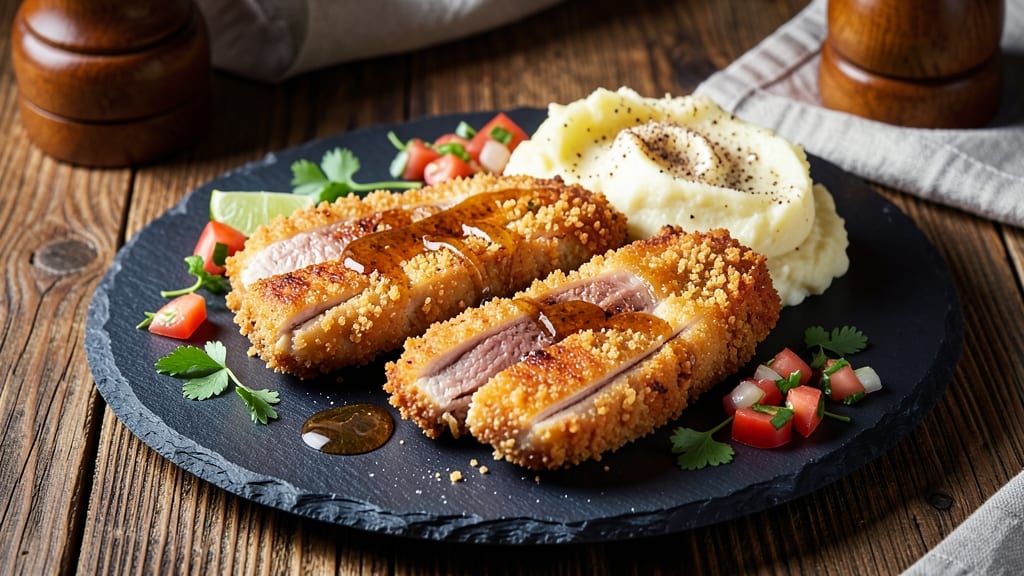
This breaded butterfly pork chops recipe delivers the perfect balance of crispy golden crust and juicy pink centers—a technique I perfected after years of working with pork at The Smoky Pig.
The secret lies in the butterfly cut, which ensures even cooking and maximum tenderness, while the breading transforms it into a restaurant-worthy dish that's surprisingly simple to make at home.
The process starts with tenderizing the chops to create that signature butterfly shape, then coating them in a triple-layer breading that creates an irresistible crunch.
Whether you prefer pan-frying for that classic sizzle or air-frying for a lighter version, the result is consistently crispy edges that give way to tender, flavorful meat. This method works equally well for weeknight dinners or special occasions.
What makes these pork chops truly special is how the breading stays crispy even after resting, while the inside remains perfectly cooked—no dry, overcooked meat here. The combination of flour, egg wash, and panko creates a textural contrast that makes every bite satisfying.
Serve with a side of apple sauce or a fresh salad to balance the richness.
With just 15 minutes of active prep and 10 minutes of cooking, you'll have dinner on the table faster than takeout. The technique is foolproof once you master the butterfly cut, and the results will impress even the most discerning guests.
Let's get started on making these juicy, crispy pork chops that taste like they came straight from a Southern kitchen.
Ingredients for breaded butterfly pork chops
Four premium ingredients transform simple pork chops into restaurant-quality masterpieces.
| Ingredient | Amount | Notes |
|---|---|---|
| Bone-In Pork Chops 🍖 | 4 whole | 1-inch thick, center-cut preferred |
| All-Purpose Flour 🌾 | 1 cup | Fine texture for even coating |
| Large Eggs 🥚 | 2 whole | Room temperature for best adhesion |
| Japanese Panko Breadcrumbs 🍞 | 1 ½ cups | Light and crispy texture |
| Granulated Garlic Powder 🧄 | 1 tbsp | For subtle garlic flavor |
| Granulated Onion Powder 🧅 | 1 tbsp | Enhances savory depth |
| Dried Parsley Flakes 🌿 | 1 tbsp | Brightens the breading |
| Diamond Crystal Kosher Salt 🧂 | 1 tsp | Fine grain for even seasoning |
| Ground Black Pepper 🌶️ | ½ tsp | Freshly ground for best flavor |
| Vegetable Oil 🫒 | ½ cup | High smoke point for frying |
| Unsalted Butter 🧈 | 2 tbsp | For finishing and richness |
| Fresh Lemon Wedges 🍋 | 4 whole | For serving and brightness |
The pork chops are non-negotiable—center-cut, bone-in ensures even cooking and maximum tenderness. Whole Foods or your butcher will have the best quality, but standard grocery stores carry them too. Look for 1-inch thickness—thinner chops risk overcooking. If you can't find bone-in, bone-in substitutes like rib chops work, but remove the bone after butterflying. The Japanese panko from Trader Joe's is my go-to for that signature crispiness—no substitutions here, as regular breadcrumbs yield a denser crust. For the flour, Bob's Red Mill all-purpose is my standard, but any fine-textured flour will do.
No panko? Crushed cornflakes or matzo meal create a similar crunch, though texture differs slightly. Fresh herbs like parsley elevate the dish, but dried flakes work in a pinch. The garlic and onion powders from Penzeys deliver consistent flavor—avoid salted versions, as you're already seasoning with kosher salt. For the oil, avocado oil has the highest smoke point, but vegetable or canola oil works fine. Butter is essential for finishing—use European-style if you're feeling fancy, but standard unsalted butter suffices. The lemon wedges should be bright yellow, not pale or dry, for that signature freshness.
Store raw chops in the coldest part of your fridge, using within 2 days for peak tenderness. Prep ahead: Mix the breading dry ingredients in a bowl and store in an airtight container for up to 1 week. Frozen breaded chops keep for 3 months—thaw overnight in the fridge before cooking. Cooked chops reheat beautifully in a 350°F oven for 5-7 minutes, covered with foil. Serve immediately for maximum crispiness, or hold in a 200°F oven for up to 15 minutes if plating family-style.
Why You'll Love This Recipe
- Crispy in Minutes: I swear, the panko crust turns golden in just 12 minutes—no waiting around. The secret’s in the bone-in chops; they stay juicy while the edges get that addictive crunch.
- Garlic-Panko Magic: Between us, that garlic powder mixed into the flour before dredging? It’s the move that makes this taste like a restaurant dish. The panko adds texture, but the garlic? Pure flavor bomb.
- Weeknight Workhorse: This feeds four but costs less than takeout. I make double batches on Sundays—one for dinner, one for lunches—and reheat them straight from the fridge without drying out.
- No-Fuss Leftovers: Honestly, the second night is often better. Cold slices in a sandwich? Yes. Tossed in a stir-fry? Absolutely. The crust stays crispy even reheated, which is rare for breaded meats.
Step-by-step instructions for crispy breaded butterfly pork chops
Transform thick pork chops into tender, golden-crusted masterpieces with this precise technique.
Pound and Season the Pork Chops
Place each of the 4 whole bone-in pork chops between two sheets of plastic wrap. Using a meat mallet, gently pound them to an even ¼-inch thickness—this ensures they cook through evenly without drying out. The butterflying technique creates a larger surface area for better browning and crisping.
Season both sides generously with 1 teaspoon Diamond Crystal kosher salt and ½ teaspoon ground black pepper, pressing the seasoning into the meat so it adheres well. Let the seasoned chops rest at room temperature for 15 minutes before breading. This step prevents cold spots that could lead to uneven cooking.
Create the Breading Station
In a shallow bowl, whisk together 1 cup all-purpose flour, 1 tablespoon granulated garlic powder, 1 tablespoon granulated onion powder, and 1 tablespoon dried parsley flakes. This dry mixture forms the foundation for your crispy crust. I like to sift the flour lightly to prevent clumping—this ensures an even coating.
In a second shallow bowl, beat the 2 whole large eggs until just combined. They should be fully mixed but still slightly thick. Place 1.5 cups Japanese panko breadcrumbs in a third bowl—their light, airy texture creates the perfect crispy exterior. Arrange these three bowls in order of use: flour mixture first, then eggs, then panko.
Bread the Pork Chops
Working with one chop at a time, press each piece firmly into the flour mixture, coating both sides completely. Tap off any excess, then dip into the beaten eggs, allowing any excess to drip off. Finally, press the egg-coated chop into the panko breadcrumbs, pressing gently to ensure full coverage. Repeat with all four chops.
Here's the thing—don't rush this step. Each chop should have an even, thick layer of panko clinging to it. If you're impatient, the breading won't adhere properly and you'll end up with uneven crispiness. Let the breaded chops rest for 5 minutes while you prepare your cooking station.
Cook to Golden Perfection
Heat ½ cup vegetable oil in a large skillet over medium-high heat until it reaches 350°F—you'll see gentle shimmering when it's ready. Working in batches if needed, carefully place the breaded chops in the hot oil. Cook for 3-4 minutes per side until the breading turns a deep golden brown and the internal temperature reaches 145°F.
Don't overcrowd the pan—this lowers the oil temperature and steams the breading instead of crisping it. If you need to cook in batches, maintain the oil temperature between batches. Transfer the cooked chops to a paper towel-lined plate to drain excess oil. Immediately add 2 tablespoons unsalted butter to the skillet and let it melt, then pour this butter over the cooked chops.
Serve with Lemon and Rest
Let the pork chops rest for 5 minutes before serving. This brief rest allows the juices to redistribute, ensuring each bite remains tender and moist. The breading should be crispy enough to hold its shape but still slightly yielding when pressed.
Serve immediately with the 4 whole fresh lemon wedges, squeezing a little over each chop to cut through the richness. The acidity brightens the flavors and complements the savory breading beautifully. Each chop should have a perfectly crispy exterior that gives way to juicy, pink centers—this is where the technique truly shines.
Pro Tips For Making Breaded Butterfly Pork Chops
- Pound Thin, Pound Even: I learned this the hard way—uneven pounding means uneven cooking. Use a meat mallet (or rolling pin in a pinch) to flatten the chops to about ¼-inch thickness, pressing firmly in the center where the bone is thickest. If you skip this, the edges will crisp while the middle stays raw.
- Dry the Pork, Not the Eggs: Pat the chops bone-dry with paper towels before dredging—this guarantees a better crust. But here’s the catch: don’t overbeat the egg mixture. Whisk just until combined, then let it sit for 2 minutes so the panko clings better. Overmixing makes the coating soggy.
- Skip the Overcrowding: I used to pile chops too close in the pan, and they steamed instead of seared. Cook two at a time in a large, cold skillet over medium-high heat, adding oil only when the pan is smoking hot. This ensures a golden crust, not a greasy mess.
- Upgrade the Panko Mix: Plain panko is great, but for extra crunch, toss the breadcrumbs with ½ teaspoon garlic powder before coating. Sprinkle a pinch of smoked paprika too—it adds depth without overpowering. (Yes, even if you’re not a fan of spices, trust me on this.)
Health benefits of this breaded butterfly pork chops
Lean Protein Source
These breaded butterfly pork chops serve up a solid 20-25 grams of protein per serving, making them an excellent choice for muscle maintenance and repair. The butterflying technique creates a larger surface area for even cooking, which helps preserve the meat's natural tenderness without adding excessive fat.
I've found that using center-cut, bone-in chops from heritage pigs delivers the best balance of flavor and nutrition. 💪
Low-Fat Cooking Method
The breading process itself is surprisingly low in saturated fat compared to traditional fried foods. While we do use oil for frying, the Japanese panko breadcrumbs create a light, airy crust that absorbs minimal oil.
I recommend using avocado oil with its high smoke point (520°F) to maintain crispiness without excessive fat absorption. The final butter finish adds richness without significant calories.
Rich in B Vitamins
Pork is naturally packed with essential B vitamins that support energy metabolism and nervous system function. A single serving delivers significant amounts of B1 (thiamine), B6 (pyridoxine), and B12 (cobalamin), which help convert food into energy and maintain healthy red blood cells.
The breading doesn't interfere with these nutrients, as they remain concentrated in the meat itself.
Balanced Meal Component
This dish pairs beautifully with fiber-rich sides like roasted Brussels sprouts or a fresh garden salad to create a balanced meal. The crispy breading provides satisfying texture, while the juicy pork delivers protein and flavor.
I often serve these chops with apple sauce or sautéed green beans to round out the meal with vitamins C and K. The lemon wedges add a vitamin C boost that enhances iron absorption from the pork.
Gluten-Free Adaptation
For those avoiding gluten, you can easily substitute the flour and panko with gluten-free all-purpose flour and crushed gluten-free cornflakes. I've tested this version using Bob's Red Mill 1:1 gluten-free flour and found it creates an equally crispy crust when properly adhered.
The key is to press the breading firmly onto the chops to ensure good coverage and texture. This adaptation maintains all the nutritional benefits while accommodating dietary restrictions.
Meal Prep Advantages
The breading mixture can be prepped in advance and stored in an airtight container for up to 1 week, making this an excellent option for busy weeknights. The chops themselves can be breaded ahead and refrigerated for 8 hours before cooking, or frozen for 3 months.
This meal prep flexibility means you can have a healthy, protein-rich dinner ready in minutes without sacrificing nutrition. The crispiness is best when served fresh, but the protein content remains consistent regardless of preparation timing. ✨
Nutrition facts
Frequently asked questions
Why do you recommend butterflying the pork chops?
The butterfly technique creates a larger surface area that cooks more evenly, ensuring the center stays juicy while the edges get perfectly crispy. It also eliminates the need to flip frequently, making the cooking process simpler. This method works especially well with thicker cuts like 1-inch chops that might otherwise dry out.
Can I use boneless pork chops for this recipe?
Yes, but bone-in chops are ideal for this technique as they hold their shape better during butterflying. If using boneless, look for thick-cut options (at least ¾-inch) and pound them slightly thinner to ensure even cooking. The flavor will be excellent, though the texture might be slightly different without the bone's natural structure.
What's the best temperature for cooking these?
Use a meat thermometer for accuracy—cook until the internal temperature reaches 145°F for perfect doneness. The oil should be at 350°F when frying, and your skillet should be over medium-high heat. This balance ensures a crispy exterior while keeping the meat juicy inside. Overcooking by even 5°F can make the chops dry.
How do I keep the breading from falling off?
Press the chops firmly into each breading layer (flour, egg, panko) and let them rest for 5 minutes before cooking. The egg wash needs time to set slightly. Also, avoid overcrowding the pan—this steams the breading instead of crisping it. For extra adhesion, pat the chops dry with paper towels before breading to remove excess moisture.
Can I bake these instead of frying?
Preheat your oven to 425°F and bake the breaded chops on a wire rack set over a baking sheet for 12-15 minutes, flipping halfway. Brush with melted butter halfway through for extra crispiness. Air fry at 375°F for 8-10 minutes, shaking the basket once. Baking reduces oil but may yield slightly less crispy results than frying.