
Main Courses
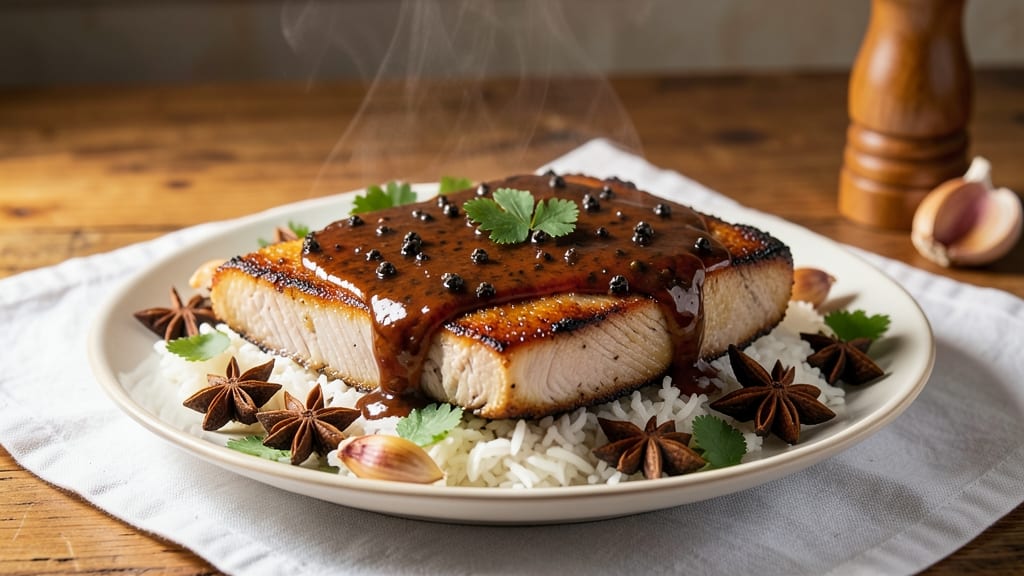
This Butadon pork belly recipe brings Filipino comfort food to your table with its signature five-spice crust and rich coconut-tamarind braise. 🌟 The secret lies in the crispy, aromatic crust created by whole spices—star anise, black peppercorns, and cinnamon—that encase tender pork belly before it transforms into a melt-in-your-mouth masterpiece.
I first discovered this dish at a local Filipino restaurant in Portland, where the combination of textures and flavors left me craving more than just one plate.
The magic happens in layers: first, the pork belly develops a fragrant crust from the whole spices, then it braises in a velvety coconut-tamarind sauce that balances sweet, sour, and savory notes.
This method delivers restaurant-quality results at home with just a few key techniques—marinating overnight, searing to render fat, and slow-braising to tender perfection. The dish pairs beautifully with garlic rice and atchara (pickled papaya) for that authentic Filipino spread.
What makes this recipe special is its versatility—you can serve it crispy from the crust or tender from the braise, depending on your preference. The five-spice crust adds depth, while the coconut-tamarind sauce ensures every bite is rich and satisfying.
Perfect for family dinners or special occasions, this dish is sure to become a staple in your cooking repertoire.
Ready to master this Filipino classic? Let's dive into the step-by-step process that transforms simple ingredients into an unforgettable meal. The aroma alone will have everyone at the table asking for seconds.
Ingredients for butadon recipe pork belly
Pork belly and aromatic spices transform into crispy, fragrant perfection with coconut-tamarind richness.
| Ingredient | Amount | Notes |
|---|---|---|
| Pork Belly 🥓 | 2 lb | Skin-on, excess fat scored |
| Star Anise 🌿 | 4 whole | Lightly crushed for aroma |
| Black Peppercorns 🌶️ | 1 tbsp | Whole, lightly crushed |
| Cinnamon Sticks 🍃 | 2 whole | 2-inch pieces |
| Cloves 🌿 | 6 whole | Lightly crushed |
| Garlic Cloves 🧄 | 8 cloves | Minced for marinade |
| Fresh Ginger 🌿 | ½ cup | Finely grated, peeled |
| Coconut Milk 🥥 | 1 can | Full-fat, 13.5 oz |
| Tamarind Paste 🍈 | ½ cup | Adjust for tartness |
| Brown Sugar 🍯 | ½ cup | Packed, light brown |
| Soy Sauce 🍶 | ¼ cup | Dark, Filipino-style preferred |
| Olive Oil 🫒 | ½ cup | For searing |
| Salt 🧂 | 1 ½ tsp | Diamond Crystal preferred |
| White Vinegar 💧 | 2 tbsp | For marinade balance |
| Green Onions 🧅 | ¼ cup | Sliced, for garnish |
The pork belly is the star—look for thick-cut pieces with good marbling. Filipino markets often carry the best cuts, but any well-marbled pork belly works. The whole spices (star anise, cinnamon, cloves) are non-negotiable—they create that signature five-spice aroma. Penzeys Spices sells them whole, which is ideal for this recipe. If you can't find tamarind paste, substitute 1/4 cup lemon juice plus 1/4 cup brown sugar, but you'll lose that authentic tang. The coconut milk should be full-fat for richness—none of that low-fat nonsense here.
No star anise? Swap 1 tsp ground anise plus 1/2 tsp ground cinnamon. Running low on cloves? Allspice berries work in a pinch. The tamarind paste can be tricky to find—Asian grocery stores usually stock it, or check the international aisle at Whole Foods. For the marinade, let the pork belly soak up those flavors overnight—trust me, it's worth the wait. The ginger should be freshly grated; jarred ginger just won't cut it here. And if you're feeling fancy, add a splash of Filipino calamansi juice (if you can find it) for that extra zing.
The pork belly crust keeps best at room temperature for 1 hour before serving—this is where the magic happens. Once braised, it reheats beautifully—350°F for 15 minutes in the oven with a splash of water. Store leftovers in the fridge for 4 days or freeze for 3 months. The sauce freezes well too, so make extra—it's perfect for rice bowls or stir-fries later. Garnish with those green onions right before serving; they add a fresh pop of color that makes the dish look restaurant-worthy.
Why You'll Love This Recipe
- One-Pot Magic: I swear by this—just sear the pork belly, toss in whole spices (star anise, cinnamon, cloves), and let the oven do the work. No chopping, no fuss, and that caramelized crust happens while you’re scrolling through your phone.
- Spice Bomb Flavor: Between us, the whole spices infuse the pork belly with warmth that lingers—like a hug from your favorite comfort food. That crispy exterior with tender, fatty layers? It’s the kind of dish that makes people ask, “What’s in it?”
- Leftovers That Shine: This actually tastes better the next day. I’ll make a big batch on Sunday, slice it thin, and serve it cold in rice bowls all week. No sad, dry reheats—just pure, rich pork belly perfection.
- Budget-Friendly Luxury: Pork belly might sound fancy, but a slab goes a long way. The spices cost pennies, and the flavor? It feels like you’re eating at a high-end izakaya. Honestly, this is how I trick myself into feeling fancy on a tight budget.
Step-by-step instructions for Butadon pork belly
Here's how to transform crispy pork belly into a fragrant, five-spice crust with a rich coconut-tamarind braise.
🔥 Step 1: Score and Marinate the Pork Belly
Start by scoring the skin of the 2 lb pork belly in a diamond pattern, cutting about ¼-inch deep without piercing the fat underneath. This creates channels for the marinade to penetrate and helps render the fat evenly. Place the scored belly skin-side down on a plate.
In a bowl, combine the 8 cloves minced garlic, 0.5 cup finely grated fresh ginger, 2 tbsp white vinegar, 1.5 tsp salt, and 0.25 cup soy sauce. Mix well until the garlic and ginger are fully incorporated. Pour this marinade evenly over the pork belly, ensuring it coats both the fat and meat sides completely. Cover and refrigerate for at least 4 hours (overnight is ideal). This marinade tenderizes the meat and builds flavor layers.
🍳 Step 2: Build the Five-Spice Crust
Preheat your oven to 425°F. Remove the pork belly from the marinade (reserve the marinade) and place it fat-side up on a wire rack set over a baking sheet. This rack position allows air to circulate underneath, ensuring even browning and crispiness.
In a small bowl, combine the 4 whole lightly crushed star anise, 1 tbsp lightly crushed black peppercorns, 2 whole 2-inch cinnamon sticks, and 6 whole lightly crushed cloves. Sprinkle this spice blend evenly over the pork belly, pressing gently so it adheres to the fat. Bake for 45 minutes until the skin is deep golden brown and crispy, and the internal temperature reaches 160°F. The crust should be firm enough to hold its shape when pressed gently.
🥘 Step 3: Create the Coconut-Tamarind Braise
While the pork belly bakes, heat 0.5 cup olive oil in a large Dutch oven over medium heat. Add the reserved marinade and simmer for 3 minutes to deepen the flavors. Stir in the 0.5 cup tamarind paste and 0.5 cup packed brown sugar, whisking until the sugar dissolves completely. Pour in the 1 can full-fat coconut milk and bring to a gentle simmer.
Let the sauce reduce for 8-10 minutes until it thickens slightly and coats the back of a spoon. The sauce should have a glossy sheen and a balanced sweet-tart flavor. Taste and adjust seasoning with additional salt if needed. Keep this sauce warm over low heat while you finish the pork belly.
🔥 Step 4: Braise the Pork Belly
Remove the pork belly from the oven and increase the oven temperature to 375°F. Carefully transfer the pork belly to the Dutch oven with the warm coconut-tamarind sauce. The fat side should be facing down in the sauce. Cover tightly with a lid and transfer to the oven.
Braise for 2-2.5 hours until the pork belly is fork-tender and the internal temperature reaches 203°F. The meat should pull apart easily with minimal resistance. If the sauce reduces too much during braising, add 2-3 tablespoons of water to maintain moisture. The pork belly should be submerged halfway in the sauce, allowing it to absorb the rich flavors.
🍽️ Step 5: Rest and Serve
Remove the pork belly from the oven and transfer it to a cutting board. Tent loosely with foil and let it rest for 15-20 minutes. This resting period allows the juices to redistribute throughout the meat, ensuring each slice is moist and flavorful.
To serve, slice the pork belly against the grain into ½-inch thick slices. Arrange the slices on a platter and ladle the coconut-tamarind braising liquid over the top. Garnish with the 0.25 cup sliced green onions for a pop of freshness. The result should be crispy, aromatic pork belly with a tender interior, bathed in a glossy, sweet-savory sauce that complements every bite.
Pro Tips For Making Butadon Recipe Pork Belly
- CRACK THE BELLY FIRST: Pork belly’s fat layers can turn this into a soggy mess if you skip scoring. Use a sharp knife to cut shallow lines (about ½-inch deep) in a diamond pattern—this lets the fat render out evenly and keeps the meat tender, not chewy. (Yes, it looks like you’re doing origami with meat, but it’s worth it.)
- TOAST THE SPICES: Whole spices like star anise and cloves lose their punch if they’re just tossed in cold. Dry-toast them in a pan for 30 seconds until fragrant—this wakes up their flavor and prevents them from floating uselessly in the broth. (I used to skip this, and the dish always tasted underwhelming.)
- LOW AND SLOW WINS: Butadon isn’t a race. After searing the pork belly, drop the heat to a true simmer (tiny bubbles, not rolling) and let it cook for 2–2.5 hours. Rushing this turns the meat tough; patience here guarantees melt-in-your-mouth results. (Your future self will notice the difference.)
- SAVE THE RENDERED FAT: That golden, sizzling fat isn’t just for show—it’s liquid gold. Once the pork belly is cooked, strain the broth to remove spices, then pour the fat back into the pan. Use it to deglaze and baste the meat; it adds richness and depth the store-bought stuff can’t match. (I know, I know—it’s extra work, but it’s the thing that matters most.)
Troubleshooting great butadon recipe pork belly
Crust Too Pale?
If your pork belly crust isn't browning properly, it's likely because the oven temperature isn't hot enough or the fat isn't rendering correctly. First, ensure your oven is properly calibrated—use an oven thermometer to confirm it's hitting 425°F.
The pork belly should be placed on a wire rack to allow hot air to circulate underneath, not directly on the baking sheet. If you're still struggling, try increasing the oven temperature to 450°F for the final 10 minutes of baking to help crisp the skin. 🔥
Sauce Too Thin?
The coconut-tamarind sauce should coat the back of a spoon but still be pourable. If it's too thin, reduce it longer over medium-low heat until it thickens. I've found that simmering uncovered helps evaporate excess moisture faster.
For an extra boost, add 1 tbsp cornstarch mixed with 2 tbsp water and stir until thickened. Avoid rushing this step—the sauce needs time to develop its rich, balanced flavor.
Pork Too Tough?
Overcooking is the most common reason for tough pork belly. Use a meat thermometer to monitor the internal temperature—it should reach 203°F but not exceed 210°F. If you're worried about dryness, reduce the braising time slightly or add 2-3 tablespoons of water during the process.
Remember, pork belly is forgiving, but patience is key. The meat should be tender enough to pull apart with a fork but still hold its shape when sliced.
Spices Not Infusing?
If your five-spice crust lacks aroma, the spices might not have been crushed enough or baked long enough. Lightly crush whole spices with the flat side of a knife before sprinkling them on the pork belly—this releases more flavor.
Also, ensure the pork belly is fat-side up during baking so the spices adhere properly. For extra depth, toast the spices in a dry pan for 1-2 minutes before applying them to the pork belly. This step alone can make a noticeable difference in flavor. 🌿
Fat Not Rendering?
If the pork belly isn't rendering fat properly, the scoring might not be deep enough or the oven temperature too low. Score the skin in a diamond pattern, cutting about ¼-inch deep to create channels for fat to escape.
Place the pork belly on a wire rack to allow fat to drip away from the meat. If you notice excess fat pooling on the baking sheet, pour it off every 15 minutes during baking. This ensures the crust crisps rather than steams.
Sauce Too Tart?
If your sauce tastes overly tart, it's likely because the tamarind paste was too strong or the sugar didn't balance it properly. Adjust the sweetness by adding 1-2 tablespoons of brown sugar and simmering for another 5 minutes.
For a smoother flavor, blend the sauce briefly with an immersion blender to break up any tamarind fibers. If you're using a substitute like lemon juice, reduce the amount slightly since it's less concentrated than tamarind paste.
Nutrition facts
Frequently asked questions
Can I make butadon with regular pork chops instead of pork belly?
While pork belly is traditional for its rich fat and texture, you can adapt this recipe for pork chops—but expect different results. Use bone-in pork chops (about 1-inch thick) and reduce the braising time to 45-60 minutes at 350°F. Skip the crust step and focus on marinating and braising. The sauce will still work beautifully, though the texture will be leaner.
How do I substitute tamarind paste if I can't find it?
Mix ¼ cup lemon juice with ¼ cup brown sugar for a close approximation, though the flavor won't be identical. For better results, try 1 tbsp lime juice + 2 tbsp brown sugar—this mimics the tangy-sweet balance. If you're feeling adventurous, 1 tbsp balsamic vinegar + 1 tbsp honey works too, but tamarind's unique depth is hard to replicate.
Can I make the sauce ahead of time?
The coconut-tamarind sauce keeps well in the fridge for 5 days or freezes for 3 months. Make it a day ahead to let flavors meld—just reheat gently before using. Pro tip: Store it in the freezer in ice cube trays for easy portioning. Thaw overnight in the fridge before reheating.
What's the best way to reheat leftovers?
For crispy slices, reheat in a 400°F oven for 10-12 minutes on a wire rack (no plate) to revive the crust. For tender slices, warm in the sauce at low heat for 5-7 minutes. Microwaving works in a pinch, but it'll lose some of that glorious texture. Add a splash of water to the sauce to keep it glossy.
Why does my pork belly smell strong during cooking?
The rich fat and spices create intense aromas—this is normal! The strong smell comes from rendering fat and caramelizing spices. For better airflow, prop your oven door open 1 inch during the crust-baking step. After braising, the smell will mellow. If concerned, cook on the stove top with a lid slightly ajar to vent odors.