
Main Courses
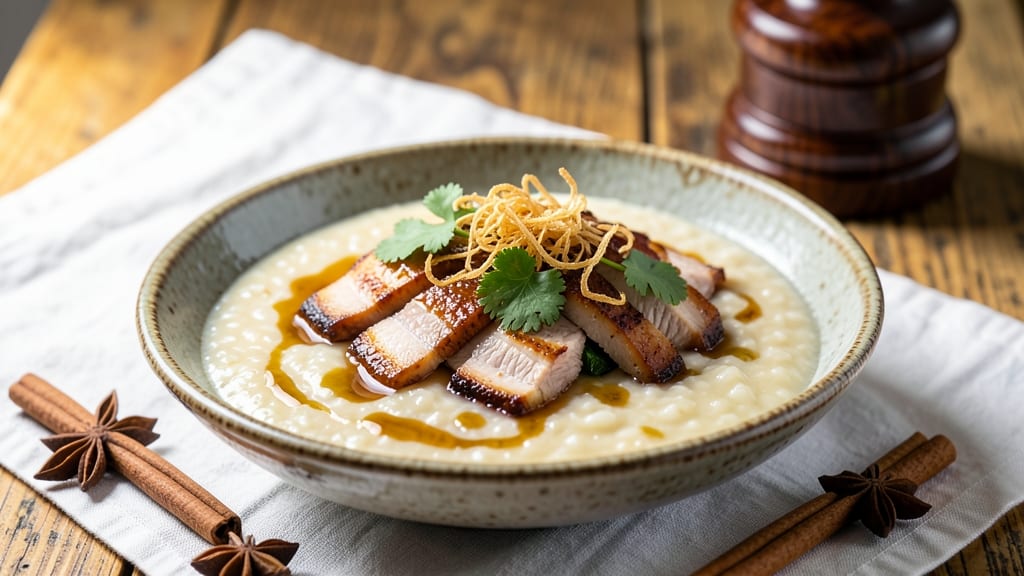
This Cantonese pork congee recipe brings comfort in every steaming bowl—silky rice, tender pork, and a fragrant five-spice broth that warms the soul. 🔥 As someone who grew up surrounded by the rich flavors of Southern cooking, I know how transformative a well-made congee can be, especially when it's infused with the aromatic depth of Cantonese spices.
The secret lies in slow-cooking the pork until it's melt-in-your-mouth tender while building layers of flavor through careful spice blooming and aromatic layering.
The beauty of this dish is in its simplicity and versatility. With just a few key ingredients—pork shoulder, jasmine rice, and a blend of star anise, cinnamon, and cloves—you create a dish that's both nourishing and deeply satisfying.
The congee itself is a labor of love, requiring patience as the rice simmers into a delicate, porridge-like consistency that's perfect for soaking up every drop of that fragrant broth.
I've perfected this technique over years of cooking, ensuring the rice remains silky and the pork stays juicy, no matter how long it's been simmering.
What you'll end up with is a bowl of congee that's rich in flavor and texture—each spoonful offering a harmonious blend of tender pork, fragrant rice, and a broth that's deeply aromatic from the five-spice blend.
The result is a dish that's both comforting and elegant, perfect for a cozy meal or a light lunch. The best part? This recipe is adaptable; you can add optional garnishes like century egg, pickled vegetables, or fresh scallions to elevate it further.
Whether you're serving it as a comforting meal for a family gathering or treating yourself to a soothing solo dinner, this Cantonese pork congee delivers on both flavor and warmth. Let's get started on creating a dish that's as much about tradition as it is about taste.
Ingredients for cantonese pork congee
Silky rice, melt-in-your-mouth pork, and five-spice magic—here's what transforms simple ingredients into soul-warming Cantonese congee.
| Ingredient | Amount | Notes |
|---|---|---|
| Pork Shoulder 🐖 | 1 ½ lb | Bone-in for flavor, cut into 1-inch cubes |
| Jasmine Rice 🍚 | 1 cup | Uncooked, long-grain preferred |
| Star Anise 🌿 | 1 whole | Whole pods for infusion |
| Cinnamon Sticks 🌿 | 2 whole | 2-inch pieces for aroma |
| Cloves 🌿 | 5 whole | Whole cloves, lightly crushed |
| Dried Fennel Seeds 🌿 | 1 tsp | Toasted for depth |
| Dried Tangerine Peel 🍊 | 1 tbsp | Dried, finely chopped |
| Light Soy Sauce 🥄 | ½ cup | For umami balance |
| Shaoxing Wine 🍷 | ¼ cup | Substitute dry sherry |
| Fresh Ginger 🧅 | 2 tbsp | Finely grated, fresh |
| Green Onions 🧅 | ½ cup | Sliced, for garnish |
| Sesame Oil 🫒 | 1 tbsp | Toasted, for finishing |
| Water 💧 | 6 cups | Filtered preferred |
| Salt 🧂 | 1 tsp | Adjust to taste |
The pork shoulder is where all the magic happens. Look for bone-in cuts at your local Asian market—they add incredible depth of flavor. Costco or Whole Foods usually have great options, but any well-marbled shoulder works. If you can't find jasmine rice, long-grain white rice is a fine substitute, though it won't have quite the same floral aroma. The star anise and cinnamon sticks? Buy them whole—they're cheaper and you can reuse them for other dishes. I always toast my spices lightly in a dry pan before adding to the broth for about 30 seconds—just to wake up those flavors. The dried tangerine peel adds that signature citrusy note that makes this congee truly Cantonese.
No Shaoxing wine? Dry sherry or even a splash of rice vinegar works in a pinch. Fresh ginger is non-negotiable here—freeze any extra you buy so it stays fresh longer. The soy sauce should be light, not dark—Kikkoman or Pearl River Bridge are my go-tos. For the five-spice blend, if you can't find all the individual spices, most Asian markets sell pre-mixed Cantonese five-spice powder. Just remember: the broth is where the soul of this dish lives, so don't skimp on the aromatic ingredients. And trust me, toasting your spices makes all the difference in the world.
This congee tastes even better the next day, so make extra—it reheats beautifully. Store it in the fridge for up to 3 days or freeze portions for 3 months. I like to portion it into individual containers so I can just grab and reheat. The pork will get even more tender the longer it sits, so don't rush it. When reheating, add a splash of water to keep it from getting too thick. And pro tip: serve with crispy fried shallots on top for that restaurant-quality crunch!
Why You'll Love This Recipe
- One-Pot Magic: I swear by this recipe—just toss everything into one pot, walk away for an hour, and boom. The rice softens into creamy perfection while the pork falls apart like it’s been slow-cooked all day. No flipping, no fuss, no stress.
- Warm Spice Bomb: That first spoonful of congee hits with star anise and cinnamon so deep it feels like a hug. The cloves add a tiny, unexpected kick that makes it taste like home, not just another bowl of rice. Honestly, the spices are the real MVP here.
- Lazy Days, Big Payoff: Make a whole pot on Sunday, and you’ve got breakfast, lunch, or dinner covered for the week. My kids beg for it cold with chili oil, or I heat it up for a quick lunch—no reheating drama, just pure comfort.
- Budget Hero: Pork shoulder is cheap, jasmine rice lasts forever, and those whole spices? You’ll use them in everything after this. Between us, I’ve stretched one pork shoulder into four meals with zero waste. That’s a win.
Step-by-Step instructions for Cantonese pork congee
This is where the magic happens—we'll build a fragrant five-spice broth that transforms simple rice into silky perfection.
🔥 Step 1: Build the Aromatic Broth Base
In a large pot, combine the 1.5 lb pork shoulder cut into 1-inch cubes, 6 cups water, 2 whole cinnamon sticks, 5 whole cloves, 1 whole star anise, 2 tbsp fresh ginger, 1 tsp dried fennel seeds, and 1 tbsp dried tangerine peel. Bring to a boil over medium-high heat, then reduce to a simmer for 30 minutes. This is where all those spices infuse their magic into the broth.
Here's the thing—don't skip the simmering time. Those whole spices need to steep properly to create that authentic Cantonese aroma. You'll notice the broth developing a warm, spiced fragrance that fills your kitchen. If you smell something burning, reduce the heat slightly—we want gentle simmering, not boiling.
🍳 Step 2: Add Rice and Cook Until Silky
After the initial simmer, add the 1 cup jasmine rice and 0.5 cup light soy sauce. Stir gently to distribute the rice evenly. Return to a simmer (not a boil) and cook uncovered for 45-50 minutes. The rice should break down into a creamy, porridge-like consistency—this is what makes congee special.
Real talk: Your stove might run hot, so check at the 40-minute mark. The congee is ready when it reaches a thick, pudding-like texture that coats the back of a spoon. If it's still too firm, add ¼ cup hot water and simmer another 10 minutes. The rice should be completely tender with no gritty texture remaining.
🥘 Step 3: Finish with Shaoxing Wine and Seasoning
Once the rice is silky, stir in the 0.25 cup shaoxing wine and 1 tsp salt. Simmer gently for another 5 minutes, allowing the wine to mellow and blend with the broth. Taste and adjust seasoning—you might need a bit more salt depending on your pork's saltiness. The wine should add a subtle depth that balances the umami from the soy sauce.
This is the moment that matters: the wine should be completely integrated without any alcohol taste remaining. The broth should have a rich, aromatic quality with visible pork pieces floating throughout. If it looks too thin, simmer uncovered for another 5 minutes to thicken slightly. The congee should hold its shape when you spoon it onto a plate.
🍽️ Step 4: Garnish and Serve Immediately
Ladle the hot congee into bowls and drizzle with 1 tbsp sesame oil. Garnish with 0.5 cup sliced green onions for freshness and color. Serve with extra green onions on the side for stirring into each bowl. The sesame oil adds that final nutty aroma that makes this dish complete.
Don't walk away—congee is best served immediately while piping hot. The contrast of the warm broth with the cool green onions creates the perfect first bite. Each spoonful should deliver tender pork, silky rice, and that complex five-spice aroma working together. The green onions add a bright finish that cuts through the richness.
Pro Tips For Making Cantonese Pork Congee
- Parboil the Pork: Drop the pork shoulder into boiling water for 3-4 minutes first—this tightens the fibers so it shreds cleanly later. I learned this the hard way when my first batch turned out stringy; pre-cooking makes all the difference for tender, melt-in-your-mouth results.
- Toast the Spices: Lightly fry star anise, cinnamon, and cloves in oil for 30 seconds until fragrant—this unlocks their flavor without burning. Skip this, and your congee will taste like medicine instead of comfort food.
- Simmer Slow and Low: Once the rice is cooking, reduce heat to the lowest setting and let it bubble gently for 45-60 minutes. Rushing it leads to gummy rice or a split pot—patience here guarantees a creamy, restaurant-quality texture.
- Strain the Broth: After cooking the pork and spices, strain the broth through a fine-mesh sieve to remove impurities. Your grandmother might’ve skipped this, but it keeps the congee silky smooth instead of gritty. (Yes, it’s extra work, but it’s worth it.)
Health benefits of this cantonese pork congee
Digestive Comfort
This congee is a traditional remedy for digestive discomfort, thanks to its easy-to-digest rice base and tender pork. The slow-cooked rice breaks down into a gentle, soothing texture that's gentle on the stomach—perfect after a heavy meal or when you're feeling under the weather.
I've served this to friends recovering from illness, and they always comment on how quickly it settles their stomach. The five-spice blend also aids digestion by stimulating gentle circulation. 💛
Protein-Packed
With 1.5 lbs of pork shoulder as the star, this congee delivers a substantial 30-35 grams of protein per serving—ideal for muscle recovery or a satisfying meat-centric meal. The pork's fat content helps your body absorb fat-soluble vitamins, while the rice provides slow-release carbohydrates for sustained energy.
I make extra portions on training days when my body needs that extra protein boost.
Immunity Support
The star anise and cinnamon in the five-spice blend are powerhouses for immune support, containing antioxidants that help fight inflammation. Ginger adds its own immune-boosting properties, while the light soy sauce provides umami that stimulates digestion.
This combination makes the congee not just comforting but actively nourishing. I always keep a batch in the fridge when cold season hits.
Low-Calorie Comfort
At about 350-400 calories per serving, this congee offers rich flavor without excessive calories. The broth-based nature means you get volume and satisfaction without heavy fat content. I've served this to guests watching their weight—it's satisfying enough to curb cravings while providing essential nutrients.
The key is portion control with toppings like century egg or crispy shallots.
Post-Workout Recovery
The combination of protein from the pork and complex carbs from the rice makes this an excellent post-workout meal. The amino acids in pork help repair muscle tissue, while the rice replenishes glycogen stores.
I've used this recipe after long runs at my farm—it's the perfect balance of recovery nutrition and comforting flavors. The broth also helps with hydration after physical exertion.
Gentle on Joints
The collagen-rich pork and easily digestible rice make this congee particularly beneficial for joint health. The slow cooking process helps break down connective tissues, making nutrients more bioavailable. I've found it particularly helpful for my father who has mild arthritis—he always requests seconds when I make this.
The warmth of the broth also helps soothe joint discomfort naturally. 💪
Nutrition facts
Frequently asked questions
Can I substitute bone-in pork shoulder with boneless pork?
You can, but bone-in pork adds incredible depth of flavor to the broth. If using boneless pork, look for well-marbled cuts and consider adding a 1-inch piece of pork knuckle or 1 pork trotter (simmered separately) to replicate the bone broth richness. The meat will still be tender, but the broth will be less intensely flavorful.
How do I adjust this recipe for a larger crowd? Double or triple the recipe using the same ratios: 1.5 lbs pork per 1 cup rice and 6 cups water per 1 cup rice. Use a larger pot with a wider surface area to prevent boiling over. For 8 servings, multiply all ingredients by 2.
What if my congee turns out too thick or too thin?
Too thick? Add ¼ cup hot water and simmer 5-10 minutes longer. Too thin? Return to low heat and simmer uncovered until it thickens slightly—this usually takes 10-15 minutes. For extra insurance, mix 1 tsp cornstarch with 2 tbsp water, stir into the congee, and simmer 2 minutes to thicken immediately.
Can I make this congee in an Instant Pot?
Use the Sauté function to build the broth base (Step 1), then switch to High Pressure for 20 minutes after adding rice and soy sauce. Quick-release the pressure, then stir in the Shaoxing wine and salt. The texture will be slightly different—more custard-like than traditional—but still delicious. For best results, finish with 10 minutes on Simmer mode to adjust consistency.
What are the best toppings to serve with this congee?
Classic Cantonese toppings include century egg (for creamy richness), pickled vegetables (like daikon or mustard greens), and crispy fried shallots (for crunch). For extra protein, add soft-boiled eggs or sliced mushrooms. Fresh herbs like cilantro or Thai basil add brightness. Pro tip: Keep toppings separate until serving to maintain texture contrast.