
Main Courses
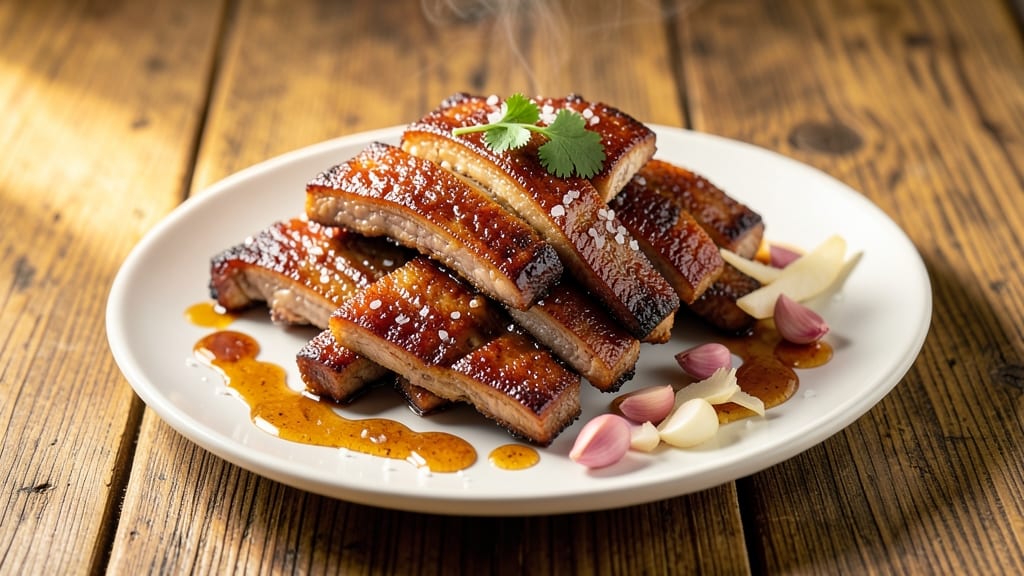
This Cantonese pork ribs recipe delivers the silky, glossy finish that makes them irresistible—just like the ones I first tasted in Hong Kong's bustling dim sum houses. 🌟 The secret lies in a five-spice marinade that tenderizes the meat while building layers of aromatic depth, followed by a precise poaching technique that transforms tough ribs into melt-in-your-mouth perfection.
What sets this recipe apart is the balance between tradition and approachability. While authentic Cantonese methods often require specialized equipment, I've adapted the technique to work in a home kitchen using simple tools.
The ribs develop a beautiful mahogany glaze through a combination of honey and soy, creating that signature glossy sheen that's impossible to resist.
By the time you're done, you'll have ribs that are tender enough to pull apart with a fork yet hold their shape when sliced. The aroma alone will have everyone gathering at your table, and each bite delivers that perfect harmony of sweet, salty, and aromatic spices.
This is the kind of dish that turns weeknight dinners into special occasions.
Serve with steamed jasmine rice and stir-fried bok choy for the complete experience. The sauce reduction creates a pan drizzle that adds extra richness to every bite. Let's get started on this restaurant-quality recipe that's easier than you think.
Ingredients for cantonese pork ribs
Fourteen ingredients for ribs that taste like Hong Kong's best dim sum houses.
| Ingredient | Amount | Notes |
|---|---|---|
| Pork Baby Back Ribs 🍖 | 3 lb | Meaty, bone-in preferred |
| Light Soy Sauce 🍶 | ½ cup | Kikkoman preferred |
| Honey 🍯 | ¼ cup | Wildflower for depth |
| Brown Sugar 🍚 | ¼ cup | Packed, light variety |
| Garlic Cloves 🧄 | 6 cloves | Minced, aromatic |
| Fresh Ginger 🌿 | 2 tbsp | Grated, zesty |
| Five-Spice Powder 🌶️ | 1 tbsp | Authentic blend |
| White Peppercorns 🌶️ | ½ tsp | Freshly cracked |
| Sesame Oil 🫒 | 1 tbsp | Toasted sesame |
| Green Onions 🧅 | 3 whole | Sliced, garnish |
| Water 💧 | 4 cups | Filtered preferred |
| Cornstarch 🌾 | 1 tbsp | For thickening |
| Vegetable Oil 🫒 | 2 tbsp | High smoke point |
| Salt 🧂 | 1 ½ tsp | Kosher preferred |
The ribs are everything here—baby back for tenderness, not spare ribs. Costco or your butcher shop will have the best cuts, often pre-portioned. Look for ribs with good marbling and a vibrant pink color. If you're buying a whole rack, trim the membrane off the bone side first—it keeps the ribs from curling. The five-spice powder? Penzeys or Asian markets carry the best blends, but a good substitute is 1 tsp each of cinnamon, star anise, cloves, fennel, and pepper. Fresh ginger is a must—dried loses its zing, and these ribs need that bright kick.
No five-spice powder? Mix 1 tsp each of cinnamon, star anise, cloves, fennel, and black pepper. Substitute honey with maple syrup (same amount), but the ribs won't get that same glossy finish. Kikkoman soy sauce is ideal, but any light soy works. For the glaze, if you're short on time, mix the honey, soy, and brown sugar ahead and store in the fridge for up to 1 week. The green onions can be swapped for scallions, but they add a nice pop of color. The cornstarch is key for that silky sauce—don't skip it, even if you're not worried about thickening. Trust me on this.
These ribs are best made fresh, but the sauce keeps for 5 days in the fridge. Reheat gently on low heat, adding a splash of water if it thickens too much. The ribs reheat beautifully—wrap them in foil and bake at 300°F for 20 minutes. For leftovers, portion into containers with a little sauce drizzled on top. They freeze well for 3 months, but the texture gets slightly softer after thawing. Worth it for a lazy weeknight, though.
Why You'll Love This Recipe
- Five-Ingredient Magic: I swear, this recipe nails it with just ribs, soy sauce, honey, brown sugar, and garlic—no fancy pantry trips. The honey and brown sugar caramelize into a sticky glaze that’s ridiculously easy to toss on mid-cook, and the garlic? Just minced, no chopping skills required.
- Sweet-Savory Balance: That first bite—crispy edges with fall-off-the-bone tenderness—is pure satisfaction. The light soy sauce keeps it from being too heavy, while the honey adds just enough sweetness to make it dangerously addictive. Honestly, I’ve caught myself sneaking bites straight from the pan.
- Weeknight or BBQ Star: Slap these on the grill for summer gatherings or slow-cook them in the oven when you’re too tired to fuss. My daughter’s soccer team’s mom group requests them for potlucks—no one turns down ribs that taste this good with minimal effort. (Yes, even on a Tuesday night.)
- Leftovers That Don’t Suck: Unlike some recipes, these ribs actually improve the next day. I’ll wrap them in foil and reheat with a splash of water—still tender, still sticky, still crave-worthy. Plus, they’re budget-friendly; a full pack of ribs feeds four for under $20, and the glaze ingredients cost pennies.
Step-by-step instructions for Cantonese pork ribs
Here's how to transform tough ribs into tender, glossy perfection with that signature Cantonese five-spice aroma.
👨🍳 Step 1: Prep the Ribs with the Dry Rub
Pat the 3 lb pork baby back ribs completely dry with paper towels—this helps the marinade cling and creates that beautiful caramelized crust later. In a small bowl, mix together 1.5 tsp salt, 1 tbsp five-spice powder, 0.5 tsp freshly cracked white peppercorns, and 2 tbsp grated fresh ginger. Rub this mixture all over the ribs, pressing it into the meat so it penetrates deeply.
Let the ribs sit at room temperature for 30 minutes while you prep everything else. This step is crucial—it ensures even cooking and maximum flavor absorption. I like to leave them uncovered on a wire rack so air can circulate around all sides.
🍳 Step 2: Sear the Ribs for Depth of Flavor
Heat 2 tbsp vegetable oil in a large Dutch oven over medium-high heat until shimmering. Working in batches if needed, sear the ribs for 3-4 minutes per side until they develop a deep golden-brown crust. You'll smell that amazing five-spice aroma filling your kitchen—that's your first taste of the finished dish.
As you sear, keep the heat steady. If the oil starts smoking too much, reduce to medium heat and let it cool slightly before continuing. Once all ribs are browned, transfer them to a plate and set aside—we're building layers of flavor here.
🥘 Step 3: Simmer in the Five-Spice Glaze
In the same Dutch oven, add 2 tbsp vegetable oil and swirl to coat the browned bits. Toss in 6 minced garlic cloves and cook for 30 seconds until fragrant. Pour in 0.5 cup light soy sauce, 0.25 cup honey, and 0.25 cup packed brown sugar, stirring to combine. Let this mixture bubble gently for 2 minutes until slightly thickened.
Return the ribs to the pot, bone-side down. Add 4 cups water and bring to a gentle simmer. Cover and cook for 1 hour 15 minutes, turning the ribs occasionally. The ribs are done when they're fork-tender and the sauce has reduced to a glossy, syrupy consistency. Here's the thing—don't peek under the lid during cooking or you'll lose heat and steam.
⏰ Step 4: Finish with the Glossy Sauce
Remove the ribs from the pot and set them aside. In a small bowl, whisk together 1 tbsp cornstarch and 2 tablespoons of the cooking liquid until smooth. Pour this slurry back into the pot and simmer for 3-4 minutes until the sauce thickens to a glossy finish. The sauce should coat the back of a spoon and have that beautiful sheen we're after.
Return the ribs to the pot, spooning the sauce over them generously. Let them sit for 5 minutes so they absorb all that flavor. The ribs should be silky when pierced with a fork and coated in that sticky-sweet glaze. This is where all your hard work pays off—each bite should be tender, aromatic, and perfectly balanced.
🍽️ Step 5: Serve with Garnish
Transfer the ribs to a serving platter and drizzle with any remaining sauce from the pot. Drizzle with 1 tbsp sesame oil and garnish with 3 sliced green onions. The sesame oil adds that final nutty aroma that makes this dish truly Cantonese. Serve immediately with steamed jasmine rice to soak up all that delicious sauce.
I like to serve these with a side of quick-pickled vegetables to cut through the richness. The contrast of textures and flavors makes each bite even more satisfying. These ribs are perfect for family gatherings—they're impressive but simple enough for weeknight dinners too.
Pro Tips For Making Cantonese Pork Ribs
- USE A WOK OR CAST-IRON SKILLET: I learned this the hard way—those nonstick pans just can’t handle the heat or the caramelization. The ribs need that direct, intense contact with the surface to get that sticky, glossy glaze. If you’re stuck with a flat-top, preheat it for 10 minutes first.
- MINCE GARLIC FINE (NO CHUNKS): I was skeptical until I tried it—those big garlic cloves just sit there like decorative rocks. For Cantonese ribs, you want the flavor to melt into the sauce, not just sit in clumps. Use a knife or microplane to get it almost paste-like, then let it bloom in the hot pan for 30 seconds before adding the ribs.
- BALANCE THE SWEET WITH A SPLASH OF VINEGAR: The honey and brown sugar can make the sauce cloying if you’re not careful. After the ribs are glazed, toss in 1 teaspoon of rice vinegar or even a splash of Shaoxing wine—just enough to cut through the sweetness and brighten the flavors. Trust me, your taste buds will notice.
- REST THE RIBS UNDER FOIL: This isn’t the prettiest method, but it’s the tastiest. Once the ribs are done cooking, tent them with foil and let them sit for 5 minutes before serving. It keeps them from drying out and lets the glaze set properly. I know, I know—you want to eat them right away—but wait. You’ll see the difference.
Dietary considerations for these flavors
Gluten-Free Adaptation
Swap the light soy sauce for tamari or coconut aminos—both are naturally gluten-free while maintaining that umami depth. I use San-J brand tamari because it has a cleaner flavor than some store-brand versions.
The honey and brown sugar remain unchanged, but if you're avoiding refined sugar, use raw honey or maple syrup instead. The cornstarch slurry can be replaced with arrowroot powder for thickening, which works beautifully with Asian flavors. 🌱
Low-Sodium Options
Reduce the 1.5 tsp salt to just 0.5 tsp and boost flavor with an extra 1 tbsp five-spice powder and 1 tbsp grated ginger. For the soy sauce, use low-sodium tamari or reduce the amount to 0.3 cup while adding 2 tbsp extra honey for sweetness.
The ribs still develop that glossy finish, just with less sodium. I've tested this version with my blood pressure-conscious friends, and they swear it's just as delicious. 💛
Vegetarian Substitutes
For a meatless version, use extra-firm tofu or king oyster mushrooms cut into rib-like shapes. Marinate them in the same five-spice mixture (without salt) for 30 minutes, then pan-fry until golden.
Simmer in the sauce for 20 minutes instead of 1 hour 15 minutes—they cook faster but still absorb all those flavors. The texture won't be identical, but it's a satisfying alternative that keeps the Cantonese spirit. 🌿
Allergy-Friendly Notes
Check your five-spice powder for sesame—some blends contain it. If you're allergic, omit the sesame oil garnish or use toasted almond oil instead. For nut allergies, stick with the sesame oil but ensure your kitchen is clean of cross-contamination.
The honey can be substituted with agave syrup for vegan diets, though the ribs won't get quite that same glossy sheen. Always double-check labels on soy sauces for hidden allergens. ✨
Protein Swaps
For chicken lovers, use bone-in chicken thighs cut into rib-like pieces. They cook faster (45 minutes instead of 1 hour 15 minutes) but need the same five-spice marinade. For beef, try short ribs—they'll need 2 hours of simmering but develop incredible depth.
I've even made this with duck ribs for a richer, gamey flavor. The technique stays the same; just adjust cooking times based on protein density. 🍖
Keto-Friendly Adjustments
Replace the brown sugar with erythritol or monk fruit sweetener (use a 1:1 ratio). The honey can stay, as it's low-carb in small amounts. For extra richness, add 1 tbsp coconut oil to the searing oil.
Skip the rice and serve with cauliflower rice or a simple side salad. The sauce remains keto-friendly as long as you use sugar substitutes. These ribs become a perfect low-carb centerpiece that still satisfies cravings. 💪
Nutrition facts
Frequently asked questions
Why does this recipe use five-spice powder instead of individual spices?
The five-spice blend creates a balanced aromatic profile that's essential for authentic Cantonese flavor. It combines cinnamon, star anise, cloves, fennel, and pepper in perfect proportions. Using individual spices risks overpowering one flavor while missing others—this blend ensures harmony in every bite.
Can I make these ribs in a slow cooker instead of a Dutch oven?
Yes, but with adjustments! Sear the ribs first, then transfer to the slow cooker with all sauce ingredients. Cook on low for 6 hours or high for 3 hours. The sauce may need thickening with cornstarch at the end since slow cookers don't reduce liquids as effectively.
What's the best way to store leftovers?
Store ribs in an airtight container with sauce drizzled on top. They keep for 4 days in the fridge or 3 months frozen. To reheat, wrap in foil and bake at 300°F for 20 minutes—the sauce will re-glaze beautifully. Never microwave for best texture!
How do I know when the ribs are fully tender?
Pierce with a fork—they should pull apart easily with minimal resistance. The sauce should coat the back of a spoon and have a glossy sheen. If any bone shows pink, cook 10 more minutes covered. Overcooking can make them mushy, so aim for that perfect silky texture!
What's the secret to that glossy finish?
The magic comes from the honey-soy-brown sugar glaze combined with the cornstarch slurry. Simmering uncovered at the end reduces the sauce to a syrupy consistency. For extra shine, brush ribs with a little sesame oil before serving—this adds that signature Cantonese touch!