
Soups & Stews
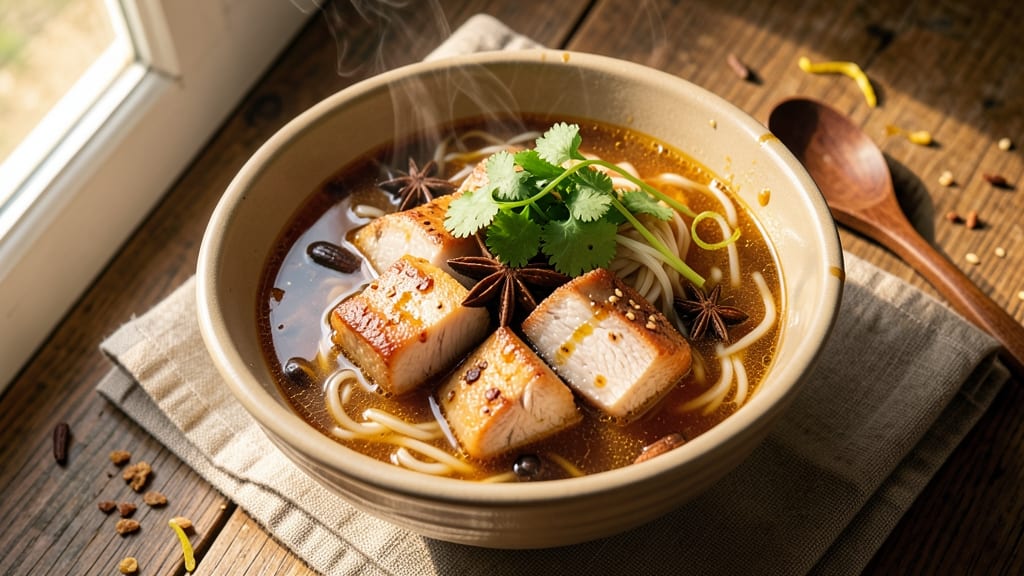
This Cantonese pork soup recipe delivers the comforting warmth of a Hong Kong street stall in your own kitchen. The secret lies in the five-spice broth—fragrant with star anise, cinnamon, and cloves—that transforms simple pork into melt-in-your-mouth perfection.
I've perfected this technique over years of cooking for my family, ensuring every bowl is packed with authentic flavor and tender meat.
The dish begins with pork belly or shoulder, simmered low and slow until it practically falls apart. Meanwhile, rice noodles soak up the aromatic broth, creating a silky texture that balances the rich pork.
What makes this recipe special is the harmony of flavors—sweet, savory, and subtly spiced—all achieved with just a handful of ingredients and proper technique.
By the time you're done, you'll have a steaming bowl of Cantonese pork soup with tender pork pieces, fragrant broth, and delicate rice noodles that melt in your mouth.
The aroma alone will have everyone gathering around your table, and the first spoonful delivers that perfect balance of richness and lightness that defines this classic dish.
This recipe serves four and takes about 90 minutes to prepare, but the waiting is worth it. Serve with a side of pickled vegetables or steamed greens for the full experience. Let's get cooking!
Ingredients for cantonese pork soup
Fragrant spices, tender pork, and silky noodles—this Cantonese pork soup needs just 15 ingredients.
| Ingredient | Amount | Notes |
|---|---|---|
| Pork Belly 🥓 | 1 ½ lb | Skin-on, cut into 1-inch cubes |
| Rice Noodles 🍜 | 8 oz | Wide or medium, uncooked |
| Star Anise 🌿 | 2 whole | For authentic five-spice aroma |
| Cinnamon Sticks 🌿 | 2 whole | 2-inch pieces for infusion |
| Cloves 🌿 | 4 whole | Lightly crushed for depth |
| Dried Ginger 🌿 | 1 tbsp | Ground or thinly sliced |
| Soy Sauce 🍶 | ½ cup | Light or all-purpose |
| Shaoxing Wine 🍷 | ¼ cup | Or dry sherry in a pinch |
| Brown Sugar 🍚 | 2 tbsp | For subtle sweetness |
| Garlic Cloves 🧄 | 6 cloves | Smashed for intense flavor |
| Green Onions 🧅 | 4 whole | White and green parts separated |
| Sesame Oil 🫒 | 1 tbsp | Toasted for finishing |
| Water 💧 | 6 cups | For broth base |
| Salt 🧂 | 1 ½ tsp | Adjust to taste |
| White Pepper 🌶️ | ½ tsp | For subtle heat |
The pork is everything here. Pork belly gives that melt-in-your-mouth texture, but shoulder works too—just trim excess fat. Look for thick-cut pieces at Asian markets or the meat counter; they often have it pre-cut. The star anise, cinnamon, and cloves are non-negotiable for that classic five-spice aroma. Penzeys Spices has great whole spices, but the bulk bins at Walmart or H Mart work too. Toast the spices lightly in a dry pan for 30 seconds before adding to the broth—this wakes up their flavors.
No Shaoxing wine? Dry sherry or even a splash of rice vinegar works in a bind, though the flavor will be slightly different. The rice noodles should be wide or medium—Vietnamese-style from Trader Joe's or 99 Ranch are my go-tos. For the garlic, smash the cloves with the flat side of your knife instead of mincing—this keeps the oils intact. The green onions add freshness, but if you're short on time, scallions or chives work. And if you can't find sesame oil, toasted sesame seeds sprinkled on top give a similar nutty finish.
The broth keeps for 3 days in the fridge, and the pork gets even more tender. Reheat gently on low—no boiling, or the noodles will turn to mush. For extra flavor, save the spices and pork pieces, strain the broth, and reuse it for another round. The noodles? Soak them in warm water for 5-7 minutes before adding to the soup—this prevents them from turning gummy. Double the recipe and freeze portions for lazy days; it's even better reheated.
Why You'll Love This Recipe
- One-Pot Magic: I swear by this—just simmer the pork belly with star anise and cinnamon, then toss in noodles at the end. No extra pots, no extra stress, and the broth gets richer while you do nothing but stir occasionally.
- Spiced Perfection: That warm, earthy aroma from cloves and star anise? It’s like a hug in a bowl. The pork belly stays tender but crispy in spots, and the noodles soak up every last bit of that fragrant broth.
- Lunchbox Hero: Between us, this is my go-to for meal prep. Reheat the soup, pack it with extra noodles, and it’s a hearty lunch that doesn’t taste like leftovers. (Yes, even on a Tuesday night.)
- Budget Warmth: Pork belly might sound fancy, but it stretches further than you’d think—especially when you’re simmering it low and slow. A single cut feeds four, and the spices cost pennies. Comfort food that doesn’t break the bank.
Step-by-step instructions for Cantonese pork soup
Here's how to build a fragrant, aromatic broth that perfectly balances sweet, salty, and spiced notes.
Prepare the Pork Belly and Spice Infusion
Cut the 1.5 lb pork belly into 1-inch cubes, leaving the skin on for extra flavor and texture. In a large pot, combine the pork with the 6 cups water, 2 whole star anise, 2 whole cinnamon sticks, 4 whole cloves, and 1 tbsp dried ginger. Bring to a boil over medium-high heat, then reduce to a simmer for 20 minutes. This initial simmer helps release the pork's natural oils and infuses the broth with the warm, earthy spices.
Here's the thing—don't rush this step. The spices need time to meld into the broth. You'll notice the water turn cloudy as the pork releases collagen and fat, which will later create a naturally rich, velvety texture. Keep the lid slightly ajar to allow excess steam to escape, preventing the broth from becoming too cloudy.
Build the Flavor Base
After the initial simmer, skim off any foam that rises to the surface—this ensures a clear, clean broth. Add the 6 smashed garlic cloves, 0.5 cup soy sauce, 0.25 cup Shaoxing wine, and 2 tbsp brown sugar. Stir gently to combine, then increase the heat to medium-high and bring the broth back to a boil. Once boiling, reduce the heat to medium-low and let it simmer uncovered for 45 minutes. This slow simmer allows the pork to tenderize fully while developing deep, complex flavors.
You'll smell the aromatic blend of garlic, soy, and wine as it infuses into the broth. The pork should be fork-tender by now, and the broth should have a rich, amber color. If it looks too thin, don't worry—the rice noodles will absorb some of the liquid later, creating the perfect consistency.
Finish the Broth and Prepare the Noodles
Remove the pork from the broth and let it cool slightly. Strain the broth through a fine-mesh sieve into a clean pot, pressing gently on the solids to extract every last drop of flavor. Return the strained broth to the pot and add the 1.5 tsp salt and 0.5 tsp white pepper. Taste and adjust the seasoning—you want a balance of salty, sweet, and subtle spice. Simmer the broth gently for 10 minutes to let the flavors meld.
While the broth finishes, prepare the 8 oz rice noodles by soaking them in a bowl of hot water for 10-15 minutes until pliable but still slightly firm. They should be soft enough to eat but not mushy. Drain and set aside, ready to be added to the soup just before serving.
Assemble and Serve
Return the pork to the pot and bring the broth to a gentle simmer. Add the drained rice noodles and let them cook in the hot broth for 2-3 minutes, just until they're fully tender. Divide the pork and noodles among 4 bowls, then ladle the hot broth over the top. Finish each serving with a drizzle of 1 tbsp toasted sesame oil and the white and green parts of the 4 green onions, separated and arranged on top for garnish.
Serve immediately while the noodles are hot and the broth is steaming. The contrast of the silky noodles, tender pork, and fragrant broth makes every spoonful a perfect balance of textures and flavors. The sesame oil adds a nutty finish, tying everything together. This soup is best enjoyed fresh, so don't wait too long before diving in!
Pro Tips For Making Cantonese Pork Soup
- CRISP THE BELLY FIRST: Pork belly needs a head start—sear it skin-side down in a dry pot until the fat renders and the skin turns deep golden (about 8-10 minutes). I learned this the hard way: skipping this step means soggy, greasy pork instead of that crispy, aromatic base the soup craves.
- SIMMER SPICES LOW: Toss star anise, cinnamon, and cloves into the broth after the pork belly has cooked 15 minutes—otherwise, they’ll turn bitter. Keep the heat at a bare simmer (just bubbles breaking, not rolling) or they’ll overpower the soup with harsh, medicinal notes.
- CUT NOODLES LAST: Soak rice noodles in hot broth for 2-3 minutes, then drain and rinse quickly under cold water. Adding them directly to the simmering pot turns them mushy—this way, they stay firm and soak up flavor without falling apart.
- USE THE FAT: Don’t drain that rendered pork belly fat! Skim off the excess, but leave 2-3 tablespoons in the pot—it adds richness and helps emulsify the broth. (Yes, even if you’re watching calories, this is where the soul of the dish lives.)
Best sauces and condiments for cantonese pork soup
Five-Spice Broth Base
The soul of this soup lies in its five-spice broth, where star anise, cinnamon, and cloves create that signature aromatic depth. I always toast these spices lightly in a dry pan for 30 seconds before adding them to the broth—this step is non-negotiable.
The Shaoxing wine adds a subtle complexity, while light soy sauce provides the perfect balance of saltiness. For extra richness, I sometimes add a splash of oyster sauce (about 1 tbsp) after the pork has simmered for 30 minutes—it deepens the umami without overpowering the delicate flavors. 🌿
Sesame Oil Finish
A drizzle of toasted sesame oil at the end is what transforms this soup from good to extraordinary. I use Kadoya brand for its rich, nutty flavor, but any high-quality sesame oil will work. Add it just before serving—1 tbsp per bowl—so the aroma doesn’t dissipate.
For an extra touch, sprinkle toasted sesame seeds on top for crunch and visual appeal. If you’re feeling adventurous, a pinch of Sichuan peppercorn powder (about ¼ tsp) adds a subtle numbing spice that pairs beautifully with the pork. 💫
Pickled Vegetable Topping
For a tangy contrast, serve this soup with quick-pickled vegetables—think cucumber, carrot, and daikon radish sliced thin and marinated in rice vinegar, sugar, and a pinch of red pepper flakes. I make a big batch and keep it in the fridge for up to 5 days.
The acidity cuts through the richness of the pork and broth, balancing every bite. If you’re short on time, store-bought kimchi works too—just drain it well before serving. 🥒
Chili Oil Heat Boost
Want to add some heat? A swirl of chili oil (about ½ tsp per bowl) elevates the dish without overpowering it. I like to make my own by infusing neutral oil with dried chili flakes and a few whole Sichuan peppercorns, but store-bought works in a pinch.
For a smoky twist, add a pinch of smoked paprika to the oil before drizzling. This is especially good if you’re serving the soup to guests who enjoy a little kick. 🌶️
Ginger-Scallion Oil
For a fresher, brighter finish, try ginger-scallion oil—simmer 2 tbsp neutral oil with 1 tbsp minced ginger and 2 tbsp chopped scallions for 2-3 minutes until fragrant. Strain out the solids and drizzle over the soup just before serving.
This adds a bright, herbal note that complements the richness of the pork. I often make a big batch and keep it in the fridge for up to 3 days—it’s perfect for other Asian dishes too. 🧄
Nutrition facts
Frequently asked questions
Can I substitute pork belly with another cut?
Pork shoulder works beautifully—just trim excess fat to ¼-inch thickness. For extra tenderness, cut it into 1.5-inch cubes and simmer 10 minutes longer. Pork loin is leaner but requires 30 minutes less cooking time—test doneness with a fork. Avoid fatty cuts like ribs, as they can make the broth greasy.
How do I make the broth clearer?
Skimming foam during the initial 20-minute simmer removes impurities. For extra clarity, strain the broth through a cheesecloth-lined sieve after removing the pork. If it's still cloudy, simmer uncovered for 15 minutes—this evaporates excess fat. Pro tip: Use bone-in pork for richer flavor, but remove bones before straining.
What if I don't have Shaoxing wine?
Use dry sherry (like Kirkland) or rice vinegar (reduce to 1 tbsp). For depth, add 1 tsp fish sauce—it enhances umami without overpowering. Avoid sweet wines like mirin, as they'll make the broth cloying. The key is acidity and complexity, not sweetness.
Can I make this soup in an Instant Pot?
Yes! Sauté spices in the pot for 1 minute, then add pork and water. Cook on High Pressure for 30 minutes, then quick-release. Strain and reduce broth on Sauté mode for 10 minutes to thicken. Noodles cook in 2 minutes of broth immersion—just like stovetop. The pressure method cuts cooking time by 45 minutes!
Why did my noodles turn mushy?
Over-soaking or reheating noodles causes mushiness. Soak them in hot water for 5-7 minutes max, then drain immediately. When adding to soup, cook for only 2-3 minutes—they'll finish cooking in the hot broth. For reheating, add 1 tbsp cold water per bowl and simmer 2 minutes to restore texture.