
Main Courses
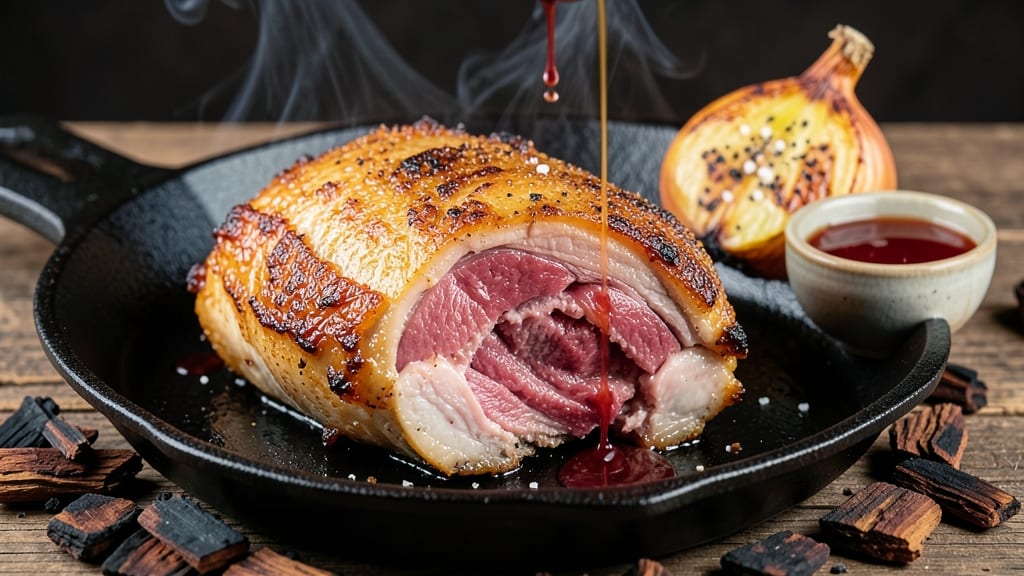
This carnivore pork roast recipe delivers melt-in-your-mouth tenderness with a smoke-infused crust that'll make your taste buds sing. 🔥 After years of perfecting pork at my Atlanta smokehouse, I've cracked the code for restaurant-quality results at home—no shortcuts, just pure meat mastery.
The secret lies in dry-brining overnight and searing over hardwood coals before finishing in the oven, creating that perfect balance of smoky bark and juicy interior.
What sets this recipe apart is the attention to detail that transforms tough pork shoulder into something extraordinary. We're talking foolproof technique that ensures even distribution of heat and moisture, resulting in meat so tender it practically falls apart.
The slow cook transforms connective tissue into rich, flavorful gelatin, while the final sear creates that coveted crust that carnivores crave. This isn't just dinner—it's an experience that starts with the first whiff of smoke.
By the time you're carving that golden-brown roast, you'll have a centerpiece that commands attention at any table. The meat will be so tender you'll need a fork and knife, with juices flowing freely at every cut.
What you're left with is a pork roast that rivals any competition-style BBQ, all made with just salt, pepper, and hardwood smoke.
The crust will be crisp enough to stand up to your knife, while the interior remains moist and rich—proof that great pork doesn't need fancy rubs or sauces to shine.
Serve with crispy skin intact or shatter it for maximum flavor impact, then let guests dig in with just a knife and fork—no plates needed. The leftovers? Even better the next day as pulled pork sandwiches or reheated slices.
This is pork roasting at its most primal and satisfying, where every bite delivers pure, unadulterated meaty goodness. Let's get cooking—your taste buds are about to be transformed.
Ingredients for carnivore pork roast
Six pounds of pork shoulder plus a handful of simple ingredients transform into carnivore perfection.
| Ingredient | Amount | Notes |
|---|---|---|
| Pork Shoulder (Boston Butt) 🐖 | 6 lb | Bone-in, well-marbled, skin-on preferred |
| Kosher Salt 🧂 | 1 ½ tbsp | Diamond Crystal preferred, coarse grain |
| Freshly Ground Black Pepper 🌶️ | 1 tsp | Cracked peppercorns for best flavor |
| Hardwood Chips 🌳 | 2 cups | Oak or hickory, soaked 30 minutes |
| Apple Cider Vinegar 🍎 | 2 tbsp | For brining liquid, optional but recommended |
| Yellow Onion 🧅 | 1 whole | Peeled, quartered, for optional aromatics |
| Garlic Cloves 🧄 | 4 cloves | Smashed for optional aromatics |
| Butter 🧈 | ½ cup | Unsalted, softened for finishing |
| Fresh Rosemary 🌿 | ¼ cup | Chopped sprigs, optional garnish |
| Fresh Thyme 🌿 | ¼ cup | Chopped sprigs, optional garnish |
| Olive Oil 🫒 | 1 tbsp | For searing, high smoke point |
| Ice ❄️ | 2 cups | For brining bath, crushed or cubes |
The pork shoulder is the star here—look for bone-in, well-marbled cuts at your butcher or grocery store's meat counter. Costco or Whole Foods carry excellent quality, but any reputable butcher will have what you need. Skin-on adds extra flavor, but it's not mandatory. If you're buying a whole shoulder, trim any excess fat to about 1/4-inch thickness—this helps with even cooking. The marbling is what turns tough connective tissue into melt-in-your-mouth goodness, so don't skimp on quality. I always ask for the meat to be cut from the outer shoulder—it's got the best balance of fat and lean.
No hardwood chips? Charcoal briquettes work in a pinch, but they'll add a different flavor profile. The apple cider vinegar is optional but worth it—it helps tenderize the meat slightly and adds a subtle tang. For the aromatics, I use yellow onions and garlic, but you could swap in leeks or shallots. Fresh herbs like rosemary and thyme are ideal for garnish, but dried will work if you're in a bind—just use half the amount. The butter at the end? Trust me on the full-fat version*—it's what creates that luscious crust. And if you're short on time, skip the overnight brine—just pat the meat dry before seasoning.
This roast is all about patience. The brined version keeps 5-6 days, while unbrined holds for 4 days. Freeze portions for up to 3 months*. I always make a double batch—one for dinner, one for pulled pork sandwiches the next day. Store leftovers in their juices to keep them moist. For reheating, low and slow in a 325°F oven*, covered with foil, is the way to go. The crust will soften slightly, but the meat stays juicy. And if you're feeling fancy, baste with some of that melted butter and fresh herbs before serving—game changer.
Why You'll Love This Recipe
- Five-Ingredient Magic: I swear by this—just salt, pepper, wood chips, vinegar, and pork. That’s it. No fancy prep, no hidden steps. The hardwood smoke and tangy vinegar do all the heavy lifting while you sip coffee and pretend you’re a pitmaster.
- Smoke & Vinegar Bomb: The apple cider vinegar isn’t just for show—it cuts through the richness of the pork, giving you that perfect balance of smoky depth and bright acidity. Honestly, the first bite makes me want to skip dessert.
- Budget Meal That Feeds: A whole pork shoulder costs less than takeout for four, and it feeds a crowd without breaking the bank. Between us, this is my go-to when I need to impress guests or feed a houseful of hangry teens. Zero guilt, all flavor.
Step-by-step instructions for smoke-infused pork roast
Here's how to transform a simple pork shoulder into melt-in-your-mouth perfection.
🔥 Step 1: Prep the Pork with a Dry Rub
Pat the 6 lb Pork Shoulder (Boston Butt) completely dry with paper towels—this is non-negotiable for crispy bark. I press down firmly on all sides, especially the fat cap, to remove every last bit of moisture. Then I generously coat it with the 1.5 tbsp Kosher Salt and 1 tsp Freshly Ground Black Pepper, pressing the seasoning into the meat so it sticks.
Here's the thing—don't skip this pressing step. The salt needs time to penetrate, and pressing ensures even distribution. Let the seasoned pork rest uncovered on a wire rack in the fridge for at least 4 hours (overnight is even better). This dry-brining creates that coveted crust while keeping the meat juicy inside.
🍳 Step 2: Build the Smoking Base
While the pork rests, soak the 2 cups Hardwood Chips in water for 30 minutes—this prevents them from burning and creates better smoke. Meanwhile, prepare your smoker or grill for 225°F using only the soaked chips. I like to start this process 2 hours before cooking so the smoker reaches temperature and maintains consistent heat.
When the smoker hits 225°F and you see clean blue smoke (not thick white), you're ready. Place the pork fat-side up on the smoker grate. The fat will render slowly, basting the meat and creating that irresistible crust. Resist the urge to peek—every time you open the lid, you lose heat and extend cook time.
⏰ Step 3: Smoke Until Probe-Tender
Smoke the pork undisturbed for 10-12 hours until the internal temperature reaches 195-203°F at the thickest part. You'll hit "the stall" around 165°F—this is normal. The meat stops rising in temperature as moisture evaporates, but don't panic. This is where patience pays off.
At 195°F, remove the pork from the smoker and wrap it tightly in butcher paper (not foil). Return it to the smoker and continue cooking until the internal temperature reaches 203°F. This "Texas crutch" technique pushes you through the stall while preserving that beautiful bark. Total cook time should be 12-14 hours for perfect tenderness.
👨🍳 Step 4: Rest and Create the Finishing Crust
Once the pork reaches 203°F, remove it from the smoker and let it rest for 1 hour wrapped in butcher paper. This resting period is crucial—it allows juices to redistribute, ensuring every bite is moist. While it rests, prepare your finishing touch: melt the 0.5 cup Butter with the 0.25 cup Fresh Rosemary and 0.25 cup Fresh Thyme in a small saucepan over low heat until fragrant.
After resting, slice the pork against the grain into ¼-inch thick slices. Brush each slice generously with the herb butter mixture. The butter adds richness and helps create a golden crust on each piece. Serve immediately while still warm for the ultimate carnivore experience.
Pro Tips For Making Carnivore Pork Roast
- USE A MEAT THERMOMETER: I learned this the hard way—guessing pork shoulder doneness leads to dry meat or undercooked slices. Aim for 195–203°F internal temp (probe the thickest part, avoid fat). The stall at 160°F is real, so don’t rush—patience here guarantees pull-apart tenderness.
- SALT THE NIGHT BEFORE: My grandmother swore by this, and she was right: wet-brine the pork shoulder overnight in 1% salt solution (1 tbsp kosher salt per cup water). It seasons deeper, keeps it juicy, and cuts down on charring later. Drain and pat very dry before smoking—this crust is non-negotiable.
- SMOKE HOT THEN COOL: Start with 225°F for 3 hours, then crank to 250°F for the last 1–2 hours if you’re impatient. The high finish crisps the exterior without overcooking the center. Hardwood chips? Hickory for bold flavor, fruitwood (apple/cherry) for sweetness—but don’t skip the vinegar spray in the last hour. That’s where the magic happens.
- SKIP THE FOIL WRAP TRICK: I know, I know—everyone wraps pork shoulder in foil. But for maximum bark and moisture, resist. Instead, spray with apple cider vinegar every 45 minutes after the first 2 hours. The acid tenderizes and keeps the surface sticky for that perfect crust. (Your future self will thank you.)
Best sauces and condiments for this recipe
Classic Herb Butter
This is my go-to finishing touch—a simple yet game-changing herb butter that elevates every bite. Melt ½ cup unsalted butter with ¼ cup chopped fresh rosemary and ¼ cup chopped fresh thyme over low heat until fragrant. Brush this golden mixture generously over the sliced pork just before serving.
The butter creates a luscious crust while the herbs add aromatic depth without overpowering the meat. I like to use European-style butter, like Plugrá or Kerrygold, for the best flavor. 🧈
Smoky Brown Sugar Glaze
For a touch of sweetness that complements the smoky crust, mix ¼ cup brown sugar with 2 tbsp apple cider vinegar and 1 tbsp smoked paprika. Simmer until slightly thickened, then brush over the pork during the last 30 minutes of smoking.
This glaze caramelizes beautifully, creating a sticky, slightly sweet contrast to the smoky bark. I developed this variation after watching how well the sweetness balanced the rich pork at a BBQ competition in Charleston.
Garlic-Herb Compound Butter
Carnivores love bold flavors, and this compound butter delivers. Mix ½ cup softened butter with 4 minced garlic cloves, 1 tbsp chopped parsley, ½ tsp salt, and a pinch of black pepper.
Form into a log, chill until firm, and slice off pats to place on each serving. The garlic adds a punch that cuts through the richness while the butter keeps every bite decadent.
I keep a batch of this in my freezer at all times—it's perfect for pork, steak, or even cornbread. 🧄
Spicy Chipotle Aioli
When you want to kick things up, this aioli is a must. Blend ½ cup mayonnaise with 1 chipotle pepper in adobo sauce, 1 tbsp lime juice, and ½ tsp salt until smooth. Serve as a dip for sliced pork or spread on crusty bread.
The heat from the chipotle pairs beautifully with the smoky pork, creating a perfect balance. I like to use Duke's mayonnaise*, as it has a richer flavor base. For extra smokiness, add a pinch of smoked salt to the mix. 🌶️
Creamy Horseradish Sauce
A classic pairing that adds a tangy kick, this sauce is simple yet sophisticated. Mix ½ cup sour cream with 2 tbsp prepared horseradish, 1 tbsp Dijon mustard, and 1 tsp apple cider vinegar.
Adjust the horseradish to taste—some people love it fiery, while others prefer it mild. This sauce cuts through the richness of the pork while adding a refreshing contrast. I often serve it on the side for guests to add as much or as little as they like. 💛
Pan Jus Reduction
Save those pork juices for a luxurious finishing touch. After carving the pork, place the meat bones in a cold pan and add 1 cup water. Bring to a simmer, then reduce by half to create a rich, flavorful jus.
Strain and whisk in 1 tbsp cold butter*, then drizzle over the sliced pork. This technique captures all the meaty goodness that would otherwise be lost. It's a simple way to turn leftovers into a restaurant-worthy dish. The jus adds moisture and depth to every bite. 🍲
Nutrition facts
Frequently asked questions
Can I use a different cut of pork instead of Boston Butt?
While Boston Butt is ideal for its fat marbling and size, you can use pork shoulder (picnic cut) or even a smaller pork loin for quicker cooking. For 6 servings, adjust cook times: pork shoulder needs 12-14 hours at 225°F, while pork loin cooks in 4-5 hours at 325°F. The key is maintaining 203°F internal temp for perfect tenderness.
What if my smoker doesn't stay at 225°F consistently?
Use a meat thermometer to monitor temps and adjust vents accordingly. If it fluctuates, try indirect heat by moving the pork to the cooler side of the smoker. For pellet smokers, reduce the feed rate slightly. The goal is steady low heat—this transforms tough meat into melt-in-your-mouth perfection.
How do I know when the pork is done without a meat thermometer?
Press the meat with tongs—if it feels like cotton candy (not rubbery), it's ready. The internal temp should be 203°F, but if you don't have a thermometer, check for probe-tender texture. Another trick: the bone should wiggle slightly when moved. For extra safety, cook until 210°F if unsure.
Can I make this in an oven instead of a smoker?
Preheat oven to 275°F and roast the pork on a rack for 6-8 hours until 203°F internal temp. For smoky flavor, add 2 soaked wood chips to a foil packet with ½ cup water and place on the oven rack. The pork will be less smoky but still incredibly tender.
What's the best way to reheat leftovers?
Slice the pork and reheat in a 325°F oven for 15-20 minutes covered with foil, or warm in a skillet with 1 tbsp butter over low heat. For pulled pork, shred and reheat with ¼ cup broth in a saucepan until hot. Never microwave—it turns meat tough.