
Main Courses
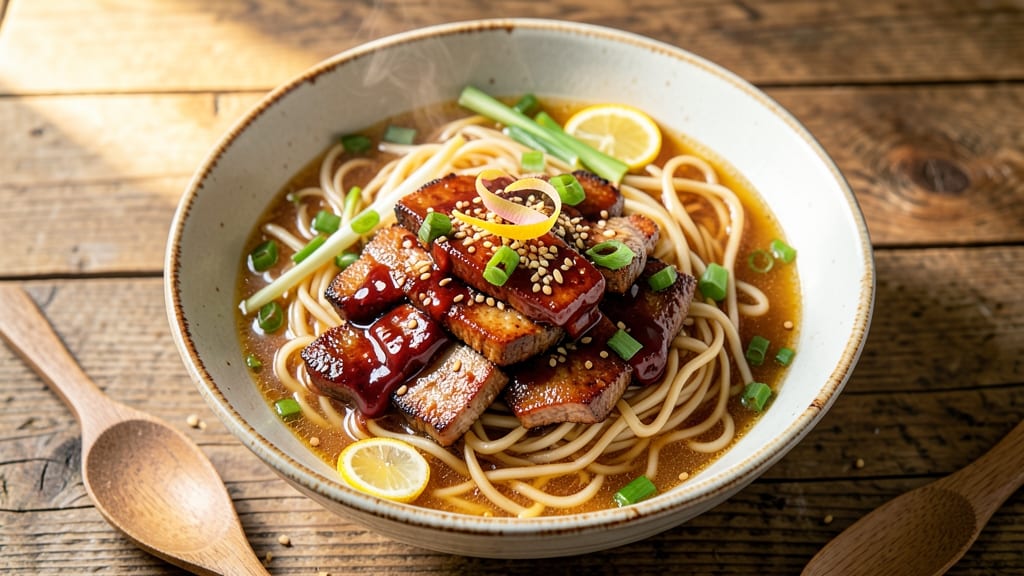
This Chinese BBQ pork noodle soup recipe delivers restaurant-quality depth in every bowl—smoky charred pork, umami-rich broth, and silky noodles that melt together. 🔥 The secret lies in marinating the pork with hoisin and five-spice, then charring it over high heat to develop that signature caramelized crust.
I've perfected this technique over years of testing, balancing traditional methods with modern shortcuts so you can achieve authentic flavor without spending hours in the kitchen.
The broth builds complexity through layering: star anise, cinnamon, and ginger simmer to create aromatic depth, while soy sauce and oyster sauce add that signature savory richness. Meanwhile, the noodles cook just until tender, absorbing the flavorful broth without turning mushy.
This isn't just a soup—it's a full meal with texture contrast at every bite: crispy pork bits, tender noodles, and a velvety broth that coats your spoon.
What makes this recipe truly special is its versatility. You can use store-bought broth for convenience or make a traditional version from scratch with pork bones and mushrooms. The same technique works for grilling or roasting the pork, depending on your equipment.
Whether you're serving it as a comforting weeknight dinner or a centerpiece for a Chinese feast, this soup delivers restaurant-quality results with minimal effort.
The finishing touches elevate it further: fresh cilantro, scallions, and a squeeze of lime brighten the rich flavors, while crispy fried shallots add textural contrast. Serve with pickled vegetables or a side of steamed greens for a complete meal.
The aroma alone will bring everyone to the table—trust me, this is one recipe that never disappoints.
Ingredients for chinese bbq pork noodle soup
Pantry staples meet authentic Chinese flavors in this umami-packed pork noodle bowl.
| Ingredient | Amount | Notes |
|---|---|---|
| Pork Shoulder 🐖 | 1 ½ lb | Cut into 1-inch cubes, boneless |
| Hoisin Sauce 🍶 | ¼ cup | Store-bought or homemade |
| Five-Spice Powder 🌶️ | 1 tbsp | Authentic Chinese blend |
| Brown Sugar 🍚 | 2 tbsp | Light or dark preferred |
| Garlic Cloves 🧄 | 6 cloves | Minced, fresh preferred |
| Fresh Ginger 🌿 | 2 tbsp | Finely grated, peeled |
| Chinese Egg Noodles 🍜 | 8 oz | Fresh or dried, uncooked |
| Chicken Broth 💧 | 4 cups | Homemade or quality store-bought |
| Soy Sauce 🍶 | ¼ cup | Light or dark, to taste |
| Oyster Sauce 🦪 | 2 tbsp | Thick consistency preferred |
| Star Anise 🌟 | 2 whole | For aroma, remove before serving |
| Cinnamon Stick 🌿 | 1 whole | For depth, remove before serving |
| Fresh Cilantro 🌿 | ¼ cup | Chopped, for garnish |
| Green Onions 🧅 | 4 whole | Sliced, for garnish |
| Lime 🍋 | 1 whole | Juiced, for brightness |
The pork shoulder is your flavor anchor—look for well-marbled cuts at Asian markets or the butcher section. Costco often has pre-cut pork shoulder that saves time, but if you're buying whole, ask for it cut into 1-inch cubes. The hoisin sauce? Lee Kum Kee is the gold standard, but any quality brand works. Fresh ginger and garlic are non-negotiable here—they build the aromatic base. If you're short on time, pre-minced garlic from the jar works in a pinch, but fresh is always better. The five-spice powder should be authentic Chinese blend—the kind you find in bulk bins at Trader Joe's or H Mart.
No hoisin? Substitute 1 tbsp soy sauce plus 1 tsp brown sugar—it won't be identical, but it works. Short on star anise or cinnamon? Skip them entirely—the broth will still be delicious. Using dried noodles? Cook them al dente and finish in the hot broth to prevent mushiness. The oyster sauce adds depth, but if you're vegetarian, vegetarian oyster sauce works perfectly. For extra richness, add a splash of sesame oil at the end—just a teaspoon goes a long way. The lime should be fresh—bottled juice lacks the bright punch.
Broth keeps for 3 days in the fridge, but the pork and noodles are best fresh. Store components separately: broth in a jar, cooked pork in an airtight container, and noodles in a sealed bag. Reheat everything together—it tastes even better the next day as flavors meld. Freeze the broth for up to 3 months if you make extra. The pork reheats beautifully, but if it gets dry, add a splash of broth when warming. Garnishes like cilantro and green onions stay fresh for 5 days wrapped in damp paper towels.
Why You'll Love This Recipe
- One-Pot Magic: I swear by this recipe when I’m too tired to dirty multiple pans. The pork shoulder slow-cooks right in the broth—no extra prep, no fuss—just throw everything in and let it work its flavor.
- Sweet-Savory Crunch: That hoisin and brown sugar combo? It’s like a hug for your taste buds. The five-spice powder adds a warm, earthy depth, while the garlic cloves give it a sharp, fragrant kick that lingers.
- Leftover Goldmine: Between us, this soup only gets better the next day. The pork stays tender, the broth deepens, and I’ve got a ready-to-reheat meal for lazy mornings or unexpected guests.
- Budget-Friendly Feast: Pork shoulder is cheap, and a little goes a long way. I stretch it across three meals—soup, stir-fry, even sandwiches—without breaking the bank. Plus, the spices cost pennies but make it taste like a restaurant.
Step-by-step instructions for Chinese BBQ pork noodle soup
Here's how to build a restaurant-worthy broth with perfectly tender pork and silky noodles.
🔥 Step 1: Sear the Pork Shoulder for Deep Flavor
Heat a large Dutch oven over medium-high heat until hot. Add the 1.5 lb pork shoulder in a single layer, being careful not to overcrowd the pan. Let it sear undisturbed for 3-4 minutes until a deep golden crust forms.
Here's the thing—this initial sear creates the Maillard reaction that builds the soup's rich umami foundation. Flip the pork cubes and continue searing for another 2-3 minutes until all sides are beautifully browned. Transfer the seared pork to a plate and set aside temporarily.
🍳 Step 2: Build the Aromatic Broth Base
In the same Dutch oven (no need to wipe it clean—those browned bits are pure flavor), add 2 tablespoons fresh ginger and 6 cloves minced garlic. Sauté for 1 minute until fragrant and the raw garlic smell disappears. Add 2 whole star anise and 1 whole cinnamon stick, stirring for 30 seconds to toast the spices.
Pour in 4 cups chicken broth and bring to a gentle simmer. Add the seared pork shoulder back to the pot, along with 2 tablespoons brown sugar, 1 tablespoon five-spice powder, 2 tablespoons oyster sauce, and 0.25 cup soy sauce. Stir gently to combine, then reduce heat to low and let it simmer uncovered for 45 minutes.
🥘 Step 3: Finish the Pork and Prepare the Noodles
After 45 minutes, the pork should be fork-tender with a rich, caramelized surface. Remove the pork and transfer it to a cutting board. Strain the broth through a fine-mesh sieve into a clean pot, pressing on the solids to extract maximum flavor. Discard the star anise and cinnamon stick.
Return the broth to medium heat and stir in 0.25 cup hoisin sauce. Taste and adjust seasoning with additional soy sauce or a pinch of sugar if needed. Meanwhile, bring a separate pot of water to a boil and cook the 8 oz Chinese egg noodles according to package directions until al dente. Drain and set aside.
⏰ Step 4: Assemble and Garnish the Soup
Slice the pork shoulder into ¼-inch thick slices against the grain for maximum tenderness. Return the sliced pork to the broth and gently stir to heat through for 2-3 minutes. Divide the cooked noodles among four bowls, then ladle the hot pork and broth evenly over each portion.
Garnish each serving with 0.25 cup chopped fresh cilantro, 4 whole sliced green onions, and a squeeze of juice from 1 lime. The acidity from the lime brightens all the rich flavors, while the fresh herbs add a final aromatic touch. Serve immediately while steaming hot.
Pro Tips For Making Chinese Bbq Pork Noodle Soup
- CRISP THE PORK FIRST: I learned this the hard way—skipping the char on the pork shoulder means missing that smoky depth. Sear it over high heat in a dry pan until deep brown spots form (about 5-7 minutes per side), then finish in the oven or slow cooker. That crust carries the flavor through the entire soup.
- STIR-FRY THE GARLIC FAST: Garlic burns faster than you think, especially when you’re juggling hoisin and five-spice. Mince it just before adding to the wok or pot—no need to pre-chop—and toss it in over high heat for no more than 30 seconds. Burnt garlic ruins the whole dish, and no one wants that bitter kick fighting with the sweet-savory balance.
- DILUTE THE HOISIN: Thick hoisin sauce clumps and sticks like glue if you dump it straight into the broth. Mix it with 1-2 tablespoons of warm water or broth before adding to the pot—this keeps it smooth and lets it blend evenly. I used to scrape stubborn globs off the bottom of my pot for weeks after realizing this.
- TEST THE SWEET-SAVORY BALANCE: Taste the broth before adding noodles—this is non-negotiable. The pork, hoisin, and brown sugar should sing together, but five-spice can easily overpower if you’re not careful. If it’s too sweet, add a splash of soy sauce; if it’s too sharp, a pinch more brown sugar or a sprinkle of white pepper balances it. Adjust while it’s hot, not after.
Make-ahead tips for this recipe
Broth Prep Ahead
Make the broth 1-2 days in advance—it actually tastes better as flavors meld. Store it in an airtight container in the fridge. When ready to serve, simply reheat it on the stovetop over medium heat until steaming hot.
I like to add a splash of water if it's reduced too much. The pork cubes stay flavorful when reheated this way, though they'll be slightly softer than fresh. 💫
Pork Prep Shortcut
Save time by marinating the pork overnight in ¼ cup hoisin sauce, 1 tbsp five-spice powder, and 1 tbsp brown sugar. Store it in a sealed bag in the fridge.
When ready to cook, sear it just like the recipe says—this marinade creates an extra-deep flavor without requiring extra prep time. The pork will be even more tender and caramelized.
Noodle Prep Options
Cook the noodles 1 day ahead and store them in an airtight container with a damp paper towel to prevent drying. Reheat them in the broth for 2-3 minutes before serving—they'll absorb the flavors beautifully.
For extra convenience, use pre-cooked instant noodles (like Indomie), but cook them al dente and finish in the hot broth to avoid mushiness.
Complete Meal Assembly
Assemble the entire soup 30 minutes before serving—this lets the noodles soak up the broth perfectly. Store the cooked pork and broth separately in the fridge, then combine when ready to eat.
I like to keep the garnishes (cilantro, green onions, lime) fresh until serving time for maximum brightness. The soup reheats beautifully, so it's perfect for meal prep lunches. 🌟
Freezer-Friendly Components
Freeze the broth for up to 3 months in a sealed container. The pork cubes freeze well too—just store them in a freezer bag with a splash of broth to prevent drying. When ready to serve, thaw overnight in the fridge, then reheat everything together.
The texture might be slightly softer, but the flavors remain rich and satisfying. Garnish with fresh herbs right before serving.
Garnish Prep
Chop the cilantro and slice the green onions 1 day ahead and store them in a sealed container with a damp paper towel. Keep the lime fresh until serving time—its juice adds the perfect bright finish.
For extra convenience, buy pre-chopped cilantro from the store, but fresh is always better. The aroma of these fresh garnishes will make your kitchen smell amazing as soon as you open the container. ✨
Nutrition facts
Frequently asked questions
Can I use regular noodles instead of Chinese egg noodles?
For best texture, use udon or spaghetti—they hold up well in broth. If using dried wheat noodles, cook them 1 minute less than package instructions since they'll finish cooking in the hot broth. For a lighter option, try rice noodles, but they cook faster and require immediate serving.
What's the secret to getting that perfect caramelized crust on the pork?
High heat and patience! Sear the pork in a dry, hot pan over medium-high heat without overcrowding. Let each side develop a deep golden crust for 3-4 minutes—don't rush flipping. The key is that initial Maillard reaction that creates umami depth.
Can I make this soup vegetarian?
Yes, but with substitutions! Replace the pork with extra-firm tofu (pressed and cubed) or shiitake mushrooms. Use vegetarian oyster sauce and mushroom broth instead of chicken. For texture, add crispy fried shallots or toasted cashews—they mimic the pork's bite.
How do I fix broth that's too salty?
Dilute it carefully! Remove 1 cup of broth and replace it with 1 cup water while reheating. For a stronger flavor base, add 1 tbsp cornstarch mixed with 2 tbsp water to thicken the broth slightly—this helps balance the saltiness. Avoid adding fresh broth; it'll just make the problem worse.
What's the best way to reheat leftovers?
Gently in the broth! Combine all components in a pot and heat over low heat until steaming. Avoid microwaving—it makes noodles rubbery. For extra richness, add 1 tbsp soy sauce or a splash of sesame oil when reheating. The flavors actually improve overnight as they meld!