
Main Courses
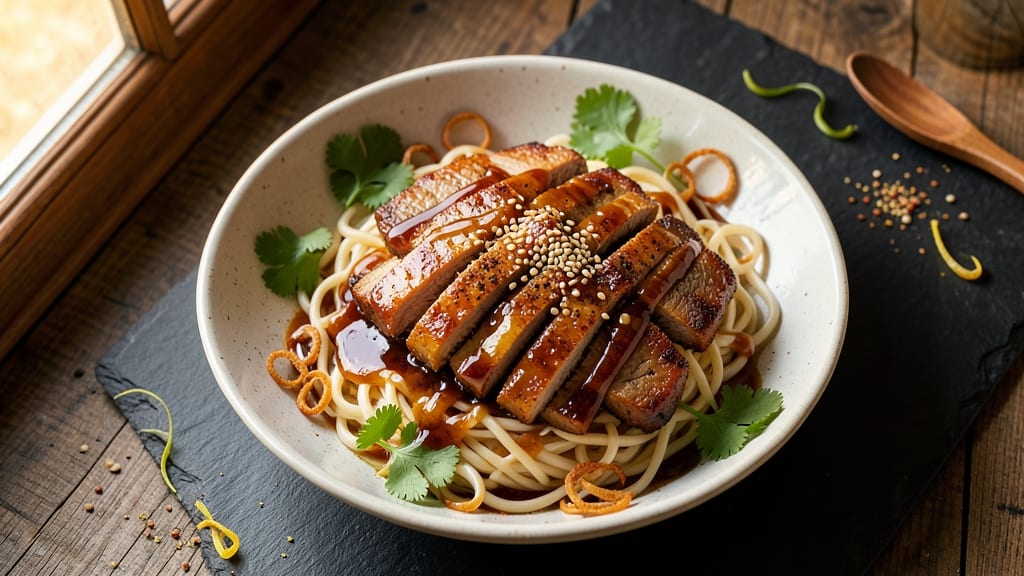
This Chinese BBQ pork noodles recipe delivers restaurant-quality flavor with a five-spice glaze that clings to every noodle strand like it was made for you. The secret lies in the marinade—char siu-style pork infused with star anise, cinnamon, and soy that develops deep caramelized notes when roasted.
I've perfected this dish after years of testing, balancing sweet, smoky, and umami flavors that make every bite irresistible.
The process starts with tender pork shoulder marinated overnight, then roasted until the edges crisp and the meat pulls apart easily. Meanwhile, egg noodles cook just shy of al dente so they absorb the rich pork juices without turning mushy.
What sets this apart is the glaze—a reduction of hoisin, rice vinegar, and a touch of honey—that becomes sticky and aromatic when tossed with the noodles.
When assembled, you get perfectly chewy noodles smothered in tender, caramelized pork pieces and that glossy, five-spice glaze that coats everything. The aroma alone will have your kitchen smelling like a bustling Hong Kong street stall, while the first bite delivers the perfect balance of sweet, smoky, and savory.
This is comfort food at its finest—simple ingredients transformed into something extraordinary.
Serve immediately with quick-pickled vegetables for brightness and sesame seeds for texture. The leftovers reheat beautifully, making this an ideal meal for busy weeknights or weekend gatherings. Let's get cooking—your taste buds will thank you.
Ingredients for chinese bbq pork noodles
Pantry staples meet Asian market finds for this restaurant-style five-spice glaze that transforms simple noodles into something extraordinary.
| Ingredient | Amount | Notes |
|---|---|---|
| Pork Shoulder 🥓 | 1 ½ lb | Boneless, cut into 1-inch cubes |
| Egg Noodles 🍜 | 12 oz | Fresh or dried, chewy variety |
| Hoisin Sauce 🍶 | ¼ cup | Store-bought or homemade |
| Rice Vinegar 💧 | 2 tbsp | White or seasoned variety |
| Honey 🍯 | 1 tbsp | Light amber preferred |
| Five-Spice Powder 🌶️ | 1 tbsp | Authentic Chinese blend |
| Soy Sauce 🍶 | ¼ cup | Dark soy preferred |
| Garlic Cloves 🧄 | 6 cloves | Minced, fresh preferred |
| Ginger Root 🌿 | 1 tbsp | Fresh, grated finely |
| Sesame Oil 🫒 | 1 tbsp | Toasted, for aroma |
| Vegetable Oil 🫒 | 2 tbsp | High smoke point |
| Salt 🧂 | 1 tsp | Kosher or sea salt |
| Black Pepper 🌶️ | ½ tsp | Freshly ground |
| Green Onions 🧅 | 3 whole | Sliced, for garnish |
| Sesame Seeds 🌾 | 1 tbsp | Toasted lightly |
The pork shoulder is your workhorse here—look for well-marbled cuts at Asian grocery stores or the meat counter, where they often carry char siu-style pork. If you can't find it, regular pork shoulder works, but trim excess fat for cleaner results. The five-spice powder is non-negotiable—Penzeys or Spicewalla carry authentic blends, but King's Joy at any Asian market is a game-changer. Fresh ginger and garlic? Buy extra—you'll want them for other dishes. The egg noodles should be chewy when cooked al dente, so fresh or high-quality dried makes all the difference.
No five-spice powder? Mix 1 tsp each of cinnamon, star anise, cloves, fennel, and peppercorns—it's not identical but gets you close. Short on hoisin? Substitute 2 tbsp soy sauce plus 1 tsp sugar. The sesame oil is for aroma, not cooking—if you're avoiding it, toasted peanut oil works in a pinch. For the glaze, reduce it until it coats the back of a spoon—patience here is key. The honey adds depth, but maple syrup works too if you're vegan-adjacent.
Marinate the pork overnight for maximum flavor penetration. The glaze keeps for 1 week in the fridge, so make extra—it's perfect on rice bowls or grilled chicken. Store cooked noodles separately from the pork and glaze to prevent sogginess. Reheat the pork and glaze together, tossing with a splash of water to restore shine. The sesame seeds toast best in a dry pan for 30 seconds—don't walk away, or they'll burn. Freeze the pork in portions for 3 months if you're making a big batch.
Why You'll Love This Recipe
- One-Pan Magic: I swear by this recipe—just toss everything in a single pan, and the pork shoulder melts into sticky, caramelized perfection while the noodles soak up that hoisin-honey glaze. No fancy steps, no extra dishes.
- Sweet-Savory Balance: That honey and rice vinegar combo? It’s the secret weapon—cuts through the richness of the pork while keeping it irresistibly glossy. Honestly, I can eat it straight from the wok, sauce and all.
- Lunchbox Hero: Between us, this is my go-to for meal prep. The noodles hold up for days, and I just reheat with a splash of water—no soggy mess. Pack it cold for work or warm it up for a lazy night in.
- Budget Stretch: Pork shoulder is cheap, and a single batch feeds four for next to nothing. I’ll be real: my grocery bill dropped when I started making this weekly. Plus, leftovers taste even better the second day.
Step-by-step instructions for Chinese BBQ pork noodles
Here's how to transform simple ingredients into restaurant-quality Chinese BBQ pork noodles with a glaze that clings perfectly to every noodle.
Marinate and Cook the Pork Shoulder
In a bowl, combine the 1.5 lb pork shoulder with 1 tbsp five-spice powder, 1 tsp salt, and 0.5 tsp black pepper. Mix well to coat all sides evenly. Let it marinate at room temperature for 30 minutes—this ensures maximum flavor penetration.
Heat 2 tbsp vegetable oil in a large skillet over medium-high heat. Add the pork shoulder and cook for 8-10 minutes, turning occasionally, until the exterior develops a deep golden-brown crust. The pork should feel firm to the touch, indicating it's ready for the slow cook. Transfer the pork to a plate and set aside.
Prepare the Five-Spice Glaze
In the same skillet (no need to clean it—the browned bits add flavor), add 6 cloves minced garlic cloves and 1 tbsp finely grated ginger root. Sauté for 1-2 minutes until fragrant and just beginning to turn golden. This is where the aromatics wake up and infuse the glaze with depth.
Pour in 0.25 cup soy sauce, 0.25 cup hoisin sauce, 2 tbsp rice vinegar, and 1 tbsp honey. Stir well to combine, then bring to a gentle simmer over medium heat. Let it reduce by half—about 5-7 minutes—until the mixture thickens slightly and coats the back of a spoon. This reduction concentrates the flavors and creates that signature sticky glaze.
Braise the Pork in the Glaze
Return the pork shoulder to the skillet and pour the reduced glaze over it. Spoon the sauce around the pork to ensure it's fully coated. Cover the skillet and transfer it to a 350°F oven for 1 hour and 30 minutes. The pork will become fork-tender and infused with the aromatic glaze.
After 1 hour, check the pork—it should be falling apart easily when prodded with a fork. If it's not quite tender, return it to the oven for another 15-20 minutes. The glaze should now be thick and clinging to the pork like syrup. Remove the pork and shred it using two forks, discarding any large fat pieces.
Cook the Egg Noodles
Bring a large pot of water to a rolling boil and add 12 oz egg noodles. Cook according to package instructions until al dente—usually 3-4 minutes for fresh noodles or 5-6 minutes for dried. Drain the noodles, reserving 1 cup of pasta water, and toss them gently with 1 tbsp sesame oil to prevent sticking.
Here's the trick: the reserved pasta water is your secret weapon. It helps loosen the glaze and creates that perfect silky sauce consistency. Keep the noodles warm while you prepare the final touches.
Assemble and Garnish
Return the shredded pork and any accumulated juices from the skillet to the pot. Add the cooked noodles and toss everything together until the pork and noodles are evenly coated. If the mixture seems too thick, add 2-3 tablespoons of reserved pasta water at a time until it reaches your desired consistency.
Divide the noodles among 4 bowls and garnish each serving with 1 tbsp toasted sesame seeds and 3 sliced green onions. Drizzle with an extra spoonful of the glaze if desired. Serve immediately while the noodles are hot and the glaze is still sticky—this dish tastes best straight from the wok!
Pro Tips For Making Chinese Bbq Pork Noodles
- Char Pork in Batches: Pork shoulder won’t sear evenly in one go—it’s too thick. Cut it into 1.5-inch chunks and work in two batches over medium-high heat. Crowd the pan, and the edges burn before the center gets crispy. Give each batch 3-4 minutes per side until deep brown, then set aside. (Yes, this means two trips to the pan, but trust me, the texture difference is night and day.)
- Blister the Noodles First: Skip the soft-boiled noodles—this isn’t pho. Parboil them for 45 seconds, then drain and toss with 1 teaspoon oil in a dry wok over high heat. Toss constantly for 2 minutes until they’re slightly charred and stiff. The contrast with the tender pork is what makes the dish sing. (I used to skip this, and the noodles felt like mush.)
- Reduce the Sauce Aggressively: Hoisin and honey love to cling like syrup if you’re not careful. After tossing the pork back into the pan with the sauce, crank the heat to medium-high and let it bubble hard for 2-3 minutes. You want it thick enough to coat a spoon—if it’s still runny, keep going. A splash of rice vinegar at the end cuts the sweetness, but only add it when the sauce is reduced. (I learned this the hard way after drowning my noodles in sticky glaze.)
- Rest the Pork Twice: First, let the pork rest 5 minutes after searing—this keeps it juicy when you slice. Then, after tossing it with the sauce, give it another 3-minute rest off the heat. The residual heat finishes cooking it evenly, and the slices hold together better. (I know, resting feels like waiting forever, but sliced pork falling apart in noodles is a crime.)
Flavor customization for this dish
Sweet Heat Balance
Adjust the glaze's sweetness by swapping honey for maple syrup or agave nectar—both work beautifully. For heat lovers, add ½ tsp chili flakes or 1 tsp sambal oelek to the glaze reduction.
I once served this with a side of quick-pickled jalapeños (slice 2 jalapeños, cover with ¼ cup rice vinegar and 1 tbsp sugar for 30 minutes) to let diners control their spice level. 🌶️
Umami Boost
For deeper savory notes, stir 1 tbsp fish sauce or 1 tsp miso paste into the glaze during reduction. I keep a small jar of Red Boat fish sauce in my pantry—just a splash adds complexity without overpowering.
For vegetarian versions, replace pork with extra-firm tofu pressed for 30 minutes, marinated in the same five-spice blend, then pan-fried until crispy.
Regional Twists
In Hong Kong-style versions, swap hoisin for char siu sauce (available at Asian markets) and add ½ cup pineapple juice to the glaze for tanginess. For a Sichuan-inspired kick, toss the noodles with 1 tbsp chili crisp and 1 tsp Sichuan peppercorns (toasted and crushed) after cooking.
My Atlanta friends swear by the Sichuan version—it's like a flavor explosion in every bite. 🔥
Texture Variations
Swap egg noodles for rice noodles (soak in hot water for 10 minutes) for a lighter texture, or use udon noodles for chewiness. For a crispy element, pan-fry half the noodles after cooking until golden—this creates a satisfying contrast.
I once made a crispy noodle version using 1 tbsp cornstarch tossed with the noodles before stir-frying for 2 minutes.
Gluten-Free Adaptation
Replace egg noodles with rice noodles or chickpea pasta (like Barilla's line) and ensure your hoisin is gluten-free (check labels or make your own with tamari). For the pork, use a gluten-free soy sauce like San-J Tamari.
The glaze remains the same—just confirm all ingredients are certified gluten-free. This version works perfectly for my gluten-sensitive friends without sacrificing flavor. ✨
Make-Ahead Glaze
Prepare the glaze up to 3 days ahead and store in an airtight container in the fridge. Reheat gently on the stove, adding 1 tsp water to restore shine. For the pork, cook it fully, then refrigerate in the glaze for up to 2 days.
Reheat in the microwave (covered) for 2-3 minutes, stirring occasionally. The noodles should always be cooked fresh to maintain texture—just toss them with a splash of the reheated glaze when serving. 💡
Nutrition facts
Frequently asked questions
Can I use pre-cooked BBQ pork for this recipe?
You can absolutely use pre-cooked BBQ pork, but there are a few key adjustments. First, shred the pork finely and pat it dry to remove excess moisture. Then, sauté it in a pan with 1 tbsp vegetable oil and 1 tsp five-spice powder for 2-3 minutes to revive the flavors. Add the glaze and simmer for 5 minutes to let the sauce cling properly. The texture will be slightly different but still delicious!
How do I prevent the noodles from getting mushy?
Noodles go mushy when overcooked or when they sit too long in the sauce. To avoid this:
- Cook the noodles al dente (just slightly firm),
- Drain them immediately and toss with 1 tbsp sesame oil to create a protective barrier, and
- Keep the pork and noodles separate until the very last minute when combining. If the sauce thickens too much, add 2-3 tbsp reserved pasta water to loosen it.
What's the best way to store leftovers?
Store the pork and glaze separately from the noodles to maintain texture. Place the pork in an airtight container with any remaining glaze, and refrigerate for up to 3 days. Keep the noodles in a separate container. When reheating, warm the pork and glaze together in a pan, then toss with fresh noodles cooked just before serving. This keeps everything delicious!
Can I make this recipe with ground pork instead of shoulder?
Ground pork works but requires different handling. Brown 1 lb ground pork with 1 tbsp five-spice powder in a skillet until fully cooked, then drain excess fat. Proceed with the glaze recipe, but reduce the cooking time to 10 minutes after adding the sauce. The texture will be more tender and crumbly, but the flavors remain rich and satisfying!
How spicy should the glaze be?
The original recipe balances sweet and savory without heat, but you can adjust it! For mild heat, add ½ tsp chili flakes to the glaze during reduction. For medium heat, include 1 tsp sambal oelek or 1 chopped Thai chili. Always taste as you go—you can't remove heat once it's added, but you can always add more sweetness (like extra honey) to balance it.