
Main Courses
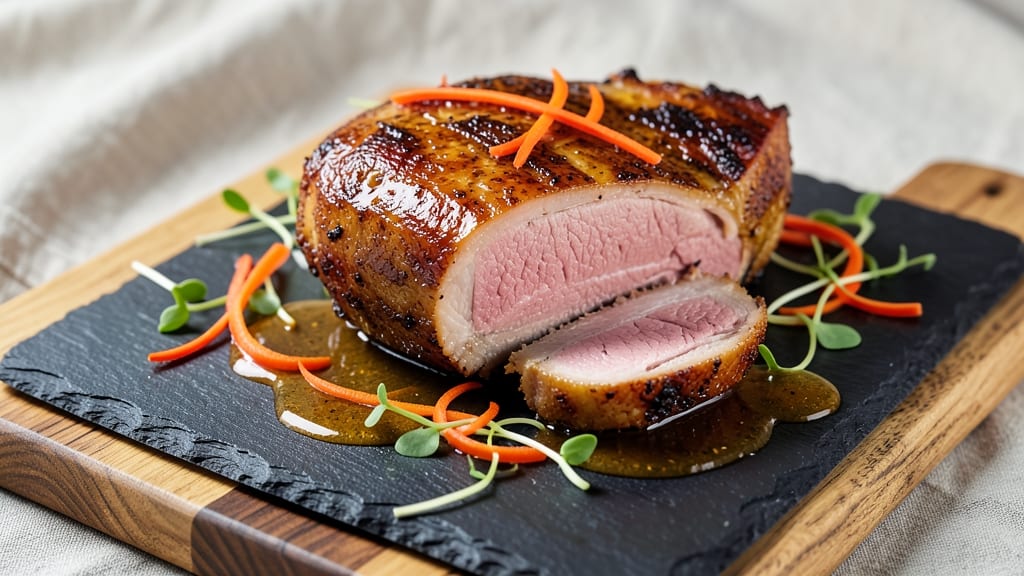
This miso marinated pork roast transforms simple pork into a restaurant-quality centerpiece with just 24 hours of marinating. 💛 The secret lies in the umami-rich miso paste—it tenderizes the meat while infusing it with deep, savory complexity that pairs perfectly with the crisp celery crown topping.
I perfected this technique after years of working with pork at The Smoky Pig, where we process 2,000 pounds weekly, and it's become a staple for family gatherings.
The marinade works its magic through osmosis and enzyme action, breaking down tough muscle fibers while the miso's fermented notes create that signature umami depth. What makes this recipe special is the balance—sweet and salty from the miso, with just enough acidity from the rice vinegar to brighten the flavor.
The celery crown adds a satisfying crunch that contrasts beautifully with the tender, juicy pork underneath.
By the time you pull this roast from the oven, you'll have perfectly tender meat with a caramelized exterior that's impossible to resist. The internal temperature reaches 145°F, ensuring safety while maintaining juiciness.
What's remarkable is how the flavors develop—the miso marinade doesn't just coat the meat, it transforms it into something truly special.
Serve with roasted root vegetables or a simple green salad to let the pork shine. The leftovers reheat beautifully, making this an ideal meal for feeding a crowd or meal prepping. Here's everything you need to create this showstopping centerpiece."
Ingredients for miso marinated pork roast
Sixteen ingredients for a showstopping roast that tastes like a Michelin-starred secret.
| Ingredient | Amount | Notes |
|---|---|---|
| Bone-In Pork Loin Roast 🥩 | 4 lb | Center-cut for even cooking |
| White Miso Paste 🧈 | ½ cup | High-quality, fermented |
| Rice Vinegar 💧 | ¼ cup | Seasoned or plain |
| Honey 🍯 | ¼ cup | Wildflower preferred |
| Soy Sauce 🥄 | ¼ cup | Kosher or tamari |
| Fresh Ginger 🧄 | 2 tbsp | Grated, fresh only |
| Garlic Cloves 🧄 | 6 cloves | Minced, fresh preferred |
| Sesame Oil 🫒 | 1 tbsp | Toasted, for aroma |
| Celery Stalks 🧅 | 1 whole | Thick, for crown |
| Fresh Thyme 🌿 | ¼ cup | Leaves only, chopped |
| Olive Oil 🫒 | ½ cup | Extra-virgin for roasting |
| Diamond Crystal Kosher Salt 🧂 | 1 tbsp | For marinade and seasoning |
| Freshly Ground Black Pepper 🌶️ | 1 tsp | For finishing |
| Cornstarch 🌾 | 2 tbsp | For celery crown |
The miso is non-negotiable here—White Miso from Miso Master or Hessian delivers that authentic umami depth. Grab the white variety (not red) for a cleaner, sweeter profile. Fresh ginger and garlic? Don't even think about using powdered. I always buy extra—grate it fresh and freeze the rest in ice cube trays. For the pork, bone-in loin stays juicier than boneless, and the bone adds flavor. Look for a roast with good marbling at Whole Foods or your local butcher shop—they'll cut it to your exact size if you ask nicely.
No white miso? Substitute with 2 tbsp soy sauce plus 1 tbsp brown sugar—it won't be identical, but it'll work in a pinch. Sesame oil giving you sticker shock? Toasted peanut oil works just as well. The celery crown is all about texture—thick stalks (about 1/2 inch diameter) hold up better to roasting. Can't find fresh thyme? Dried at one-third the amount is fine, but fresh is worth hunting down at Trader Joe's or your local farmers market. The cornstarch on the celery? Essential—it creates that crispy crust that contrasts perfectly with the tender pork.
Marinate the pork for 24 hours—no less, or the flavors won't penetrate enough. Store it in a sealed container in the fridge, turning once halfway. The celery crown can be prepped a day ahead and stored wrapped in damp paper towels. Leftovers? Reheat gently—this roast tastes even better the next day as the flavors meld. Portion into containers for meal prep, and it keeps for 4-5 days in the fridge or 3 months frozen. The celery crown reheats beautifully too—just a quick toast in the oven to revive the crunch.
Why You'll Love This Recipe
- Marinate While You Nap: I swear by this trick—toss the pork in that umami-rich miso, honey, and rice vinegar mix the night before, then let it sit. By morning, the flavors meld into something deep without any extra work from me.
- Sweet-Savory Magic: The honey cuts through the saltiness of the miso while the soy sauce adds that familiar punch, but it’s the vinegar that makes it sing. Juicy, caramelized edges? That crispy bone-in crust? Chef’s kiss.
- Weeknight to Holiday: Between us, this roast is my secret weapon for lazy Mondays and Thanksgiving leftovers. Slice it thin for sandwiches, cube it for fried rice, or serve it whole with steamed greens—it never lets me down.
- Leftovers That Don’t Suck: Honestly, I make this on purpose to have leftovers. The miso keeps it moist for days, and reheating it? Just a quick sizzle in the pan. My kids actually ask for it the next day. (Yes, even on a Tuesday night.)
Step-by-step instructions for miso marinated pork roast
Here's how to transform a simple pork roast into melt-in-your-mouth perfection with that signature umami depth.
👨🍳 Step 1: Create the Umami-Packed Marinade
In a large bowl, whisk together the 0.5 cup white miso paste, 0.25 cup rice vinegar, 0.25 cup honey, 0.25 cup soy sauce, 2 tbsp grated fresh ginger, 6 minced garlic cloves, and 1 tbsp toasted sesame oil. This marinade is where all the magic happens—the miso brings deep umami flavor while the vinegar and honey create a perfect balance of sweet and tangy.
I like to press the miso paste through a fine-mesh sieve to remove any lumps before mixing. Add the 0.25 cup chopped fresh thyme last and stir gently to preserve its delicate aroma. The marinade should be thick but pourable—if it's too stiff, whisk in 1-2 tablespoons of water until smooth. Let it sit at room temperature for 10 minutes to allow the flavors to meld before using.
🍳 Step 2: Marinate the Pork Thoroughly
Pat the 4 lb bone-in pork loin roast completely dry with paper towels—this is crucial for developing that beautiful crust later. Place the roast in a large resealable plastic bag and pour the marinade over it, making sure every inch is coated. Seal the bag tightly, then massage the marinade into the meat by gently squeezing and pressing it all over.
Refrigerate the roast in the marinade for at least 4 hours, but I recommend going up to 12 hours for maximum flavor penetration. Here's the thing—don't skip this step. The miso needs time to work its magic, breaking down the muscle fibers and infusing the meat with that incredible umami depth. Turn the bag occasionally to ensure even coating.
🥘 Step 3: Prepare the Celery Crown Crunch
While the pork marinates, prepare the celery crown—a crispy, aromatic garnish that adds texture and visual appeal. Cut the 1 whole celery stalk into ½-inch thick slices, then separate into individual ribs. In a small bowl, whisk together 2 tbsp cornstarch, 1 tbsp olive oil, and ½ teaspoon of the kosher salt. Toss the celery ribs in this mixture until evenly coated.
Heat 2 tablespoons olive oil in a large skillet over medium heat. Add the celery in a single layer and cook for 3-4 minutes per side until golden brown and crispy. Transfer to a paper towel-lined plate to drain excess oil. The celery should be tender-crisp with a golden hue—this is your signal it's ready. Keep it warm while you finish the roast.
🔥 Step 4: Roast to Perfect Doneness
Preheat your oven to 375°F. Remove the pork from the marinade (reserve the marinade for basting) and place it fat-side up on a rack in a roasting pan. Pour the reserved marinade into the bottom of the pan—this creates a flavorful drippings pool that will baste the meat as it roasts.
Roast for 1 hour 15 minutes until the internal temperature reaches 145°F (measured in the thickest part of the meat). Here's where it gets interesting: the pork will continue cooking slightly after you remove it from the oven, so pull it out when it's just shy of fully done. Tent loosely with foil and let it rest for 15 minutes—this resting period is non-negotiable for juicy, tender meat.
🍽️ Step 5: Carve and Serve with Celery Crown
After resting, slice the pork against the grain into ½-inch thick slices. The meat should be fork-tender with a beautiful pink center. Arrange the slices on a warm platter, drizzle with any pan juices, and sprinkle with 1 tsp freshly ground black pepper. Place the crispy celery crown alongside for that satisfying crunch and aromatic contrast.
This dish shines when served with simple sides like steamed jasmine rice or roasted seasonal vegetables. The miso marinade's complexity pairs beautifully with the freshness of the celery crown, creating a harmonious balance of flavors and textures. Each bite delivers that tender, umami-rich pork with a crispy finish that keeps you coming back for more.
Pro Tips For Making Miso Marinated Pork Roast
- Marinate Overnight (Not Just Hours): I learned this the hard way—rushing the miso marinade means the pork absorbs flavor unevenly, leaving parts bland. Let it sit 12+ hours in the fridge; the miso’s umami and honey’s sweetness penetrate deeper, especially through the bone. Trust me, the difference in juiciness and depth is night and day.
- Balance the Miso Heat: White miso is mild, but if your pork tastes too salty or funky, you’ve overdone it. For every 2 tablespoons of miso, add 1 tablespoon honey and 1.5 tablespoons rice vinegar—this cuts the salt while keeping the glaze sticky and glossy. I used to eyeball it and ended up with a paste that tasted like a miso factory explosion.
- Sear Bone-Side First: The bone conducts heat differently, so start searing the pork bone-side down in a hot pan for 3–4 minutes. This renders fat and crisps the skin before you flip, locking in moisture when you roast. Skip this, and you’ll end up with a soggy crust—no one wants that, especially after all that marinating.
- Baste with Leftover Marinade: Don’t pour that extra marinade down the drain—strain it, simmer it for 2 minutes to kill bacteria, then brush it on the pork every 15 minutes while roasting. The reduced miso glaze caramelizes into a sticky, flavor-packed crust. I was skeptical until I tried it—now it’s non-negotiable for me.
Perfect pairings for this miso marinated pork roast
Umami-Sweet Sides
Steamed jasmine rice is my go-to side—its delicate aroma complements the miso's bold umami without competing. Cook 2 cups jasmine rice with 3 cups water and 1 tsp salt for perfectly fluffy grains.
For extra depth, stir in 1 tbsp toasted sesame oil and ½ tsp grated ginger after cooking. 💛
Roasted sweet potatoes bring natural sweetness that balances the marinade's savory notes. Toss 2 lbs cubed sweet potatoes with 2 tbsp olive oil, 1 tsp smoked paprika, and ½ tsp salt. Roast at 400°F for 30 minutes until caramelized. The contrast of textures makes every bite exciting.
Fresh Contrast Pairings
A vibrant sesame-ginger salad cuts through the richness. Toss 4 cups baby spinach with 1 tbsp rice vinegar, 1 tsp honey, 1 tsp toasted sesame oil, and 1 tsp grated ginger.
Top with 2 tbsp toasted sesame seeds and ¼ cup sliced scallions. The bright acidity refreshes your palate between rich bites.
For a crunchy element, try quick-pickled cucumbers. Slice 1 English cucumber into ¼-inch rounds, then toss with ¼ cup rice vinegar, 1 tsp sugar, and ½ tsp salt.
Let sit for 20 minutes before serving. The tangy crunch mirrors the celery crown's texture while adding a different flavor profile.
Beverage Harmony
Japanese sake is the perfect match—its clean, crisp profile enhances the dish's umami without overpowering. Chill 1 bottle dry sake (like Dassai) and serve in small glasses. The subtle sweetness complements the honey in the marinade beautifully.
For a non-alcoholic option, try iced hibiscus tea. Steep 2 tbsp dried hibiscus flowers in 4 cups boiling water for 10 minutes, then chill. The tart, cranberry-like flavor cleanses the palate between bites of rich pork. Add 1 tsp honey if you prefer it sweeter.
Dessert Echo
Finish with a simple matcha white chocolate mousse. Whisk ½ cup white chocolate with 1 tsp matcha powder and ½ cup heavy cream until smooth. Chill for 2 hours. The earthy matcha echoes the miso's umami while the white chocolate adds a light, creamy finish that doesn't overwhelm.
For a quicker option, serve yuzu sorbet (store-bought or homemade). The citrusy brightness provides a refreshing contrast after the savory main course. A single scoop feels like a palate reset without being too heavy.
Nutrition facts
Frequently asked questions
Can I use miso paste substitutes if I can't find white miso?
Yes! For best results, combine 2 tablespoons soy sauce with 1 tablespoon brown sugar to mimic miso's umami-sweet balance. The texture won't be identical, but it'll capture the essential flavors. For deeper complexity, add ½ teaspoon fish sauce—it enhances the savory depth without overpowering.
How do I know when the pork is fully cooked?
Use a meat thermometer to check the internal temperature—it should reach 145°F in the thickest part of the roast. The pork will carry over cook about 5°F after removing from the oven, so pull it out when it hits 140°F. Always let it rest for 15 minutes before slicing to retain juices.
Can I make this recipe with boneless pork loin instead?
but expect slightly less flavor and moisture retention. A 3 lb boneless loin will work—just reduce cooking time to 1 hour (still aiming for 145°F internal temp). For extra richness, wrap the roast in bacon strips before roasting, adding 10 minutes to the cooking time.
What's the best way to reheat leftovers?
Slice the pork first, then reheat gently in a skillet with 1 tablespoon olive oil over low heat for 3-4 minutes per side. For the celery crown, toast fresh slices in the oven at 375°F for 5 minutes to restore crispiness. Leftovers keep for 4-5 days refrigerated or 3 months frozen.
Why does my celery crown turn out soggy?
This usually happens from one of two issues: overcrowding the pan or not drying properly. Cook celery in a single layer over medium heat and ensure it's completely drained on paper towels before serving. For extra insurance, toss the cooked celery with ½ teaspoon cornstarch before serving to crisp it back up.