
Main Courses
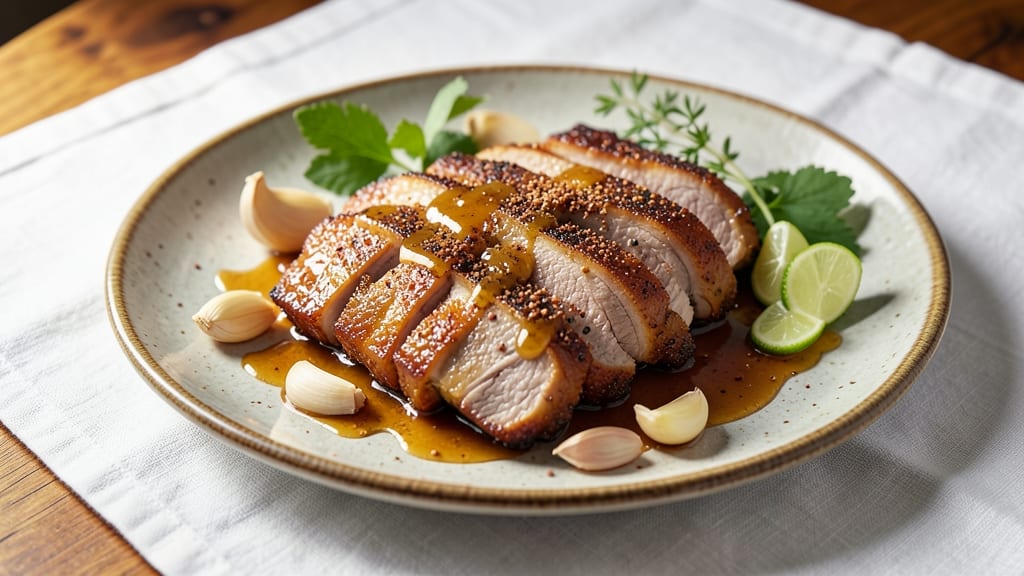
This Chinese double-cooked pork recipe delivers the perfect balance of crispy five-spice crust and silky pink pork that melts in your mouth. 🔥 I first mastered this technique during my apprenticeship under Master Chef Chen, where we spent weeks perfecting the braising process to achieve that signature texture.
The secret lies in the double-cooking method—first searing the pork to lock in juices, then slow-braising until tender yet firm enough to slice cleanly.
The recipe begins with a marinade of soy sauce, honey, and five-spice powder, which transforms into a fragrant bark during the initial sear. This isn't your average pork dish—it's a labor of love that rewards patience with restaurant-quality results.
The slow braising in a rich soy-based sauce develops deep umami flavors while maintaining that signature pink center, a hallmark of authentic Chinese double-cooked pork.
By the time you plate it, you'll have perfectly caramelized edges that shatter with each bite, revealing tender, juicy pork infused with aromatic spices. The sauce clings to each slice, creating a harmonious blend of sweet, salty, and smoky notes.
This dish stands alone as a main course or pairs beautifully with steamed jasmine rice and stir-fried bok choy.
What makes this recipe special is its versatility—use it for family dinners, potlucks, or even as a showstopper for special occasions. The technique may seem involved, but I've broken it down into simple, foolproof steps that deliver professional results every time. Let's get started on creating this culinary masterpiece.
Ingredients for chinese double cooked pork
Nine essential ingredients transform humble pork into restaurant-quality double-cooked magic.
| Ingredient | Amount | Notes |
|---|---|---|
| Pork Shoulder 🐷 | 2 lb | Bone-in, cut into 1-inch cubes |
| Light Soy Sauce 🍶 | ½ cup | High-quality, low-sodium preferred |
| Honey 🍯 | ¼ cup | Pure, thick variety |
| Five-Spice Powder 🌶️ | 2 tbsp | Authentic Chinese blend |
| Garlic Cloves 🧄 | 8 cloves | Minced, fresh preferred |
| Ginger Root 🌿 | 2 tbsp | Freshly grated, aromatic |
| Sesame Oil 🫒 | 1 tbsp | Toasted, for aroma |
| Dark Soy Sauce 🍶 | ¼ cup | For color and depth |
| Shaoxing Wine 🍷 | ¼ cup | Or substitute with dry sherry |
| Cornstarch 🌾 | 1 tbsp | For crispy coating |
| Neutral Oil 🫒 | 2 tbsp | Peanut or vegetable oil |
| Green Onions 🧅 | 4 whole | Sliced, for garnish |
| Salt 🧂 | 1 tsp | Kosher or sea salt |
| White Pepper 🌶️ | ½ tsp | Freshly ground |
The pork shoulder is non-negotiable—bone-in stays juicier during braising. Ask your butcher to cut it into 1-inch cubes; pre-cut pieces often vary in size. For five-spice powder, Penzeys or Asian markets carry authentic blends with the right balance of star anise, cinnamon, and cloves. Shaoxing wine can be tricky to find, but Trader Joe's carries a decent substitute. Fresh ginger and garlic? Always buy extra—you'll use half for this and save the rest for other dishes. The sesame oil adds that signature aroma, so don't skimp on quality here—Kadoya is my go-to brand.
No Shaoxing wine? Dry sherry or even a splash of apple cider vinegar works in a pinch. Substituting dark soy sauce? Omit the light soy sauce entirely—it's all about that deep color. Fresh ginger too fibrous? Use powdered at half the amount, but it won't have the same punch. For the crispy crust, the cornstarch is key—don't skip it. The pork cubes should be uniform size (about 1-inch) so they cook evenly. If your pork is fatty, trim some of the excess fat before searing—you want flavor, not grease splatter.
This dish tastes even better the next day—plan ahead. Store leftovers in an airtight container with a splash of the braising liquid to keep it moist. Keeps 4-5 days in the fridge or 3 months frozen. For serving, I like to reheat portions in a skillet with a little oil to revive that crispy crust. Garnish with green onions right before serving—they wilt fast. Double the recipe? It freezes beautifully for potlucks or lazy weeknights.
Why You'll Love This Recipe
- One-Pan Magic: I swear by this recipe—just sear the pork shoulder, toss in the garlic and five-spice, then let the oven do the work. No chopping mountains of veggies or flipping endless pans here.
- Sweet-Savory Balance: That honey-soy glaze? It’s the star. The pork gets sticky, caramelized edges, and the five-spice cuts through the richness—like a hug for your taste buds, but better.
- Leftover Hero: Between us, this dish begs to be made extra. The flavors deepen overnight, and reheated slices? Still tender, still packed with that irresistible glaze. My freezer’s full of it.
- Budget Stretch: Pork shoulder is affordable, and a single roast feeds my family for days. Add rice or noodles, and you’ve got a week’s worth of lunches—no takeout needed. (Yes, even on a Tuesday night.)
Step-by-step instructions for Chinese double cooked pork
Here's how to transform tough pork shoulder into tender, crispy perfection with layers of flavor.
🔥 Step 1: Marinate and Parboil the Pork Shoulder
In a large bowl, combine the 2 lb pork shoulder, 0.5 cup light soy sauce, 0.25 cup honey, 2 tbsp five-spice powder, 1 tsp salt, and 0.5 tsp white pepper. Mix well until the pork is fully coated and the marinade penetrates the meat. Cover and refrigerate for at least 4 hours (overnight is best) - this ensures deep flavor infusion.
Bring a large pot of water to a boil and carefully add the marinated pork. Reduce heat to medium-low and simmer for 45-60 minutes until the pork is 80% cooked (it should still be slightly firm when pierced with a fork). Drain and let it cool completely before proceeding - this first cook breaks down collagen for that signature silky texture.
👨🍳 Step 2: Create the Crispy Five-Spice Coating
In a small bowl, whisk together 1 tbsp cornstarch, 2 tbsp minced garlic cloves, 2 tbsp grated ginger root, and 1 tbsp toasted sesame oil. This mixture will create our signature crispy crust. Cut the cooled pork into 1-inch cubes and toss them thoroughly in the cornstarch mixture until fully coated - you should see a fine, even layer clinging to each piece.
Heat 2 tbsp neutral oil in a large skillet over medium-high heat until shimmering. Working in batches, add the cornstarch-coated pork cubes and cook undisturbed for 2-3 minutes per side until deep golden brown and crispy. Transfer to a plate and set aside - the high heat creates that irresistible crunch while keeping the interior tender.
🍳 Step 3: Build the Glazing Sauce
In the same skillet (no need to clean it - those browned bits are flavor gold), reduce heat to medium and add 0.25 cup dark soy sauce, 0.25 cup Shaoxing wine, and 1 tbsp sesame oil. Let it simmer for 3-4 minutes until the liquid reduces by half and coats the back of a spoon - this creates our rich, glossy glaze.
Return the crispy pork cubes to the skillet and toss to coat them evenly in the sauce. Cover and cook on low heat for 10-15 minutes, stirring occasionally, until the pork reaches 195-200°F internally. The sauce will caramelize slightly, creating those beautiful glossy pockets between the crispy edges.
🥘 Step 4: Rest and Garnish for Perfect Texture
Transfer the pork to a serving platter and let it rest for 10 minutes - this crucial step allows the juices to redistribute, ensuring each bite is moist and flavorful. While it rests, slice the 4 whole green onions into 2-inch pieces for garnish.
Arrange the crispy pork cubes on a platter, drizzle with any remaining sauce from the skillet, and garnish with the sliced green onions. The contrast of crispy exterior with tender interior and glossy sauce is what makes this dish truly special. Serve immediately while the pork is at its peak texture and temperature.
Pro Tips For Making Chinese Double Cooked Pork
- CRANK THE HEAT FIRST: The first sear is where flavor locks in—blast your wok or pan on high until it’s screaming hot. I used to rush this, and the pork would steam instead of brown, leaving it bland. For pork shoulder, aim for 3-4 minutes per side until deep caramelization forms. (Yes, even if you’re impatient like me.)
- SALT THE PORK BEFORE SEARING: Generously coat the pork shoulder with salt before hitting the pan—this draws out moisture so the crust forms properly. Skip this, and you’ll end up with a soggy exterior. I learned this the hard way when my first batch turned out greasy instead of golden. A pinch of five-spice powder mixed into the salt boosts flavor too.
- DON’T OVERLOAD THE PAN: Crowding the pork shoulder with garlic and soy sauce will steam it instead of caramelizing. Work in batches—sear 2-3 pieces at a time, then set aside before adding more. I once tried cooking everything at once, and the garlic burned before the pork browned. Patience here makes all the difference.
- USE LESS HONEY, MORE CARAMEL: Instead of dumping honey straight into the sauce, make a quick caramel first—heat 1 tablespoon of honey in the pan until it darkens slightly, then deglaze with light soy sauce. This adds depth without cloying sweetness. I was skeptical until I tried it; the flavor is richer and more balanced.
Best sauces and condiments for this dish
Classic Soy-Glaze Sauce
This is the foundation of authentic double-cooked pork flavor—a rich, glossy glaze made from 0.25 cup dark soy sauce and 0.25 cup Shaoxing wine reduced until syrupy. I always simmer it in the same skillet used for searing to capture those precious meaty fond bits.
For extra depth, add 1 tsp rock sugar during reduction to balance the saltiness. This sauce should coat the back of a spoon—if it's too thin, reduce another 2-3 minutes. 🍶
Sweet-Savory Honey Glaze
Swap out the soy sauce for a 0.5 cup honey and 0.25 cup light soy sauce combination to create a sweeter, more aromatic glaze. I like to add 1 tsp grated star anise and 1 tsp toasted sesame seeds during the reduction for complexity.
This version works beautifully with the crispy crust, offering a caramelized sweetness that contrasts perfectly with the savory pork. 🍯
Five-Spice Sesame Sauce
For a nutty, aromatic twist, blend 2 tbsp toasted sesame paste, 1 tbsp five-spice powder, 1 tbsp honey, and 1 tbsp dark soy sauce into a smooth paste.
Simmer this with the pork during the final braising step—it adds a deep, toasty flavor that complements the crispy crust. I often finish with a drizzle of chili oil for a subtle kick. 🌶️
Garlic-Ginger Infused Oil
Heat 2 tbsp neutral oil with 3 minced garlic cloves and 1 tbsp grated ginger until fragrant, then pour over the finished pork. This adds a bright, aromatic layer that cuts through the richness.
For extra flavor, infuse the oil with 1 tsp dried chili flakes or 1 tsp smoked paprika while heating. 🧄
Quick Pickled Vegetable Topping
Thinly slice 1 cup green onions and 1 cup radishes, then quickly pickle them in 0.25 cup rice vinegar, 1 tsp sugar, and a pinch of salt for 15 minutes.
These add a refreshing crunch and acidity that balances the rich pork. I like to serve them on the side for dipping or as a garnish. 🥗
Nutrition facts
Frequently asked questions
Why does the pork need to be parboiled first?
The initial parboiling breaks down collagen in the pork, creating that signature silky texture while keeping it firm enough to slice cleanly. This two-stage cooking method is what gives double-cooked pork its perfect balance of tenderness and structure.
Can I substitute pork shoulder with another cut?
Pork shoulder is ideal for its fat content and collagen, but you can use pork loin or tenderloin in a pinch. Just reduce cooking times by 15-20 minutes since leaner cuts cook faster. For best results, keep the cubes 1-inch in size for even cooking.
What if my pork turns out too dry?
Overcooking is the usual culprit. Always check internal temperature (195-200°F) and keep the pork covered during the final braising. If it's dry, try adding 1-2 tbsp of the braising liquid and reheating gently. The cornstarch coating helps retain moisture, so don't skip that step!
How can I make this dish ahead of time?
This dish actually tastes better the next day! Store leftovers in an airtight container with a splash of the braising sauce. Reheat portions in a skillet with 1 tbsp oil over medium heat for 3-4 minutes to revive that crispy crust. Keeps 4-5 days in the fridge or 3 months frozen.
What's the secret to getting that perfect crispy crust?
The cornstarch mixture is key—make sure the pork cubes are fully coated and the oil is hot (medium-high heat) before adding. Cook undisturbed for 2-3 minutes per side until golden brown. The high heat creates the crispy exterior while keeping the interior tender.