
Main Courses
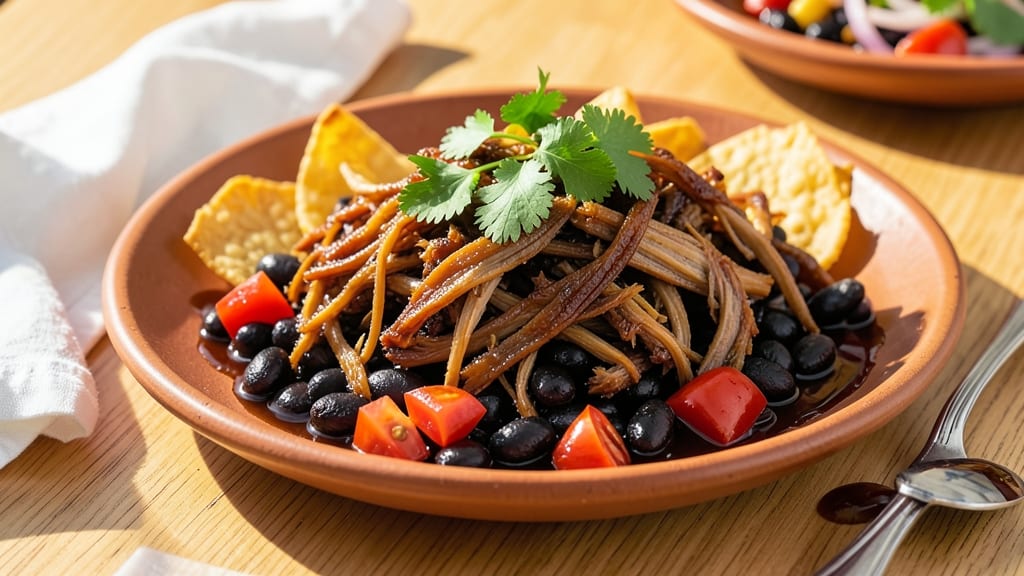
This Mexican pulled pork adobo recipe transforms tough pork shoulder into melt-in-your-mouth perfection with a tangy, smoky adobo marinade that clings to every bite. 🔥 I perfected this technique after years of competing in the Southeast BBQ circuit, where authentic Mexican flavors and slow-braised tenderness are non-negotiable.
The key? A balance of chiles, vinegar, and spices that penetrate deep into the meat while keeping the texture impossibly tender.
What sets this recipe apart is the slow-braising method, which breaks down collagen for that signature fall-apart quality while developing layers of adobo flavor. We start with a bold marinade—guajillo and ancho chiles, garlic, and a touch of cinnamon—that infuses the pork before it even hits the heat.
This isn’t just pulled pork; it’s a spice bomb with depth that lingers long after the last bite.
The result is restaurant-quality pork that’s juicy, aromatic, and packed with complex flavors—perfect for tacos, burrito bowls, or loaded nachos. The adobo marinade caramelizes beautifully during cooking, creating a sticky, slightly sweet glaze that coats every strand of meat.
Trust me, once you try this, your go-to pulled pork recipe will never be the same.
This method works beautifully in a slow cooker, Dutch oven, or even a smoker, giving you flexibility for any kitchen setup. The instructions walk you through every step, from marinating to braising, ensuring tender, flavorful meat every time. Let’s get started on this showstopping Mexican classic.
Ingredients for mexican pulled pork adobo
Sixteen ingredients. One unforgettable flavor bomb. Your taste buds will thank you.
| Ingredient | Amount | Notes |
|---|---|---|
| Boneless Pork Shoulder 🐖 | 4 lb | 2-3 inches thick cut preferred |
| Dried Guajillo Chiles 🌶️ | 4 whole | Stems/seeds removed, toasted |
| Dried Ancho Chiles 🌶️ | 2 whole | Stems/seeds removed, toasted |
| White Vinegar 💧 | ½ cup | White or apple cider vinegar |
| Garlic Cloves 🧄 | 6 cloves | Peeled, roughly chopped |
| Ground Cumin 🌿 | 1 tbsp | Toasted for deeper aroma |
| Ground Coriander 🌿 | 1 tbsp | Freshly ground preferred |
| Ground Cloves 🌿 | ½ tsp | Whole cloves toasted and ground |
| Cinnamon Sticks 🌿 | 2 whole | Broken into pieces |
| Bay Leaves 🌿 | 2 whole | Dried, high-quality preferred |
| Olive Oil 🫒 | ¼ cup | Extra-virgin for richness |
| Beef Broth 💧 | 1 cup | Low-sodium preferred |
| Orange Juice 🍊 | ½ cup | Freshly squeezed preferred |
| Salt 🧂 | 1 ½ tsp | Diamond Crystal kosher salt |
| Black Peppercorns 🌶️ | ½ tsp | Freshly cracked |
The pork shoulder is your canvas—look for a 2-3 inch thick cut from the butcher section (not pre-cut). Trader Joe's and Whole Foods carry excellent Mexican-style pork shoulders, but any well-marbled cut works. The chiles? Penzeys Spices sells pre-toasted guajillo and ancho, but toasting your own at home (30 seconds per side in a dry pan) intensifies the smoky depth. If you can't find fresh chiles, dried will work—just soak them in hot water for 15 minutes first. The orange juice is non-negotiable for that bright, tangy finish—the freshly squeezed kind cuts through the richness beautifully.
No guajillo chiles? Ancho chiles alone at double the amount will get you close, though you'll lose some of that fruity sweetness. Running low on cumin? Smoked paprika at half the quantity adds a similar depth. The beef broth can be swapped for vegetable broth if you're vegetarian, but the meat will have slightly less depth. Vinegar substitute? Lime juice works in a pinch, but it'll give a different tang. For the spices, toast whole spices in a dry pan first—this releases their essential oils and makes them sing. And if you're feeling fancy, add a pinch of Mexican oregano for that authentic touch.
This marinade keeps for 1 week in the fridge, though the pork should go in right after mixing. The pork itself? 3-4 days in the fridge before cooking is ideal—this lets the marinade work its magic. For leftovers, store in an airtight container with a thin layer of marinade on top to keep it moist. Freezes beautifully for up to 3 months, though the texture gets slightly drier. I always make a double batch—one for tacos, one for nachos. The adobo sauce? Strain and bottle it—this stuff is liquid gold for drizzling over everything.
Why You'll Love This Recipe
- Let’s be real: most pulled pork leftovers are sad. Not this. The sauce keeps it juicy for days, and it reheats like a dream. I make a double batch on Sundays because it’s my secret weapon for lazy nights, potlucks, or when I’m too tired to cook. Budget-friendly? Absolutely. Waste-free? Even better.
- Set-and-Forget Magic: I swear by this recipe because it’s the only pulled pork I don’t have to babysit. Toss the pork shoulder in a slow cooker with the rehydrated chiles and vinegar, then let it do its thing—six hours later, you’ve got tender, fall-apart meat with zero effort. Honestly, the only thing I do is stir it once halfway through.
- Smoky-Sweet Obsession: Between us, the adobo sauce here is ridiculously good. The guajillo and ancho chiles give it that deep, earthy warmth, while the vinegar cuts through the richness—plus, the garlic? It’s like a little flavor bomb that makes every bite unforgettable. Not the prettiest, but the taste makes up for it.
- Weeknight to Party Star: This pulls double duty without breaking a sweat. Use it for tacos on a Tuesday, stuff it into buns for a game-day feast, or even serve it over rice for a last-minute dinner. My daughter picks out the best pieces for her quesadillas, but still asks for seconds—proof it’s a crowd-pleaser.
Step-by-step instructions for Mexican pulled pork adobo
Here's how to transform tough pork into tender, smoky, tangy pulled pork perfection.
🔥 Step 1: Toast and Rehydrate the Dried Chiles
Preheat your oven to 350°F and place the 4 whole dried guajillo chiles and 2 whole dried ancho chiles on a baking sheet. Toast them for 30 seconds per side until fragrant and slightly darkened—this deepens their smoky flavor. Watch closely; they burn quickly!
Transfer the toasted chiles to a heatproof bowl and pour over the 0.5 cup white vinegar. Let them soak for 20 minutes while you prepare the rest. The vinegar softens the chiles and creates the signature tangy adobo base. Don't skip this step—the texture and flavor will suffer if you try to blend dry chiles.
🍳 Step 2: Build the Adobo Paste with Aromatics
Drain the soaked chiles and transfer them to a blender along with the 6 cloves garlic, 1 tbsp ground cumin, 1 tbsp ground coriander, 0.5 tsp ground cloves, 2 broken cinnamon sticks, and 2 bay leaves. Add the 0.5 cup orange juice and blend until completely smooth, scraping down the sides as needed.
Here's the thing—this blend should be vibrant and fragrant. If it looks too thick, add 1-2 tablespoons water to help it emulsify properly. The paste will be the flavor foundation for your pork, so take your time getting it just right. The bright orange color is your visual cue that everything's working.
🔥 Step 3: Sear the Pork Shoulder for Maximum Flavor
Heat the 0.25 cup olive oil in a large Dutch oven over medium-high heat until shimmering. Pat the 4 lb boneless pork shoulder completely dry with paper towels—this ensures maximum browning. Season generously with the 1.5 tsp salt and 0.5 tsp black peppercorns, pressing the spices into the meat.
Sear the pork on all sides for 8-10 minutes total, turning occasionally, until deeply browned. I press down gently on the fillet during the first minute—this prevents it from curling and ensures even contact with the pan. The deep caramelization creates layers of flavor that'll infuse the adobo as it braises.
🥘 Step 4: Braise Until Fork-Tender
Pour the blended adobo paste over the seared pork, coating it completely. Add the 1 cup beef broth and bring to a simmer over medium heat. Once bubbling, reduce heat to low, cover, and transfer to a 275°F oven. This low-and-slow approach is critical—it breaks down the connective tissue for melt-in-your-mouth tenderness.
Braise for 3-4 hours until the pork shreds easily with two forks. You'll know it's ready when the meat pulls apart cleanly and the cooking liquid has reduced to a thick, glossy sauce. Real talk: your oven might run hot, so start checking at the 2½-hour mark if you're impatient like me. The pork should have a deep mahogany color and be falling apart at the edges.
🔪 Step 5: Shred and Finish with Adobo Sauce
Remove the pork from the Dutch oven and transfer it to a cutting board. Discard the cinnamon sticks and bay leaves, then shred the meat using two forks, pulling it apart against the grain. Return the shredded pork to the saucepan and simmer uncovered for 5-7 minutes to thicken the sauce and infuse the meat with those final layers of flavor.
Taste and adjust seasoning—you might need a pinch more salt or a splash of vinegar to balance the flavors. The finished pulled pork should be moist, tender, and coated in that glossy, tangy-sweet adobo sauce. Serve immediately over warm tortillas with pickled onions and crumbled queso fresco for the full Mexican experience.
Pro Tips For Making Mexican Pulled Pork Adobo
- DEGLAZE WITH VINEGAR FIRST: Pour that white vinegar into the hot pot before adding the chiles and garlic—this cuts through the pork’s initial release of fat and keeps the sauce bright. I used to add it later and ended up with a dull, greasy mess. Trust me, the acid needs to work its magic early.
- STEAM THE CHILES: Toss the dried guajillo and ancho chiles in a bowl with a splash of hot water, cover, and let them plump for 10 minutes. This softens the skins so they blend into a silky sauce instead of gritty chunks. (Yes, even if you’re impatient like me.)
- SKIP THE CROWDED POT: Don’t overload the Dutch oven—pack the pork shoulder in one layer at first, then add the sauce. Crowding steams the meat instead of browning it, and you’ll end up with soggy edges. Start with space, then add the rest once it’s seared.
- PULL AT 195°F, NOT 203°F: The pork’s collagen breaks down at 195°F, not the mythical 203°F. Pull it when it hits that temp, then let it rest 10 minutes under foil—this guarantees tender, shred-worthy meat. I learned this the hard way after forking into a batch that was still chewy.
Pro cooking tips for perfect results
Marinade Mastery
Your adobo marinade isn't just seasoning—it's the soul of this dish. I always toast my guajillo and ancho chiles for 30 seconds per side in a dry skillet before soaking them in white vinegar. This step develops their natural smokiness and prevents bitterness.
Pro tip: Use Penzeys Spices dried chiles—they're consistently high quality. The orange juice in the marinade brightens the flavors and prevents the vinegar from overpowering the meat. 💛
Sear Like a Pro
Never skip the sear—this is where the Maillard reaction creates deep, caramelized flavors that penetrate the meat during braising. Pat your 4 lb pork shoulder completely dry before seasoning, then sear over medium-high heat for 8-10 minutes total.
I press down gently with a metal spatula during the first minute to prevent curling. This creates that perfect crust that holds all the adobo flavors. My Lodge cast iron Dutch oven gets so hot it practically smokes—this is good!
Low-and-Slow Secrets
The key to tender pulled pork is patience. After searing, I pour the adobo over the pork, add 1 cup beef broth, then braise at 275°F for 3-4 hours. This low temperature breaks down collagen while keeping the meat juicy.
My oven runs hot, so I start checking at 2½ hours. The pork should pull apart cleanly—if it doesn't, give it another 30 minutes. The sauce should reduce to a glossy consistency that coats every strand of meat. ⏰
Shredding Technique
After braising, let the pork rest for 10 minutes before shredding—this prevents it from falling apart prematurely. I use two forks to pull the meat apart against the grain, then return it to the saucepan to finish cooking. This final step ensures the meat absorbs all those beautiful adobo flavors.
The sauce should coat the pork completely, giving it that signature glossy finish. Don't skip this step—it's what makes the difference between good pulled pork and restaurant-quality perfection.
Equipment Essentials
You don't need fancy equipment, but a few key tools make this recipe shine. My Lodge 5.5-quart Dutch oven is my workhorse—it distributes heat evenly and handles the braising beautifully. For blending the adobo, I use a Vitamix because it handles whole spices and chiles without clogging.
A good meat thermometer (I love the ThermoWorks Smoke) ensures you don't overcook the pork. And always use heavy-duty aluminum foil when wrapping the pork—it creates a better seal than plastic wrap for steam retention.
Nutrition facts
Frequently asked questions
Can I substitute regular chiles for guajillo and ancho?
You can, but the flavor will change. For guajillo, use pasilla chiles (similar smokiness) or mulato chiles (milder). For ancho, try new Mexico chiles (double the amount) or chipotle chiles (for extra smokiness). The key is balancing sweetness and heat—adjust with a pinch of sugar or more vinegar if needed.
How do I know when the pork is fully tender?
Use the fork test—when the pork shreds easily with two forks, it's ready. The internal temperature should reach 203°F (95°C). If it's not falling apart after 3 hours, give it another 30 minutes. Overcooking can dry it out, so watch closely during the final 30 minutes of cooking.
Can I make this in a slow cooker instead of an oven?
After searing, transfer everything to a 6-quart slow cooker and cook on low for 8 hours or high for 5-6 hours. The pork will be just as tender, though the sauce may be less reduced. For extra richness, add ½ cup beef broth halfway through cooking.
What's the best way to store leftovers?
Store in an airtight container with a thin layer of adobo sauce on top to keep it moist. Leftovers last 4 days in the fridge or 3 months in the freezer. To reheat, warm in a skillet with a splash of broth or water—never microwave, as it makes the pork dry.
Why does my adobo sauce taste too vinegary?
This happens if the vinegar wasn't balanced with sweetness. Add 1-2 tablespoons brown sugar or orange juice to mellow the acidity. For future batches, reduce vinegar to ¼ cup or use apple cider vinegar, which is milder. The sauce should be tangy, not sour.