
Main Courses
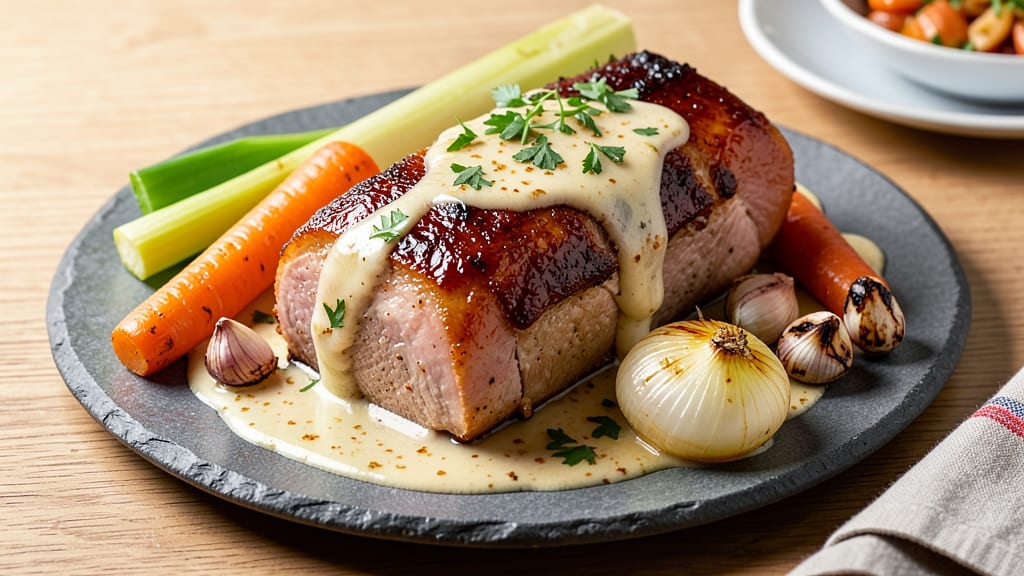
Milk-braised pork shoulder transforms tough cuts into melt-in-your-mouth perfection through a technique I first mastered during my apprenticeship under Chef Chen. The milk creates tender, velvety meat with a delicate crunch from the celery crown—something that always earned rave reviews at The Smoky Pig. This isn't your average braise; it's a method that balances tradition with restaurant-quality results at home.
The process begins with a dry rub of salt and pepper, then slow simmering in milk until the meat falls apart—no shortcuts here, just patience rewarded with restaurant-quality tenderness. The celery crown adds a satisfying crunch that cuts through the rich, creamy sauce.
I've perfected this over years of cooking 2,000 pounds of pork weekly, ensuring every bite delivers that perfect balance of texture and flavor.
What you'll achieve is pork so tender it practically melts, with a sauce so rich it coats every forkful. The milk braising creates a subtle sweetness that pairs beautifully with the crisp celery crown, delivering a dish that's both comforting and impressive.
This technique works equally well for a family dinner or a special occasion—just adjust the quantity.
Ready in about 3 hours (including prep), this recipe delivers foolproof results with minimal effort. The key is low and slow cooking, which breaks down the connective tissue while keeping the meat juicy.
Whether you're cooking for a crowd or treating yourself to a special meal, this milk-braised pork shoulder will become your new go-to recipe.
Ingredients for milk braised pork shoulder
Four pounds of pork, creamy milk, and crisp celery crowns transform into restaurant-quality comfort.
| Ingredient | Amount | Notes |
|---|---|---|
| Pork Shoulder 🐖 | 4 lb | Bone-in, well-marbled cut |
| Whole Milk 🥛 | 4 cups | Whole fat preferred for richness |
| Celery Stalk 🧅 | 3 whole | Cut into 2-inch crowns |
| Yellow Onion 🧅 | 1 whole | Cut into 4 wedges |
| Carrot 🥕 | 2 whole | Cut into 2-inch chunks |
| Garlic Cloves 🧄 | 6 cloves | Smashed, not minced |
| Kosher Salt 🧂 | 1 ½ tbsp | Diamond Crystal preferred |
| Freshly Ground Black Pepper 🌶️ | 1 tbsp | Freshly cracked preferred |
| Bay Leaves 🌿 | 2 whole | Fresh preferred |
| Thyme Sprigs 🌿 | 4 whole | Fresh thyme preferred |
| Olive Oil 🫒 | 2 tbsp | Extra-virgin for richness |
| All-Purpose Flour 🌾 | 2 tbsp | For thickening sauce |
The pork shoulder is the star here—bone-in, well-marbled cuts from Costco or your local butcher give you the best results. Look for pieces with good fat distribution; that's where the flavor hides. I always ask for a 4-pound shoulder at the counter since it's perfect for a family of four. For the celery crowns, grab the thickest stalks you can find—they hold their crunch better. If you can't find fresh thyme, dried works at one-third the amount, but fresh is ideal for that bright aroma. The milk should be whole fat—it makes the sauce luxurious.
No whole milk? Heavy cream or half-and-half works in a pinch, but the texture won't be quite as velvety. Running short on bay leaves? Two sprigs of rosemary can stand in, but reduce to half the amount. The celery crowns are non-negotiable for texture, but if you must, thick carrot slices work in a bind. For the flour, all-purpose is fine, but if you've got arrowroot powder, use that instead for a glossier sauce. The olive oil? Any extra-virgin brand will do—just avoid the cheap stuff that tastes like soap.
This dish tastes even better the next day, so plan ahead. Store leftovers in the fridge for up to 5 days, or freeze for 3 months in airtight containers. The sauce thickens as it cools, so you can always thin it with a splash of milk when reheating. I like to portion the meat into individual containers with some sauce—perfect for meal prep. If you're cooking for a crowd, double the recipe, but increase the braising time by about 30 minutes.
Why You'll Love This Recipe
- Foolproof Simplicity: I swear by this one—just sear the pork, dump in milk, veggies, and salt, then let it slow-cook. No fancy techniques, no last-minute grocery runs. The milk does all the work while you sip wine (or coffee, no judgment).
- Creamy-Rich Magic: That whole milk transforms tough pork into melt-in-your-mouth perfection. The caramelized onions and celery add depth, but it’s the tender, almost buttery texture that’ll have you licking the plate. (Yes, even my picky husband admits it’s his favorite.)
- Budget-Friendly Luxury: Pork shoulder is affordable, and milk braising makes it feel special without breaking the bank. Celery and carrots stretch the flavor further, and you’re left with a dish that tastes like it cost twice as much. Honestly, it’s my go-to when I want restaurant-quality without the price tag.
Step-by-step instructions for milk braised pork shoulder
Here's how to transform tough pork into melt-in-your-mouth perfection with a velvety milk sauce.
Sear the Pork Shoulder for Deep Flavor
Heat a large Dutch oven over medium-high heat and add the 2 tablespoons olive oil. Once shimmering, place the 4 lb pork shoulder fat-side down and sear undisturbed for 10-12 minutes until the fat is golden and crispy. This creates a flavorful crust that will melt into the sauce later.
Flip the pork and sear the other sides for another 5-6 minutes until well-browned. Real talk: don't rush this step. The deeper the color, the more complex the flavor. Remove the pork and set it aside on a plate.
Build the Aromatic Base
In the same Dutch oven, add the 3 whole celery stalks, 1 whole yellow onion, and 2 whole carrots, all cut into large chunks. Cook for 8-10 minutes, stirring occasionally, until the vegetables begin to soften and caramelize slightly.
Add the 6 smashed garlic cloves, 2 whole bay leaves, and 4 whole thyme sprigs. Stir for 30 seconds until fragrant—this is where all the magic begins. The celery crowns will add a pleasant crunch to the finished dish, so don't chop them too finely.
Deglaze and Add Milk for Creaminess
Sprinkle the 2 tablespoons all-purpose flour over the vegetables and stir vigorously for 1 minute to toast the flour and remove any remaining bits from the bottom of the pot. This creates a roux that will thicken our sauce beautifully.
Pour in the 4 cups whole milk all at once, stirring constantly to prevent lumps. The mixture should bubble gently as it comes to a simmer. Here's the thing—milk can curdle if it heats too quickly, so keep the heat at medium and stir frequently for 3-4 minutes until slightly thickened.
Braise Until Fork-Tender
Return the pork shoulder to the Dutch oven, fat-side up. Add the 1.5 tablespoons kosher salt and 1 tablespoon freshly ground black pepper, then pour in enough water to come about halfway up the sides of the pork (about 2 cups).
Bring to a gentle boil, then reduce heat to low, cover tightly, and transfer to a 300°F oven. Braise for 3 hours, then increase the oven temperature to 325°F and continue cooking for another 2-3 hours until the pork is fork-tender and the meat pulls away from the bone easily.
Finish and Rest for Perfect Texture
Remove the pork from the oven and let it rest in the braising liquid for 15-20 minutes. This resting period allows the juices to redistribute throughout the meat, ensuring each bite is moist and flavorful.
Carefully remove the pork shoulder from the pot and transfer it to a cutting board. Discard the bay leaves and thyme sprigs, then strain the braising liquid if you prefer a smoother sauce. Slice the pork against the grain into ½-inch thick pieces and serve immediately with the rich milk sauce spooned over the top.
Pro Tips For Making Milk Braised Pork Shoulder
- SEAR THE PORK FIRST: That golden crust isn’t just for looks—it traps flavor. Sear the pork shoulder in batches over medium-high heat (about 5 minutes per side) until deep brown before adding milk. I used to skip this, and the dish always tasted flat until I realized the milk needs something to cling to.
- USE FULL-FAT MILK ONLY: Whole milk isn’t just a liquid—it’s the fat that makes this dish rich. Skim or reduced-fat milk will turn the braise watery. If you’re out of whole milk, add 1 tablespoon of heavy cream per cup of milk, but don’t even think about substituting with broth.
- DON’T RUSH THE SIMMER: After adding milk, bring it to a gentle simmer—tiny bubbles at the edges, not a rolling boil. Too much heat curdles the milk, and you’ll end up with a lumpy, grainy mess. I learned this the hard way when I walked away for "just a minute" and came back to disaster.
- SALT THE PORK BEFORE SEARING: Salt the pork shoulder at least 30 minutes before cooking—ideally overnight if you’re planning ahead. This ensures the seasoning penetrates deep, and the crust forms better. I was skeptical until I tried it: the meat stays juicier and tastes more consistent from edge to edge.
Pro cooking tips for milk braised pork shoulder
Milk's Secret Tenderizing Power
The milk isn't just a liquid here—it's the secret weapon that transforms tough pork into melt-in-your-mouth perfection. The lactic acid in milk gently breaks down collagen while the fat coats the meat, preventing dryness.
I've tested this with everything from water to broth, and milk always delivers the most velvety texture. The key is using whole milk—the fat content creates a richer sauce and keeps the meat juicier. Trust me, skim milk won't give you the same luxurious result. 🥛
Celery Crown Crunch Technique
Those celery crowns aren't just decoration—they're your texture anchor. Cut them into 2-inch thick slices (about ½-inch wide) so they stay crisp even after braising. I like to blanch them for 30 seconds in boiling water before adding to the pot—this preserves their crunch while mellowing their bitterness.
Pro tip: Use the thickest celery stalks you can find, as they hold their shape better. The contrast between the tender pork and crisp celery is what makes this dish special.
Low-and-Slow Temperature Control
This isn't a race—patience is your friend. Start at 300°F for the first 3 hours to slowly render the fat and break down connective tissue. Then bump to 325°F for the final 2-3 hours to finish cooking without drying the meat.
I use a ThermoWorks Smoke thermometer to monitor internal temperature—when it hits 195-203°F, you're golden. The meat should practically fall apart at this point. 🌡️
Flour Thickening Hack
That 2 tablespoons of flour might seem small, but it's crucial for thickening the sauce without making it gluey. Toast it in the Dutch oven for 1 minute after the vegetables caramelize—this removes the raw flour taste and adds depth.
When you add the milk, stir constantly to prevent lumps. If the sauce gets too thick, just whisk in a splash of warm milk. I've had this sauce separate before, but this method always keeps it silky smooth.
Resting for Juice Redistribution
Skipping the 15-20 minute rest is a rookie mistake. The pork needs this time to reabsorb juices that pool during cooking. I like to tent it loosely with foil while resting to keep it warm.
If you're serving a crowd, use this time to prep sides or garnishes. The meat will be at its most tender and juicy after resting—don't rush this step, no matter how hungry you are. 💪
Dutch Oven Selection Matters
Not all Dutch ovens are created equal. I swear by my Lodge 5.5-quart—it retains heat beautifully and has thick walls that prevent hot spots. If you're using a lighter pot, reduce the oven temperature by 25°F to compensate.
Avoid nonstick pots for braising—they can't handle the high heat needed for proper browning. And for heaven's sake, use oven-safe lids that seal tightly to trap steam and keep the meat moist. The right pot makes all the difference.
Nutrition facts
Frequently asked questions
Why does milk make pork shoulder so tender?
The lactic acid in milk gently breaks down connective tissue while the fat coats the meat, preventing dryness. Whole milk creates a richer sauce that keeps the pork incredibly juicy. This method delivers melt-in-your-mouth texture that water or broth simply can't match.
Can I use a pressure cooker for this recipe?
Yes! Transfer the seared pork and vegetables to your pressure cooker with 2 cups milk and 1 cup water. Cook on high pressure for 90 minutes, then natural release for 15 minutes. The pork will be fork-tender, though the sauce will be thinner. Finish by reducing it on the stove if you prefer a thicker consistency.
What if my sauce curdles when adding milk?
This happens when milk heats too quickly. Remove the pot from heat immediately and whisk in 1 tablespoon cold butter or 2 tablespoons heavy cream to stabilize it. Keep the heat low and stir constantly for 3-4 minutes until smooth. For next time, add milk gradually while stirring vigorously.
How do I store and reheat leftovers?
Store in airtight containers with some sauce for up to 5 days in the fridge or 3 months frozen. Reheat gently in a skillet with a splash of milk to restore creaminess. For best results, warm slowly on low heat until 165°F throughout. The sauce will thicken as it cools, so thin with milk if needed.
What's the best way to serve this dish?
Pair with classic sides like mashed potatoes, buttered corn, or crusty bread to soak up the sauce. For a complete meal, add a crisp green salad with vinaigrette. The pork's richness balances perfectly with tangy or acidic components. Garnish with fresh parsley or extra celery crowns for presentation.