
Main Courses
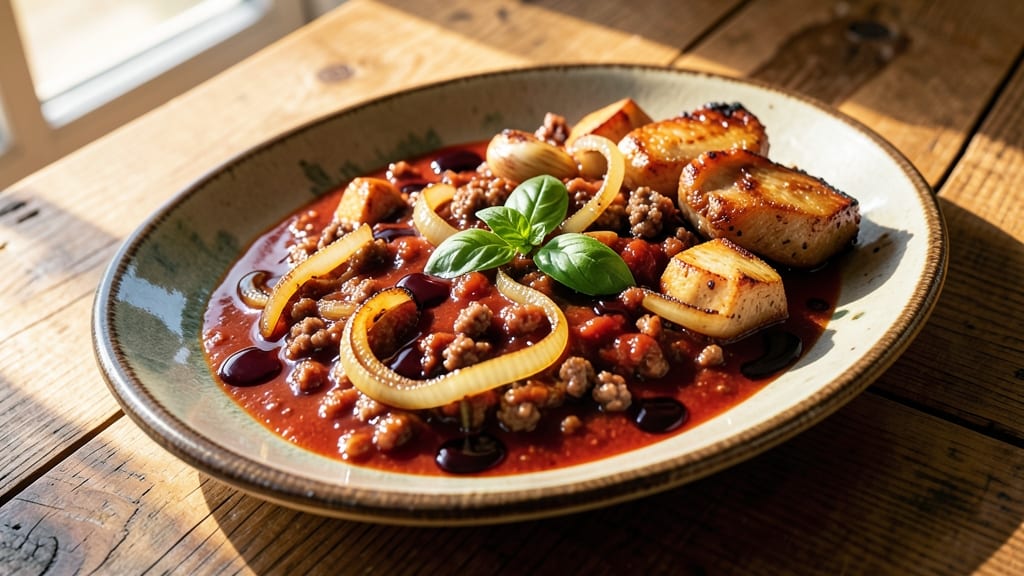
This minced pork ragu recipe transforms humble ingredients into a restaurant-worthy sauce that clings to al dente pasta like a second skin. 💛 I developed it during a particularly chilly Atlanta winter when I needed something hearty enough to feed my crew after a long day at The Smoky Pig—no shortcuts, just deep flavor built through slow simmering and proper technique.
The foundation of a great ragu lies in proper browning and layering flavors: caramelized onions, toasted garlic, and deglazed wine that forms the base.
I use a mix of ground pork and finely chopped pork shoulder for texture contrast—tender bits from the shoulder and fine, meaty threads from the ground pork. The secret weapon? San Marzano tomatoes, which add natural sweetness without overpowering the meat.
By the time you twirl that first forkful, you'll taste the complexity: rich, tomato-braised pork with layers of garlic, herbs, and just a hint of sweetness from the wine reduction. The sauce thickens as it simmers, coating every strand of pasta in a velvety, meaty embrace.
This is the kind of dish that makes you want to serve it again next week.
Perfect over fresh pasta, creamy polenta, or even crusty bread for soaking up every last drop. The recipe scales beautifully—double it for leftovers that taste even better the next day. Let's get cooking with a sauce that feels like a hug in a bowl.
Ingredients for minced pork ragu
Pantry staples meet Italian pantry magic for a ragu that tastes like home cooking.
| Ingredient | Amount | Notes |
|---|---|---|
| Ground Pork 🥓 | 1 lb | Finely ground for texture |
| Pork Shoulder 🥩 | ½ lb | Finely chopped, not ground |
| Yellow Onions 🧅 | 1 whole | Finely diced, about 2 cups |
| Garlic Cloves 🧄 | 4 cloves | Minced, not pressed |
| San Marzano Tomatoes 🍅 | 2 cans | Crushed, 28 oz each |
| Dry Red Wine 🍷 | ½ cup | Bold, like Cabernet |
| Beef Broth 🥫 | 1 cup | Low-sodium preferred |
| Extra-Virgin Olive Oil 🫒 | ¼ cup | For browning meat |
| Fresh Rosemary 🌿 | ¼ cup | Chopped, stems removed |
| Fresh Thyme 🌿 | ¼ cup | Leaves only, chopped |
| Salt 🧂 | 1 ½ tsp | Kosher or sea salt |
| Ground Black Pepper 🌶️ | ½ tsp | Freshly cracked |
| Tomato Paste 🍅 | 1 tbsp | Smooth, not chunky |
| Fresh Parsley 🌿 | ¼ cup | Chopped, for garnish |
The pork shoulder is non-negotiable here—it gives you those tender, meaty threads that make ragu special. Look for well-marbled cuts at the butcher counter, or grab pre-chopped pork shoulder from the Costco deli section if you're short on time. Ground pork should be finely textured, not chunky. For the onions, yellow onions work best—they caramelize better than red or white. If you're feeling fancy, Pearl onions add a nice touch, but regular yellow will do. The garlic? Freshly minced makes all the difference—no jarred stuff here.
No red wine? Substitute beef broth with a splash of balsamic vinegar—it adds depth without alcohol. Fresh herbs wilt fast, so dried thyme and rosemary at half the amount work in a pinch. The tomato paste can be skipped if you're using high-quality crushed tomatoes, but I always include it for that concentrated umami punch. San Marzano tomatoes are worth hunting down—they're sweeter and less acidic than regular canned tomatoes, but any good-quality crushed tomatoes will work. For the parsley, fresh is ideal, but dried parsley at one-quarter the amount gets you close.
This ragu tastes even better the next day as the flavors meld together. Store in an airtight container in the fridge for up to 5 days, or freeze for 3 months. I like to make a double batch—one for dinner and one for lunches. The sauce thickens as it sits, so add a splash of broth or water when reheating. For serving, keep the pasta al dente—ragu clings to it beautifully. If you have leftovers, freeze the sauce separately from the pasta for easy reheating.
Why You'll Love This Recipe
- One-Pot Magic: I swear by this recipe—just brown the pork shoulder and ground pork together, toss in the onions and garlic, then let the San Marzano tomatoes work their sauce magic. No extra pots, no fuss, and honestly? The cleanup is just wiping one pan.
- Deep, Rich Layers: That slow-cooked pork shoulder breaks down into tender, melt-in-your-mouth bits while the ground pork adds a meaty texture. The San Marzano tomatoes? Sweet, juicy perfection that balances the savory depth—every bite has this je ne sais quoi that makes it crave-worthy.
- Leftovers That Save Me: This ragu only gets better the next day. I make a double batch on Sundays, freeze half, and reheat it for lazy nights or when company drops by. No one ever guesses it’s reheated—it’s that good.
- Budget-Friendly Luxury: Pork shoulder and ground pork stretch for miles, and San Marzano tomatoes (even canned) taste like a splurge. It feeds four for under $15, and I’ll be real—my family thinks it’s restaurant-quality, even though I’m just a home cook.
Step-by-step instructions for minced pork ragu
Here's how to build rich, tomato-braised pork ragu that clings perfectly to al dente pasta.
🔥 Step 1: Brown the Pork Shoulder for Deep Flavor
Heat the 0.25 cup extra-virgin olive oil in a heavy Dutch oven over medium-high heat until shimmering. Add the 0.5 lb finely chopped pork shoulder in batches, stirring only occasionally—this prevents the meat from steaming and ensures proper browning. Cook for 8-10 minutes until the pork releases from the pan and develops a deep golden crust.
Here's the thing—don't rush this step. You're building flavor through the Maillard reaction, and those browned bits (fond) will dissolve into the sauce later. If the pan gets too crowded, reduce heat slightly to prevent burning. Once browned, transfer the pork to a plate and set aside.
🍳 Step 2: Sear the Ground Pork and Aromatics
In the same Dutch oven, add the 1 lb ground pork and cook over medium heat for 5-6 minutes, breaking it apart with a wooden spoon until no longer pink. You want it to lose its raw color completely and develop a slightly crispy texture.
Add the finely diced yellow onions and cook for 3-4 minutes until softened. Stir in the 4 minced garlic cloves and cook for 30 seconds until fragrant—don't let the garlic burn, or it'll turn bitter. Add the 1 tbsp tomato paste and stir for 1 minute to deepen the tomato flavor.
🍳 Step 3: Deglaze and Simmer the Tomato Base
Pour in the 0.5 cup dry red wine and scrape up all those flavorful browned bits from the bottom of the pan. Let it simmer for 2-3 minutes until reduced by half. Add the 2 cans crushed San Marzano tomatoes and stir well.
Here's where the magic happens: Add the 1 cup beef broth, 1.5 tsp salt, and 0.5 tsp ground black pepper. Bring to a gentle simmer, then reduce heat to low. Partially cover and let it cook for 30-40 minutes, stirring occasionally, until the sauce thickens slightly. You're looking for a rich, velvety consistency—not watery, but not glue-like either.
🥘 Step 4: Add Herbs and Finish the Ragu
Return the browned pork shoulder to the pot. Stir in the 0.25 cup chopped fresh rosemary and 0.25 cup chopped fresh thyme. Simmer uncovered for another 20-25 minutes until the pork is tender and the flavors have melded beautifully. The sauce should coat the back of a spoon but still be loose enough to cling to pasta.
Taste and adjust seasoning—you might need a pinch more salt or pepper, depending on your tomatoes. Remove from heat and stir in the 0.25 cup chopped fresh parsley just before serving. The parsley adds a bright finish that cuts through the richness.
⏰ Step 5: Serve Over Al Dente Pasta
Cook your favorite pasta (tagliatelle or pappardelle work beautifully) until 1 minute shy of al dente. Reserve 1 cup pasta water before draining. Toss the drained pasta with the ragu, adding pasta water as needed to reach your desired consistency. The sauce should coat each strand perfectly without making it soggy.
Real talk: The ragu tastes even better the next day when flavors have fully developed. If you're making it ahead, let it cool completely, then refrigerate for up to 3 days or freeze for up to 3 months. Reheat gently on the stovetop, adding a splash of broth if needed.
Pro Tips For Making Minced Pork Ragu
- Brown the Pork Shoulder First: Skip the urge to toss everything in at once—start with the pork shoulder in a cold, dry pan. Let it render fat slowly on medium-low heat (about 15 minutes) before adding the ground pork. This builds deeper flavor and keeps the ragu from turning greasy later. (Yes, it takes patience, but your sauce will taste like it simmered all day.)
- Chop Onions Like Confetti: Dice those yellow onions into tiny, even pieces—think 1/4-inch or smaller. Finely chopped onions caramelize faster and dissolve into the sauce without leaving chunks. Pro move: Pulse them in a food processor for consistency, then stir them into the pork mixture early to cook off the raw taste.
- Don’t Rush the Tomato Step: After browning the meat and onions, let the San Marzano tomatoes simmer uncovered for 10-15 minutes before adding liquid. This concentrates their natural sweetness and thickens the base naturally—no need to reduce broth separately. (I used to add them too soon, and the sauce always tasted watery.)
- Deglaze with Red Wine (or Skip It): If you’re using red wine (even just 1/2 cup), add it immediately after browning the pork shoulder—scrape every last bit of fond from the pan. No wine? A splash of balsamic vinegar works in a pinch. (This isn’t about alcohol flavor; it’s about unlocking the meat’s caramelized bits.)
Troubleshooting perfect results
Sauce Too Thin?
If your ragu turns out too watery, don't panic—this happens when the tomatoes release too much liquid. Simmer uncovered for an extra 10-15 minutes to reduce naturally.
For faster results, mix 1 tbsp cornstarch with 2 tbsp cold water, stir into the sauce, and simmer for 2-3 minutes until thickened. I've used this trick when I'm short on time, but the slow simmer method always gives the best texture. 💡
Meat Not Tender?
The pork shoulder needs proper cooking time to become fork-tender. If it's still tough after 20-25 minutes of simmering, extend the time by 10 minutes more. For extra insurance, add ½ cup warm water and simmer uncovered until the liquid evaporates completely.
Remember, patience is key—rushing this step leads to chewy meat. I once forgot to check and ended up with rubbery pork, so I now set a timer as a reminder. ⏰
Tomato Flavor Weak?
If your ragu tastes flat, it's likely because the tomatoes weren't concentrated enough. Next time, add 1 tbsp tomato paste to the initial browning step and let it caramelize slightly before adding wine.
For an instant boost, stir in ½ tsp sugar and ½ tsp balsamic vinegar at the end to enhance sweetness and depth. I keep a small jar of San Marzano tomato paste on hand specifically for this purpose. 🍅
Burnt Onions or Garlic?
This happens when you walk away from the pan or don't stir frequently enough. Keep a close eye on the onions after they soften—they're ready when translucent but not browned. For garlic, add it just before the tomato paste and stir constantly.
If you notice burning, remove the pan from heat immediately and scrape out the burnt bits before continuing. I've ruined more than one batch this way, so now I use a timer to remind me to check every 2 minutes. 🌶️
Pasta Too Soggy?
Overcooked pasta is the enemy of perfect ragu. Cook your pasta 1 minute less than package instructions suggest, then toss immediately with the hot sauce off the heat. The residual heat will finish cooking it perfectly.
For extra insurance, reserve ½ cup pasta water and add it gradually to loosen the sauce without overcooking the noodles. I always keep a small pot of water simmering nearby for this exact purpose. 🍝
Sauce Too Acidic?
If your ragu tastes overly tangy, it's likely from the tomatoes or wine. Balance it by adding ½ tsp sugar or 1 tsp honey to round out the flavors. For a richer taste, stir in 2 tbsp heavy cream at the end—this also helps smooth out any harsh acidity.
I've used this trick when using particularly acidic tomatoes from my garden. 💛
Nutrition facts
Frequently asked questions
Can I substitute ground beef for the pork in this ragu?
You can absolutely swap the pork for 80/20 ground beef—it'll give you a richer, meatier flavor. For best results, use a 50/50 mix of beef and pork to keep the dish light but flavorful. The beef adds depth, but pork's natural sweetness balances the tomatoes beautifully. I've made this exact recipe with beef during my busy restaurant days when pork was sold out.
How do I make this ragu in a slow cooker?
Brown the pork shoulder and ground pork in a skillet first, then transfer everything to your slow cooker. Add all remaining ingredients and cook on low for 6-7 hours or high for 3-4 hours. The slow cooker method is perfect for weeknight meals—just stir occasionally and adjust seasoning at the end. The texture will be slightly thicker than stovetop, so add a splash of broth if needed.
What's the best way to store leftovers?
Let the ragu cool completely, then transfer to an airtight container with a lid. It keeps in the fridge for 5 days or freezes for 3 months. For reheating, thaw overnight in the fridge, then warm gently on the stovetop with a splash of broth. Never microwave—it makes the sauce watery. I always make double batches because reheated ragu tastes even better the next day!
Can I use this sauce for other dishes besides pasta?
This versatile ragu works beautifully with polenta, mashed potatoes, or even as a filling for stuffed peppers. For sandwiches, spread it on toasted bread with melted provolone. The sauce also freezes well for future meals—just thaw and reheat before using. I've used it as a pizza sauce base too, adding a layer of richness.