
Main Courses
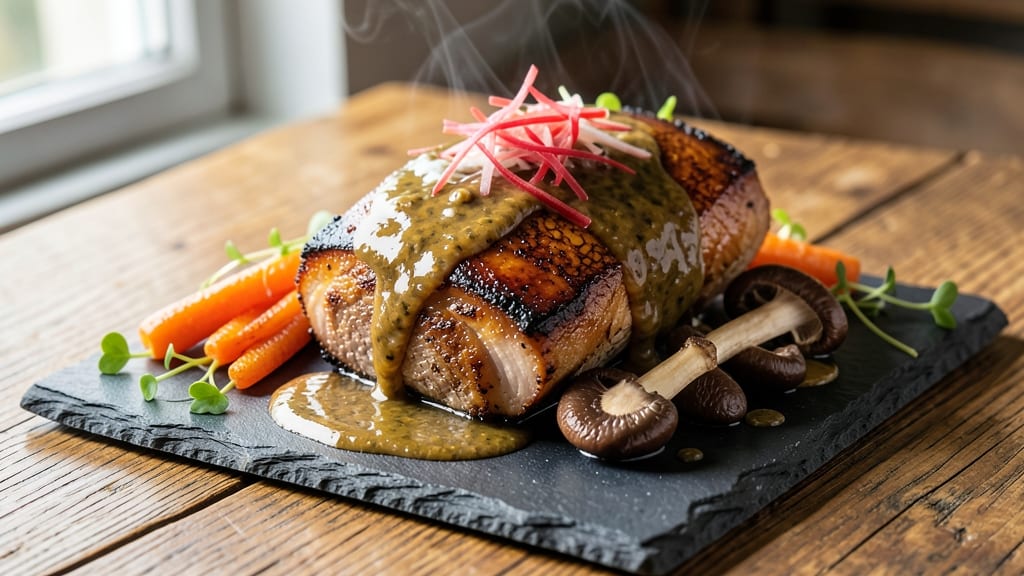
This miso pork roast recipe transforms tough cuts into melt-in-your-mouth perfection through the magic of fermentation and slow cooking. 🔥 As someone who's spent years perfecting pork at The Smoky Pig, I can tell you the secret lies in balancing sweet, salty, and umami flavors—creating a crust that locks in juices while delivering that signature silky tenderness you crave.
The miso doesn't just flavor; it tenderizes, caramelizes, and builds depth that takes hours to develop properly.
What makes this recipe work is the combination of white miso (for brightness) and brown miso (for richness), paired with just the right amount of honey to balance the saltiness.
We're talking about a foolproof method that delivers restaurant-quality results at home—no fancy equipment required, just patience and attention to temperature. The key is the low-and-slow approach that breaks down collagen while building layers of flavor in the crust.
By the time your roast emerges from the oven, you'll have perfectly tender meat that practically falls apart at the touch, with a glossy, caramelized crust that's impossible to resist.
The aroma alone will have everyone gathering around your table, and each bite delivers that perfect harmony of sweet, salty, and umami that defines great pork roasting. This is the kind of dish that makes you want to host dinner parties just to share it.
Serve it with steamed jasmine rice to soak up every last bit of that rich miso glaze, or pair it with roasted seasonal vegetables for a complete meal. The leftovers reheat beautifully too, making this an excellent recipe for meal prep when you want something special without the daily effort.
Let's get started on creating your most tender pork roast yet.
Ingredients for miso pork roast
Six ingredients transform tough pork into melt-in-your-mouth perfection through miso magic.
| Ingredient | Amount | Notes |
|---|---|---|
| Pork Shoulder (Bone-In) 🐷 | 4 lb | Tough cut for silky tenderness |
| White Miso Paste 🧂 | ½ cup | Bright, fermented umami base |
| Brown Miso Paste 🧂 | ¼ cup | Rich, deep flavor layer |
| Honey 🍯 | ¼ cup | Balances miso saltiness |
| Soy Sauce 🍶 | ¼ cup | Kosher or Japanese preferred |
| Rice Vinegar 🍶 | ⅛ cup | Brightens the braise |
| Garlic Cloves 🧄 | 8 cloves | Minced for deep flavor |
| Fresh Ginger 🌿 | ¼ cup | Finely grated, aromatic |
| Sesame Oil 🫒 | 1 tbsp | Toasted sesame preferred |
| Neutral Oil (Avocado or Vegetable) 🫒 | 2 tbsp | High smoke point for searing |
| Jasmine Rice 🍚 | 3 cups | Uncooked, for serving |
| Green Onions 🧅 | ¼ cup | Sliced, for garnish |
| Kosher Salt 🧂 | 1 ½ tbsp | Diamond Crystal preferred |
| Black Peppercorns 🌶️ | 1 tsp | Freshly cracked |
The pork shoulder is where the magic happens—bone-in for extra flavor, but don't stress if you find boneless at Costco or your local butcher. Look for good marbling; that's what turns tough into tender. White miso brings brightness while brown miso adds depth—don't skip either. I always grab Miso Master brand from the Asian market, but the store-bought stuff works fine too. The honey should be pure, nothing with additives. If you're feeling fancy, use raw honey for extra floral notes, but regular works just as well for everyday cooking.
No white miso? Double the brown miso—it'll be richer but still delicious. Running low on honey? Maple syrup works 1:1, though it's slightly less sweet. The soy sauce can be swapped for tamari if gluten-free, but keep the same amount. Fresh ginger is ideal, but ground ginger at half the amount gets you close in a pinch. The sesame oil is non-negotiable for that signature aroma—toasted sesame oil from the Asian aisle has more flavor than the regular kind. And if you're wondering about the rice vinegar, trust me, it cuts through the richness beautifully.
This roast develops flavor over time, so make it a day ahead if possible. The leftovers reheat beautifully—just add a splash of water and cover to keep it moist. Store in an airtight container for 4-5 days in the fridge or freeze for 3 months. I always make extra because it's perfect for meal prep. The rice? Cook it the night before—jasmine rice pairs perfectly with the miso glaze. Garnish with green onions right before serving so they stay vibrant.
Why You'll Love This Recipe
- Foolproof Roast: I swear, this recipe is the kind of thing you’ll make twice in a week. No fancy searing, no basting—just rub that pork shoulder with miso, honey, and soy, slap it in the oven, and walk away. The bone-in cut does all the work for you, melting into tender perfection while you’re still deciding what to watch on TV.
- Umami Bomb: Between us, the combo of white and brown miso here is chef’s kiss—sweet, salty, and deep all at once. The honey cuts through the richness just enough to keep it from feeling heavy, and that caramelized crust? It’s the kind of flavor that makes people ask, “What is this?” (I’ll let you take the credit.)
- Leftovers for Days: Honestly, I make this on Sunday and eat it for lunch all week. The meat stays juicy for ages, and the sauce thickens into a sticky glaze that’s perfect for quick stir-fries or rice bowls. Even my picky teenager sneaks seconds—call me proud.
- Budget Stretch: A bone-in pork shoulder is cheaper than chicken thighs, and miso paste lasts forever. You’re basically getting a whole week’s worth of meals for the price of one sad takeout order. Plus, the leftovers taste better the next day—no sad, dry reheats here.
Step-by-step instructions for miso pork roast
Transform tough pork shoulder into melt-in-your-mouth perfection with this umami-packed method.
🍳 Step 1: Sear the Pork Shoulder for Deep Flavor
Heat a Dutch oven over medium-high heat and add the 2 tablespoons neutral oil. Place the 4 lb pork shoulder fat-side down and sear undisturbed for 8-10 minutes until the fat renders and the skin turns deep golden brown. Flip and sear the other side for another 6-8 minutes until well-browned.
I press down gently on the pork shoulder during the first minute—this prevents it from curling and ensures even contact with the pan. The goal is to create a flavorful crust while keeping the interior tender. Don't rush this step; patience here builds layers of flavor. Remove the pork and set it aside, leaving all the rendered fat in the pot.
👨🍳 Step 2: Build the Miso-Ginger Sauce
In the same Dutch oven, reduce heat to medium and add 1 tablespoon sesame oil. Add the 8 cloves minced garlic and 0.25 cup finely grated fresh ginger, cooking for 1-2 minutes until fragrant but not browned. Add the 0.5 cup white miso paste and 0.25 cup brown miso paste, stirring constantly for 1 minute to blend completely.
Pour in the 0.25 cup honey, 0.25 cup soy sauce, and 0.125 cup rice vinegar, scraping up any browned bits from the bottom. This sauce will become the silky braising liquid that transforms tough meat into tender perfection. Let it simmer for 3-4 minutes until slightly thickened.
🥘 Step 3: Braise Until Fork-Tender
Return the pork shoulder to the Dutch oven, fat-side up, and pour the sauce over it. Bring to a simmer over medium-high heat, then reduce to low heat, cover, and transfer to a 300°F oven. Braise for 3-3.5 hours until the pork is fork-tender and the internal temperature reaches 205°F.
Here's the thing—this long cook time might seem intimidating, but it's what makes the pork melt off the bone. Check the pork after 3 hours; if it's not quite tender, add ¼ cup hot water to the pot and continue cooking. The sauce should reduce to a glossy consistency, coating the pork beautifully.
⏰ Step 4: Rest and Slice for Maximum Juiciness
Remove the pork from the oven and let it rest for 30 minutes before slicing. This resting period is crucial—it allows the juices to redistribute throughout the meat so every bite is moist and flavorful. While it rests, skim any excess fat from the braising liquid and keep it warm.
Slice the pork against the grain into ½-inch thick slices. The meat should pull apart easily with just a fork, and the sauce should cling beautifully to each piece. Serve the pork over 3 cups cooked jasmine rice and drizzle with the reduced braising sauce. Garnish with 0.25 cup sliced green onions for freshness and color.
Pro Tips For Making Miso Pork Roast
- Brown the Bone First: That bone-in shoulder needs a good sear before braising—otherwise, the miso glaze will stick like glue instead of caramelizing. Pat it dry, hit it with oil, and let it brown 8-10 minutes on high heat before adding anything else. I learned this the hard way when my first batch turned into a mushy miso pudding.
- Mix Miso Pastes Properly: White miso is salty and sharp; brown miso is deep and funky. If you just dump them together without balancing, one will overpower the other. Start with a 1:1 ratio, then taste—add more white if it’s too bitter, or more brown if it’s too mild. (Yes, even if you’re impatient like me.)
- Don’t Rush the Braise: Low and slow is non-negotiable here. After searing, cover the pork with liquid (soy, honey, and a splash of water) and simmer at 300°F (150°C) for at least 3 hours—4 if it’s a big cut. I skipped this once and ended up with tough, chewy pork that tasted like miso-flavored shoe leather.
- Deglaze with Honey Early: Add the honey to the pan before the liquid—this way, it caramelizes into the miso glaze instead of just sweetening the sauce at the end. A quick splash of water or soy sauce helps scrape up those browned bits, which pack serious flavor. (Your future self will thank you.)
Pro cooking tips for this recipe
Miso Magic Secrets
White miso brings brightness while brown miso adds depth—never skip either. I always use Miso Master brand from the Asian market, but store-bought works too. The key is blending 0.5 cup white miso with 0.25 cup brown miso to balance sweetness and umami.
For extra richness, add 1 tbsp toasted sesame oil to the marinade. 🧂
Low-and-Slow Mastery
Braising at 300°F for 3-3.5 hours is non-negotiable for tender pork. I check the internal temperature with a ThermoWorks Smoke thermometer—aim for 205°F. If it's not quite there, add ¼ cup hot water and continue cooking. The sauce should reduce to a glossy consistency, coating every bite. 🌡️
Honey's Role
The 0.25 cup honey balances miso's saltiness while caramelizing beautifully. I use raw honey for floral notes, but regular works fine. For a gluten-free twist, swap soy sauce for tamari—just keep quantities equal. The honey also helps create that signature glossy crust. 🍯
Equipment Essentials
Your Dutch oven is your best friend here—I swear by Le Creuset for even heat distribution. A meat thermometer is non-negotiable for perfect doneness. For searing, use avocado oil (high smoke point) and press the pork gently with a spatula to prevent curling. 🔥
Resting Game-Changer
Never skip the 30-minute rest after roasting. This lets juices redistribute, ensuring every bite is moist. While resting, skim excess fat from the braising sauce and keep it warm. The pork should pull apart easily with just a fork—proof of perfect tenderness. ⏰
Leftovers Strategy
This roast reheats beautifully—just add 2 tbsp water and cover to keep it moist. Store in an airtight container for 4-5 days or freeze for 3 months. I always make extra because it's perfect for meal prep. Garnish with green onions right before serving to keep them vibrant. 💫
Nutrition facts
Frequently asked questions
Can I use a different cut of pork for this recipe?
While pork shoulder is ideal for its fat content and tenderness, you can adapt this recipe for pork loin or tenderloin. For these leaner cuts, reduce the cooking time to 1.5-2 hours at 300°F and monitor closely with a meat thermometer. The internal temperature should reach 145°F for tenderloin. Just be prepared for less fall-apart texture.
What if I don't have white miso? Can I substitute?
Double the amount of brown miso (use 0.5 cup instead of 0.25 cup) for a richer flavor, though it'll be slightly less bright. For extra brightness, add 1 teaspoon rice vinegar or ½ teaspoon lemon zest to compensate. The dish will still be delicious—just with a deeper, more robust umami profile.
How do I know when the pork is done without a meat thermometer?
If you don't have a thermometer, use the fork test: Insert a fork into the thickest part of the pork. If it slides in and out with little resistance and the meat fibers pull apart easily, it's done. The pork should also have a deep golden-brown crust and the braising liquid should be reduced and glossy. For a 4 lb roast, this typically takes 3-3.5 hours at 300°F.
Can I make this recipe in a slow cooker?
Yes! Sear the pork first as directed, then transfer it to a slow cooker with the miso sauce. Cook on low for 8 hours or high for 5 hours until fork-tender. The slow cooker method is perfect for hands-off cooking, though the crust won't be as caramelized. Add ¼ cup water if the sauce gets too thick during cooking.
What's the best way to reheat leftovers?
Reheat leftovers in a skillet over medium-low heat with 2 tablespoons water to restore moisture. Cover and cook for 5-7 minutes until warmed through. For oven reheating, wrap slices in foil and bake at 325°F for 15 minutes. Never microwave—it makes the meat dry. Garnish with fresh green onions right before serving to keep them crisp.