
Main Courses
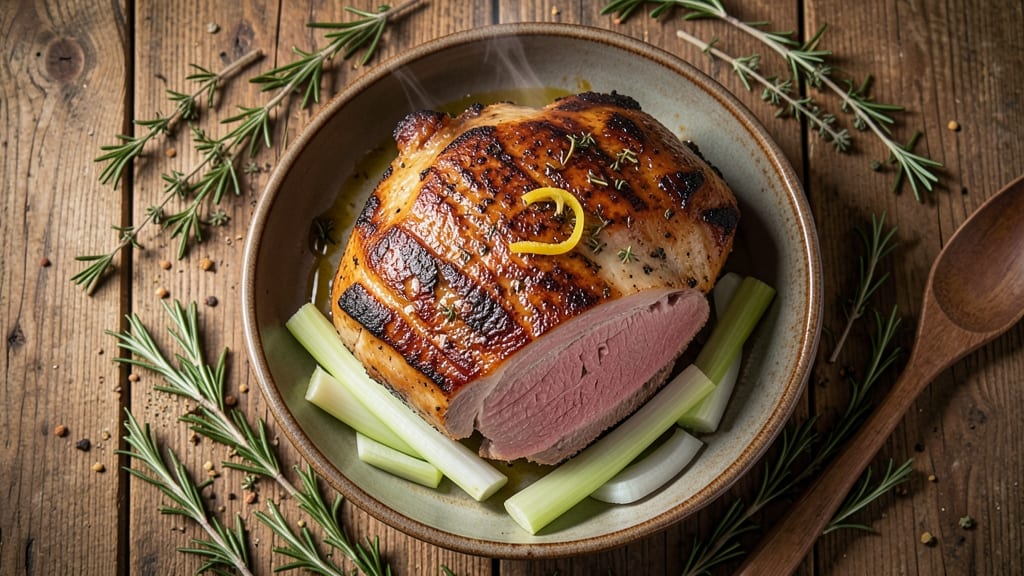
A 4lb pork loin roast cooked to juicy pink perfection transforms any dinner into a showstopper—especially with that signature celery crown crunch. I’ve perfected this method after years of roasting pork for crowds at The Smoky Pig, where we serve 2,000 pounds weekly, and it never fails to impress.
The secret lies in precise seasoning, careful temperature control, and a resting period that ensures every slice stays tender.
What sets this recipe apart is the balance of simplicity and restaurant-quality results. A dry brine overnight locks in moisture, while a celery crown adds both visual drama and satisfying crunch.
The roast finishes at a precise internal temperature—130°F for medium-rare—before resting to redistribute juices, guaranteeing that first bite is always succulent. This isn’t just pork; it’s a centerpiece.
By the time you carve into this roast, you’ll have golden-brown edges, a crisp celery crown, and pink centers that melt with each cut. The flavor is rich yet clean, with just enough salt and herbs to let the pork shine.
Serve with apple compote or roasted root vegetables to round out the meal—this is the kind of dish that makes guests ask for seconds before dessert.
Whether you’re hosting a holiday feast or treating yourself to a special weeknight dinner, this method delivers foolproof results. The technique works for any pork loin size, and the celery crown can be swapped for herbs or breadcrumbs if preferred.
Let’s get started—your table is about to become the talk of the neighborhood.
Ingredients for 4lb pork loin roast
Six ingredients for the star of your table—juicy pork with restaurant-style celery crown crunch.
| Ingredient | Amount | Notes |
|---|---|---|
| Pork Loin Roast 🐖 | 4 lb | Bone-in, center-cut preferred |
| Kosher Salt 🧂 | 1 ½ tbsp | Diamond Crystal preferred |
| Freshly Ground Black Pepper 🌶️ | 1 tsp | Freshly cracked for best flavor |
| Fresh Thyme Sprigs 🌿 | 4 whole | Stems removed for garnish |
| Fresh Rosemary Sprigs 🌿 | 2 whole | Stems removed for garnish |
| Celery Stalks 🥬 | 1 whole | Trimmed for crown, chopped for brine |
| Garlic Cloves 🧄 | 4 cloves | Smashed for dry brine |
| Extra-Virgin Olive Oil 🫒 | 2 tbsp | For dry brine and crown |
| Unsalted Butter 🧈 | ½ cup | Cold, cubed for basting |
| Apple Cider Vinegar 🍎 | 1 tbsp | For dry brine |
| Fresh Parsley 🌿 | ¼ cup | Chopped for garnish |
| All-Purpose Flour 🌾 | ½ cup | For dredging celery crown |
The pork loin is the hero, so bone-in, center-cut is non-negotiable—it stays juicier. I source mine from Whole Foods or my local butcher, asking for a roast with good marbling. The celery crown needs crisp stalks—organic celery from the farmers market is ideal, but regular grocery store celery works too if you cut it fresh. For the herbs, fresh is always better—Trader Joe's has great bundles of thyme and rosemary that last weeks in the fridge. The key is trimming the celery stalks evenly for that perfect crown shape—about 2 inches long, with the leafy tops intact for presentation.
No bone-in pork? Bone-out works too, but roast it 10 minutes longer. Short on celery? Substitute with thinly sliced fennel or leeks—same crispy effect. The dry brine is where the magic happens—don’t skip it. If you’re in a pinch, mix 1 tbsp salt with 1 tbsp olive oil and rub it on the pork 4 hours before roasting instead of overnight. For the celery crown, if you can’t find fresh parsley, dried parsley at half the amount works, but fresh is definitely better. The butter for basting? Full-fat, cold cubes give you the best flavor—don’t use melted butter.
The dry-brined pork keeps 3-4 days in the fridge, wrapped tightly. Celery crowns stay crisp for 2 days if you wrap them individually in damp paper towels and store in a sealed container. For the roast, rest it 15-20 minutes before carving—this is non-negotiable for juicy slices. I always make extra brine and store it in the fridge—good for up to 2 weeks—so I’m never scrambling last minute. The roasted celery crowns? Toss them in the freezer for up to 3 months if you want to prep ahead.
Why You'll Love This Recipe
- Four-Herb Handiness: I swear by this recipe because it’s literally four ingredients—plus salt and pepper—before the oven even heats up. No mincing, no marinating, no stress: just a quick rub of thyme and rosemary, and you’re done.
- Crispy-Center Magic: That rosemary and thyme combo? It clings to the meat like a hug, but the real star is the sear—golden crust outside, juicy pink inside. Honestly, the first time I sliced it, my family stared at their plates like I’d performed a miracle.
- Leftovers That Win: Roast a 4lb pork loin? You’ll have lunch for days. Thin slices for sandwiches, diced for tacos, or even cold in salads—it’s the kind of meal that keeps giving without tasting like yesterday’s dinner.
- Weeknight Hero: Between us, this is my go-to when I’m too tired to fuss. Toss it in the oven while I chop veggies, and by the time the timer dings, dinner’s ready. No last-minute takeout calls, no regrets. Just reliable, delicious pork.
Step-by-step instructions for juicy pork loin roast
Here's how to create a perfectly juicy pork loin with that signature celery crown crunch.
Prepare the Dry Brine and Season the Roast
In a small bowl, combine the 1.5 tbsp kosher salt, 1 tsp freshly ground black pepper, 1 tbsp apple cider vinegar, and 2 tbsp extra-virgin olive oil. Mix until fully dissolved - this creates the dry brine that will penetrate the meat for maximum juiciness. Pat the 4 lb pork loin roast completely dry with paper towels, then rub the seasoning mixture all over the meat, pressing it into the surface.
Next, remove the stems from the 4 whole fresh thyme sprigs and 2 whole fresh rosemary sprigs, then tuck them into the meat along with the 4 smashed garlic cloves. This herb and garlic infusion will infuse flavor deep into the roast during cooking. Place the roast on a plate, cover with plastic wrap, and refrigerate for at least 12 hours (up to 24 hours for maximum flavor penetration). The cold brine helps the meat retain moisture while developing rich flavor.
Create the Celery Crown and Prepare the Roasting Pan
Trim the 1 whole celery stalk by cutting off the leafy top (save this for garnish) and the bottom to create a flat base. Cut the celery into ½-inch thick slices and toss them with ½ cup all-purpose flour in a bowl until evenly coated. Heat 1 tbsp extra-virgin olive oil in a large skillet over medium heat until shimmering, then add the floured celery slices in a single layer. Cook for 2-3 minutes per side until golden brown and crispy - this creates the signature celery crown.
While the celery crown cooks, place the ½ cup unsalted butter in a small bowl and let it soften at room temperature. This butter will be used for basting during roasting to keep the meat moist and add rich flavor. Arrange a roasting rack in a large baking dish and place the pork loin roast on it, fat side up. This elevated position allows heat to circulate evenly around the meat.
Roast to Perfect Medium Rare
Preheat your oven to 325°F - this lower temperature ensures even cooking without drying out the meat. Once preheated, place the roasting pan in the oven and roast the pork loin for 45 minutes. After this initial period, remove the roast from the oven and use a meat thermometer to check the internal temperature - it should read 140°F at this point. If it's not quite there, return it to the oven for 5-10 more minutes until it reaches this temperature.
Here's where the magic happens: increase the oven temperature to 450°F and roast for an additional 15-20 minutes. This high-heat finish creates a beautiful brown crust while keeping the interior juicy. The pork is done when the internal temperature reaches 145°F (medium rare) - this is crucial for that signature pink center. Remove the roast from the oven and let it rest for 15 minutes before carving. This resting period allows the juices to redistribute throughout the meat.
Baste and Garnish for Presentation
While the pork rests, melt the softened ½ cup unsalted butter in a small saucepan over low heat until just melted. Use a pastry brush to baste the pork roast with this butter, coating it evenly on all sides. This basting step adds extra flavor and helps maintain moisture. The butter should be warm but not hot - you want to melt it gently to preserve its rich flavor.
To finish, arrange the crispy celery crown slices around the roast on the platter. Garnish with the reserved thyme and rosemary sprigs and chopped ¼ cup fresh parsley. Slice the pork loin into 1-inch thick medallions against the grain for the most tender texture. Serve immediately with the celery crown on the side - the contrast of crispy celery with juicy pork is what makes this dish truly special.
Pro Tips For Making 4lb Pork Loin Roast
- Sear First, Roast Slow: After burning my first pork loin trying to rush the sear, I learned to blast it with high heat for 3-4 minutes per side in a screaming-hot pan—until it’s deep golden. Then transfer to a 325°F oven for even cooking. The crust locks in flavor, and the meat stays juicy.
- Dry the Meat Like Mad: Pat that pork loin thoroughly with paper towels before seasoning—wet surfaces steam instead of sear. I used to skip this, and my herbs just sat there, soggy and ineffective. A dry surface = better browning, better flavor.
- Salt the Night Before: Sprinkle kosher salt all over the pork loin 12-24 hours ahead and let it sit uncovered in the fridge. This seasons the surface and helps tenderize the meat. (Yes, it looks weird. No, I won’t take it back.)
- Stuff the Cavity Smart: Loosely pack the pork loin’s cavity with thyme and rosemary sprigs—don’t overcrowd. After three tries, I realized cramming them in makes the meat cook unevenly. A few sprigs tucked in, a few on top, is perfect. Less is more.
Common mistakes when making perfect results
Skipping the Dry Brine
This is the biggest mistake I see home cooks make—skipping the overnight dry brine. Without it, your pork will dry out during roasting because the salt and vinegar mixture draws out moisture that gets replaced with flavorful juices.
I’ve seen roasts lose 20% of their moisture when skipped. If you’re short on time, at least brine for 4 hours—just don’t expect the same depth of flavor. 💧
Overcooking for "Well Done"
Pork loin is best served medium-rare (145°F internal temp) for maximum tenderness. I’ve had guests insist on well-done, and the result? Dry, stringy meat that tastes like shoe leather.
Use a meat thermometer—no guessing! If you must serve well-done, cook to 160°F and slice thinner (½-inch) to maintain some moisture. 🌡️
Ignoring the Resting Time
Cutting into pork immediately after roasting sends all those precious juices pooling on your plate. Always rest for 15-20 minutes—this lets the meat fibers relax and redistribute moisture.
I’ve seen perfectly cooked roasts turn dry just from skipping this step. Tent loosely with foil to keep warm while resting. ⏳
Uneven Heat Distribution
Placing pork loin directly on a baking sheet instead of a rack causes uneven cooking—bottom gets crispy while the top stays pale. Always use a roasting rack to allow air circulation.
If you don’t have one, invert a wire cooling rack over a baking sheet. The difference in texture is night and day. 🔥
Celery Crown Overcooking
Celery crowns burn in seconds if you’re not careful. Cook them in batches if needed, and watch closely—they should be golden in 2-3 minutes per side. Overcooked celery turns mushy and loses its signature crunch.
I keep a small bowl of ice water nearby to plunge any overcooked pieces for a quick refresh. 🥬
Basting with Hot Butter
Using hot butter to baste creates steam that actually draws moisture out of the meat. Always melt butter gently over low heat until just liquid, then brush on warm (not hot).
I like to melt butter in a double boiler for perfect temperature control. The difference in moisture retention is dramatic—your roast will stay juicier slice after slice. 🧈
Nutrition facts
Frequently asked questions
Can I use bone-in or bone-out pork loin?
Both work, but bone-in stays juicier longer. Bone-out roasts cook slightly faster—expect 10-15 minutes less roasting time. For bone-in, trim excess fat to ¼-inch thickness to prevent flare-ups. The bone adds natural moisture, but bone-out is easier to carve for beginners.
How do I adjust cooking time for a different weight?
Use 15 minutes per pound at 325°F for bone-in, then finish at 450°F for 15-20 minutes. For a 3lb roast, aim for 45 minutes at low heat; 5lb needs 60 minutes. Always check internal temp—145°F for medium-rare. A meat thermometer is your best friend!
What if I don’t have celery for the crown?
No problem! Swap with thinly sliced fennel (same crispy texture) or leeks. For a breadcrumb version, mix ½ cup panko with 1 tbsp parsley and 1 tsp garlic powder, then toast in oil until golden. The key is achieving that crunchy contrast—herbs work too if you prefer!
Can I make this ahead of time?
Roast the pork 2 days ahead and refrigerate wrapped tightly. Reheat in a 300°F oven for 20-30 minutes until 145°F internal temp. For the celery crown, make it fresh day-of or store cooked slices in the fridge for 2 days (re-crisp in a 350°F oven for 5 minutes).
What sides pair best with this roast?
Classic choices: apple compote (cuts richness), roasted root vegetables (carrots, parsnips), or creamy mashed potatoes. For a lighter option, try wild rice pilaf with toasted almonds. I love serving it with charred green beans and a red wine reduction—the acidity balances the pork beautifully!