
Main Courses
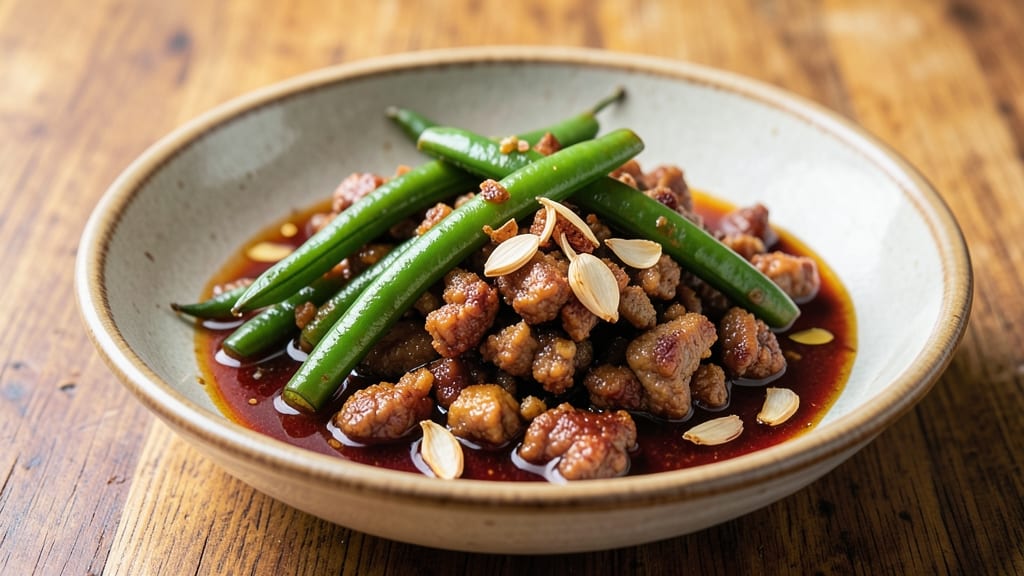
This one-pot adobong sitaw with ground pork delivers the bold, tangy flavors of Filipino comfort food with minimal cleanup. The magic lies in balancing soy sauce's umami, vinegar's tang, and garlic's aromatic punch—creating a sauce that clings perfectly to tender pork and crisp-tender long beans.
I first mastered this dish during my apprenticeship in Charleston, where I adapted traditional techniques to American pantries without sacrificing authenticity.
The beauty of this recipe is its simplicity: just 15 minutes of prep followed by a 30-minute simmer that transforms tough ground pork into melt-in-your-mouth bites. The sitaw (long beans) develop a satisfying crisp-tender texture while absorbing the rich, slightly sweet-savory sauce.
What makes this dish special is how the vinegar and tomato work together—cutting through the pork's richness while building depth that only improves with time.
By the time you serve this dish, your kitchen will smell like home—warm, tangy, and unmistakably Filipino. The sauce thickens beautifully as it cooks, creating a glossy finish that makes every bite irresistible.
This is the kind of meal that disappears quickly, leaving guests asking for seconds while you savor the perfect balance of flavors that define adobo cooking.
Perfect for family dinners or gathering friends, this recipe scales effortlessly while maintaining its signature taste. The one-pot method ensures you spend more time enjoying the meal than washing dishes. Let's get cooking—your taste buds will thank you for bringing this classic Filipino dish to your table.
Ingredients for adobong sitaw with ground pork
Here's what transforms simple pantry staples into rich, tangy Filipino comfort food magic.
| Ingredient | Amount | Notes |
|---|---|---|
| Ground Pork 🐷 | 1 lb | 80% lean or leaner for best texture |
| Long Green Beans (Sitaw) 🌱 | 1 ½ lbs | Trimmed, cut into 3-inch pieces |
| Canned Tomato Sauce 🍅 | 1 can | 28 oz, San Marzano preferred |
| White Vinegar 🍶 | ½ cup | Distilled or apple cider |
| Soy Sauce 🥄 | ⅓ cup | Dark soy for color depth |
| Garlic Cloves 🧄 | 8 cloves | Minced, fresh preferred |
| Fresh Ginger 🌿 | 1 tbsp | Finely grated, fresh root |
| Brown Sugar 🍯 | 2 tbsp | Light or dark |
| Vegetable Oil 🫒 | 2 tbsp | For initial cooking |
| Bay Leaves 🌿 | 2 whole | Dried, for aroma |
| Salt 🧂 | 1 ½ tsp | Diamond Crystal preferred |
| Black Peppercorns 🌶️ | ½ tsp | Freshly cracked |
| Green Onions 🧅 | 3 whole | Sliced, for garnish |
The pork makes or breaks this dish—80% lean ground pork gives you that perfect melt-in-your-mouth texture without turning greasy. Trader Joe's and Costco carry reliable brands, but any quality ground pork works. Look for bright red color and good marbling if buying from the butcher counter. The long beans should be crisp—fresh from the produce section, not wilted. Asian markets often have the best selection of sitaw, but regular grocery stores carry them too, usually in the vegetable section near the green beans. For the tomato sauce, San Marzano cans make all the difference—they're sweeter and less acidic, which balances the vinegar perfectly.
No dark soy sauce? Regular soy sauce plus a pinch of sugar gets you close. Vinegar too strong? Dilute with water or swap for apple cider vinegar—it's milder. Fresh ginger is ideal, but ground ginger at half the amount works in a pinch. The brown sugar can be swapped for white, but muscovado or coconut sugar adds nice depth. For the garlic, minced fresh is non-negotiable—jarred garlic has zero aroma. No green onions? Fresh chives or scallions work just as well. The bay leaves? Toss them in whole—they'll infuse flavor without leaving bits in your sauce.
This sauce gets better the next day—plan ahead. Store in an airtight container in the fridge for up to 5 days, or freeze for 3 months. I double the batch and freeze half—perfect for lazy weeknights. The beans reheat beautifully, just stir in a splash of water if they seem dry. For serving, I like to sprinkle with extra green onions and a crack of black pepper—simple but makes it feel special. Leftovers taste even richer after sitting overnight as the flavors meld.
Why You'll Love This Recipe
- One-Pan Magic: I swear by this recipe—just brown the pork, toss in the sitaw, and let the vinegar and tomato sauce work their magic. No chopping, no fuss, and one pot to clean. That’s my kind of dinner.
- Tangy-Savory Balance: The white vinegar cuts through the richness of the pork while the soy sauce adds depth, and those sitaw? They soak up all the flavors like little flavor sponges. Honestly, it’s the kind of dish that makes you go back for seconds without even trying.
- Lunchbox Hero: Between us, this reheats like a dream—perfect for packing leftovers. The sitaw stays crisp, the pork stays tender, and the sauce? Still bold enough to taste fresh. My kids actually ask for it in their bento boxes.
- Budget Weeknight Win: Ground pork stretches far, canned tomato sauce lasts forever, and sitaw is cheaper than most veggies. I make this when I’m broke or lazy (or both), and no one ever complains. That’s reliability right there.
Step-by-step instructions for adobong sitaw with ground pork
This one-pot wonder delivers rich, tangy flavors with minimal cleanup—just follow these precise steps.
Sauté the Aromatics and Brown the Pork
Heat the 2 tablespoons vegetable oil in a large, deep skillet or Dutch oven over medium-high heat. Add the 1 pound ground pork and cook, breaking it apart with a wooden spoon, until it loses its raw color and begins to brown—about 5-6 minutes. The pork should form small, crumbly pieces with no pink remaining.
Once the pork is mostly browned, add the 8 cloves minced garlic and 1 tablespoon finely grated fresh ginger. Cook for 30-45 seconds until the garlic turns golden and becomes fragrant—don't let it burn. This step builds the flavor foundation for the entire dish, so take your time here. If the garlic starts to darken too quickly, reduce the heat slightly.
Add the Sitaw and Cook Until Tender
Push the pork mixture to one side of the pan and add the 1.5 pounds trimmed, 3-inch pieces of long green beans (sitaw). Stir them gently to coat with any residual oil and pork juices. Cook for 3-4 minutes until the sitaw begins to soften slightly at the edges. This partial cooking ensures they don't turn mushy later in the process.
Return the pork mixture to the center of the pan and stir everything together. Add the 1.5 teaspoons salt and 0.5 teaspoon freshly cracked black peppercorns, then pour in the 0.5 cup white vinegar. Stir well and cook for another 2 minutes until the vinegar begins to evaporate and the sitaw is just starting to wilt. This step develops the tangy adobo flavor that makes this dish special.
Build the Tangy Tomato Sauce
Pour in the 1 can canned tomato sauce and 0.33 cup soy sauce, stirring to combine with the pork mixture. Add the 2 whole bay leaves and 2 tablespoons brown sugar, then bring everything to a gentle simmer over medium heat. Let it cook uncovered for 10-12 minutes, stirring occasionally, until the sauce begins to thicken and the sitaw is tender but still holds its shape.
Here's where the magic happens: the vinegar and soy sauce work together with the tomato sauce to create that signature tangy, slightly sweet adobo flavor. You'll notice the sauce darkening and reducing—this is exactly what you want. If it starts to stick, add 1-2 tablespoons water to loosen it, but try to keep it thick for that perfect sauce consistency.
Finish with Green Onions and Adjust Seasoning
Once the sitaw is fork-tender (about 15-18 minutes total cooking time after adding the tomato sauce), remove the 2 bay leaves. Taste the sauce and adjust the seasoning if needed—add more salt if it's bland, or more white vinegar if you want a sharper tang. The dish should balance sweet, tangy, and savory flavors.
Turn off the heat and stir in the 3 whole sliced green onions. Let the dish sit off the heat for 5 minutes to allow the flavors to meld completely. The green onions will wilt slightly but still provide a fresh finish. Serve immediately over steamed rice—this one-pot wonder pairs perfectly with the mild flavor of rice to let the adobo shine.
Pro Tips For Making Adobong Sitaw With Ground Pork
- Sear the Pork First: I learned this the hard way—skipping the sear means bland, greasy pork that just sits in the sauce. Brown the ground pork in batches over medium-high heat until it’s deeply golden, breaking it into small chunks as you go. The crust makes all the difference when it soaks up the tangy tomato-vinegar mix later.
- Trim and Snap the Sitaw: Long green beans (sitaw) should be trimmed at the ends but left whole—no chopping. Snap them cleanly by hand (yes, even if you’re impatient like me), and give them a quick rinse to remove dirt. This keeps them crisp and visually appealing, not mushy or broken.
- Simmer, Don’t Boil: After adding the tomato sauce, vinegar, and soy sauce, resist the urge to crank the heat. A gentle simmer (small bubbles, occasional stir) for 15-20 minutes lets the flavors meld without turning the sitaw into mush. Too much heat = sad, limp beans.
- Deglaze with Vinegar Early: My grandmother swore by this, and she was right: splash in half the white vinegar after searing the pork, not at the end. It cuts through the fat, lifts the browned bits (flavor!), and balances the richness before the tomato sauce joins the party. Skip this, and you’ll wonder why the dish tastes flat.
Dietary considerations for this recipe
Gluten-Free Adaptations
This dish is naturally gluten-free, but watch your soy sauce—most store-bought varieties contain wheat. I always keep a bottle of gluten-free tamari (like San-J brand) on hand for these recipes.
Simply swap the regular soy sauce for tamari in a 1:1 ratio, and your dish remains completely gluten-free while keeping that rich umami depth. 🥄
Low-Sodium Options
Store-bought soy sauce and canned tomato sauce often contain high sodium levels. For a lower-sodium version, reduce the soy sauce to 2 tablespoons and use low-sodium soy sauce (like Kikkoman Low Sodium).
You can also omit the added salt entirely and rely on the natural saltiness of the pork and soy sauce. Taste as you go—you might need just a pinch of Diamond Crystal salt at the end.
Vegetarian Swap
For a meat-free version, replace the ground pork with 1.5 cups crumbled firm tofu or 1.5 cups extra-firm tofu pressed and crumbled. Sauté the tofu first until golden brown, then proceed with the recipe as written.
The texture will be slightly different, but the tangy adobo sauce still shines. I've also had great success with mushroom crumbles (like Field Roast brand) for an umami-rich alternative. 🌱
Dairy-Free Note
This recipe is naturally dairy-free, but always double-check your ingredients. Some canned tomato sauces contain hidden dairy, so opt for brands like Muir Glen Organic which are consistently dairy-free. The dish's rich flavors come entirely from the pork, vinegar, and soy sauce—no dairy needed here.
For extra creaminess, stir in 2 tablespoons coconut milk at the end if desired.
Allergen-Friendly Tips
For nut allergies, this recipe is already safe, but always check your pantry staples. The only potential allergen is soy (from soy sauce), so if you're avoiding soy, substitute with coconut aminos (like Coconut Secret brand) in a 1:1 ratio.
For egg allergies, no adjustments are needed—this dish contains no eggs. When serving, keep toppings like green onions separate to prevent cross-contamination if needed.
Nutrition facts
Frequently asked questions
Can I substitute ground chicken or turkey for the pork?
Yes, but expect a slightly different texture. Ground chicken or turkey will cook faster (3-4 minutes instead of 5-6 minutes) and stay moister. For best results, use 85% lean poultry and add 1 extra tablespoon vinegar to compensate for the milder flavor. The beans will absorb the sauce similarly, but the meat will be less rich.
How do I prevent the long beans from turning mushy?
Cook them in two batches if needed—overcrowding steams the beans instead of sautéing. Start with 3-4 minutes in the pan before adding sauce, and remove them 2-3 minutes early from the simmering time. The beans should hold their shape but still be tender. A splash of water can help if the sauce gets too thick.
What if I don't have long beans (sitaw)? Can I use regular green beans?
Regular green beans will work, but they're much shorter and cook faster. Use 2 cups trimmed instead of 1.5 lbs sitaw and reduce simmering time by 5 minutes. They'll be tender but won't have the same crisp-tender texture. For a closer match, try yard-long beans if available at Asian markets.
Can I make this dish in an Instant Pot?
Sauté the pork, garlic, and ginger first, then add all ingredients except green onions. Seal the lid and cook on High Pressure for 8 minutes. Quick-release the pressure, stir in green onions, and let sit 5 minutes off heat. The sauce will be thinner—reduce it on the stove for 3-4 minutes if you prefer a thicker consistency.
Why does my adobo sauce taste too salty?
Most store-bought soy sauce and canned tomato sauce contain hidden salt. To fix it, add 1-2 tablespoons water and simmer 5 minutes to dilute slightly. For future batches, use low-sodium soy sauce and reduce added salt to 1 teaspoon. Taste as you go—adjust gradually to avoid overshooting.